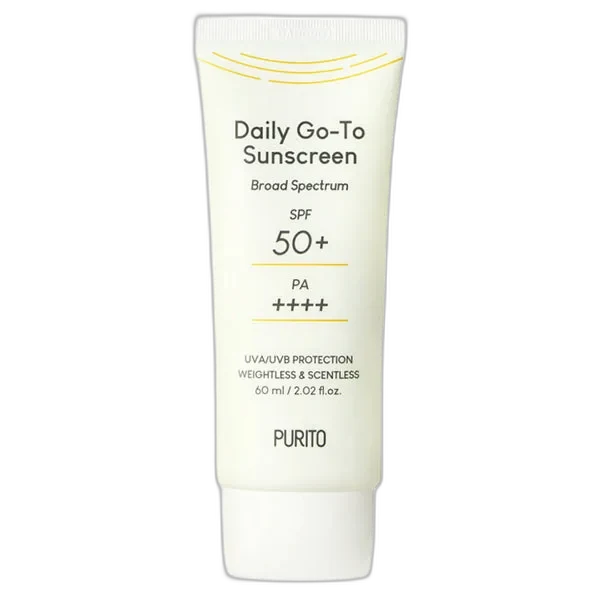
Daily Go-To Sunscreen Broad Spectrum SPF 50+ PA++++
K-Beauty Redemption SPF
 Verified reviewer
Pros & cons.
- +Next-generation Tinosorb filter system provides photostable broad-spectrum UVA/UVB protection
- +Zero white cast even on deeper skin tones thanks to optimized titanium dioxide coating
- +Completely fragrance-free with no known irritants — exceptional for sensitive skin
- +Centella asiatica extract plus four individual triterpenes provide genuine anti-inflammatory benefits
- +Lightweight lotion texture can replace morning moisturizer for normal to dry skin
- +Clean formulation: silicone-free, paraben-free, alcohol-free, cruelty-free, and vegan
- +Developed post-SPF controversy with updated testing protocols and reformulated UV filter system
- −Very dewy finish that never fully sets — can feel tacky on oily skin types
- −Small 60 ml tube runs out in 4-6 weeks with proper daily application
- −Can pill under certain moisturizers or makeup if not allowed to fully absorb
- −Higher per-ounce cost than drugstore sunscreen alternatives
- −Brand's history with the 2020 SPF scandal may concern some consumers
The full review.
In December 2020, the K-beauty world shook. Independent lab testing showed Purito’s Centella Green Level Unscented Sun — a near-cult favorite — tested at SPF 19 instead of the claimed 50+. A trusted brand became a cautionary tale overnight. Products left shelves, refunds were issued, and K-beauty enthusiasts learned a hard lesson about SPF claims.
The aftermath is more interesting. Instead of rebranding or closing, Purito spent over a year rebuilding. The Daily Go-To Sunscreen, launched in 2021, is not a modified old formula — it is an entirely different sunscreen with a new UV filter architecture. While the original used inadequate concentrations of chemical filters, the Daily Go-To uses a hybrid approach. It combines next-generation chemical filters with mineral titanium dioxide to meet the SPF 50+ PA++++ claim.
About
The UV filter system uses top-tier sunscreen technology. Bis-ethylhexyloxyphenol methoxyphenyl triazine (Tinosorb S) is a broad-spectrum filter that covers UVA and UVB wavelengths; it is photostable and does not degrade significantly under UV radiation. Diethylamino hydroxybenzoyl hexyl benzoate (DHHB, also known as Tinosorb A2B) provides UVA-I protection in the 340-400nm range, the wavelengths that drive photoaging. Ethylhexyl triazone adds UVB coverage. Titanium dioxide provides immediate physical blocking without chemical absorption. These four filters create a redundant system where each filter covers the others’ wavelength gaps.
Texture
The texture converts skeptics into repeat buyers. It applies like a lightweight, creamy lotion, not the thick, white, paste-like texture many associate with sunscreens. There is zero white cast, despite the titanium dioxide. It blends into skin in seconds and leaves a dewy, hydrated finish. For dry and normal skin types, it can replace a morning moisturizer, simplifying a routine to cleanser, serum, and sunscreen.
Best for
The centella asiatica inclusion is more than marketing. Purito includes centella extract alongside all four key triterpenes (madecassoside, asiaticoside, asiatic acid, madecassic acid) individually. This ensures therapeutic levels of these anti-inflammatory and skin-repairing compounds. This matters because UV exposure triggers inflammatory cascades that cause photoaging.
Works for
The clean ingredient profile is impressive. Fragrance-free. Alcohol-free. Silicone-free. Paraben-free. Essential oil-free. It has no known common irritants or allergens. For sensitive skin types seeking a sunscreen that does not sting, redden, or react, this formula removes almost every common culprit.
Not ideal for
The dewy finish is both an asset and a divisive trait. It is perfect for dry skin types wanting moisture and a healthy glow. For oily skin types, it can feel tacky and never sets, leaving a glazed quality that feels uncomfortable in humid conditions. Purito addressed this with the Daily Soft Touch Sunscreen, which has a matte finish for oily skin; this product targets dry and normal skin.
Common Complaints
A practical note: the 60 ml tube lasts roughly four to six weeks with daily application (the two-finger rule uses about 1.25 ml per application for face and neck). At $17 per tube, the annual cost adds up. This is standard for K-beauty sunscreens but costs more per ounce than drugstore options. The UV filter system and formula elegance justify the premium, but budget-conscious users should note the cost.
Conflicts With
Users occasionally report pilling when layering over certain moisturizers or silicone-based primers. To avoid this, let each layer absorb fully before applying the next, and pat the sunscreen onto the skin instead of rubbing.
About
The redemption arc of this sunscreen gives it unique narrative weight. It exists because a brand failed publicly, took accountability, and rebuilt its formulations using better science and stricter testing. Whether that history inspires skepticism or confidence depends on your view of second chances. The formula itself argues for confidence.
Ingredient analysis.
Full INCI list
Water, Butyloctyl Salicylate, Dibutyl Adipate, Propanediol, Butylene Glycol, Bis-Ethylhexyloxyphenol Methoxyphenyl Triazine, Ethylhexyl Triazone, Dicaprylyl Carbonate, Titanium Dioxide, Diethylamino Hydroxybenzoyl Hexyl Benzoate, Hydrogenated Poly(C6-14 Olefin), 1,2-Hexanediol, Centella Asiatica Extract, Polyglyceryl-2 Stearate, Aluminum Hydroxide, Glyceryl Stearate, Stearyl Alcohol, Sodium Polyacrylate, Stearic Acid, Polyhydroxystearic Acid, Behenyl Alcohol, Polymethylsilsesquioxane, Ethylhexyl Stearate, Ammonium Acryloyldimethyltaurate/VP Copolymer, Caprylyl Glycol, Trideceth-6, Ethylhexylglycerin, Xanthan Gum, Madecassoside, Asiaticoside, Asiatic Acid, Madecassic Acid
Skin match.
The science.
The Science
The UV filter system in this sunscreen uses current best practices in photoprotection technology. Bemotrizinol (Tinosorb S), the primary chemical filter, is a broad-spectrum triazine that absorbs UVA and UVB wavelengths (280-400nm). Research in the Journal of Photochemistry and Photobiology shows its exceptional photostability. Unlike older filters like avobenzone, bemotrizinol does not significantly degrade under UV exposure and maintains protection while worn.
Diethylamino hydroxybenzoyl hexyl benzoate (DHHB), marketed as Uvinul A Plus, provides UVA-I protection in the 340-400nm range. Research in Photodermatology, Photoimmunology & Photomedicine shows UVA-I wavelengths drive dermal collagen degradation and melanogenesis. Strong UVA-I filtration is essential to prevent photoaging and hyperpigmentation. DHHB is photostable and adds to the overall stability of the filter system.
Titanium dioxide provides a physical barrier via UV scattering and reflection, offering immediate protection without a chemical activation period. Photobiology research increasingly recognizes this hybrid approach — combining organic (chemical) and inorganic (mineral) filters — as optimal for broad, even spectral coverage with minimal gaps.
The centella asiatica component has clinical relevance. A 2014 systematic review in Phytomedicine confirmed that centella triterpenes, specifically madecassoside and asiaticoside, promote collagen synthesis, reduce inflammation, and accelerate wound healing. In a daily sunscreen, these properties help counteract subclinical inflammatory damage from UV exposure that causes photoaging over time.
Dermatologist Perspective
Dermatologists increasingly recommend hybrid sunscreens that combine chemical and mineral filters for patients needing comprehensive broad-spectrum protection. Board-certified dermatologists note that the next-generation Tinosorb filters in this formulation offer superior photostability to older chemical filters like avobenzone. The fragrance-free, irritant-free formulation suits patients with sensitive, rosacea-prone, or post-procedure skin who struggle to find tolerable daily sunscreens. Dermatologists also value the centella asiatica for its documented anti-inflammatory properties.
Where it fits in your routine.
Apply this as your last morning skincare step, after moisturizer (or instead of moisturizer for normal to dry skin). Use about 1.25 ml — the two-finger rule — for face and neck. Pat it on gently instead of rubbing to stop pilling. Wait 2-3 minutes to absorb before applying makeup. Reapply every 2 hours during long sun exposure, after swimming, sweating, or toweling off.
At about $17 for 60 ml, this costs more than typical US drugstore options and sits in the mid-range for K-beauty sunscreens. A tube lasts 4-6 weeks with proper daily application (about 1.25 ml for face and neck), costing roughly $150-220 per year. Advanced UV filter technology, a clean formulation, and centella-enriched soothing benefits justify the premium. For sensitive skin types who spent years and money cycling through irritating sunscreens, this investment works.
People with dry, normal, or sensitive skin who want a daily SPF 50+ sunscreen with no white cast, no fragrance, and no irritants. It works well for reactive skin types that struggle to find tolerable sunscreens, and for K-beauty enthusiasts seeking an elegantly formulated sun protection step.
Oily skin types wanting a matte finish will find this too dewy — use Purito's Daily Soft Touch Sunscreen instead. Those on a tight budget should note the cost of the small tube format. Anyone who dislikes the 2020 SPF controversy may prefer a brand without that history.
Product details.
This lightweight, creamy lotion has a fluid consistency that spreads and blends easily. It feels more like a moisturizer than a traditional sunscreen during application.
Fragrance-free — no detectable scent.
Squeezable plastic tube with a flip-cap. The 60 ml size matches K-beauty sunscreen standards. The clean, minimalist design fits the Purito Seoul rebrand.
Applies like a hydrating lotion without stinging, white cast, or heaviness. The dewy finish shows immediately — skin looks moisturized and slightly glossy. No adjustment period is required. Works as a makeup base for those who prefer a dewy look.
4-6 weeks with daily facial application using proper SPF application amounts
12 months
All Year
The backstory.
After the 2020 SPF scandal that shook K-beauty — when Purito's original Centella Green Level sunscreen tested at SPF 19 instead of the claimed 50+ — the brand pulled the product, offered refunds, and spent over a year reformulating. The Daily Go-To Sunscreen emerged in 2021 as Purito's comeback, built on a completely different UV filter system with independent testing verification. It represents a brand rebuilding consumer trust through transparent, evidence-based formulation.
About Purito
Emerging Brand (2–5 years)Purito launched in 2017 as a clean K-beauty brand. In 2020, the brand hit an SPF controversy after independent tests showed Centella Green Level Unscented Sun had SPF 19 instead of the claimed SPF 50+. Purito pulled the product, issued refunds, and rebranded as Purito Seoul in 2023 using stricter testing protocols. The Daily Go-To Sunscreen is part of this reformulated post-controversy lineup.
Common myths.
Purito sunscreens lack reliability following the 2020 SPF scandal.
The Daily Go-To Sunscreen uses a different UV filter system than the controversial original. Developers created it post-scandal using updated testing protocols and third-party verification. The UV filter blend (Tinosorb S, DHHB, ethylhexyl triazone, titanium dioxide) is a modern, high-performance system that provides SPF 50+ protection.
Hybrid sunscreens (chemical + mineral) work less effectively than pure mineral or pure chemical options.
Hybrid formulations provide superior broad-spectrum protection by combining both approaches. The mineral titanium dioxide gives immediate physical protection, while the chemical Tinosorb filters offer photostable, comprehensive spectral coverage. Each fills the other's wavelength gaps.
FAQ.
Does Purito Daily Go-To Sunscreen leave a white cast?
No. This formula uses coated titanium dioxide particles alongside transparent chemical filters to offset the white cast typical of titanium dioxide. Users across all skin tones report no visible white cast after application.
Can I use Purito Daily Go-To Sunscreen as a moisturizer?
This sunscreen hydrates normal to dry skin enough to act as both sunscreen and moisturizer. The butyloctyl salicylate, dibutyl adipate, and propanediol base makes it feel like a moisturizing lotion. Very dry skin may still need a hydrating serum underneath.
Is Purito Daily Go-To Sunscreen good for oily skin?
This sunscreen has a dewy finish that is too moisturizing for oily skin. If you have oily skin but love Purito, use the Daily Soft Touch Sunscreen instead; it has a matte finish for oily and combination skin.
How often should I reapply Purito Daily Go-To Sunscreen?
Reapply every 2 hours during sustained sun exposure, after swimming or sweating, and after toweling off. A single morning application works for daily indoor/office use with minimal sun exposure, but reapply before extended outdoor time.
What the community says.
"No white cast even on deeper skin tones"
"Fragrance-free and gentle on sensitive skin"
"Moisturizing enough to skip extra moisturizer"
"Clean ingredient list with no irritants"
"Lightweight lotion-like texture spreads easily"
"Very dewy finish never fully sets — can feel tacky"
"Can pill under certain moisturizers or makeup"
"Small tube runs out quickly with daily use"
"Too moisturizing for oily skin types"
Featured in.
People also looked at.