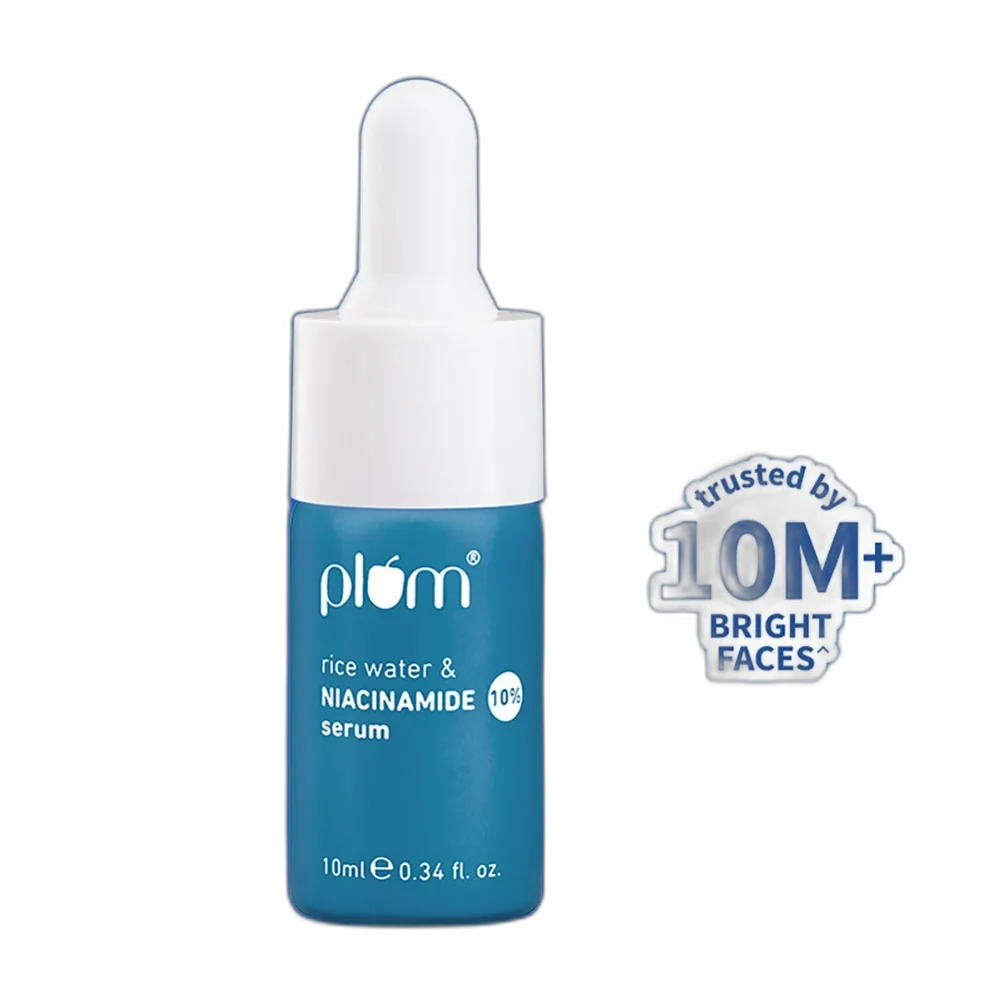
10% Niacinamide Face Serum
Budget Niacinamide Pick
 Verified reviewer
Pros & cons.
- +Full 10% niacinamide plus 1% zinc PCA at an accessible price point
- +Centella and panthenol buffering improves tolerability vs barebones alternatives
- +Fragrance-free, silicone-free, fungal-acne safe
- +Watery-thin texture layers easily under other products
- +Well-suited to oily, combination, and acne-prone skin
- +Pregnancy-safe and suitable for use throughout the year
- −15ml base size is small — look for the 30ml version for better value
- −Niacinamide flushing still possible for sensitive users despite buffering
- −Dropper packaging is less hygienic than airless pump alternatives
- −Limited independent clinical validation outside Indian market
The full review.
Somewhere around 2019, a specific shift happened in the Indian skincare market. For years, anyone serious about efficacy-first, affordable actives had been importing The Ordinary from overseas — paying customs fees, waiting weeks for shipments, and treating each bottle like a small victory. Then domestic brands started releasing their own formulations at the same price points, and the calculation changed. Plum’s 10% Niacinamide Face Serum arrived in that window, and it’s been one of the brand’s quiet workhorses ever since.
The formula is built on the same thesis as every other 10% niacinamide serum on the market: give the actives room to work without a heavy carrier, keep the ingredient list short, and let the science do the job. What Plum added on top of that baseline is where the serum distinguishes itself, if only slightly. Centella asiatica extract and panthenol both appear in meaningful amounts, both chosen specifically to soften the edges of a 10% niacinamide formulation. These aren’t transformative additions, but they matter for users who tried The Ordinary’s version and found it slightly too stark on reactive skin.
The core actives are the well-trodden combination of niacinamide at 10% and zinc PCA at 1%. This pairing has been a mainstay of oily-skin formulations for more than a decade, and the evidence base is substantial. Niacinamide at this concentration has been shown to reduce sebum production, improve barrier function, fade post-inflammatory hyperpigmentation, and modulate inflammatory pathways. Zinc contributes antimicrobial support and sebum regulation that complements rather than duplicates the niacinamide’s effects. For oily, blackhead-prone, or mildly acneic skin, this is one of the more useful combinations you can apply topically without a prescription.
The base is a simple water-plus-humectant vehicle — propanediol, glycerin, sodium hyaluronate — that keeps the skin feeling hydrated without competing with the actives. There’s no silicone, no oil phase, and no emulsion thickening. The texture is watery-thin, almost like a slightly viscous toner, and it absorbs within a minute with a very slight tacky finish that disappears under moisturizer. For people who dislike the heavier feel of cream serums, the lightness here is a feature.
Centella asiatica — sometimes called cica or gotu kola — adds a note of calming support that most budget niacinamide serums skip. The evidence for centella in reducing redness and supporting wound-healing pathways is promising rather than conclusive, but its inclusion here is appropriate for a serum that might be used on skin already dealing with active breakouts or post-acne inflammation. Panthenol does similar barrier-supporting work from a different angle, and together they round out what would otherwise be a fairly stark formulation.
The tolerability story deserves a note. A minority of users — somewhere in the single digits, based on review patterns — report facial flushing on the first few applications of 10% niacinamide serums. This is typically transient, driven by the niacinamide’s vasodilatory effects, and usually resolves within a week or two as skin acclimates. For most people it doesn’t happen at all. But if you’ve had this reaction with niacinamide before, you should know that this formula, despite the centella and panthenol buffering, can still trigger it on sensitive complexions.
Honest limitations: the 15ml size is small. A 30ml bottle would make the value proposition significantly stronger, and Plum does offer a 30ml version at a modest premium. The dropper packaging is adequate but not exceptional — airless pumps are preferable for any formulation with actives, though niacinamide itself is stable enough that oxidation isn’t a major concern. The brand’s track record is shorter than Western legacy brands, which modestly limits the confidence in long-term formulation consistency, though user reviews across several years suggest the product has remained stable.
The comparison to The Ordinary is unavoidable. Side by side, these two serums are doing essentially the same job at similar prices. Plum’s advantage is the centella and panthenol support and the local supply chain for Indian customers. The Ordinary’s advantage is global availability and the massive independent review base that comes with being one of the most scrutinized formulations in consumer skincare. For a user in India, Plum is usually the more convenient choice. For a user elsewhere, The Ordinary’s broader validation is hard to beat.
What this serum does well, it does reliably: gentle sebum control, gradual fading of post-acne marks, a generally healthier-looking finish after a few weeks of consistent use. It’s not glamorous, it doesn’t make dramatic claims, and it doesn’t need to. This is the kind of product that quietly earns its place in a routine without demanding attention.
Ingredient analysis.
Full INCI list · pH 5.5
Aqua, Propanediol, Niacinamide, Pentylene Glycol, Zinc PCA, Betaine, Allantoin, Panthenol, Sodium Hyaluronate, Centella Asiatica Extract, Glycerin, Xanthan Gum, Sodium Citrate, Citric Acid, Phenoxyethanol, Ethylhexylglycerin, Disodium EDTA
Skin match.
The science.
The Science
Niacinamide — also called nicotinamide — is a heavily studied cosmetic active. Research in the International Journal of Cosmetic Science and the British Journal of Dermatology shows it affects sebum regulation, barrier function, post-inflammatory hyperpigmentation, and inflammatory acne. Most evidence uses concentrations between 2% and 5%, though some data supports up to 10%. Above 5%, benefits for most endpoints are modest; higher concentrations mostly benefit specific groups, like those with significant oiliness or hyperpigmentation.
The combination with zinc PCA has less, but still supportive, evidence. Zinc regulates sebaceous activity and provides antimicrobial effects at the skin surface. Pairing it with niacinamide has been a staple for oily and acne-prone skin formulations since the early 2010s. This reduces visible shine and helps resolve mild inflammatory acne without the irritation of benzoyl peroxide or topical antibiotics.
Centella asiatica has a longer history in Ayurvedic and traditional Asian medicine than in Western dermatology, but peer-reviewed research now tracks the active compounds asiaticoside, madecassoside, and asiatic acid. Studies show these compounds support wound healing, reduce inflammation, and stimulate collagen synthesis. In a niacinamide serum, centella acts as an anti-inflammatory adjunct rather than a primary active.
The formulation pH is around 5.5. This is slightly above the skin's natural pH, which stabilizes niacinamide. Niacinamide converts to nicotinic acid at lower pH values, which causes the flushing some users experience; keeping the serum in a mildly acidic-to-neutral range prevents this conversion.
Dermatologist Perspective
Dermatologists often recommend niacinamide serums to target oiliness, enlarged pores, and post-inflammatory hyperpigmentation. Board-certified dermatologists note that 5% works for most patients, while 10% is safe and appropriate for users with significant oil production or stubborn pigmentation. The zinc combination helps acne-prone patients, and centella asiatica serves as a useful adjunct for reactive or compromised skin. Dermatologists confirm niacinamide pairs well with almost any other active, contradicting older claims about incompatibility with vitamin C.
Where it fits in your routine.
Apply 3-4 drops to clean skin morning and/or night before moisturizer. You can layer it with almost any other active, including retinol, AHA/BHA exfoliants, and vitamin C (niacinamide and vitamin C can coexist, despite the outdated myth). Let it absorb for 30-60 seconds before applying other products. For very sensitive skin, apply once daily and increase to twice daily if tolerated.
At about $11 for 15ml, this is a budget serum that competes with The Ordinary's 10% Niacinamide + 1% Zinc at a similar price. The 30ml version costs a modest premium but offers better per-ounce value; most regular users buy this size. The 15ml is a low-commitment way to test tolerance for a first-time niacinamide trial. For a regular routine staple, the 30ml is the smarter purchase. The formula's centella and panthenol nudge it slightly ahead of bare-bones alternatives at the same price, though not dramatically.
Oily, combination, or acne-prone skin types seeking a budget niacinamide serum. Users with post-inflammatory hyperpigmentation, enlarged pores, or excess shine. People comparing this to The Ordinary's equivalent who prefer local supply chains and better tolerability.
Users with persistent niacinamide-induced flushing should try a 5% formulation. This option suits those who want a larger serum size per bottle. It also works for anyone who requires extensive independent clinical data before trusting emerging brands.
Product details.
Watery-thin liquid with slight slip
Virtually odorless
Frosted glass dropper bottle — adequate but dropper is less hygienic than pump
Initial applications feel unremarkable — reactive skin may tingle slightly. A minority of users report transient flushing, which usually fades after one week of acclimation.
Approximately 6-8 weeks with daily use
12 months
All Year
The backstory.
Plum positioned this serum as their answer to The Ordinary's cult niacinamide product when the Indian D2C clean beauty market was looking for local alternatives to imported Deciem products. The brand's target customer was someone who wanted efficacy-focused pricing without importing from abroad, and the niacinamide serum became one of their most successful launches.
About Plum
Emerging Brand (2–5 years)Plum Goodness launched in 2013 in Mumbai. Its niacinamide serum is a flagship D2C product. The brand has high review volume in India but lacks much independent clinical validation in Western dermatology literature.
Common myths.
Niacinamide and vitamin C can't be used together.
This claim is outdated and uses old stability data. Modern formulations of both ingredients work together; current research supports using them in the same routine or same product.
Higher niacinamide percentages are always better.
Research shows niacinamide effects plateau at 5% for most endpoints. 10% is not harmful for most users, but a 5% serum provides most benefits with lower flushing risk.
FAQ.
How does this compare to The Ordinary's niacinamide serum?
Both use the core 10% niacinamide plus 1% zinc formula. Plum's version adds centella asiatica and panthenol to soothe skin, which makes it slightly more tolerable for sensitive skin. The price points are similar.
Can I use it morning and night?
Yes. Niacinamide is stable, well-tolerated, and works in both AM and PM routines. Many users apply it twice daily, but once provides most benefits.
***
Will it make me break out at first?
Niacinamide doesn't cause purging because it isn't an exfoliant or cell-turnover accelerator. A small subset of users gets temporary breakouts, usually from the product's formulation rather than the niacinamide itself.
***
Is it safe during pregnancy?
Yes. Niacinamide, zinc PCA, and centella asiatica are pregnancy-safe. People commonly use this serum during pregnancy and breastfeeding.
***
Can I use it with retinol?
Yes — niacinamide pairs well with retinol and buffers some irritation. Apply niacinamide first, let it absorb, then apply retinol.
***
How long until I see results?
Most users see less oil and shine within 2-4 weeks. Post-inflammatory pigmentation and pore appearance improve after 8-12 weeks of consistent use.
***
Does it help with acne?
Yes, especially oily, blackhead-prone acne. niacinamide regulates sebum and zinc provides antimicrobial support, so this combination works for mild to moderate acne.
***
Community
What the community says.
"affordable"
"reduces oiliness"
"helps with post-acne marks"
"non-greasy"
"15ml size is small"
"some users experience flushing"
"dropper can be finicky"
People also looked at.