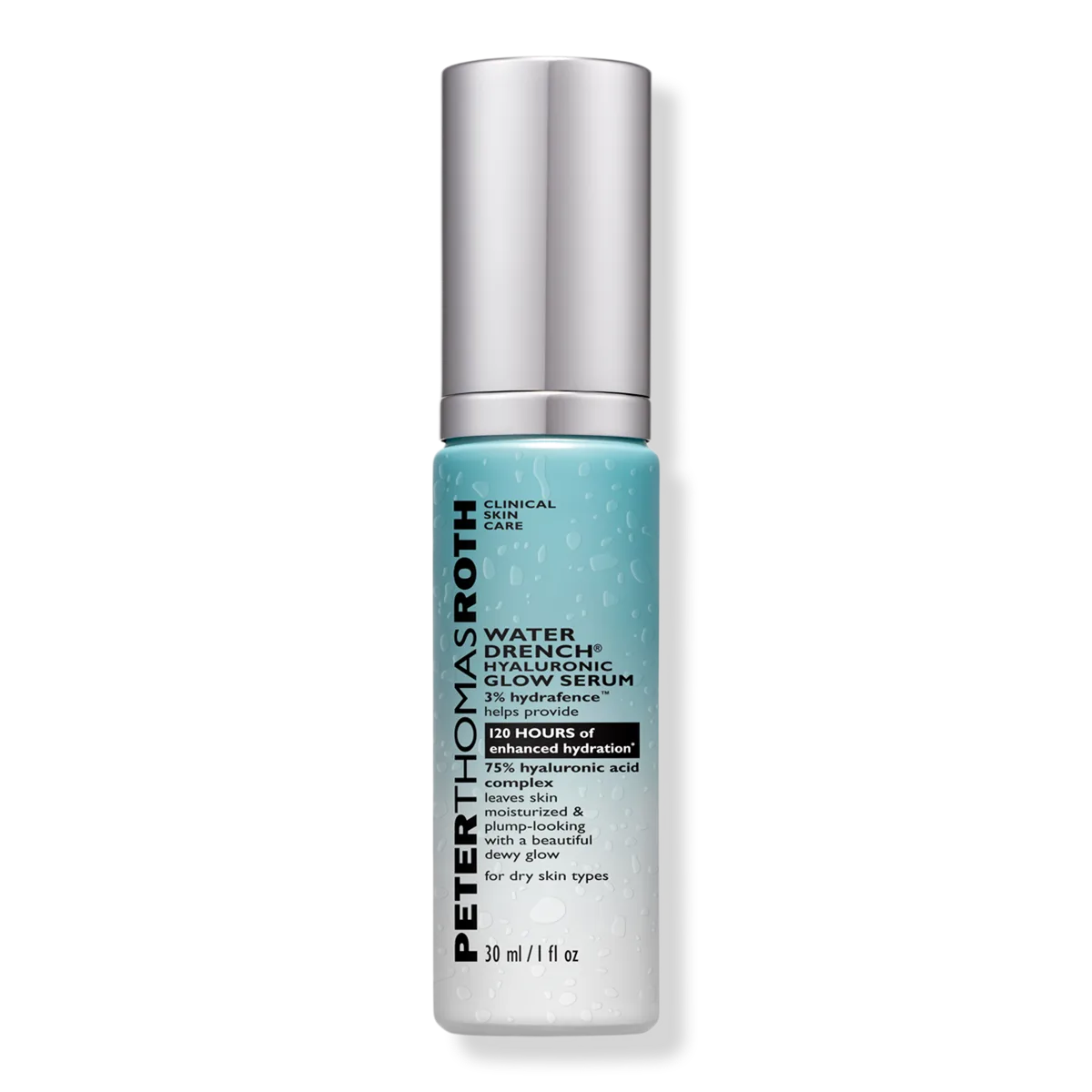
Water Drench Hyaluronic Cloud Serum
Hydration Maximalist
 Verified reviewer
Pros & cons.
- +Three-tiered hydration system with HA, Pentavitin, and Lipidure for layered moisture retention
- +Fragrance-free and silicone-free with a lightweight water-gel texture
- +One pump covers the entire face — concentrated formula stretches the small bottle
- +Absorbs in under 20 seconds with no sticky or filmy residue
- +Pump packaging protects formula integrity and ensures precise dosing
- +Trehalose and urea add cell-protective and NMF-supporting hydration pathways
- +Pairs seamlessly with the Water Drench Cloud Cream for a complete hydration system
- −At $65 for 1 oz, this is significantly more expensive than comparable HA serums
- −Contains methylparaben, propylparaben, and diazolidinyl urea — outdated preservative system
- −The 75% HA complex claim is misleading — actual sodium hyaluronate concentration is much lower
- −Perceived improvement over well-formulated budget HA serums is subtle rather than dramatic
- −No ceramides or barrier-repair lipids — purely a humectant serum that needs a moisturizer on top
The full review.
In 2017, Peter Thomas Roth made a bold play in the hyaluronic acid serum market — a category that was already crowded with options from budget to luxury. The pitch was simple: a 75% hyaluronic acid complex concentration, several times higher than what most competitors were offering. The number grabbed attention. Whether the formula behind it justifies the premium is a more nuanced conversation.
The serum itself is elegant in its simplicity. It is a clear, water-like liquid with the faintest gel quality — not viscous, not sticky, not the slippery slug trail that some HA serums leave behind. One pump genuinely covers the entire face, which is a point in its favor when considering the per-use cost of that one-ounce bottle. It absorbs in about fifteen seconds, leaving skin that feels immediately plumped and smooth with a subtle dewy finish that does not interfere with subsequent product layering.
What distinguishes this serum from cheaper alternatives is the hydration architecture. Most HA serums are essentially sodium hyaluronate dissolved in water with a preservative system. This one layers three distinct moisture-retention mechanisms. Sodium hyaluronate handles the immediate humectant work, pulling water to the skin surface and into the upper epidermis. Saccharide isomerate — Pentavitin — takes over for the medium term, binding covalently to keratin proteins in the stratum corneum and continuing to attract moisture long after the initial HA plumping fades. And Polyquaternium-51, also known as Lipidure, mimics cell membrane phospholipids to create a biomimetic moisture film that retains hydration with an efficiency estimated at roughly twice that of HA by weight.
The supporting cast adds depth. Trehalose is a disaccharide that protects cell structures from dehydration stress — it is the same sugar that allows certain organisms to survive complete desiccation and rehydrate without damage. Urea at low concentrations functions as a natural moisturizing factor component, enhancing the skin’s intrinsic water-holding capacity. Sodium PCA is another NMF constituent that rounds out the humectant base. There are fermented mineral complexes — saccharomyces ferments of zinc, copper, magnesium, iron, and silicon — that provide trace mineral support for skin function. Hydrolyzed silk adds a subtle smoothing and moisture-binding effect.
The formula reads like a carefully considered hydration portfolio. Each ingredient contributes something distinct, and the synergy between immediate humectants, sustained moisture binders, and cell-protective sugars is genuinely more sophisticated than what you find in most drugstore HA serums.
But here is where honesty gets uncomfortable. The preservative system uses methylparaben, propylparaben, and diazolidinyl urea — a formaldehyde-releasing preservative. From a safety standpoint, these are well within regulated limits and have been used in cosmetics for decades. The EU’s Scientific Committee on Consumer Safety has reviewed parabens extensively and considers them safe at standard concentrations. However, the consumer landscape has shifted decisively away from these ingredients. Many of Peter Thomas Roth’s own products — including the Water Drench Cloud Cream — have moved to paraben-free formulations. The serum feels like a holdover from an earlier formulation era that has not been updated, and for a $65 product, that feels like an oversight.
The 75% hyaluronic acid complex claim deserves scrutiny. This does not mean the serum is 75% pure sodium hyaluronate — that would be virtually solid. The percentage refers to a broader hydrating complex that includes the HA along with other water-binding ingredients. The marketing is not technically dishonest, but it leans into a number that sounds more impressive than the underlying reality. This is a common tactic in the HA serum space, and Peter Thomas Roth is far from the only brand doing it, but at this price point, transparency would serve the product better than ambiguity.
In use over several weeks, the serum delivers consistent, reliable hydration. Skin feels and looks more hydrated from the first application, and the sustained moisture effect from the Pentavitin becomes more noticeable after about two weeks — there is a baseline improvement in skin plumpness even before applying the serum each morning, suggesting the barrier is retaining more moisture on its own. Fine dehydration lines soften visibly. The overall complexion looks healthier and less dull.
The honest question is whether these results are meaningfully better than what a well-formulated $15-20 HA serum delivers. The multi-mechanism approach is theoretically superior, and the Pentavitin and Lipidure add genuine value. But the perceived difference in daily use is subtle rather than dramatic. Users with severely dehydrated skin or those living in very dry climates may notice the sustained hydration advantage more clearly. For someone with normally hydrated skin looking for a boost, the gap narrows considerably.
The pump packaging is a welcome departure from Peter Thomas Roth’s jar habit. The serum stays sealed and protected from air and contamination, and the dosing is precise — one pump, every time. The glass bottle is elegant and feels appropriate for the price.
At $65 per ounce, this is one of the more expensive HA serums on the market. Peter Thomas Roth’s clinical heritage and the formula’s genuine multi-mechanism sophistication provide some justification, but the parabens and the inflated complex percentage undermine the premium positioning. It is a good serum. Whether it is a $65 serum depends entirely on how much value you place on the Pentavitin and Lipidure technology over a simpler, cheaper HA formula.
Packaging
The pump packaging is a welcome departure from Peter Thomas Roth’s jar habit. The serum stays sealed and protected from air and contamination, and the dosing is precise — one pump, every time. The glass bottle is elegant and feels appropriate for the price.
Common Praise
In use over several weeks, the serum delivers consistent, reliable hydration. Skin feels and looks more hydrated from the first application, and the sustained moisture effect from the Pentavitin becomes more noticeable after about two weeks — there is a baseline improvement in skin plumpness even before applying the serum each morning, suggesting the barrier is retaining more moisture on its own. Fine dehydration lines soften visibly. The overall complexion looks healthier and less dull.
Common Complaints
But here is where honesty gets uncomfortable. The preservative system uses methylparaben, propylparaben, and diazolidinyl urea — a formaldehyde-releasing preservative. From a safety standpoint, these are well within regulated limits and have been used in cosmetics for decades. The EU’s Scientific Committee on Consumer Safety has reviewed parabens extensively and considers them safe at standard concentrations. However, the consumer landscape has shifted decisively away from these ingredients. Many of Peter Thomas Roth’s own products — including the Water Drench Cloud Cream — have moved to paraben-free formulations. The serum feels like a holdover from an earlier formulation era that has not been updated, and for a $65 product, that feels like an oversight.
The 75% hyaluronic acid complex claim deserves scrutiny. This does not mean the serum is 75% pure sodium hyaluronate — that would be virtually solid. The percentage refers to a broader hydrating complex that includes the HA along with other water-binding ingredients. The marketing is not technically dishonest, but it leans into a number that sounds more impressive than the underlying reality. This is a common tactic in the HA serum space, and Peter Thomas Roth is far from the only brand doing it, but at this price point, transparency would serve the product better than ambiguity.
Best for
Users with severely dehydrated skin or those living in very dry climates may notice the sustained hydration advantage more clearly.
Works for
In use over several weeks, the serum delivers consistent, reliable hydration. Skin feels and looks more hydrated from the first application, and the sustained moisture effect from the Pentavitin becomes more noticeable after about two weeks — there is a baseline improvement in skin plumpness even before applying the serum each morning, suggesting the barrier is retaining more moisture on its own. Fine dehydration lines soften visibly. The overall complexion looks healthier and less dull.
Not ideal for
For someone with normally hydrated skin looking for a boost, the gap narrows considerably.
Ingredient analysis.
Full INCI list
Water/Aqua/Eau, Saccharide Isomerate, Sorbitol, Sodium Hyaluronate, Lactobacillus/Olive Leaf Ferment Extract, Opuntia Tuna Fruit Extract, Honey Extract, Algae Extract, Eriodictyon Crassifolium Leaf Extract, Hydrolyzed Silk, Saccharomyces/Zinc Ferment, Saccharomyces/Copper Ferment, Saccharomyces/Magnesium Ferment, Saccharomyces/Iron Ferment, Saccharomyces/Silicon Ferment, Pentylene Glycol, Butylene Glycol, Glycerin, Urea, Sodium PCA, Trehalose, Polyquaternium-51, Triacetin, Propylene Glycol, Diazolidinyl Urea, Methylparaben, Propylparaben
Skin match.
The science.
The Science
The Water Drench Hyaluronic Cloud Serum's efficacy relies on three complementary hydration mechanisms. Sodium hyaluronate, the salt form of hyaluronic acid, is one of the most well-studied humectants in dermatology. A 2012 review in Dermato-Endocrinology confirmed that topically applied hyaluronic acid improves skin hydration, reduces wrinkle depth, and enhances skin elasticity. The molecule's ability to hold up to 1,000 times its weight in water makes it an exceptionally efficient moisture reservoir.
Saccharide isomerate (Pentavitin) represents a newer approach to sustained moisture delivery. This plant-derived carbohydrate complex binds to lysine residues in keratin through a non-enzymatic glycation reaction, creating a moisture-attracting anchor directly on the skin's surface proteins. Unlike HA, which sits within and upon the skin and gradually dissipates, Pentavitin remains bound to the stratum corneum through multiple wash cycles. Supplier-sponsored testing demonstrated measurable hydration improvements persisting up to 72 hours in vitro, though real-world performance is moderated by environmental variables.
Polyquaternium-51 (Lipidure) is a synthetic phospholipid polymer that structurally resembles the phosphatidylcholine found in cell membranes. Research has demonstrated that this biomimetic polymer has approximately twice the moisture-retention capacity of hyaluronic acid by weight, and its cell-membrane-mimicking structure allows it to integrate into the skin's surface more naturally than conventional humectants. A study in the Journal of Cosmetic Science found that Polyquaternium-51 improved skin hydration and softness when applied topically.
Trehalose, a disaccharide found naturally in organisms that survive extreme desiccation (tardigrades, resurrection plants), protects cellular structures by replacing water molecules around proteins and lipid membranes during dehydration stress. In skincare, this translates to improved cell resilience against low-humidity environments.
References
- Hyaluronic acid: A key molecule in skin aging — Dermato-Endocrinology (2012)
Dermatologist Perspective
Dermatologists recognize hyaluronic acid as a foundational hydrating ingredient, and the multi-mechanism approach in this serum aligns with evidence-based hydration strategies. Board-certified dermatologists note that layering different humectant types — fast-acting HA for immediate plumping, keratin-binding Pentavitin for sustained moisture, and biomimetic Lipidure for moisture-film retention — is a sound formulation strategy that addresses different aspects of transepidermal water loss. The paraben and diazolidinyl urea preservative system, while safe at regulated concentrations, is an outdated choice that dermatologists would generally prefer to see replaced with modern alternatives like phenoxyethanol or ethylhexylglycerin, particularly at this price point.
Where it fits in your routine.
Cleanse your face and leave skin slightly damp; do not towel dry fully. Press one pump from your palm into your face and neck. The serum absorbs in about 15 seconds. Apply a moisturizer immediately to seal in hydration. Use morning and evening. In dry environments, apply a second pump to areas of greatest concern. Layer this under any moisturizer, retinol, or treatment product.
At $65 for 1 fl oz, this serum costs much more than comparable HA products. The Pentavitin and Lipidure technology add formulation sophistication budget serums lack, and one pump per application makes the bottle last 2-3 months. However, the paraben-based preservative system and the 75% complex marketing undermine the premium positioning. The per-use cost is roughly $1 per application — reasonable for a prestige serum, but the improvement over $15-20 alternatives is modest, not transformative. Peter Thomas Roth's legacy credibility and the formula's multi-mechanism architecture justify some of the premium, but not all of it.
This serum works best for chronic dehydration, fine lines from moisture loss, or dull, tired skin needing multi-mechanism hydration. It suits dry and combination skin types seeking a fragrance-free, silicone-free first layer of hydration.
Skip this if your current HA serum works and you won't pay a premium for small improvements. This is also not for consumers who avoid parabens or formaldehyde-releasing preservatives — the Cloud Cream in the same line is paraben-free.
Product details.
Clear, lightweight water-gel texture feels like liquid silk when applied. It is not viscous or sticky and absorbs almost instantly into skin.
Fragrance-free. No detectable scent on application.
Clear glass bottle with a pump dispenser. This pump design is more hygienic than the Cloud Cream's jar packaging because it minimizes air exposure and bacterial contamination.
The serum absorbs fast — skin feels plump and smooth within 15-20 seconds of application with no sticky residue. It causes no tingling, stinging, or adjustment period. Skin looks more hydrated and has a subtle dewy glow immediately.
2-3 months with twice-daily use (1 pump per application)
12 months
All Year
The backstory.
Launched alongside the Water Drench Cloud Cream in 2017, this serum was designed as the first step in a hydration system — a concentrated moisture booster that the cream would then seal in. The 75% HA complex concentration was a marketing differentiator in a market where most serums were vague about their HA percentages.
About Peter Thomas Roth
Legacy Brand (20+ years)Peter Thomas Roth launched in 1993, using a clinical approach inspired by Hungarian spa traditions. In over three decades, the brand grew into one of the largest privately-owned skincare companies in the U.S., selling through Sephora, Ulta, and dermatologist offices worldwide.
Common myths.
A 75% hyaluronic acid complex means the serum is 75% pure hyaluronic acid.
The 75% describes the proprietary hydrating complex containing sodium hyaluronate and other hydrators. Pure 75% HA is a solid gel; the actual HA concentration is lower and diluted in a larger moisture complex.
Parabens in skincare are unsafe and users avoid them.
The EU's Scientific Committee on Consumer Safety reviewed parabens and found methylparaben and propylparaben safe at concentrations up to 0.4% and 0.14% respectively. Consumer preference has shifted away from parabens, so many brands — including other PTR products — use paraben-free formulations.
FAQ.
Is the Peter Thomas Roth Cloud Serum worth the price?
At $65 for 1 oz, this HA serum costs more than most on the market. The multi-mechanism hydration approach — HA plus Pentavitin plus Lipidure — is more sophisticated than budget HA serums. But for users who only need basic hyaluronic acid hydration, cheaper alternatives provide similar immediate plumping for less money.
Can I use the Water Drench Serum and Cloud Cream together?
Yes — they work as a system. Apply the serum to damp skin first, wait 30 seconds for absorption, then apply the Cloud Cream to seal in hydration. The serum delivers concentrated humectants while the Cloud Cream's silicone matrix and ceramides lock them in. Together they provide immediate and sustained hydration.
Does the Peter Thomas Roth Cloud Serum contain parabens?
This serum uses methylparaben and propylparaben as preservatives, plus diazolidinyl urea (a formaldehyde-releasing preservative). These are safe at regulated concentrations, but consumers seeking paraben-free products should note the Cloud Cream in the same line is paraben-free.
Should I apply the Water Drench Serum to wet or dry skin?
Apply to damp skin for best results. Hyaluronic acid is a humectant that draws moisture toward itself. Applying it to damp skin pulls surface water into the epidermis instead of drawing moisture from deeper skin layers. Pat your face lightly after cleansing so it stays slightly wet, then apply one pump.
How does the Water Drench Cloud Serum compare to the Glow Serum?
The Cloud Serum uses a 75% HA complex, Pentavitin, and Lipidure to hydrate. The Glow Serum adds brightening and radiance-boosting ingredients for a luminous finish. Choose the Cloud Serum for dehydration and plumping. Choose the Glow Serum for hydration and glow.
Community
What the community says.
"One pump covers the entire face — very concentrated formula"
"Instant plumping effect visible within minutes"
"Lightweight water-gel texture absorbs without residue"
"Fragrance-free and comfortable on sensitive skin"
"Pairs well with other products in the Water Drench line"
"$65 for 1 oz is very expensive for a hyaluronic acid serum"
"Results are not dramatically different from cheaper HA serums"
"Contains parabens which many consumers prefer to avoid"
"Diazolidinyl urea is a formaldehyde-releasing preservative"
"Hydration does not last the claimed 72 hours in real-world conditions"
Featured in.
People also looked at.