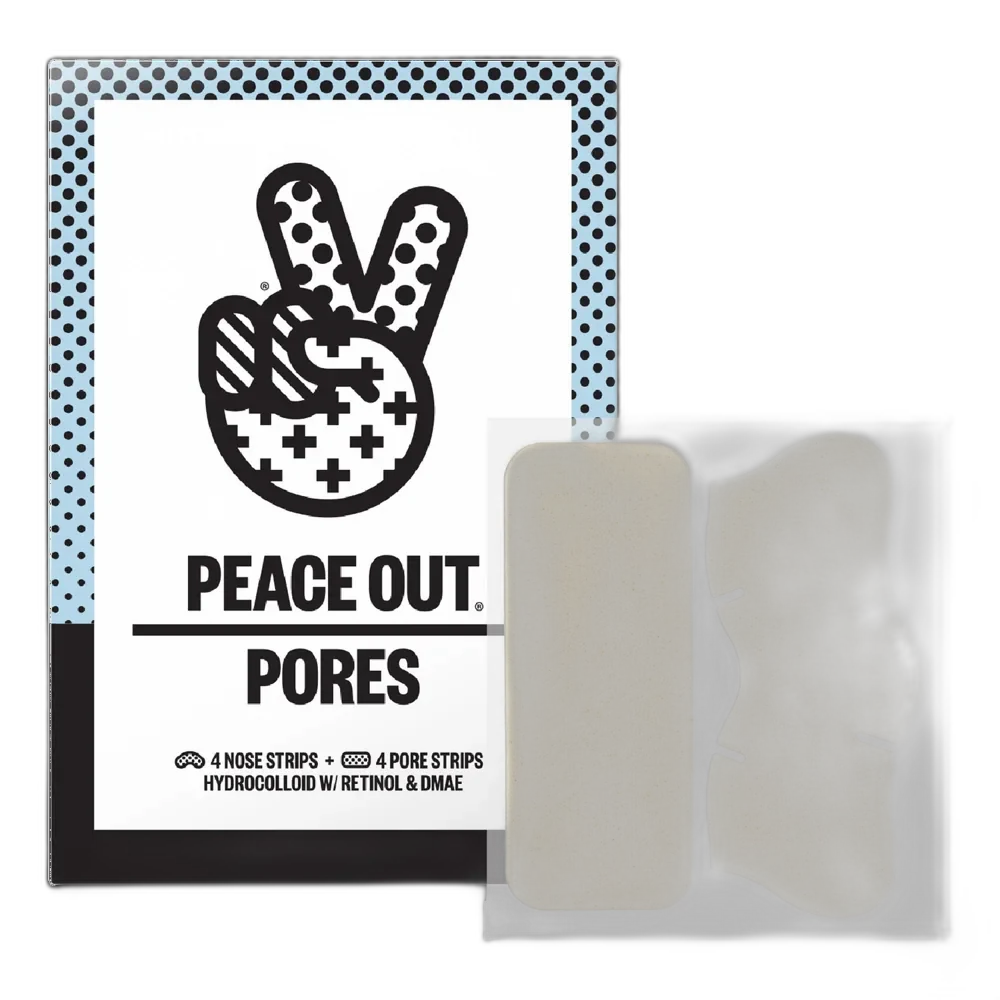
Pores Oil-Free Pore Treatment Strips
Satisfying Pore Clearer
 Verified reviewer
Pros & cons.
- +Hydrocolloid absorption is gentler than traditional adhesive rip-off pore strips
- +Visibly extracts sebum and debris over extended wear with satisfying results
- +Includes retinyl acetate and DMAE for pore refinement beyond basic extraction
- +Two strip shapes accommodate nose and other facial areas like chin and forehead
- +Fragrance-free, cruelty-free, and vegan with a minimal ingredient list
- +Comfortable enough for overnight wear without irritation
- −Results are temporary — pores refill within days without addressing root cause
- −$19 for 8 strips makes regular use expensive over time
- −Contains mineral oil which some users may prefer to avoid
- −DMAE pore-tightening effect is cosmetic and wears off within hours
- −Not effective on deeply embedded blackheads requiring professional extraction
The full review.
Peeling a pore strip off your nose to see extracted gunk provides a primal satisfaction. This process is gross and relatable, keeping pore strips in skincare despite dermatologists noting they do not solve the underlying problem. Peace Out Skincare addresses the tension between extraction satisfaction and temporary results by making the process gentler and more effective, even if the fundamental limitation remains.
Traditional pore strips act like tape. You wet them, press them on, wait ten minutes, and rip. The adhesive grabs surface sebaceous filaments, loose dead skin, and sometimes actual skin cells. It works like a crowbar opening a door. Peace Out substitutes hydrocolloid polymer technology for brute adhesive force. The strips use glyceryl hydrogenated rosinate-based hydrocolloid material to draw out impurities through osmotic absorption over four to six hours of wear instead of a single violent pull.
The experience differs immediately. Apply the strip to clean, dry skin and forget it. There is no countdown timer or anxiety about the strip bonding permanently to your face. You sleep, wake up, and peel it off gently. You see the same satisfying visual evidence of extraction without the redness, irritation, or micro-tears traditional strips cause. The hydrocolloid draws out sebum, dead cells, and surface debris gradually; the strip shows this via yellowish or grayish dots marking each extracted pore.
Peace Out adds two active ingredients missing from traditional strips. Retinyl acetate—a gentle vitamin A ester—works during the extended wear time to promote mild cell turnover around pore openings, which helps refine their appearance over time with regular use. DMAE bitartrate provides a temporary tightening and firming effect on the skin surrounding pores, creating a visible pore-minimizing result for several hours after removal. This is a cosmetic effect, not a structural change, but it makes skin look smoother immediately after use.
The pack includes two strip shapes—nose-contoured and rectangular for chin, forehead, or cheek application—a practical design choice traditional nose-only strips lack. Four of each shape provides eight total strips. At $19, the cost is $2.38 per strip. This is reasonable for a specialty treatment, but a twice-weekly maintenance habit costs around $250 annually. That is a meaningful investment for temporary results.
“Temporary” is the honest word. Pores refill. Sebaceous glands continue producing sebum. No topical strip—hydrocolloid or adhesive—changes the fundamental structure or production rate of pores. These strips maintain clarity and reduce visible congestion between deeper treatments. They work best within a broader pore management routine including BHA exfoliation, niacinamide, and consistent cleansing.
The ingredient list has only seven ingredients. The formula is fragrance-free, cruelty-free, and vegan, with no silicones or parabens. The inclusion of paraffinum liquidum (mineral oil) may concern users who avoid petroleum-derived ingredients, but mineral oil is comedogenically neutral in most studies and acts as the occlusive vehicle for the hydrocolloid polymer. Retinyl acetate is the mildest commonly used retinoid and is unlikely to cause irritation in this leave-on format, though users of strong retinoids should avoid doubling up on the same area the same night.
Peace Out found a niche with these strips. They are gentler than traditional pore strips, include active ingredients traditional strips lack, and the extended wear time extracts more thoroughly than the quick-rip approach. For oily and combination skin types who enjoy the ritual of visible extraction and want a kinder tool, this is a top option. Understand what you are buying: maintenance, not a fix. Pores refill. The DMAE tightening fades. You will reach for another strip. That is the business model, and Peace Out has built a popular one.
Ingredient analysis.
Full INCI list
Glyceryl Hydrogenated Rosinate, Paraffinum Liquidum, Cellulose Gum, Pentaerythrityl Tetra-Di-T-Butyl Hydroxyhydrocinnamate, Styrene/Isoprene Copolymer, DMAE Bitartrate, Retinyl Acetate
Skin match.
The science.
The Science
Hydrocolloid technology works in wound care by creating a moist healing environment that absorbs exudate via osmotic action. In skincare, this same mechanism pulls sebum and debris from pores during extended contact. The hydrocolloid polymer (glyceryl hydrogenated rosinate) forms a gel matrix that absorbs lipophilic material from the pore canal, extracting more thoroughly than the brief adhesive contact of traditional strips.
Studies show DMAE (dimethylaminoethanol) bitartrate firms the skin. A 2005 study by Grossman et al. in the American Journal of Clinical Dermatology found that topical DMAE produces a temporary firming and tightening effect through membrane stabilization and cell vacuolization. The pore-minimizing appearance after strip removal likely comes from this transient tightening of perifolicular skin.
Retinyl acetate, a retinoid ester, must convert to retinol and then to retinoic acid to affect cell turnover. This makes it gentler than direct retinol or tretinoin, but the pore-refining benefits are subtle and require weeks of consistent use. Because the strip contacts skin for only 4-6 hours at a time, its cumulative retinoid activity is lower than a daily leave-on retinol product.
Dermatologist Perspective
Dermatologists view pore strips as a harmless, temporary cosmetic treatment. Board-certified dermatologists note the hydrocolloid approach in these strips is gentler than traditional adhesive strips, which cause micro-tears and irritation with frequent use. However, dermatologists emphasize that no topical strip changes pore size — genetics, hormones, and collagen integrity determine that. For patients seeking long-term pore refinement, dermatologists typically recommend BHA (salicylic acid) exfoliants for daily pore clearing, niacinamide for pore appearance reduction, and in-office treatments like laser or microneedling for structural changes. These strips work as a satisfying maintenance tool that complements, but does not replace, a comprehensive pore care routine.
Where it fits in your routine.
Cleanse your face and pat it dry. The strips work best on clean, dry skin. Peel a strip from its backing and press it firmly onto the nose or desired facial area. Leave it on for 4-6 hours or overnight. Peel the strip off gently; it should come away without tugging. Check the strip for visible extraction residue. Follow with your regular skincare routine. Use 1-2 times per week.
At $19 for 8 strips ($2.38 per treatment), this premium product costs more than traditional adhesive strips. However, traditional adhesive strips lack hydrocolloid technology, retinyl acetate, and DMAE. Value depends on how much you want the gentler extraction method and temporary pore-tightening benefits. The price works for an occasional pore-clearing ritual. For frequent users applying 2-3 strips per week, costs add up fast. A daily BHA exfoliant provides more consistent results for less money long-term.
Oily and combination skin types who want visible pore extraction without the irritation of traditional rip-off strips. This works for anyone who likes seeing pore clearing and needs a low-irritation tool for nose and T-zone congestion.
People with dry or sensitive skin and no significant pore congestion use this. No strip delivers permanent pore size reduction. For those on a budget, a daily BHA exfoliant provides more consistent pore clarity at a lower annual cost.
Product details.
Flexible, slightly tacky hydrocolloid strips conform to facial contours. They stay comfortable during extended overnight wear.
Unscented.
Individual strips sit on backing sheets in a compact box. The box includes nose-shaped and rectangular face-shaped strips.
Apply to clean skin for a comfortable fit. The strip causes no stinging or irritation. After 4-6 hours, the strip shows yellowish or grayish spots from absorbed sebum and debris — the "gross satisfaction" factor users frequently describe. Removal is gentle and lacks the painful ripping of traditional pore strips.
2-4 weeks using 1-2 strips per session, 1-2 times per week
24 months
spring summer
The backstory.
Peace Out expanded from its original acne dot success into pore treatment, applying the same hydrocolloid technology principle to a larger strip format. The insight was that hydrocolloid absorption over hours extracts more debris than the 10-minute rip-and-go approach of traditional pore strips, while being significantly gentler on skin.
About Peace Out Skincare
Emerging Brand (2–5 years)Peace Out Skincare launched in 2017 and grew fast through Sephora using hydrocolloid patch technology. The brand now offers pore treatment and microneedling formats with $20 million in growth investment, but has less clinical validation than legacy skincare brands.
Common myths.
Pore strips permanently shrink your pores.
No topical treatment permanently changes pore size; genetics and collagen structure determine it. These strips clear debris that makes pores look larger, and the DMAE provides temporary tightening, but pores refill and return to their natural size without continued use.
Traditional pore strips work as well as hydrocolloid strips.
Traditional strips use adhesive force to pull surface plugs in minutes. This damages skin and only removes the top of the blackhead. Hydrocolloid strips use osmotic action to absorb impurities over hours. This extracts more debris more gently, though neither approach addresses the root cause of clogged pores.
FAQ.
How long should I leave Peace Out Pore Strips on?
Wear the strips for 4-6 hours or overnight for best results. The hydrocolloid technology uses osmotic absorption to draw out sebum and debris, which differs from traditional 10-minute pore strips that rely on adhesive force.
Do Peace Out Pore Strips actually remove blackheads?
The hydrocolloid material absorbs surface debris and excess sebum from pores. This helps clear shallow blackheads and sebaceous filaments. Deeply embedded comedones may need professional extraction. The residue on the strip after removal shows extraction is occurring.
How often should I use Peace Out Pore Strips?
Use 1-2 times per week for maintenance. Do not overuse, as even gentle extraction stresses the skin over time. Pair with a regular BHA or niacinamide routine to keep pores clear between treatments.
Are Peace Out Pore Strips better than regular Biore strips?
They work differently. Traditional adhesive strips rip out surface plugs fast but irritate skin. Peace Out's hydrocolloid strips absorb impurities gently over hours and use retinyl acetate and DMAE for pore refinement. This gentle approach is kinder to skin, though both types provide temporary results.
Can I use Peace Out Pore Strips with retinol?
Do not use strong retinol or retinoid products on the same area the same night you apply the strips. The strips already contain retinyl acetate. Alternate nights—retinol one night, pore strips another—to prevent skin over-sensitization.
Community
What the community says.
"Satisfyingly visible extraction of sebum and gunk"
"Gentle removal without skin tearing"
"Can be worn for extended periods comfortably"
"Two strip shapes cover nose and other facial areas"
"Better than traditional rip-off pore strips"
"Results are temporary — pores refill within days"
"Expensive for 8 single-use strips"
"May not work well on deeply embedded blackheads"
"Contains mineral oil which some users avoid"
"DMAE pore-tightening effect wears off quickly"
People also looked at.