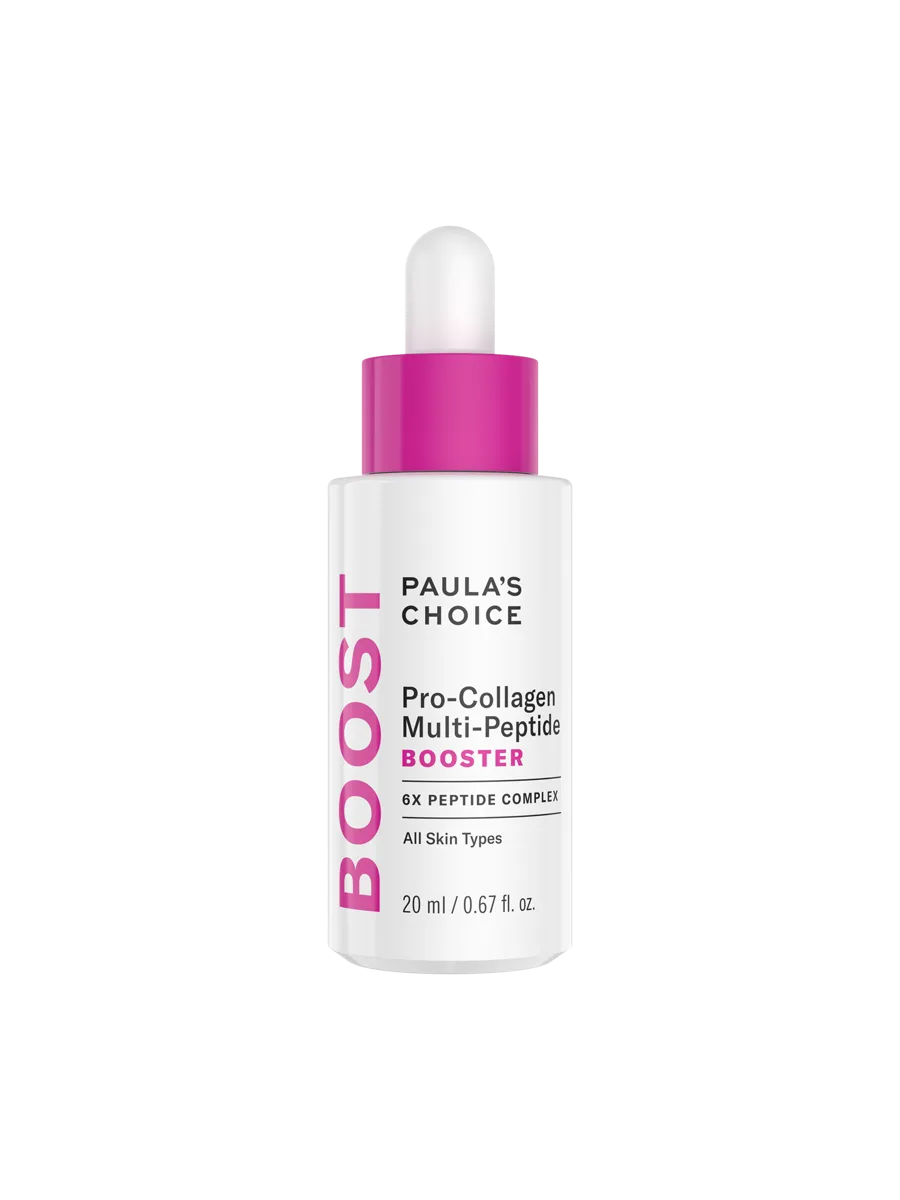
Pro-Collagen Multi-Peptide Booster
Next-Gen Collagen Booster
 Verified reviewer
Pros & cons.
- +Six next-generation collagen-specific peptides not commonly found in competing products
- +Clinical testing supports visible line reduction in 15 minutes and firming at 4 weeks
- +Refined silky texture absorbs instantly and layers beautifully under other products
- +More focused and modern formulation than the original Peptide Booster it succeeds
- +Lower price point than the original despite arguably more advanced peptide technology
- +Fragrance-free and gentle enough for sensitive skin types
- +Complementary to retinol routines through a completely different anti-aging mechanism
- −Still expensive at $47 for 0.67 oz with 6-8 week lifespan at recommended usage
- −Peptide concentrations remain undisclosed making independent efficacy assessment difficult
- −Loses the amino acid complex and ectoin that made the original formula unique
- −Contains dimethicone which some ingredient-conscious users prefer to avoid
- −Relatively short market history means long-term real-world data is still accumulating
The full review.
When a brand replaces its own bestseller with something entirely different rather than simply tweaking the formula, it is either an act of supreme confidence or a tacit admission that the original approach had limits. With the Pro-Collagen Multi-Peptide Booster, Paula’s Choice manages to make it look like both — and somehow that works in its favor.
The original Peptide Booster was an ambitious formula built on eight peptides targeting multiple aging pathways, supplemented by a comprehensive amino acid complex and supporting ingredients like ectoin and licorice root. It was the scatter-gun approach to peptide skincare: cover every target and hope you hit the most important ones. The Pro-Collagen version takes the opposite strategy. Six peptides, every single one chosen for its specific role in collagen biology. It is a sniper rifle where the original was a shotgun.
The peptide lineup reflects advances in peptide technology since the original launched. Palmitoyl tetrapeptide-72 amide and SH-polypeptide-121 represent newer-generation compounds that are not commonly found in competing products. Palmitoyl tripeptide-5 mimics the body’s own thrombospondin-1 signaling to stimulate type I collagen synthesis. Palmitoyl dipeptide-5 diaminobutyroyl hydroxythreonine targets the skin’s mechanical tension pathways. Tridecapeptide-1 supports growth factor activity. And tetradecyl aminobutyroylvalylaminobutyric urea trifluoroacetate — try saying that three times fast — addresses collagen through yet another signaling mechanism. Each peptide enters through a different door to reach the same room.
Beyond the peptides, the supporting formula has been rethought from the ground up. The amino acid complex is gone, replaced by hydrolyzed yeast extract that delivers similar cellular support through a different pathway. Apple fruit extract provides antioxidant protection for newly synthesized collagen. Polyglucuronic acid adds a polysaccharide-based moisture retention system that works alongside sodium hyaluronate. Bacillus ferment contributes skin-conditioning properties. It is a cleaner, more focused ingredient list than the original — thirty-four ingredients versus the original’s fifty-six — which suggests the formulators identified what was essential and cut what was decorative.
Paula’s Choice has attached clinical claims to this product: visible line reduction within fifteen minutes and visible firming within four weeks. The fifteen-minute claim almost certainly comes from the immediate plumping effect of hyaluronic acid and the film-forming properties of polyglucuronic acid and dimethicone — these create a smoothing effect that is real but cosmetic rather than structural. The four-week firming claim is more interesting, as it aligns with the expected timeline for peptide-signaled collagen production to become visible. Without access to the full study data, it is impossible to evaluate the rigor of these claims, but Paula’s Choice does not have a history of making claims they cannot support.
The texture is a step up from the original. Where the first Peptide Booster had a pleasant but unremarkable serum feel, the Pro-Collagen version has a refined, silky quality that makes the application feel slightly luxurious. It absorbs quickly, leaves no tackiness, and creates a subtle smoothing effect on the skin’s surface that persists under moisturizer and sunscreen. It is the kind of texture that makes you think the product is doing something even before the actives have had time to work.
At forty-seven dollars for 0.67 ounces, this is less expensive than the original Peptide Booster’s fifty-five dollar price point but still a significant investment for a product that runs out in six to eight weeks. The lower price with arguably more advanced ingredients is a welcome change, though the annual cost at twice-daily use still approaches three hundred fifty dollars for this single step. Whether that is justified depends on how seriously you take the collagen angle and whether you trust peptide science enough to invest in its promises.
The honest assessment of peptide efficacy in general applies here too. The science is promising but not at the evidence level of retinoids. Clinical studies on individual peptides show encouraging results, but translating those findings to a consumer product with undisclosed concentrations requires a leap of faith. What distinguishes the Pro-Collagen version from the original is that the leap feels smaller — the peptide selection is more modern, the formulation is more focused, and the clinical claims suggest Paula’s Choice has actually tested this specific formula rather than relying solely on published research about individual ingredients.
For existing retinol users, this makes an excellent additive treatment. Retinol and peptides work through completely unrelated mechanisms, so combining them provides genuinely complementary anti-aging action. The Pro-Collagen Booster’s gentle formula adds zero irritation risk, and its peptides continue signaling during the nights when retinol is off rotation. For those who cannot tolerate retinol at all, this offers a gentler alternative — less potent, yes, but not nothing.
The transition from the original Peptide Booster to this newer version reflects a broader shift in the peptide skincare category toward specificity over breadth. Rather than throwing every available peptide into a formula and hoping they all work, the trend is toward targeted formulas with peptides selected for a specific biological outcome. Whether that strategy ultimately delivers better real-world results is still an open question, but the scientific logic is sound, and Paula’s Choice has executed it with their characteristic thoroughness.
Ingredient analysis.
Full INCI list
Water, Glycerin, Pentylene Glycol, Hydrolyzed Yeast Extract, Pyrus Malus (Apple) Fruit Extract, Dimethicone, Propanediol, 1,2-Hexanediol, Glyceryl Glucoside, Palmitoyl Tetrapeptide-72 Amide, SH-Polypeptide-121, Glycerin, Aqua, Tetradecyl Aminobutyroylvalylaminobutyric Urea Trifluoroacetate, Palmitoyl Tripeptide-5, Palmitoyl Dipeptide-5 Diaminobutyroyl Hydroxythreonine, Tridecapeptide-1, Polyglucuronic Acid, Sodium Hyaluronate, C9-12 Alkane, Ammonium Polyacryloyldimethyl Taurate, Polygonum Bistorta Root Extract, Bacillus Ferment, Lecithin, Sodium Phytate, Coco-Caprylate/Caprate, Hexylene Glycol, Cetyl Hydroxyethylcellulose, Xanthan Gum, Ethylhexylglycerin, Caprylyl Glycol, Magnesium Chloride, Potassium Sorbate, Sodium Benzoate
Skin match.
The science.
The Science
The Pro-Collagen Multi-Peptide Booster uses newer-generation peptide technology in the Paula's Choice lineup. Six peptides in the formula each target different aspects of collagen biology.
Palmitoyl tripeptide-5 is one of the most well-studied peptides here and works as a thrombospondin-1 mimetic. Research in the International Journal of Cosmetic Science (2013) shows this peptide activates TGF-beta signaling, which stimulates type I collagen synthesis in dermal fibroblasts. The study shows dose-dependent collagen production increases in cell culture models.
Palmitoyl tetrapeptide-72 amide and SH-polypeptide-121 are newer peptide compounds with emerging but limited published research. These compounds target collagen maintenance and protection that earlier-generation peptides did not specifically address.
The hydrolyzed yeast extract replaces the original formula's amino acid complex. It provides beta-glucans, amino acids, and vitamins that support cellular metabolism and skin repair. Research in the Journal of Cosmetic Dermatology shows yeast-derived extracts improve skin barrier function and reduce the appearance of wrinkles via immunomodulatory and antioxidant properties.
Polyglucuronic acid is a biosynthesized polysaccharide that retains moisture through a mechanism distinct from hyaluronic acid. Its film-forming properties smooth the skin immediately and provide sustained hydration. Research suggests it holds water at the skin's surface more efficiently than some traditional humectants.
The formula combines multiple collagen-targeting peptides. This reflects current peptide research suggesting that stimulating collagen through several signaling pathways simultaneously may produce additive or synergistic effects compared to using a single peptide at higher concentration.
Dermatologist Perspective
Board-certified dermatologists see the Pro-Collagen Multi-Peptide Booster as the evolution of peptide skincare toward greater specificity and newer-generation compounds. Dermatologists note that topical peptides cannot match the collagen-stimulating effects of in-office procedures like microneedling or fractional lasers, but they work for daily maintenance between professional treatments. The six-peptide approach targeting collagen through multiple signaling pathways is scientifically sound, even if clinical evidence for some individual peptides is still developing. Dermatologists commonly recommend peptide products as part of a comprehensive anti-aging regimen that also includes retinoids and sunscreen, using them to complement rather than replace proven actives.
Where it fits in your routine.
Apply 2-3 drops to clean skin every morning and evening. Press it into the face and neck using your fingertips. Use serums, moisturizer, and sunscreen (AM) after. Mix it with other Paula's Choice boosters or apply it under moisturizer to simplify your routine. For targeted treatment, focus on fine lines around the eyes, forehead, and smile lines.
At $47 for 0.67 ounces, the Pro-Collagen Booster costs less than its predecessor despite using more advanced peptide technology. Using it twice daily costs about $350 per year—high, but similar to or lower than many peptide serums with fewer active peptides. Paula's Choice uses clinical claims for this formula, showing more testing investment than most brands in this category. For anti-aging routines, the focused collagen approach and clinical backing offer better value than the original Peptide Booster, though retinol may deliver more visible results per dollar for budget-conscious buyers.
People targeting collagen loss and skin firmness as their main aging concern. Retinol users seeking a complementary peptide product with different mechanisms. Anyone upgrading from the original Peptide Booster for more focused, modern peptide technology. Sensitive skin types needing an effective anti-aging serum without irritation.
This is a specialist product, not a broad-spectrum anti-aging solution. Budget-conscious buyers get more visible anti-aging results by investing in a quality retinol product. Users who valued the original Peptide Booster's amino acid complex and ectoin will find those ingredients absent here. This does not suit skeptics of peptide skincare who want ingredients with decades of evidence.
Product details.
The dimethicone base makes this lightweight, slightly silky serum smooth. It absorbs fast without tackiness or residue. The texture is more refined than the original Peptide Booster.
Unscented — no added fragrance of any kind.
Glass dropper bottle uses a pipette dispenser. The compact, travel-friendly design matches the Paula's Choice Boost line.
Hyaluronic acid and polyglucuronic acid make skin feel smoother and slightly plumped immediately. Dimethicone provides a subtle blurring effect on fine lines. There is no adjustment period, tingling, or irritation. Film-forming hydrators, not the peptides, cause the clinical claim of visible line reduction within 15 minutes.
6-8 weeks with twice-daily use of 2-3 drops
12 months
All Year
The backstory.
Launched around 2023 as an evolution of the original Peptide Booster that had been in the Paula's Choice lineup since 2018, the Pro-Collagen Multi-Peptide Booster represents the brand's response to advances in peptide research. Rather than updating the original formula, Paula's Choice chose to create an entirely new product with a sharper focus on collagen-specific peptide technology, positioning it as a clinical-grade treatment rather than a general anti-aging booster.
About Paula's Choice
Established Brand (5–20 years)Beauty journalist Paula Begoun founded Paula's Choice in 1995. The brand builds its reputation on ingredient transparency and evidence-based formulations. Skincare communities cite Paula's Choice for its research-driven approach, and the brand publishes detailed ingredient explanations for every product.
Common myths.
Topical peptides can rebuild collagen as effectively as professional treatments like microneedling or lasers.
Topical peptides signal skin to increase collagen production, but the signal is weaker than professional treatments. This booster works as daily maintenance to support collagen production between professional interventions—not as a replacement for them.
The newer Pro-Collagen version reformulates the original Peptide Booster.
These products differ fundamentally. The original uses eight peptides to target multiple aging signs. The Pro-Collagen version uses six different, newer-generation peptides that focus on collagen support. The ingredient bases also differ; the new version adds apple fruit extract, polyglucuronic acid, and bacillus ferment.
FAQ.
What is the difference between the Pro-Collagen Multi-Peptide Booster and the original Peptide Booster?
The Pro-Collagen version is a complete reformulation, not an update. It uses six newer-generation collagen-specific peptides (including palmitoyl tetrapeptide-72 amide and SH-polypeptide-121) to target collagen architecture. The original used eight broader-targeting peptides and an amino acid complex. The Pro-Collagen version also adds apple fruit extract, polyglucuronic acid, and a different supporting ingredient base. Use the Pro-Collagen for targeted collagen support and the original for broader anti-aging coverage.
How quickly will I see results from this peptide booster?
Paula's Choice clinical testing shows visible line reduction within 15 minutes via hydrating and film-forming ingredients and visible firming at 4 weeks. The peptides' deeper collagen-stimulating effects are cumulative and reach full potential after 8-12 weeks of consistent twice-daily use. Immediate plumping and long-term structural benefits work on different timelines.
Can I use this with vitamin C and retinol?
Yes to both. This peptide booster complements other active ingredients. In the AM, layer it under vitamin C serum and sunscreen. In the PM, apply it before retinol — the peptides support collagen through a different pathway than retinol, adding anti-aging benefits. The gentle, fragrance-free formula does not increase irritation from other actives.
Is this worth the upgrade from the original Peptide Booster?
If you want to target collagen loss, firmness, and fine lines, the Pro-Collagen version uses newer-generation peptides for more targeted results. If you prefer the original's broader anti-aging benefits (including the amino acid complex and ingredients like ectoin for environmental protection), keep the original or use both. The Pro-Collagen is not better; it is more specialized.
Is this serum safe for sensitive skin?
Yes — the formula is fragrance-free, lacks known sensitizing ingredients, and uses a gentle preservative system. The dimethicone base creates a protective layer that buffers sensitive skin from environmental irritants. Users with sensitive skin report no irritation or adverse reactions.
Community
What the community says.
"Visible firming and plumping within weeks of use"
"Lightweight texture absorbs quickly and layers perfectly"
"Skin looks noticeably smoother and more radiant"
"No irritation even on sensitive skin"
"Clinical claims feel substantiated by real-world results"
"Expensive for the small bottle size"
"Results are gradual and require patience"
"Contains dimethicone which some users prefer to avoid"
"Difficult to tell which improvements come from this vs other products in routine"
People also looked at.