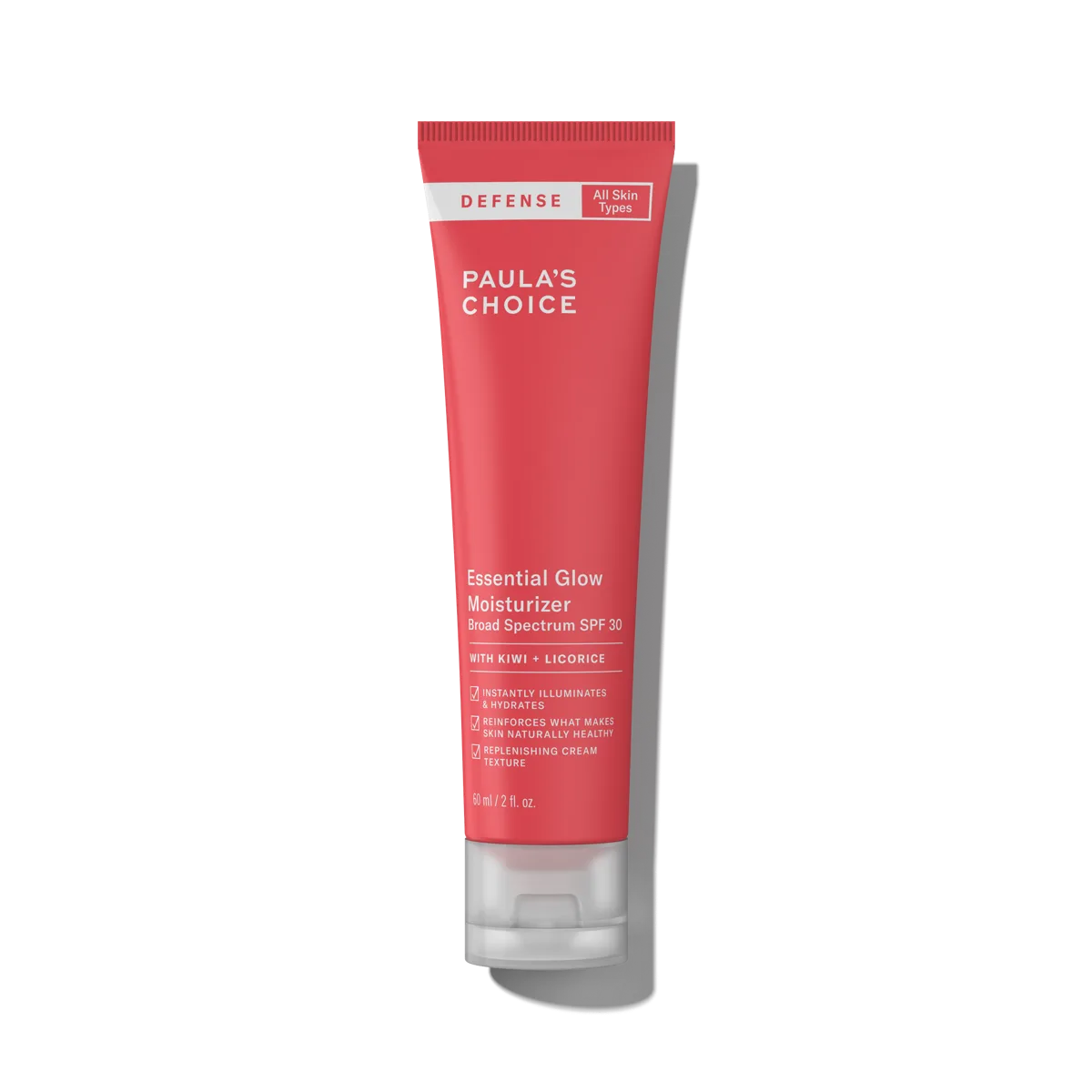
Defense Essential Glow Moisturizer SPF 30
Antioxidant-Loaded Mineral Shield
 Verified reviewer
Pros & cons.
- +Eight antioxidants layered over mineral SPF create comprehensive environmental defense beyond UV
- +Tetrapeptide-30 provides targeted anti-pigmentation action that most sunscreens lack
- +Mineral-only filters are gentle, pregnancy-safe, and don't irritate sensitive skin
- +Beautiful dewy finish eliminates the chalky look typical of mineral sunscreens
- +Fragrance-free with no common irritants or sensitizers
- +Competitive $29 price for a mineral SPF with this level of antioxidant formulation
- +Functions as both moisturizer and sunscreen — simplifies the morning routine
- −Dewy finish is too shiny for oily skin types without setting powder
- −May leave a slight cast on deeper skin tones despite the masking tint
- −SPF 30 may feel insufficient for prolonged outdoor sun exposure
- −Requires generous application (1/3 teaspoon for face and neck) to achieve rated protection
- −Contains argan oil and dimethicone — not suitable for those avoiding oils or silicones
The full review.
We used to think sunscreen was simple: block the UV, prevent the burn, reduce skin cancer risk. That was the whole story for decades. Then research caught up with reality, and we learned that air pollution, blue light from screens, and infrared radiation generate their own cascade of free radicals that damage collagen, trigger hyperpigmentation, and accelerate the aging process independently of UV. Paula’s Choice built the Defense Essential Glow Moisturizer around that expanded understanding of environmental skin damage, and the result is a daily SPF that does considerably more than protect you from sunburn.
The mineral filter system uses zinc oxide at 6.12% and titanium dioxide at 5.25% — a combination that provides broad-spectrum UVA and UVB protection without the irritation potential of chemical sunscreen agents. For sensitive skin, rosacea-prone skin, and anyone who prefers to keep synthetic UV filters off their face, this is a genuine advantage. Mineral filters sit on the skin’s surface rather than being absorbed, which also makes them the dermatologist-recommended option during pregnancy.
But the filter system is just the foundation. What makes this product genuinely interesting is the antioxidant arsenal layered beneath it. Resveratrol — the polyphenol famous for its role in red wine’s supposed health benefits — provides potent free radical scavenging. Two forms of vitamin C (ascorbyl glucoside and magnesium ascorbyl phosphate) offer brightening and collagen-protecting activity in stable, non-irritating forms. Niacinamide strengthens the barrier and helps prevent UV-triggered hyperpigmentation. Vitamin E recycles vitamin C and provides its own antioxidant protection. Licorice root extract adds glabridin for additional brightening. Kiwi fruit extract contributes its own polyphenol antioxidants. And bisabolol, the chamomile-derived anti-inflammatory, keeps everything calm.
The tetrapeptide-30 deserves special mention because it’s the ingredient that most sunscreens don’t include. This peptide specifically targets the melanin production pathway triggered by UV exposure, providing an internal anti-pigmentation mechanism alongside the external UV blocking. For anyone prone to sun-induced dark spots, melasma, or post-inflammatory hyperpigmentation that worsens with sun exposure, this dual approach — blocking UV externally while suppressing melanin production internally — is genuinely valuable.
The texture manages the difficult trick of being a mineral sunscreen that doesn’t feel like one. It applies like a rich moisturizer with a slight luminous quality, blends without the chalky drag that plagues many zinc oxide products, and settles into a dewy, lit-from-within finish. On fair to medium skin tones, the white cast is minimal to nonexistent — a meaningful achievement for a formula with over 11% combined mineral filters. On deeper skin tones, some cast may be noticeable, though the dewy finish helps it blend better than matte mineral alternatives.
The ‘glow’ is the most polarizing aspect of this product. On normal to dry skin, it looks like healthy, hydrated skin with a natural luminosity — the kind of finish that makes people ask what you’re using. On oily skin, that same glow can tip into ‘I’ve been sitting in a sauna’ territory by midday. If you run oily, a setting powder is not optional — it’s essential. Paula’s Choice makes other SPF products with matte finishes for this skin type; this particular formula is unabashedly designed for people who want their sunscreen to make them look radiant.
At $29 for 2 ounces, the value is strong considering what’s inside. A comparable antioxidant serum would cost $30-50 on its own, so getting the antioxidant complex bundled with mineral SPF at this price point represents genuine ingredient value. The tube lasts two to three months with daily use at the recommended application amount — which, it must be said, needs to be generous. One-third of a teaspoon for face and neck is the minimum to achieve rated SPF 30 protection. Under-applying mineral sunscreen is the most common user error and the fastest way to undermine the product’s performance.
The fragrance-free formulation and mineral-only filter system make this one of the more universally tolerable SPF options on the market. It’s pregnancy-safe, sensitive-skin-appropriate, and free of the common irritants that make many sunscreens problematic for reactive skin. The ingredient list, despite its length, is free of fragrance, alcohol, and known sensitizers.
If there’s a criticism beyond the oily-skin glow issue, it’s that SPF 30 — while perfectly adequate for daily urban use — may feel insufficient for beach days or prolonged outdoor exposure. For those situations, a dedicated SPF 50+ water-resistant sunscreen is the better choice. This product excels as your daily environmental shield, not as your all-day-at-the-pool protection.
Paula’s Choice positioned this as a ‘defense’ product rather than just a sunscreen, and that framing is accurate. It defends against UV, against pollution, against blue light, against the free radical cascade that ages skin from multiple directions simultaneously. In a world where our skin faces more environmental stressors than ever, a sunscreen that only blocks UV is solving yesterday’s problem. This one addresses today’s.
Formula
Texture
The texture manages the difficult trick of being a mineral sunscreen that doesn’t feel like one. It applies like a rich moisturizer with a slight luminous quality, blends without the chalky drag that plagues many zinc oxide products, and settles into a dewy, lit-from-within finish. On fair to medium skin tones, the white cast is minimal to nonexistent — a meaningful achievement for a formula with over 11% combined mineral filters. On deeper skin tones, some cast may be noticeable, though the dewy finish helps it blend better than matte mineral alternatives.
Scent
The fragrance-free formulation and mineral-only filter system make this one of the more universally tolerable SPF options on the market. It’s pregnancy-safe, sensitive-skin-appropriate, and free of the common irritants that make many sunscreens problematic for reactive skin. The ingredient list, despite its length, is free of fragrance, alcohol, and known sensitizers.
Best for
Paula’s Choice positioned this as a ‘defense’ product rather than just a sunscreen, and that framing is accurate. It defends against UV, against pollution, against blue light, against the free radical cascade that ages skin from multiple directions simultaneously. In a world where our skin faces more environmental stressors than ever, a sunscreen that only blocks UV is solving yesterday’s problem. This one addresses today’s.
Works for
The mineral filter system uses zinc oxide at 6.12% and titanium dioxide at 5.25% — a combination that provides broad-spectrum UVA and UVB protection without the irritation potential of chemical sunscreen agents. For sensitive skin, rosacea-prone skin, and anyone who prefers to keep synthetic UV filters off their face, this is a genuine advantage. Mineral filters sit on the skin’s surface rather than being absorbed, which also makes them the dermatologist-recommended option during pregnancy.
Not ideal for
If there’s a criticism beyond the oily-skin glow issue, it’s that SPF 30 — while perfectly adequate for daily urban use — may feel insufficient for beach days or prolonged outdoor exposure. For those situations, a dedicated SPF 50+ water-resistant sunscreen is the better choice. This product excels as your daily environmental shield, not as your all-day-at-the-pool protection.
AM routine
The ‘glow’ is the most polarizing aspect of this product. On normal to dry skin, it looks like healthy, hydrated skin with a natural luminosity — the kind of finish that makes people ask what you’re using. On oily skin, that same glow can tip into ‘I’ve been sitting in a sauna’ territory by midday. If you run oily, a setting powder is not optional — it’s essential. Paula’s Choice makes other SPF products with matte finishes for this skin type; this particular formula is unabashedly designed for people who want their sunscreen to make them look radiant.
Common Praise
The tetrapeptide-30 deserves special mention because it’s the ingredient that most sunscreens don’t include. This peptide specifically targets the melanin production pathway triggered by UV exposure, providing an internal anti-pigmentation mechanism alongside the external UV blocking. For anyone prone to sun-induced dark spots, melasma, or post-inflammatory hyperpigmentation that worsens with sun exposure, this dual approach — blocking UV externally while suppressing melanin production internally — is genuinely valuable.
Common Complaints
If there’s a criticism beyond the oily-skin glow issue, it’s that SPF 30 — while perfectly adequate for daily urban use — may feel insufficient for beach days or prolonged outdoor exposure. For those situations, a dedicated SPF 50+ water-resistant sunscreen is the better choice. This product excels as your daily environmental shield, not as your all-day-at-the-pool protection.
Pairs Well With
The mineral filter system uses zinc oxide at 6.12% and titanium dioxide at 5.25% — a combination that provides broad-spectrum UVA and UVB protection without the irritation potential of chemical sunscreen agents. For sensitive skin, rosacea-prone skin, and anyone who prefers to keep synthetic UV filters off their face, this is a genuine advantage. Mineral filters sit on the skin’s surface rather than being absorbed, which also makes them the dermatologist-recommended option during pregnancy.
Conflicts With
The ‘glow’ is the most polarizing aspect of this product. On normal to dry skin, it looks like healthy, hydrated skin with a natural luminosity — the kind of finish that makes people ask what you’re using. On oily skin, that same glow can tip into ‘I’ve been sitting in a sauna’ territory by midday. If you run oily, a setting powder is not optional — it’s essential. Paula’s Choice makes other SPF products with matte finishes for this skin type; this particular formula is unabashedly designed for people who want their sunscreen to make them look radiant.
Ingredient analysis.
Full INCI list
Active Ingredients: Titanium Dioxide 5.25%, Zinc Oxide 6.12%. Inactive Ingredients: Water, C12-15 Alkyl Benzoate, Glycerin, Isononyl Isononanoate, Butylene Glycol, Cetearyl Alcohol, Potassium Cetyl Phosphate, Dimethicone, Glyceryl Stearate, Glycyrrhiza Glabra (Licorice) Root Extract, Actinidia Chinensis (Kiwi) Fruit Extract, Argania Spinosa (Argan) Kernel Oil, Tetrapeptide-30, Linoleic Acid, Resveratrol, Ascorbyl Glucoside, Niacinamide, Tocopheryl Acetate, Magnesium Ascorbyl Phosphate, Bisabolol, Tocopherol, Phospholipids, Lecithin, Glycine Soja (Soybean) Sterols, Xanthophylls, Pullulan, Sodium Gluconate, Xanthan Gum, Sclerotium Gum, Alumina, Caprylic/Capric Triglyceride, Citric Acid, Triethoxycaprylylsilane, C13-14 Isoparaffin, Acrylates Copolymer, Polyhydroxystearic Acid, Caprylyl Glycol, Polyacrylamide, Ceteareth-20, Aluminum Stearate, Laureth-7, Ethylhexylglycerin, Phenoxyethanol
Skin match.
The science.
The Science
Zinc oxide (6.12%) and titanium dioxide (5.25%) combine as mineral filters to provide broad-spectrum UV protection by scattering and reflecting UV photons. Zinc oxide offers superior UVA-blocking across the 320-400nm spectrum, including the UVA1 range many chemical filters miss. Titanium dioxide adds stronger UVB blocking (290-320nm) to create a synergistic broad-spectrum shield.
Resveratrol in this formula works as a photoprotective antioxidant. A 2014 review in the International Journal of Molecular Sciences shows resveratrol neutralizes reactive oxygen species from UV exposure, inhibits UV-induced NF-kB activation, and protects against UV-induced DNA damage. These mechanisms add a second layer of protection beneath the physical UV filter shield.
Niacinamide does more than provide general skin benefits. Research shows niacinamide inhibits melanosome transfer from melanocytes to keratinocytes, which prevents UV-triggered hyperpigmentation from becoming visible. In a sunscreen, this controls internal pigmentation while the formula blocks external UV.
Research on non-UV skin damage supports this environmental protection concept. Studies show particulate matter from air pollution generates reactive oxygen species in skin cells, accelerates collagen degradation, and triggers hyperpigmentation through mechanisms independent of UV exposure. This formula uses a multi-antioxidant approach—combining polyphenols, vitamin C derivatives, vitamin E, and botanical antioxidants—to neutralize these diverse free radical sources.
Dermatologist Perspective
Dermatologists recognize that comprehensive photoprotection requires more than UV filters. Board-certified dermatologists value this mineral-only approach and antioxidant support, noting that antioxidants address oxidative damage that even effective sunscreens cannot completely prevent. Dermatologists especially value the zinc oxide for its anti-inflammatory properties, making it suitable for rosacea-prone patients who cannot tolerate chemical sunscreens. The tetrapeptide-30 inclusion matches dermatological interest in topical agents that modulate melanin production, which is relevant for melasma management when sun protection alone is insufficient.
Where it fits in your routine.
Apply about one-third of a teaspoon to your face and neck. Use this as the final step of your morning skincare routine, once all serums and treatments absorb. You must use this amount; applying less reduces the SPF protection proportionally. Let it set for 1-2 minutes before applying makeup. The dewy finish works as a natural primer. Reapply every 2 hours during prolonged outdoor sun exposure. Dust oily areas with a translucent setting powder to control shine.
At $29 for 2 fl oz, this mineral SPF moisturizer offers strong value for its antioxidant formulation. Comparable mineral sunscreens with sophisticated antioxidant systems usually cost $35-60. The bundled moisturizer-plus-SPF format also removes the need for a separate morning moisturizer for most skin types, saving the cost of an additional product. The tube lasts 2-3 months with proper daily application amounts.
Normal to dry skin types can use this daily mineral SPF as a moisturizer and antioxidant treatment. It works for those concerned about photoaging, environmental pollution damage, or UV-triggered hyperpigmentation who want comprehensive protection in one product.
Oily skin types who cannot control a dewy finish, even with setting powder. People with very deep skin tones who see white cast from mineral sunscreens — this formula minimizes it, but some residual cast may remain. Those needing high-SPF protection for long outdoor activity should use a dedicated SPF 50+ sunscreen instead.
Product details.
This lightweight cream has a luminous quality. It spreads easily and does not feel thick or cakey despite the mineral filters.
No added fragrance — neutral cream scent
Opaque squeeze tube with flip-top cap — protects antioxidants and mineral filters from degradation and allows controlled dispensing
It applies smoothly with a slight tint that masks the typical mineral sunscreen white cast. The glow effect is immediate—a luminous, lit-from-within quality instead of a matte sunscreen finish. Most users experience no stinging or irritation. The texture feels like a thick moisturizer rather than a sunscreen.
2-3 months with daily facial application at recommended SPF amounts
12 months
All Year
The backstory.
Paula's Choice launched the Defense line as emerging research revealed that UV isn't the only environmental threat to skin — air pollution particles, blue light from screens, and infrared radiation all generate free radicals that accelerate aging. This moisturizer was formulated as a daily shield against the full spectrum of environmental damage, not just the wavelengths that traditional sunscreens address.
About Paula's Choice
Established Brand (5–20 years)Cosmetics industry critic Paula Begoun founded Paula's Choice in 1995. The Defense line addresses new research on environmental skin damage beyond UV, such as pollution and blue light. This reflects how the brand evolves its formulations with the science.
Common myths.
SPF 30 isn't strong enough for real sun protection.
SPF 30 blocks about 97% of UVB rays at the correct dosage. Moving to SPF 50 adds only 1% more protection (98%). You must apply enough product (one-third teaspoon for face and neck) and reapply every 2 hours during prolonged exposure. Properly applied SPF 30 provides excellent daily protection.
Mineral sunscreens always leave a white cast.
This formula uses coated mineral particles and a slight masking tint to mostly eliminate the white cast on fair to medium skin tones. Modern mineral sunscreen technology improves the cosmetic elegance that once made zinc oxide and titanium dioxide products unpopular.
FAQ.
Does the Paula's Choice Defense SPF 30 leave a white cast?
The formula uses coated mineral particles and a subtle masking tint to mostly eliminate white cast on fair to medium skin tones. Deeper skin tones may still show a slight cast. The dewy, luminous finish blends minerals into the skin more naturally than matte mineral sunscreens.
Is this enough sunscreen or do I need a separate SPF product?
Apply approximately one-third of a teaspoon to the face and neck for full SPF 30 broad-spectrum protection from UVA and UVB rays. This works for daily urban use. Reapply every 2 hours during prolonged outdoor sun exposure or use a dedicated water-resistant sunscreen.
Can I use this as both my moisturizer and sunscreen?
Yes — this is a two-in-one morning product. Glycerin, argan oil, and dimethicone in the thick cream moisturize, while mineral filters provide SPF 30 protection. Very dry skin may need a hydrating serum underneath, but normal to combination skin can use this as the final morning skincare step.
Is the glow too shiny for oily skin?
The dewy finish looks overly shiny on oily skin, especially by midday. If you have oily skin but like the formula's ingredients, use a mattifying setting powder to control shine. Paula's Choice also makes other SPF products with matte finishes for oily skin types.
Is this safe during pregnancy?
Yes — mineral sunscreens with zinc oxide and titanium dioxide are the dermatologist-recommended option during pregnancy because they sit on the skin's surface instead of absorbing. This formula has no retinoids, no chemical UV filters, and no ingredients flagged for pregnancy concerns.
Does this protect against blue light and pollution?
Mineral filters block some blue light. The antioxidant complex — resveratrol, two vitamin C forms, niacinamide, vitamin E, and botanical extracts — neutralizes free radicals from pollution and visible light. This multi-layer approach handles environmental damage better than UV filters alone.
Community
What the community says.
"Beautiful dewy glow that works as a makeup primer"
"No white cast on fair to medium skin tones"
"Impressive antioxidant ingredient list for a sunscreen"
"Fragrance-free and gentle on sensitive skin"
"Good moisture level without feeling heavy"
"The 'glow' can read as shimmery or shiny on oily skin"
"May leave a slight cast on deeper skin tones"
"Some users find the dewy finish too much for summer or humid weather"
"SPF 30 may not be sufficient for prolonged outdoor exposure"
"Needs generous application amount to achieve rated SPF"
Featured in.
People also looked at.