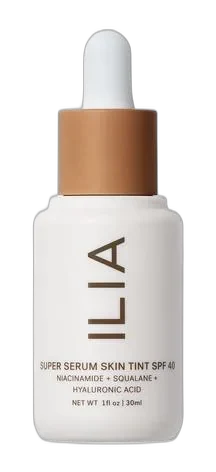
Super Serum Skin Tint SPF 40
Clean Beauty Cult Classic
 Verified reviewer
Pros & cons.
- +12% non-nano zinc oxide delivers legitimate broad-spectrum SPF 40
- +Iron oxides add visible-light protection beneficial for melasma
- +Niacinamide and hyaluronic acid deliver real skincare during wear
- +Glowy, skin-like finish that rivals chemical sunscreen elegance
- +Fragrance-free and well-tolerated by most sensitive skin types
- +Combines sunscreen, skincare, and light makeup into a single step
- +Pregnancy-safe and Leaping Bunny certified cruelty-free
- −Premium $54 price point for 1 oz
- −Shade range has gaps in deeper tones
- −Can pill when layered over heavy oils or silicones
- −Easy to under-apply and miss the labeled SPF dose
- −Can read oily by mid-afternoon on very oily skin types
The full review.
In 2020, mineral sunscreens had a reputation problem. Dermatologists recommended them, but consumers disliked the experience: chalky on deep skin, drying on dry skin, whitecast on everything, and pharmacy-style packaging. Chemical sunscreens offered the opposite: elegant textures and invisible finishes, but caused filter-based irritation, reef concerns, and pregnancy flags. A wide gap existed between “the sunscreen that protects you” and “the sunscreen you want to wear.”
Ilia’s Super Serum Skin Tint SPF 40 launched that year and closed much of that gap. The innovation was the reframing. Ilia did not market it as sunscreen; they marketed it as makeup—a serum-based tinted moisturizer containing 12% non-nano zinc oxide. This changed the purchase psychology. People bought a glowy tint, and the SPF came with it. Five years later, mainstream beauty brands have copied this approach, but Ilia did it first and still performs well.
The formula earns cult status on three fronts. First is the sunscreen: 12% non-nano zinc oxide is a high loading, higher than many medicinal mineral SPFs, and provides broad-spectrum UVA and UVB protection. Squalane, shea butter esters, isoamyl laurate, and polyglyceryl emulsifiers disperse the zinc smoothly, avoiding the drag of old-school zinc pastes. The iron oxides used for tinting do two things: they cancel the zinc whitecast and block visible light, a wavelength that triggers melasma and post-inflammatory hyperpigmentation.
Second is the serum component. Niacinamide is high enough in the INCI to provide tone-evening and barrier benefits. Hydrolyzed sodium hyaluronate and sodium hyaluronate provide dual-weight humectant hydration. Bisabolol and allantoin soothe, while aloe juice powder adds comfort. While these ingredients are standard, keeping a formula hydrating at 12% zinc is an achievement. Most products at this zinc loading feel thick and parched by lunch.
Third is the makeup experience. The tint is sheer, offering light-to-medium coverage, with a glowy, dewy finish. It evens skin tone, masks redness, and softens mild texture with a satin-to-dewy wash that looks natural in photos. It is not foundation; it will not cover a pimple or a dark spot alone. However, it works as a standalone base or under concealer and blush, feeling more like skin than a layer on top of skin.
The shortcomings are clear. The shade range has gaps in deeper tones, making matches for very light or very deep skin difficult. At $54 for 1 oz, the price is prestige; a drugstore tinted SPF like Cerave or Neutrogena costs a third as much, though they lack this ingredient density and finish. The product can pill if layered over heavy oil-based moisturizers or silicone primers. Also, at 12% zinc, it can feel warm on oily skin by mid-afternoon, though dry skin types will not notice.
Dose is also critical. Because it feels like makeup, most people apply it like a tinted moisturizer—one dropper, dot, and blend. That is only about a third of the amount needed for the labeled SPF. The correct dose is roughly two finger-lengths. This requires re-training. If you pay $54, apply the dose that earns the SPF rating.
For users managing hyperpigmentation, those who are pregnant, those with sensitive skin reacting to chemical filters, or anyone wanting one AM step for sunscreen and light makeup, this earns its status. People prioritizing full coverage, deep shades, or low per-ounce cost have better options. But for “glowy tinted mineral SPF that doesn’t feel like a punishment,” this remains the benchmark.
Ingredient analysis.
Full INCI list
Active: Zinc Oxide 12%. Inactive: Aqua/Water/Eau, Squalane, Shea Butter Ethyl Esters, Isoamyl Laurate, Polyglyceryl-3 Ricinoleate, Butyloctyl Salicylate, Propanediol, Isopropyl Isostearate, Polyglyceryl-3 Diisostearate, Methylpropanediol, Niacinamide, Sodium Chloride, Lecithin, Caprylyl Glycol, Silica, Aloe Barbadensis Leaf Juice Powder, Bisabolol, Hydrolyzed Sodium Hyaluronate, Allantoin, Phenylpropanol, Sodium Myristoyl Glutamate, Sodium Hyaluronate, Tetrasodium Glutamate Diacetate, Aluminum Hydroxide, Polyhydroxystearic Acid. May Contain: CI 77491, CI 77492, CI 77499 (Iron Oxides), CI 77891 (Titanium Dioxide)
Skin match.
The science.
The Science
This product uses 12% non-nano zinc oxide for SPF performance. Zinc oxide is a well-characterized broad-spectrum UV filter that scatters and absorbs UVA and UVB. Research in the Journal of the American Academy of Dermatology confirms that non-nano zinc at concentrations above 10% delivers SPF 30+ broad-spectrum performance when properly formulated. The iron oxide component works differently. Studies in the Journal of the American Academy of Dermatology and Photodermatology, Photoimmunology & Photomedicine show that iron oxides at cosmetic concentrations in tinted sunscreens block visible light in the 400-500nm range, which standard mineral and chemical sunscreens do not. Visible light drives melasma and post-inflammatory hyperpigmentation, especially in medium to deep skin tones. A 2020 clinical trial in the Journal of the American Academy of Dermatology showed iron-oxide-tinted sunscreens produce better melasma outcomes than non-tinted mineral alternatives. The niacinamide in the serum base also evens skin tone; a British Journal of Dermatology study shows 5% niacinamide reduces hyperpigmentation by inhibiting melanosome transfer. This product is a pigmentation-targeted formula for users managing melasma or hyperpigmentation, not just sunscreen plus makeup.
Dermatologist Perspective
Dermatologists recommend tinted mineral sunscreens containing iron oxides for patients with melasma, post-inflammatory hyperpigmentation, and photosensitive conditions, and this product is a top recommendation in that category. Board-certified dermatologists note the 12% zinc loading is in the higher range for cosmetic mineral sunscreens, providing strong broad-spectrum protection without the whitecast that causes patients to under-apply. The main caution dermatologists repeat for all tinted SPF products is dose; patients often apply them in makeup quantities instead of sunscreen quantities, missing the labeled SPF. This product is a first-line dermatological recommendation for pregnancy, retinoid users, and anyone with chemical-filter sensitivity.
Where it fits in your routine.
Shake well to redistribute the zinc suspension. Apply this as the final step of your AM skincare routine, once moisturizer absorbs. Use two finger-lengths of product for full face and neck coverage; under-application reduces the real-world SPF. Spread evenly using fingers, a damp sponge, or a flat brush. Let it set for 60 seconds before applying concealer or powder. Reapply every two hours during prolonged sun exposure. This is safe for daily year-round use.
At $54 for 1 fl oz, this is premium beauty pricing. Comparable tinted mineral SPFs vary: Cerave Hydrating Mineral SPF tinted is around $17, Supergoop Protec(tint) is $38, Saie Slip Tint is $35, and Tower 28 SunnyDays Tinted is $32. Ilia sits at the high end. The price reflects the 12% zinc loading (higher than most), iron oxide visible-light protection, niacinamide and HA inclusion, and the squalane-based vehicle. No larger size exists, so there is no economy-of-scale play. The value works for melasma management or pregnancy-safe glowy SPF. For users wanting any tinted mineral SPF, cheaper alternatives exist with smaller compromises.
People managing melasma, hyperpigmentation, or post-inflammatory dark spots who want visible-light protection in their daily SPF. Pregnant users, sensitive skin, retinoid users, and anyone wanting to collapse their morning routine into one step for sun protection, light coverage, and skincare.
Very oily skin types who find mineral sunscreens uncomfortable by midday, users needing medium-to-full makeup coverage, budget shoppers who don't need iron oxide visible-light protection, and users in the deepest or lightest shade ranges where the limited shade selection may not match.
Product details.
Liquid serum spreads like a lightweight tinted moisturizer and leaves a satin-to-dewy finish
Fragrance-free, faintly warm from the zinc and iron oxides
Frosted glass bottle with dropper-style cap, weighty and shelf-worthy
Shake well before use. One dropper provides a sheer tint. For proper SPF coverage, use about two finger-lengths, which exceeds most users' instinct. The first impression is glowy, hydrating, and comfortable for a 12% zinc formula.
2-3 months with daily face use at proper SPF dose
12 months
All Year
The backstory.
Ilia launched in 2011 as an early entrant into the clean-beauty color space, co-founded by Sasha Plavsic and built around the idea that sustainable packaging and minimal-ingredient formulas could coexist with genuinely wearable makeup. The Super Serum Skin Tint debuted in 2020 and became the brand's breakthrough crossover product, reframing mineral SPF from a medicinal chore into a desirable beauty step.
About Ilia
Established Brand (5–20 years)Ilia launched in 2011 as a clean-beauty makeup brand that blends skincare and color. The Super Serum Skin Tint, released in 2020, is a defining product that brought tinted mineral SPF into mainstream beauty.
Common myths.
Mineral sunscreens can't be glowy and elegant
This formula uses 12% zinc with iron oxides and a squalane-based vehicle. It shows mineral SPF can provide a dewy finish like chemical sunscreens without the filter-based irritation risk.
Tinted SPF products don't protect as well as untinted ones
Iron oxides add visible-light protection that untinted mineral or chemical sunscreens lack. This matters for anyone managing melasma, post-inflammatory hyperpigmentation, or photosensitive conditions.
FAQ.
Is the SPF 40 rating reliable?
Yes — 12% non-nano zinc oxide provides broad-spectrum SPF 40 protection at the correct dose. Most people under-apply tinted SPF products because they treat them like makeup. You need roughly two finger-lengths of product for full-face coverage to hit the labeled SPF.
Does it help with melasma?
Yes, meaningfully. The iron oxides that create the tint also block visible light, a documented trigger for melasma and post-inflammatory hyperpigmentation. Dermatologists managing melasma often recommend tinted mineral sunscreens like this over untinted options for that reason.
Can I use it with retinoids?
Yes — these pair well. Retinoids increase photosensitivity, and this product layers over a retinoid-moisturized routine without pilling for most users. Apply it as your final AM step once your moisturizer absorbs fully.
How does it compare to Saie Slip Tint or Supergoop Protec(tint)?
Saie Slip Tint has lower SPF (35) and more hydration; Supergoop Protec(tint) uses chemical filters. Ilia has the highest zinc loading of the three mineral-only options. This makes Ilia the best choice for pregnancy, sensitivity, or chemical-filter concerns.
Is it pregnancy safe?
Yes. Zinc oxide is the standard pregnancy-safe sunscreen filter, and this formula contains no retinoids, salicylates at treatment levels, or other pregnancy-flagged ingredients. It's one of the most-recommended tinted SPFs for pregnant users.
Does it work as foundation?
This sheer-to-light coverage tinted moisturizer evens skin tone and adds a glowy finish. It does not cover dark spots or significant blemishes alone. Most users layer a concealer on top for spot coverage and use the tint for the rest.
What the community says.
"Glowy skin-like finish"
"Works as skincare and makeup in one"
"Non-irritating even for sensitive skin"
"Iron oxides help hyperpigmentation"
"Expensive for the coverage level"
"Shade range has gaps in deeper tones"
"Can pill if layered under heavy products"
"Can look oily on already-oily skin types"
People also looked at.