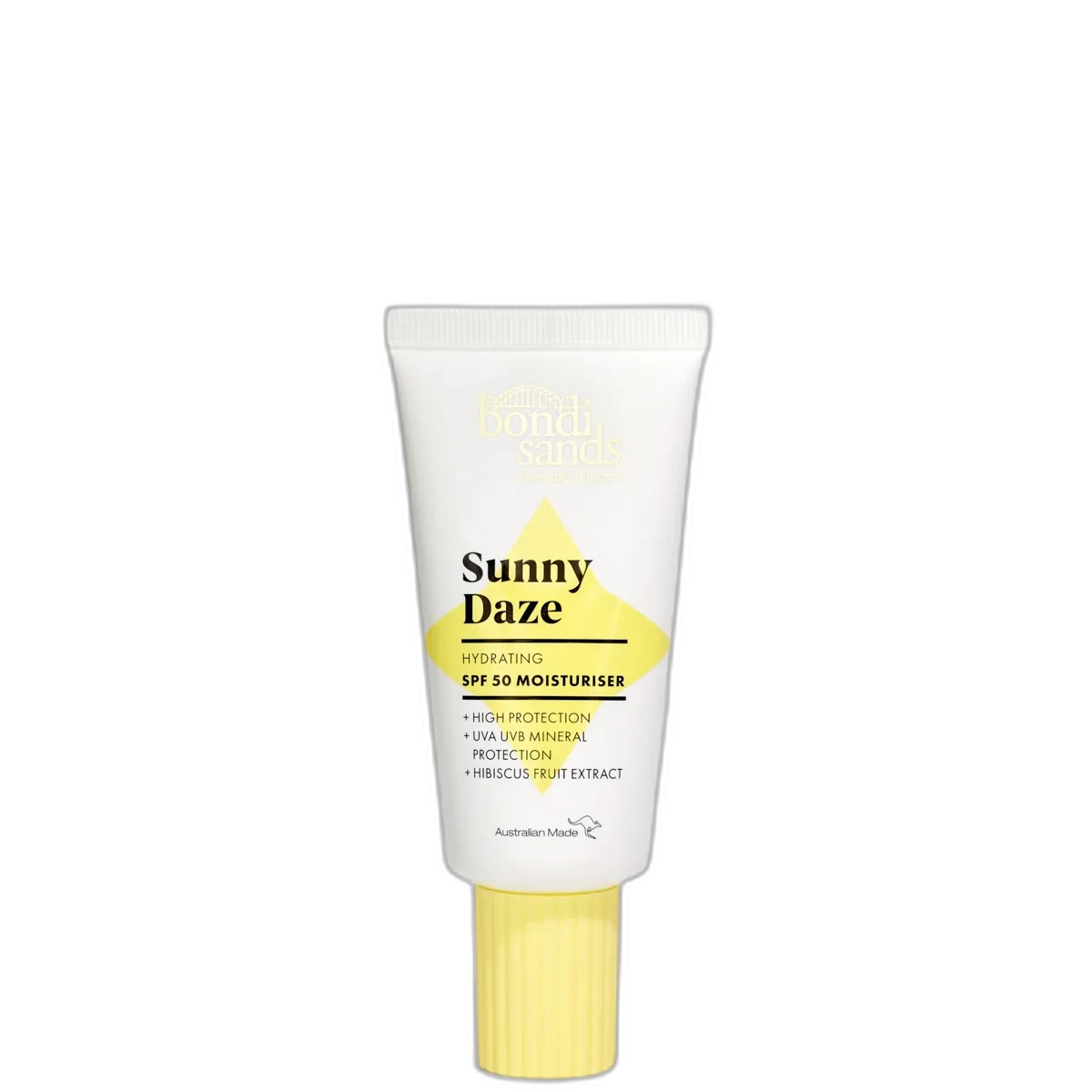
Sunny Daze SPF 50 Moisturiser
Mineral SPF for Melasma
 Verified reviewer
Pros & cons.
- +25% non-nano zinc oxide — high mineral concentration for serious sun protection
- +Iron oxide universal tint adds visible-light protection for melasma and pigment-prone skin
- +Fragrance-free base suitable for reactive and rosacea-prone skin
- +Lightweight satin finish rare in high-concentration mineral formulas
- +TGA-tested to Australian broad-spectrum standards
- +Hydrating enough to function as a daily moisturizer
- +Drugstore pricing versus premium derm-brand tinted minerals
- −Single universal tint doesn't flatter very fair or very deep skin tones
- −Can pill under heavy silicone primers without settle time
- −50g tube runs through quickly at recommended dosing
- −Not fungal-acne safe due to fatty base ingredients
- −Contains small amount of alcohol as a preservative carrier
The full review.
Drugstore marketing ignores a key issue with mineral sunscreens: pure zinc oxide and titanium dioxide do not block visible light. They block UVA and UVB, but the 400-700 nm visible-light spectrum passes through. This is fine for most skin, as visible light does not primarily drive photoaging or sunburn. However, for those with melasma, post-inflammatory hyperpigmentation, or pigment-prone conditions, it is a clinical issue. Visible light contributes to pigmentation in susceptible skin. Dermatologists now favor tinted mineral sunscreens, which use iron oxides to absorb visible light alongside UV-blocking mineral filters. Most options—EltaMD, Colorescience, Isdin—carry premium prices due to difficult formulation requirements. The Bondi Sands Sunny Daze Moisturiser is a rare drugstore-tier product that solves this for roughly a third of the price.
The active ingredient is simple: 25% non-nano zinc oxide. This concentration is high; most tinted mineral sunscreens use 12–18% zinc and fill the rest with titanium dioxide. Formulating with 25% pure zinc is harder because high mineral loads often make products chalky, heavy, or prone to white cast. Bondi Sands avoids the chalky-heavy feel using a lightweight caprylic/capric triglyceride base, polyhydroxystearic acid to stabilize the zinc, and a glycerin-and-saccharide-isomerate hydration layer for smooth slip. They address the white cast with iron oxides in one warm-beige universal tint.
The universal tint is a compromise. One shade cannot flatter every complexion. This warm-beige tint looks slightly warm on medium skin, too orange or dark on very fair skin, and slightly ashy or light on very deep skin. For the target middle range, it looks nearly invisible and subtly evens skin tone, allowing some users to skip foundation. For those outside that range, the color is a cosmetic issue; test it on your jawline first. The dermatological benefit of the iron oxides works regardless of the tint match, so the visible-light protection remains effective even if the shade is imperfect.
Texture
The texture is impressive. Most 25% zinc oxide face products feel draggy and streak easily. This one rubs out in thirty seconds to a soft satin finish. The glycerin-forward base keeps skin hydrated and avoids the squeaky-matte feel that makes mineral face SPFs feel harsh on dry skin. The 72 hours of moisture claim on the tube is marketing math, not biology, but the lotion works as a daily moisturizer for normal-to-dry skin, removing the need for a separate layer. For combination and oily skin, the base is light enough to avoid heaviness, though the satin finish is less matte than a dedicated oily-skin mineral fluid.
Common Complaints
The limitations are minor. It is not fungal-acne safe; the caprylic/capric triglyceride and cetearyl alcohol in the base can trigger malassezia. It may pill under heavy silicone primers if you do not let it settle before applying foundation. The 50g tube is small for a two-finger daily dose, and the Sunny Daze range lacks a larger size. As noted, the universal tint limits users at the fair and deep ends of the skin tone spectrum.
Best for
This is a mineral SPF moisturizer that provides visible-light protection without premium derm-brand prices. For users with melasma, reactive rosacea-prone skin, or stubborn hyperpigmentation seeking a daily clinical tinted mineral SPF, this is a smart drugstore option. For others, it is a good lightweight daily SPF with a pleasant finish and a universal tint that may or may not suit your complexion. It is more thoughtfully engineered than the category average, with better science than the marketing suggests.
Ingredient analysis.
Full INCI list
Aqua (Water), Zinc Oxide, Caprylic/Capric Triglyceride, Butyloctyl Salicylate, Glycerin, Polyhydroxystearic Acid, Cetearyl Alcohol, Phenoxyethanol, Polyurethane-62, Benzyl Alcohol, Saccharide Isomerate, Citric Acid, Propanediol, Lecithin, Xanthan Gum, CI 77492 (Iron Oxides), Sodium Phytate, Ethylhexylglycerin, Trideceth-6, Tocopherol, CI 77499 (Iron Oxides), CI 77491 (Iron Oxides), Alcohol, Helianthus Annuus (Sunflower) Seed Oil, Sodium Citrate, Erythritol, Hibiscus Sabdariffa Fruit Extract
Skin match.
The science.
The Science
Zinc oxide is a broad-spectrum physical UV filter. It works by absorbing and, secondarily, scattering UV radiation. At 25% concentration, it provides full SPF 50+ protection and covers both the UVB and UVA spectrum, including the UVA1 wavelengths linked to photoaging and pigmentation. Non-nano zinc oxide particles are larger than 100 nm. They do not penetrate intact skin and have minimal systemic absorption concerns — why mineral sunscreens are often preferred for pregnancy, pediatric, and post-procedure use.
The iron oxides in this formulation are clinically meaningful. A landmark 2020 study in the Journal of the American Academy of Dermatology shows that sunscreens containing iron oxides protect better against visible light than untinted mineral sunscreens. Visible light also contributes to pigmentation in Fitzpatrick IV–VI skin. Follow-up research reinforces this for melasma management, where visible-light-protective tinted sunscreens are now standard of care alongside oral tranexamic acid and topical pigmentation actives. This product uses the standard trio to create a universal-tint visible-light absorber: CI 77491 (red), CI 77492 (yellow), and CI 77499 (black).
The base — glycerin, saccharide isomerate, hibiscus extract, tocopherol — provides humectant and antioxidant support. Saccharide isomerate is a plant-derived carbohydrate complex that binds to skin with long residence time; this mechanism drives the long-hydration claims in this product line. Tocopherol (vitamin E) and hibiscus extract add antioxidant capacity. They complement the photoprotection by addressing free-radical damage from UV and visible light that remains even when the filters work.
Dermatologist Perspective
Dermatologists increasingly recommend tinted mineral sunscreens with iron oxides as the clinical standard for patients with melasma, post-inflammatory hyperpigmentation, and pigment-prone rosacea. Board-certified dermatologists note that visible light protection is an under-recognized gap in over-the-counter sun care. They note the iron oxide content of a tinted mineral SPF is functionally important, not a cosmetic afterthought. The 25% non-nano zinc concentration in this formula is also a pragmatic choice for patients with reactive skin, rosacea, or pregnancy concerns who want to avoid chemical filters. This product is a budget-friendly alternative to premium tinted mineral lines for patients who need visible-light protection without luxury pricing.
Where it fits in your routine.
Apply this as your final morning skincare step after serums and any separate moisturizer. Use about two finger-lengths to cover your face, neck, and ears. Rub it in fully and wait 1–2 minutes to settle before applying makeup. Reapply every two hours in direct sun or after towel drying. One morning application works for daily indoor or commute wear. Store in a cool place and replace annually. Test the universal tint on your jawline before full-face application to ensure it blends with your complexion.
At around $19.99 for 50g, this moisturizer costs mid-range for drugstore SPF moisturizers. It is much cheaper than premium tinted mineral competitors like EltaMD UV Elements and Isdin Eryfotona, which cost $40–50 for similar sizes. The 25% zinc concentration and iron oxide tint provide strong per-milliliter value. The 50g tube is smaller than some competitors, which lowers the value slightly — one tube lasts 6–8 weeks with two-finger daily dosing. No larger size exists in the Sunny Daze range. The math favors shoppers seeking a tinted mineral SPF at a drugstore price point.
This works for anyone managing melasma, post-inflammatory hyperpigmentation, or rosacea who wants a drugstore-priced tinted mineral SPF with visible-light protection. It is also a strong pick for reactive, sensitive, or pregnancy-safe routines that avoid chemical filters, and for medium skin tone shoppers wanting a combined SPF and subtle tint in one daily step.
This tint lacks warmth for very fair or very deep skin tones. Fatty base ingredients make it unsuitable for fungal-acne-prone skin. The finish is too dewy for matte oil-control needs, and dedicated makeup wearers may prefer an untinted mineral sunscreen that does not compete with foundation.
Product details.
Medium-weight tinted cream that rubs out to a soft satin finish
Genuinely fragrance-free with only a faint neutral mineral note
Cream and gold squeeze tube with flip cap
The first application shows a warm beige tint that blends to a natural satin finish within about a minute. The tint looks slightly too warm on fair skin initially, but integrates naturally on medium-to-deep skin. It causes no stinging and has no typical zinc oxide white cast.
Apply the recommended two-finger dose to your face and neck daily for 6–8 weeks.
12 months
All Year
The backstory.
Bondi Sands launched the Sunny Daze range as its mineral alternative to the chemical-filter Gold Standard line, aimed at shoppers who specifically wanted zinc oxide but didn't want the white cast or the dry feel that plague most mineral face SPFs. The decision to universally tint the moisturizer was a practical response to the complaint that mineral sunscreens exclude anyone with pigmented skin from the category.
About Bondi Sands
Established Brand (5–20 years)The Sunny Daze SPF 50 Moisturiser is Bondi Sands' mineral-filter daily moisturizer-with-SPF. Launched around 2022 in EU and AU markets, it has TGA certification. It has a loyal following among shoppers who want a 25% zinc-oxide face product that uses a universal iron-oxide tint to avoid the traditional mineral white cast.
Common myths.
Universal-tint sunscreens flatter every skin tone
A single universal tint is a pragmatic compromise, not a true shade match. This one is warm-beige and works best on medium skin; very fair users may find it too dark, while very deep users may find it too light and ashy. Test on the jawline before buying a tube.
Mineral sunscreens don't work against visible light
Pure zinc oxide and titanium dioxide provide limited visible-light protection, which affects melasma and stubborn hyperpigmentation. The iron oxides in this formula extend protection into the visible spectrum. This makes tinted mineral SPFs clinically better than untinted ones for pigment-prone skin.
FAQ.
What sunscreen filter does this use?
Pure mineral — 25% non-nano zinc oxide is the only active filter. The formula has no chemical filters, so it works well for anyone wanting mineral-only face protection.
Is the tint a match for my skin tone?
The tint is one universal warm-beige shade for medium skin tones. It looks too warm on very fair skin and too light on very deep skin. Test it on your jawline before full face application to see if it works.
Does this moisturizer protect against visible light?
Yes — the iron oxides in the tint (CI 77491, 77492, 77499) protect against the visible-light spectrum. This matters for melasma, post-inflammatory hyperpigmentation, and stubborn dark spots that pure zinc oxide alone does not address.
Is it a hydrating moisturizer or just a sunscreen?
It is both. The base uses glycerin, saccharide isomerate, hibiscus extract, and sunflower oil to provide hydration similar to a standard daily moisturizer. Normal-to-dry skin can use it as a combined moisturizer and SPF step in the morning.
Is this fungal acne safe?
Caprylic/capric triglyceride and cetearyl alcohol in the base can trigger malassezia in susceptible skin. People managing fungal acne should use a simpler mineral gel or fluid format.
Can I wear it under makeup?
Yes, but wait 1–2 minutes for it to settle before applying foundation to prevent pilling. The universal tint lets some users skip foundation on no-makeup days, using it as a combined SPF-and-tint step.
What the community says.
"25% zinc oxide with minimal white cast"
"Iron oxide tint adds visible-light protection"
"Lightweight hydrating finish for a mineral formula"
"Fragrance-free and reactive-skin friendly"
"Universal tint can read too warm or too dark on fair skin"
"Can pill under heavy silicone primers"
"50g tube runs out quickly at correct dosing"
"Not fungal-acne safe"
Featured in.
People also looked at.