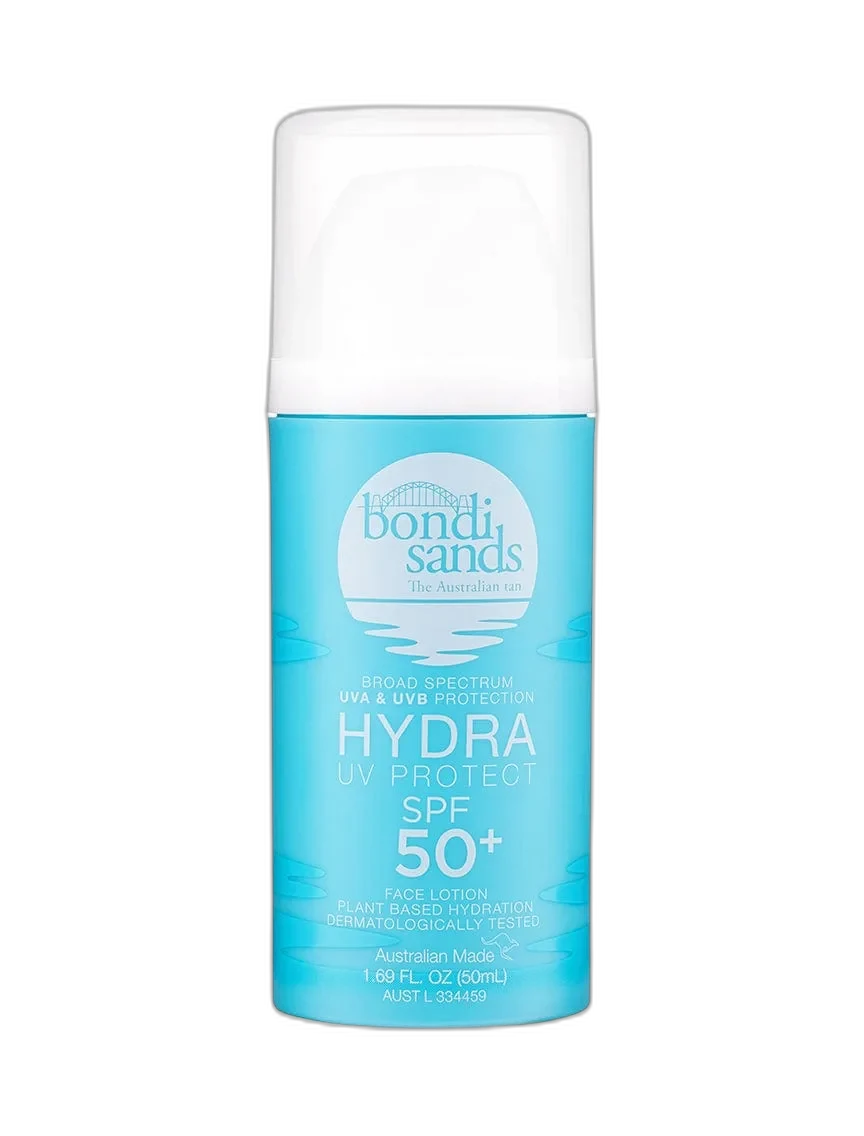
Hydra UV Protect SPF 50+ Face Lotion
European-Filter Daily Driver
 Verified reviewer
Pros & cons.
- +Uses ethylhexyl triazone — a next-generation filter not approved in the US
- +Genuinely hydrating with sodium hyaluronate, aloe, and algae extract
- +Fragrance-free and vegan, suitable for reactive and ethical shoppers
- +Satin finish layers cleanly under makeup for most users
- +TGA-tested to Australian broad-spectrum standards
- +No white cast on any skin tone
- +Drugstore pricing for next-generation filter technology
- −Not sold at US retail — requires import or travel to obtain
- −50ml tube is small at the recommended two-finger daily dose
- −Silicones and fatty ingredients not fungal-acne safe
- −Occasional pilling reported under heavy silicone primers
- −Price higher than the original US Bondi Sands face SPF once shipping is factored in
The full review.
If Bondi Sands’ American face sunscreen felt mediocre, the AU and EU Hydra version is a revelation. It uses the same brand and Australian Gold Standard testing at a similar drugstore price, but uses a filter blend the US FDA has not approved and likely never will. Ethylhexyl triazone acts as the primary UVB absorber, alongside 4-methylbenzylidene camphor as a secondary booster, avobenzone for UVA, and octocrylene to stabilize the avobenzone. This is a major reformulation. The product differs meaningfully from the American version, explaining why UK and Australian sunscreen enthusiasts have built a fanbase for the Hydra line.
Ethylhexyl triazone makes the Hydra face lotion feel lighter than most drugstore chemical SPFs. It is one of the most UVB-efficient filters ever developed, so the same sun protection factor requires a lower total filter load. A lower filter load reduces the heavy, greasy drag found in homosalate-based US formulas. Combine it with avobenzone at Bondi Sands’ chosen percentage, octocrylene for photostabilization, and the UVB boost from 4-MBC, and you get SPF 50+ in a base that feels like a moisturizer rather than a body lotion. This is the practical upgrade: the protection numbers stay similar, but the daily wear improves.
The Hydra base is the second half of the story. Sodium hyaluronate, aloe barbadensis, glycerin, and algae extract sit in a lightweight emulsion that sinks in within a minute and leaves a satin-dewy finish. This is the first Bondi Sands face SPF that is legitimately hydrating; dry-skinned users can use this lotion immediately after a cleanser on lazy days and their skin will feel fine. Silicones in the base provide enough slip to layer under makeup without pilling for most users, though heavy silicone primers can occasionally cause friction.
Fragrance-free means fragrance-free—no masking notes, essential oils, or botanical fragrances. The INCI reads like skincare rather than sun-care. This neutrality makes it a choice for reactive skin, rosacea-prone users, or those with compromised barriers or recent procedures. The formula is also vegan, unlike the brand’s original fragrance-free US face SPF which contains beeswax, making it easier for ethically-motivated shoppers to choose.
The limitations are small but real. The 50ml tube finishes quickly at the recommended two-finger dose; daily face and neck use lasts 6–8 weeks per tube. This is fine for committed users but noticeable compared to larger body sunscreens. Silicones and fatty ingredients mean it is not fungal-acne-safe, which matters for people managing malassezia. Availability is the biggest frustration: US shoppers cannot buy it at local retailers, and importing through Cult Beauty or Boots adds shipping costs and lead times that raise the effective price.
This lotion previews what American drugstore sunscreens could look like if the FDA resumed its approval pipeline. The lighter filter load, hydration-forward base, lack of white cast on any skin tone, and makeup compatibility are all possible because the brand uses filter technology Europe has used for 25+ years. This product shows you what you have been missing; once you try it, old-school American chemical sunscreens feel like regulatory relics. Technically, they are.
Ingredient analysis.
Full INCI list
Actives (AU/EU formula): Ethylhexyl Triazone, Butyl Methoxydibenzoylmethane, Octocrylene, 4-Methylbenzylidene Camphor. Inactive: Aqua, Glycerin, Aloe Barbadensis Leaf Juice, Caprylyl Glycol, Cyclopentasiloxane, Cetearyl Alcohol, Ceteareth-20, Saccharide Isomerate, Tocopheryl Acetate, Sodium Hyaluronate, Algae Extract, Hydroxyacetophenone, Phenoxyethanol, Benzyl Alcohol, Sodium Stearoyl Glutamate, Triethanolamine, Carbomer, Sodium Chloride, Citric Acid
Skin match.
The science.
The Science
Ethylhexyl triazone is a photostable UVB filter. Its molar extinction coefficient is among the highest for organic sunscreen filters, reaching about 1500 L/mol/cm at its 314 nm absorption peak. This efficiency allows 2–3% concentrations in commercial formulations to achieve meaningful UVB absorption. Photostability studies show ethylhexyl triazone stays stable under simulated solar radiation for long periods, so it works well with avobenzone in long-wear formulations.
4-Methylbenzylidene camphor is a UVB filter approved in the EU and Australia but not the US. In this formula, it acts as a secondary UVB absorber and boosts the total filter load. Together, ethylhexyl triazone and 4-MBC let an SPF 50+ product use a lower total active percentage than a US formula that uses 10% homosalate and 5% octisalate for equivalent protection.
The hydration layer — sodium hyaluronate, glycerin, aloe, saccharide isomerate, and algae extract — is intentional. Photoaging prevention research shows skin barrier hydration supports the skin's endogenous response to UV damage and helps well-hydrated skin recover from incidental UV exposure. A sunscreen that also hydrates adds a compounded photoprotection benefit beyond raw filter efficacy.
The limitation: ethylhexyl triazone is well-studied, but the specific combination with 4-MBC and avobenzone has less published head-to-head testing than US-approved homosalate-heavy filter sets. The broad evidence is strong, but direct clinical comparison is limited.
Dermatologist Perspective
Dermatologists in regions where ethylhexyl triazone is approved often prefer it as a UVB filter for photoaging-prone patients due to its efficiency and photostability. US board-certified dermatologists sometimes recommend international sunscreens with newer filter technology when daily broad-spectrum protection is a clinical priority, like melasma management or post-laser recovery. This lotion is a common drugstore-priced alternative to premium European face sunscreens for patients wanting next-generation filters without luxury pricing.
Where it fits in your routine.
Apply this as the final step of your morning skincare routine after moisturizer. Use about two finger-lengths to cover the face, neck, and ears. Rub it in fully and wait one minute before applying makeup. Reapply every two hours in direct sun or after towel drying. One morning application works for office or indoor days, but people near windows need a midday touch-up with a powder or stick SPF. Replace the product annually regardless of how much remains.
At roughly £13–17 (approximately $16–21 USD) for 50ml, this lotion is mid-range for a European face sunscreen. It offers strong per-milliliter value for its filter technology. Premium European face SPFs from brands like La Roche-Posay or Eucerin with similar filter sets often cost 50–80% more at retail. The 50ml size is small for a two-finger daily dose; a larger format exists in the Hydra body lotion if you use a body product on the face. For shoppers who can access it, the Hydra face lotion is one of the best drugstore-priced next-generation filter options in Europe.
People with access to AU or EU retailers who want a hydrating, fragrance-free, vegan face sunscreen with next-generation filter technology at a drugstore price. It works well for normal-to-dry, sensitive, and reactive skin types, and for photoaging-focused routines where daily cosmetically elegant SPF matters.
US shoppers won't import via Cult Beauty or similar retailers. People managing fungal acne on the face should avoid this because of fatty ingredients. Oily shoppers in hot climates may find the hydration base too thick and prefer a gel or fluid format.
Product details.
Lightweight white lotion that rubs out to a hydrated satin finish
Fragrance-free with a faint neutral base note
Squeeze tube with flip cap in brand's signature cream and gold styling
The first application feels hydrating and cushiony, not filter-heavy. It causes no stinging or sensory irritation. The satin finish settles within a minute and layers under liquid foundation without pilling.
Apply the recommended two-finger dose to your face and neck daily for 6–8 weeks.
12 months
All Year
The backstory.
Bondi Sands built the original Australian Gold Standard face SPF around US-compliant filters so it could ship to the American market, but the Hydra face range was designed specifically for Australian and European shoppers who wanted access to newer filter technology. The hydration-forward base was added in response to European complaints that the original face SPF felt drying — a reformulation aimed squarely at the daily-driver under-makeup crowd.
About Bondi Sands
Established Brand (5–20 years)Bondi Sands launched the Hydra UV Protect face lotion around 2022 to match its hydration-focused body range. The AU and EU formulas use ethylhexyl triazone—a next-generation UVB filter unavailable in the US—so this version has higher single-filter UVB efficiency than the brand's original US-market face SPF.
Common myths.
Chemical sunscreens all feel the same
The filter set determines cosmetic elegance. Ethylhexyl triazone is lighter, more photostable, and more UVB-efficient than homosalate. This makes this Hydra version feel better under makeup than the US-market Bondi Sands face SPF.
A fragrance-free sunscreen can't also be hydrating
This formula uses sodium hyaluronate, glycerin, aloe, and algae extract — all odorless humectants. Fragrance does not hydrate skin; humectants and emollients do. This lotion has plenty of both and contains no added scent.
FAQ.
How is Hydra face lotion different from the original Bondi Sands fragrance-free face SPF?
The AU/EU Hydra version uses ethylhexyl triazone and 4-methylbenzylidene camphor—next-generation filters not available in the US—and a hydration-focused base with sodium hyaluronate, aloe, and algae extract. The US fragrance-free face SPF uses older FDA-approved filters and a simpler base.
Can I buy this in the US?
The AU/EU formula with ethylhexyl triazone is unavailable at US retailers because the FDA has not approved the filter. US shoppers import it from Cult Beauty, Boots, or buy it while traveling.
Does it work well under makeup?
Yes — the lightweight satin finish sets in about a minute and layers cleanly under liquid foundation. Some users report occasional pilling under heavy silicone primers, but most have no issues with standard skincare-to-makeup routines.
Is it vegan?
Yes. The Hydra face lotion is vegan and cruelty-free, unlike the brand's original face SPF which contains beeswax. Plant and marine sources provide hydration instead of animal-derived emollients.
Is this sunscreen fungal acne safe?
No. The formula has cetearyl alcohol, saccharide isomerate, and silicones that trigger malassezia in susceptible skin. Fungal-acne-prone users need a simpler gel sunscreen.
How much product should I apply for full SPF 50+ protection?
Apply about two finger-lengths of product to cover the face and neck. Using less reduces the actual SPF delivered. The 50ml tube lasts about 6–8 weeks with daily use and correct dosing.
What the community says.
"Hydrating finish under makeup"
"No white cast on any skin tone"
"Fragrance-free and comfortable on sensitive skin"
"Filter set feels more cosmetically elegant than US Bondi Sands face SPF"
"Not available in US retail"
"50ml tube is small for daily use at correct dosing"
"Silicones and fatty ingredients keep it from being fungal-acne safe"
"Some pilling under heavy primer layering"
People also looked at.