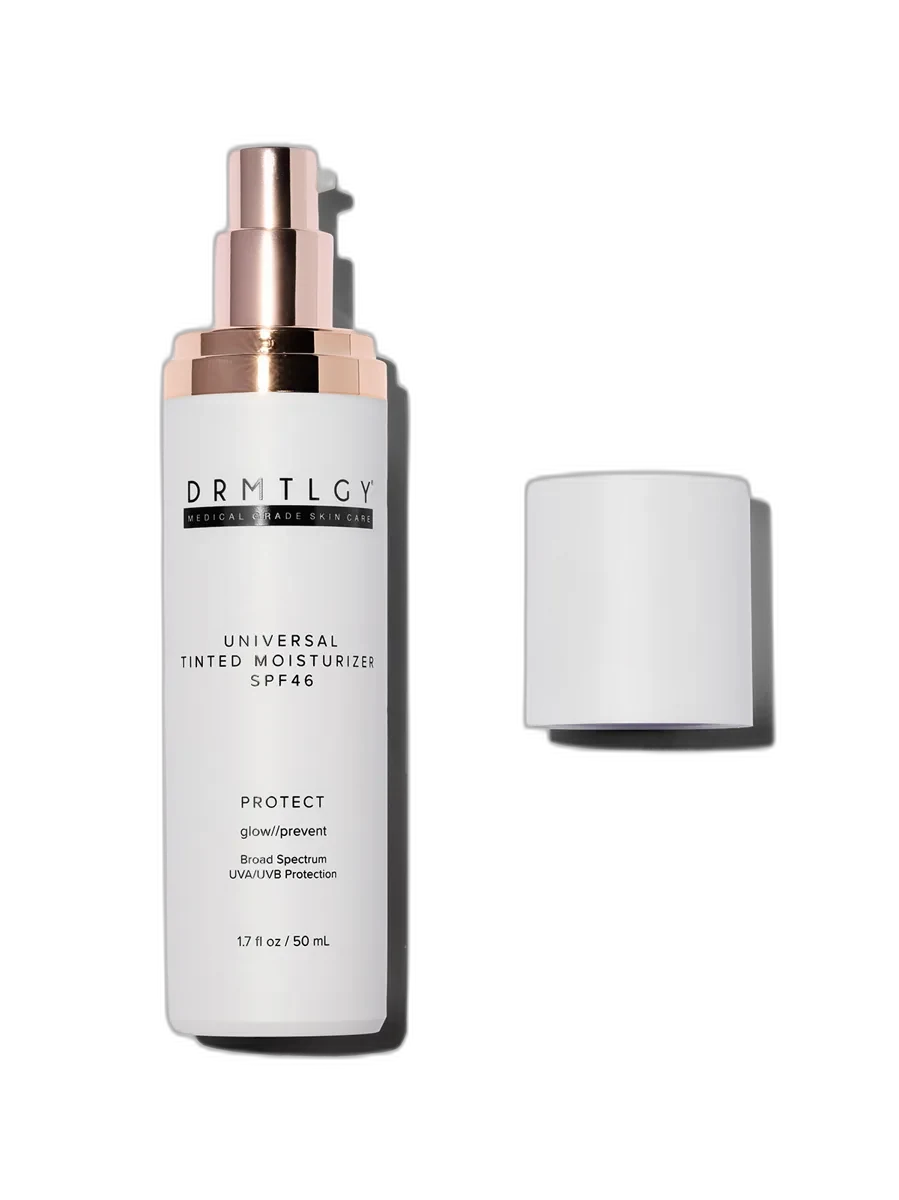
Tinted Moisturizer SPF 46
Budget Tinted SPF Pick
 Verified reviewer
Pros & cons.
- +Iron oxides provide real visible-light protection for melasma and HEVL
- +9% zinc oxide plus octinoxate hybrid delivers broad-spectrum SPF 46
- +Niacinamide adds brightening and barrier treatment benefits
- +Universal tint blends out without requiring foundation
- +Satin finish layers cleanly under or without makeup
- +Roughly half the price of comparable Elta MD UV Daily Tinted
- +Vegan and cruelty-free certified
- +Strong reputation in dermatologist-focused communities
- −Contains added fragrance — not ideal for sensitive skin
- −Octinoxate is not reef-safe and not generally recommended in pregnancy
- −Universal tint doesn't work for very fair or very deep skin tones
- −Squeeze tube is functional but less premium than the price suggests
- −Subtle floral scent may bother fragrance-sensitive users
The full review.
If you spend time in dermatologist-focused online communities—forums where people analyze ingredient lists and compare medical-grade sunscreen prices—you notice certain products get mentioned repeatedly without marketing. Drmtlgy’s Tinted Moisturizer SPF 46 is one of them. It lacks a celebrity founder, hasn’t gone viral on TikTok, and misses glossy beauty editor roundups. Instead, it has a persistent reputation among users who read INCI lists, track iron oxide content, and note that the formulation mimics Elta MD UV Daily Tinted at roughly half the price. That isn’t a coincidence; it is the most interesting thing about this product.
The formulation is a hybrid mineral and chemical sunscreen, a more sophisticated choice than pure-mineral marketing suggests. Zinc oxide at 9% provides the broad-spectrum mineral filter for long-wave UVA—the UV spectrum part most responsible for photoaging and pigmentation that chemical filters often miss. Octinoxate at 7.5% handles the UVB load by absorbing UV and converting short-wavelength light to heat through molecular vibration. Together, these filters deliver SPF 46 protection without the heavy white cast caused by impractical zinc concentrations on non-fair skin tones. This engineering trade-off makes tinted dermatologist sunscreens wearable for darker skin tones; pure mineral at SPF 40+ usually requires zinc levels that look like a Halloween costume on tan or deep complexions. The hybrid approach solves this.
Iron oxides make the formula interesting beyond basic UV protection. Iron oxides do two things: they provide a universal tint for light cosmetic coverage and absorb high-energy visible light (HEVL). HEVL is the visible spectrum part most associated with melasma exacerbation and post-inflammatory hyperpigmentation in darker skin tones. This visible-light protection is unique to tinted sunscreens; clear sunscreens do not provide it, regardless of SPF. For users with melasma or pigmentation concerns, iron oxide content is the most important ingredient in a sunscreen, which is why dermatologists treating melasma prescribe tinted sunscreens. Most users without melasma still benefit from visible-light protection because HEVL contributes to oxidative stress and collagen breakdown alongside UV.
Niacinamide adds treatment benefits, turning this from a sunscreen into a daily-wear skincare-and-protection hybrid. Niacinamide brightens, supports the barrier, regulates sebum, and prevents pigmentation through melanosome transfer inhibition. Including it in a product worn every day provides these benefits alongside UV protection. Hyaluronic acid provides humectant hydration to prevent the formula from feeling dry during an eight-hour workday.
The texture and wear match what dermatologist-developed tinted sunscreens aim for. It is a smooth, lightweight lotion that blends evenly with a universal tint, settles into a satin finish within about a minute, and rarely requires setting powder. The dimethicone-and-silicone vehicle acts like a primer under makeup, and the formula does not pill or break down when layering foundation. For everyday use, many users replace both their morning moisturizer and foundation with this, simplifying routines without losing essential function.
The flaws are familiar. Fragrance is in the formula, which is a demerit for sensitive skin or melasma-prone users—the same people who benefit most from this product. The universal tint does not work universally; very fair skin may find it too warm, while deep skin tones may find the coverage inadequate. Octinoxate is a chemical filter with reef-safety concerns (banned in Hawaii’s reef-protection ordinance) and some pregnancy precautions, so it is not for every shopper. While the price beats Elta MD, it costs more than a basic drugstore tinted sunscreen; the value lies in formulation sophistication, not being the cheapest option.
For the right user—someone with normal-to-combination skin wanting a daily-wear tinted SPF with visible-light protection and treatment benefits, who tolerates fragrance, and who is not pregnant or seeking reef-safe options—this is one of the smartest values in the sunscreen category. Earning a reputation through ingredient nerds rather than influencer campaigns is the strongest endorsement a sunscreen can get.
Formula
Ingredient analysis.
Full INCI list
Active Ingredients: Zinc Oxide 9%, Octinoxate 7.5%. Inactive Ingredients: Water, Cyclopentasiloxane, C12-15 Alkyl Benzoate, Niacinamide, Hyaluronic Acid, Octyldodecyl Neopentanoate, Dimethicone, Glycerin, Polyglyceryl-4 Isostearate, Cetyl PEG/PPG-10/1 Dimethicone, Hexyl Laurate, PEG-10 Dimethicone, Lauryl PEG/PPG-18/18 Methicone, Phenoxyethanol, Sodium Chloride, Iron Oxides (CI 77491, CI 77492, CI 77499), Tocopheryl Acetate, Caprylyl Glycol, Disodium EDTA, Ethylhexylglycerin, Fragrance
Skin match.
The science.
The Science
Zinc oxide is one of two FDA-approved mineral sunscreen actives. It provides broad-spectrum protection across UVB and the entire UVA range, including long-wave UVA-1, which drives photoaging, pigmentation, and skin cancer risk. At 9% concentration, zinc oxide covers the long-wave UVA spectrum that some chemical filters miss. Octinoxate (ethylhexyl methoxycinnamate) is a common global chemical UVB filter with peak absorption around 311 nm; it pairs with zinc oxide to provide broad-spectrum protection at lower mineral concentrations than pure mineral sunscreens. Iron oxides have published evidence for visible-light protection. Research shows they work against high-energy visible light exposure that causes melasma and post-inflammatory hyperpigmentation. A study in the Journal of the American Academy of Dermatology showed that tinted sunscreens with iron oxides protect against melasma better than untinted sunscreens of equivalent SPF, even when both contain zinc oxide. Clinical studies document niacinamide's ability to inhibit melanosome transfer, with effects on hyperpigmentation visible at 2-5% concentrations over 8-12 weeks. This formula uses UV filters, iron oxides for visible-light protection, and niacinamide to prevent pigmentation, creating a multi-pathway approach to the hyperpigmentation problems that drive most melasma treatment plans.
Dermatologist Perspective
Dermatologists treating melasma often prescribe tinted sunscreens for the iron oxide visible-light protection, which clear sunscreens lack regardless of SPF. Board-certified dermatologists note that visible light, especially the high-energy blue end of the spectrum, contributes to melasma exacerbation and post-inflammatory hyperpigmentation in darker skin tones. In clinical practice, UV-only protection does not adequately address this. Dermatologist-focused online communities often recommend this formula as an affordable alternative to medical-aesthetic brand tinted sunscreens because the formulation is notably similar to higher-priced options from established derm-focused brands. Dermatologists caution that tinted sunscreens with universal tints work best for medium skin tones and may require layering under foundation for very fair or deep complexions. Actual SPF protection depends on applying enough product—typically a quarter teaspoon for the face.
Where it fits in your routine.
Apply this as the final morning step, after moisturizer and treatment serums. Use a full quarter-teaspoon on the face to get the labeled SPF 46 protection; under-applying sunscreen reduces actual protection. Blend it evenly across the face and neck. Reapply every 2 hours during sun exposure, or after swimming or heavy sweating. If you have very oily skin, set with a translucent powder. Wear it alone or layer it under foundation for more coverage.
At $32 for 1.7 oz, this is one of the strongest values in the dermatologist-grade tinted sunscreen category. Comparable formulations from Elta MD, SkinMedica, and other medical-aesthetic brands typically run $40-$55 for the same architecture, and the formulation similarities are close enough that dermatologist communities have repeatedly cited this product as a near-clone at significant savings. The 1.7 oz size provides about 2-3 months of daily face use for most wearers, putting the per-month cost in the $10-15 range — below the cost of even basic drugstore tinted moisturizers when you account for the SPF 46 broad-spectrum coverage and the treatment benefits. For the iron oxide visible-light protection alone, this is exceptional value for melasma-prone users who would otherwise be paying significantly more for the same protection from premium derm brands.
Normal to combination skin types can use this daily-wear tinted sunscreen for visible-light protection and treatment benefits at a lower price than medical-aesthetic brands. It works well for melasma patients, hyperpigmentation-prone skin, and medium-to-tan skin tones seeking a universal-tint option. This product simplifies routines by combining moisturizer, sunscreen, and light coverage.
Pregnant or nursing users need mineral-only sunscreen because of the octinoxate. Swimmers in reef areas should use reef-safe alternatives. The universal tint may not suit very fair or very deep skin tones. People with fragrance sensitivity should use fragrance-free derm sunscreens.
Product details.
Smooth lightweight lotion with a satin finish
Light floral fragrance
Squeeze tube
The first application blends smoothly. A universal tint adjusts to most skin tones for sheer, even coverage. It causes no tingling or warming. The satin finish settles within a minute and most users do not need setting powder.
About 2-3 months with daily face use, less if applied to neck and chest as well
12 months
All Year
The backstory.
Drmtlgy launched in 2017 as a direct-to-consumer brand built around the idea that dermatologist-grade formulations could be sold at lower price points without intermediary retail markup. The Tinted Moisturizer SPF 46 quickly became one of the brand's signature products after dermatologist-focused online communities began comparing it to the more expensive Elta MD UV Daily Tinted and finding the formulations remarkably similar.
About Drmtlgy
Established Brand (5–20 years)Drmtlgy launched in 2017 as a direct-to-consumer brand. It offers dermatologist-grade formulations at lower prices than traditional medical-grade brands. The Tinted Moisturizer SPF 46 is a top recommendation in derm-focused online communities because it nearly clones Elta MD UV Daily Tinted for roughly half the price.
Common myths.
Tinted sunscreens are sunscreens with added color.
Tinted sunscreens with iron oxides provide visible-light protection that clear sunscreens lack. This protects against melasma and post-inflammatory hyperpigmentation, which both worsen from visible light from the sun and screens.
Pure mineral sunscreens outperform hybrid mineral and chemical sunscreens.
Hybrid formulations often provide better cosmetic elegance and broader-spectrum coverage than pure mineral sunscreens, especially at higher SPFs. This combination allows formulators to use lower mineral concentrations to prevent white cast while maintaining strong UVA and UVB protection.
FAQ.
Does the tint match my skin?
The universal tint adjusts to most light to medium skin tones. Very fair skin may find the shade too warm, while deep skin tones may need to layer it under foundation or use a different product. It blends seamlessly for most medium and tan skin tones.
Will this protect me from blue light from screens?
Yes — the iron oxides in this formula provide measurable visible-light protection. This includes the high-energy visible light spectrum from sunlight and digital screens. This advantage makes tinted sunscreens better than clear sunscreens for melasma-prone users.
Is this safe to use during pregnancy?
Some physicians recommend avoiding Octinoxate during pregnancy because it has potential endocrine effects. If you are pregnant or nursing, use a tinted mineral-only sunscreen with zinc oxide as the sole active filter.
Is this reef-safe?
No — octinoxate is a chemical filter banned by some reef-protection ordinances (like Hawaii's). If you swim in coral reef areas, use a mineral-only sunscreen instead.
Can I use this instead of foundation?
For light coverage and natural finish, yes — many users wear this alone for everyday looks. For more substantial coverage, layer it under your usual foundation. The tint is sheer enough to work as either a primer or a standalone.
How much should I apply?
Apply about a quarter teaspoon to the face for the labeled SPF 46 protection. Most people under-apply sunscreen, which lowers the actual protection level. Reapply every 2 hours during sun exposure.
--- Community ---
What the community says.
"Universal tint flatters most skin tones"
"No white cast"
"Doesn't pill or break down under makeup"
"Half the price of comparable derm-brand sunscreens"
"Helps with melasma"
"Universal tint can be too dark for very fair skin or too light for deep skin"
"Contains fragrance"
"Not reef-safe due to octinoxate"
Featured in.
People also looked at.