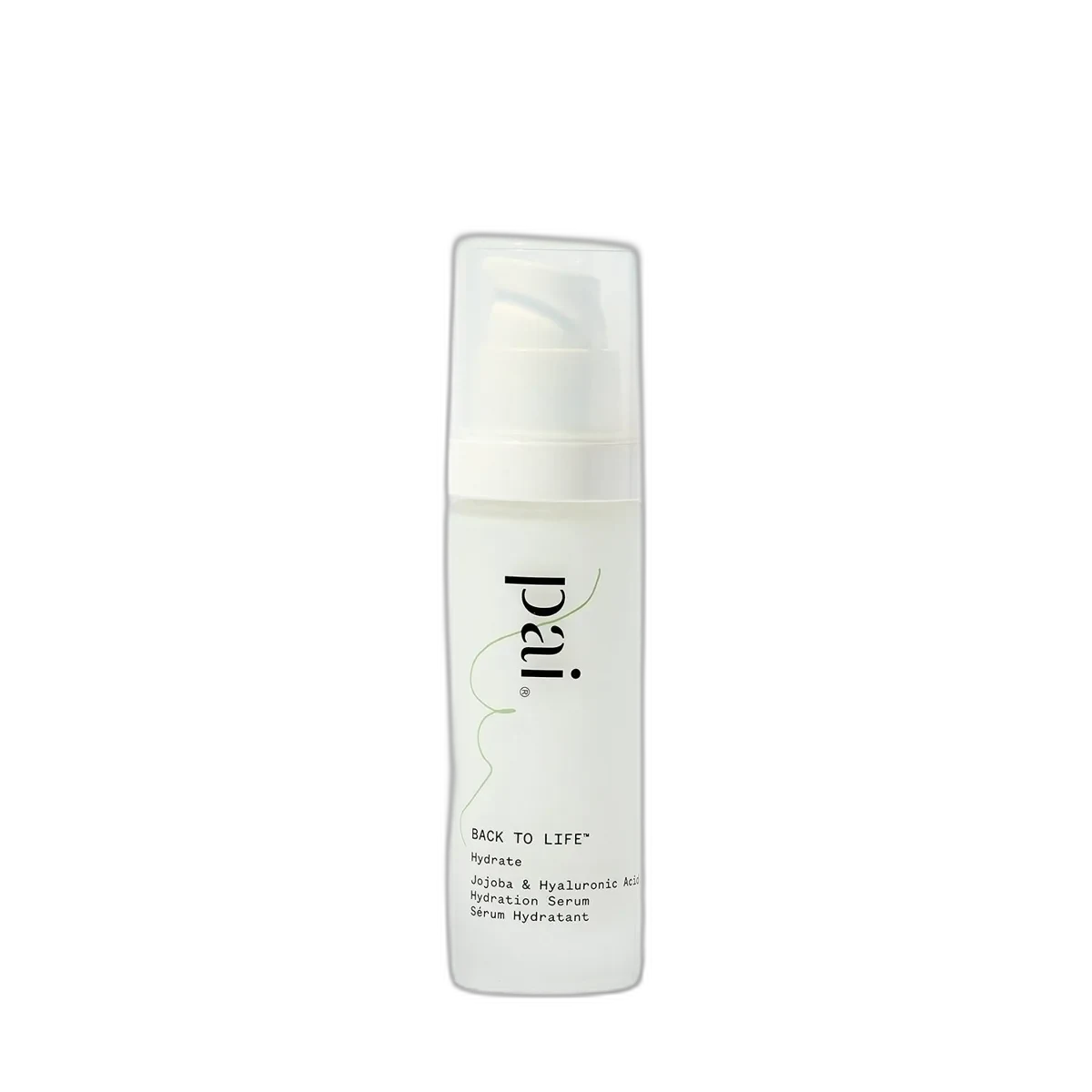
Back to Life Hydration Serum
Sensitive Skin Hydration Hero
 Verified reviewer
Pros & cons.
- +Prebiotic lactobacillus ferment supports skin microbiome health — especially relevant for eczema-prone skin
- +Native Australian berry complex provides novel antioxidant and anti-inflammatory support
- +COSMOS Organic certified with Leaping Bunny and Vegan Society credentials
- +Lightweight, non-tacky texture absorbs instantly and layers beautifully under moisturizer
- +Confirmed pregnancy safe by the brand
- +Jojoba oil provides a light occlusive seal that prevents HA from drying out in low humidity
- −Contains naturally occurring essential oil allergens (citral, geraniol, limonene) despite sensitive-skin positioning
- −May not provide sufficient hydration for severe dryness without a richer product layered on top
- −Essential oil scent, however subtle, is an unusual choice for an eczema-targeted product
- −Active ingredient concentrations not disclosed — limited transparency on how much HA is included
- −Not widely available at major US retailers
The full review.
Sarah Brown did not plan to start a skincare company. A London marketing executive, she woke up with chronic urticaria, a condition that made most skincare products sting. Because she could not find gentle products for her reactive skin, she began formulating her own in 2007. Pai Skincare—named after the Maori word for ‘benefit’ by Brown’s New Zealand-born mother—grew from that frustration. The Back to Life Hydration Serum represents the brand’s founding mission: a serum for skin that cannot hold moisture and needs it back without irritation.
The formula starts with water and glycerin; the second position indicates a high concentration. Glycerin is a humectant that dermatological research shows is as effective as hyaluronic acid for moisture retention, while also supporting natural barrier repair. The hyaluronic acid follows, drawing atmospheric moisture into the skin to provide a plump, cushioned feel.
Prebiotic lactobacillus ferment elevates this beyond a basic HA serum. Research links skin microbiome health to conditions like eczema. Dysbiosis—an imbalance in skin microbial communities—links to eczema flares and barrier dysfunction. By using a prebiotic that supports beneficial bacteria, Pai addresses a root cause of chronic dryness and reactivity. This is a meaningful ingredient choice.
The native Australian berry complex—Kunzea pomifera (muntries), Syzygium luehmannii (riberry), and Tasmannia lanceolata (pepperberry)—shows Pai looks beyond standard European botanicals. These three species contain anthocyanins and polyphenols; pepperberry has documented anti-inflammatory activity. For eczema-prone skin with constant subclinical inflammation, this botanical support helps calm the skin while hydrating.
Jojoba seed oil acts as the lipid component. Structurally, jojoba is a wax ester, not a true oil, so it mimics skin sebum and is unlikely to cause breakouts or feel heavy. It provides a light occlusive layer over the humectants, preventing the hyaluronic acid and glycerin from losing water to the atmosphere. This matters in low-humidity environments where pure HA serums can make skin drier.
The texture is light, silky, and sinks in almost immediately. It has no tackiness, no film, and requires no waiting period. It layers under moisturizer and sunscreen, which is vital for twice-daily use. The subtle natural scent of jasmine, may chang, and rose geranium disappears within seconds.
The product has one tension point. Pai markets the Back to Life Serum for extremely sensitive, eczema-prone skin. The formula is COSMOS organic certified, clinically tested on sensitive skin, and pregnancy safe. However, the essential oils contain naturally occurring allergens that EU regulation requires to be listed: citral, geraniol, citronellol, limonene, and linalool. These trace amounts are harmless for most users, including those with sensitive skin. But for the small percentage of eczema sufferers with confirmed contact allergies to these compounds, a product marketed for their condition containing them is frustrating.
This is not a dealbreaker for most, and Pai is transparent about these compounds. However, the brand’s sensitive-skin positioning sets expectations the formula does not fully meet for the most reactive users.
The certification stack is impressive: COSMOS Organic, Leaping Bunny, Vegan Society, and pregnancy safe. These require independent auditing and ongoing compliance. For consumers prioritizing sourcing and processing standards, this is one of the most thoroughly certified hydrating serums on the market.
The serum delivers meaningful hydration for moderately dry and dehydrated skin, reducing tightness and dry patches within days. For severely dry or eczema-compromised skin, use it in a layered approach: apply the serum first, then a richer moisturizer or balm. On its own, the lightweight serum format may be insufficient for deep dryness.
Value is acceptable. Forty-four dollars for one ounce is competitive for organic-certified serums, especially with COSMOS certification and the prebiotic component. One bottle lasts two to three months with twice-daily use, costing roughly fifteen to twenty-two dollars per month. It is a reasonable price for a certified organic product with a clear formulation rationale.
Ingredient analysis.
Full INCI list
Aqua (Water), Glycerin, Lactobacillus Ferment, Cocos Nucifera Fruit Extract, Simmondsia Chinensis Seed Oil, Hyaluronic Acid, Kunzea Pomifera Fruit Extract, Syzygium Luehmannii Fruit Extract, Tasmannia Lanceolata Fruit Extract, Sodium Levulinate, Lysolecithin, Sclerotium Gum, Sodium Anisate, Xanthan Gum, Pullulan, Helianthus Annuus Seed Oil, Jasminum Grandiflorum Flower Extract, Litsea Cubeba Fruit Oil, Pelargonium Graveolens Oil, Tocopherol, Lactic Acid, Beta-Sitosterol, Silica, Squalene, Citral, Geraniol, Citronellol, Limonene, Linalool
Skin match.
The science.
The Science
Skin microbiome health and eczema are closely linked in recent dermatological research. A 2019 review in the Journal of Allergy and Clinical Immunology shows that atopic dermatitis patients have lower microbial diversity on affected skin and more Staphylococcus aureus. Prebiotic ingredients like the lactobacillus ferment in this formula aim to support beneficial microbes, though clinical evidence for topical prebiotics in eczema management remains in early stages.
Hyaluronic acid works well as a topical humectant. A 2011 study in the Journal of Clinical and Aesthetic Dermatology shows topical HA improves skin hydration and reduces wrinkle depth compared to placebo. HA molecular weight matters — lower molecular weight HA penetrates deeper but can trigger inflammatory signaling in compromised skin, while higher molecular weight HA stays on the surface to form a hydrating film.
Glycerin, listed second in the INCI, is the formula's most reliable hydrating ingredient. Research in the British Journal of Dermatology (2008) shows glycerin attracts water to the stratum corneum and improves desmosome degradation and corneocyte maturation — both essential for healthy barrier function. For eczema-prone skin where barrier dysfunction drives symptoms, glycerin does more than simple humectancy.
Studies show Tasmannia lanceolata (pepperberry) has anti-inflammatory and antioxidant properties. Research in the Journal of Agricultural and Food Chemistry identifies polygodial as a bioactive compound with anti-inflammatory activity, justifying its use in formulations for inflamed, reactive skin.
Dermatologist Perspective
Dermatologists see compromised skin barrier and microbiome dysbiosis as interrelated factors in eczema and chronic dry skin. Board-certified dermatologists note that while the prebiotic approach in this serum aligns with microbiome support theories, evidence for topical prebiotics improving eczema outcomes is still preliminary. The glycerin and hyaluronic acid combination is a well-validated hydration strategy that dermatologists frequently recommend. However, dermatologists specializing in contact dermatitis note the presence of naturally occurring essential oil allergens — while safe for most, patients sensitive to limonene, linalool, or geraniol should patch test carefully despite the product's sensitive-skin positioning.
Where it fits in your routine.
Apply 2 to 3 pumps to damp skin right after cleansing and toning. Damp skin helps hyaluronic acid absorb better. Pat it onto the face and neck. Use a moisturizer or facial oil next to seal in hydration. Use morning and evening. For very dry skin, layer under a thick balm or cream.
At $44 for 1 fl oz, this serum's price fits the certified organic hydrating serum category. The COSMOS certification, prebiotic component, and Australian native botanicals justify the cost compared to basic HA serums. One bottle lasts 2-3 months with twice-daily use, making the monthly cost $15-22. The certification stack (COSMOS Organic, Leaping Bunny, Vegan Society) provides accountability that cheaper alternatives lack. This offers fair value for users who prioritize certified organic sourcing and sensitive-skin formulation.
Dry, dehydrated, or eczema-prone skin types want a certified organic hydrating serum with microbiome-supporting prebiotics. This works for anyone who values transparent ingredient sourcing, cruelty-free certification, and pregnancy-safe formulations.
People with confirmed contact allergies to limonene, linalool, geraniol, or citral should avoid this, even with its sensitive-skin positioning. It is not the best choice for oily skin types that do not need extra lipid content, or for those seeking maximum hydration from one product without layering.
Product details.
This lightweight, slightly gel-like serum feels silky and non-sticky. It is more fluid than a typical hyaluronic acid serum and absorbs quickly without leaving a film.
Jasmine, may chang, and rose geranium essential oils create a subtle, natural floral-herbal scent. This delicate scent fades seconds after application.
Recyclable glass bottle uses a pump dispenser. The clean, simple design matches Pai's minimalist branding.
Glycerin and hyaluronic acid provide immediate relief for tight, dehydrated skin. The formula does not sting or tingle, which matters for eczema-prone skin. Skin feels plump and soft minutes after the first application.
2-3 months with twice-daily use (2-3 pumps per application)
6 months
All Year
The backstory.
Pai Skincare founder Sarah Brown developed chronic hives and couldn't find skincare that didn't aggravate her condition. The Back to Life Hydration Serum was formulated specifically for skin that has been compromised by dryness, eczema, or barrier damage — the 'back to life' name reflects the feeling of parched skin finally receiving adequate hydration after struggling with reactive skin conditions.
About Pai Skincare
Established Brand (5–20 years)Pai Skincare was founded in 2007 in London by Sarah Brown after she developed chronic hives and couldn't find suitable sensitive-skin products. The entire range is certified organic by the Soil Association (COSMOS) and clinically tested on sensitive skin. The brand holds Leaping Bunny and Vegan Society certifications.
Common myths.
Synthetic formulations provide more serious hydration than organic skincare.
Hyaluronic acid and glycerin — the two primary humectants in this formula — work well in both organic and conventional products. The COSMOS organic certification regulates ingredient sourcing and processing, not active ingredient efficacy.
Hyaluronic acid serums can worsen dry skin in low-humidity environments.
This formula combines hyaluronic acid with jojoba oil and glycerin. These ingredients stop hyaluronic acid from pulling moisture out of the skin in dry air. The oil creates a light occlusive layer that locks in hydration. This makes the formula more humidity-independent than a pure water-based hyaluronic acid serum.
FAQ.
Is the Pai Back to Life Serum good for eczema?
This serum targets eczema-prone skin. It uses prebiotic lactobacillus ferment to balance the skin microbiome and combines hyaluronic acid with glycerin for deep hydration. Clinical tests show it works on sensitive skin and it is pregnancy safe. Because it contains naturally occurring essential oil allergens (citral, geraniol, limonene), patch testing is advisable for highly reactive eczema.
Can I use Pai Back to Life Serum during pregnancy?
Yes — Pai Skincare confirms this product is pregnancy safe. The formula lacks retinoids, high-dose salicylic acid, and other common pregnancy ingredients. It uses COSMOS certified organic ingredients and a gentle preservation system.
How does this compare to regular hyaluronic acid serums?
This serum uses prebiotic lactobacillus ferment for microbiome support, native Australian berry antioxidants, and jojoba oil to seal moisture. This approach provides more hydration than a simple HA-and-water formula. The COSMOS organic certification also ensures higher sourcing and processing standards.
Scent
The serum lacks synthetic fragrance but uses jasmine, may chang, and rose geranium essential oils for a subtle natural scent. These oils contain naturally occurring allergens (citral, geraniol, citronellol, limonene, linalool) which EU regulation requires on the label.
Best for
Is one serum enough for very dry skin?
This serum works best in a layered routine for very dry skin. Apply it to damp skin, then use a thick moisturizer or facial oil to seal in hydration. Some users with severe dryness find it insufficient on its own; it is a hydration booster, not a standalone moisturizer.
What the community says.
"Lightweight texture absorbs quickly without greasiness"
"Noticeably reduces dry patches and tightness"
"Suitable for very reactive and eczema-prone skin"
"Beautiful natural scent without synthetic fragrance"
"May need more pumps than expected for full hydration"
"Essential oil allergens despite sensitive-skin positioning"
"Expensive for a 1 oz serum at this active level"
"Not hydrating enough for severe dryness on its own"
People also looked at.