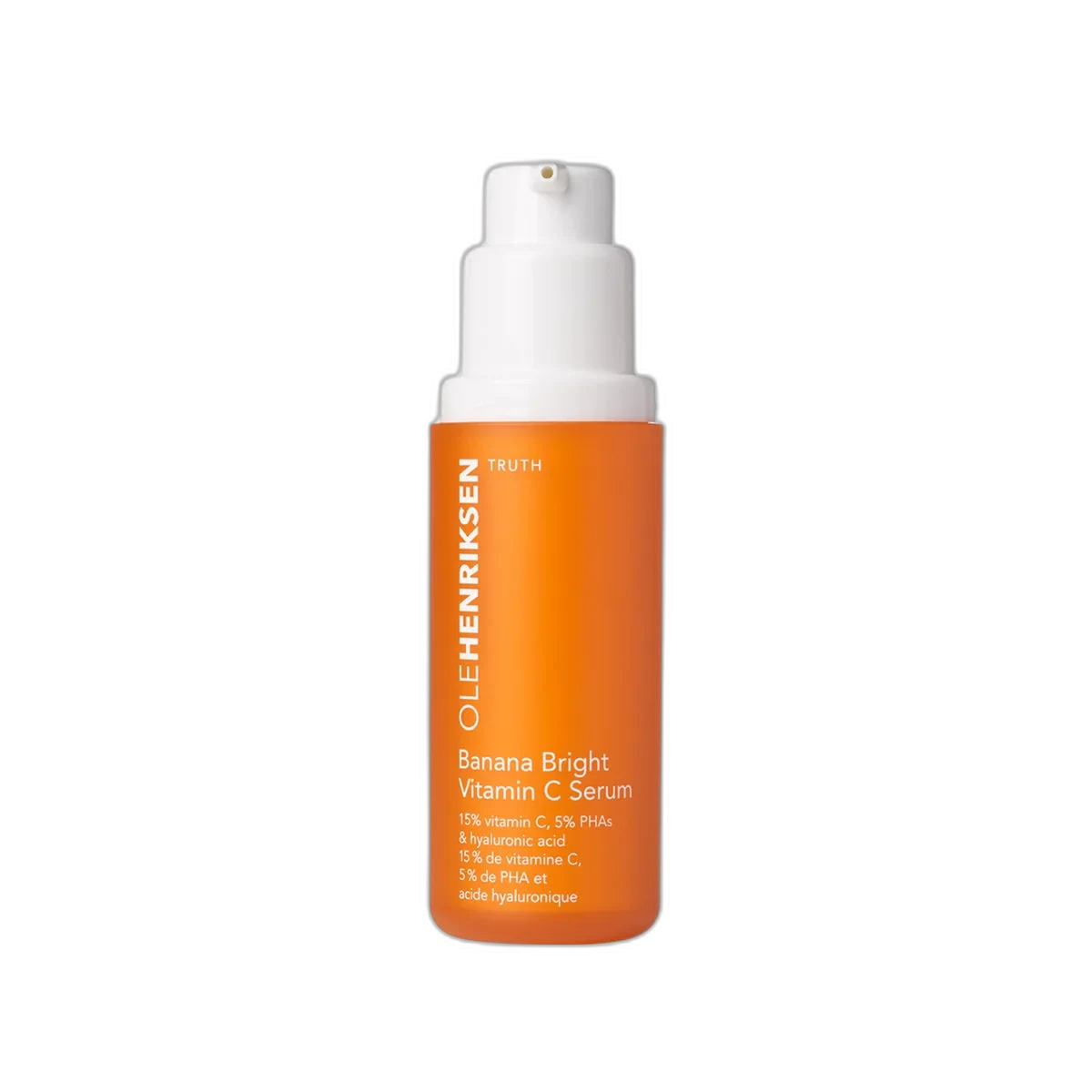
Banana Bright Vitamin C Serum
Glow-Boosting Brightener
 Verified reviewer
Pros & cons.
- +Instant golden-glow effect from light-reflecting pigments visible from the first application
- +Stable 3-O-ethyl ascorbic acid resists oxidation better than pure L-ascorbic acid serums
- +5% gluconolactone (PHA) enhances vitamin C penetration while providing gentle exfoliation
- +Dual-weight hyaluronic acid and panthenol keep skin hydrated despite active concentration
- +Works beautifully as a makeup primer with a dewy, luminous finish
- +Vegan and cruelty-free with Sephora Clean designation
- −Multiple citrus essential oils introduce limonene, linalool, and citral — known fragrance allergens
- −Significant number of users report burning, redness, and allergic reactions on sensitive skin
- −Premium price ($49/oz) for an ethyl ascorbic acid derivative rather than pure L-ascorbic acid
- −Fragrance serves no functional purpose and limits the product's safety profile
- −The instant glow is cosmetic (from pigments), not from the vitamin C itself
- −Not suitable for rosacea-prone, eczema-prone, or easily irritated skin types
The full review.
About Ole Henriksen
Ole Henriksen has been making people glow since before glow was a marketing concept. The Danish-born facialist opened his West Hollywood spa in 1975, building a celebrity client list and a reputation for sending people out the door looking like they had been lit from within. When LVMH acquired the brand in 2011, that glow philosophy went from a boutique spa secret to a Sephora bestseller strategy. The Banana Bright Vitamin C Serum, named for the old makeup artist trick of using banana powder to brighten under-eye areas, might be the purest distillation of that philosophy in a bottle.
Reality
The first thing you notice is the color. This is not a clear serum or a slightly yellow liquid that might be vitamin C — it is unambiguously golden, tinted with mica and titanium dioxide to create an instant brightening effect the moment it touches skin. It is a clever bit of product design: you get the psychological reward of visible results on day one while the actual vitamin C works its slower magic underneath. Whether this is brilliant consumer psychology or a cosmetic trick depends on your perspective, but there is no denying the immediate glow is satisfying.
The vitamin C itself deserves a closer look. Ole Henriksen uses 3-O-ethyl ascorbic acid as the primary form, listed as the second ingredient and part of a claimed 15% total vitamin C concentration (supplemented by a smaller amount of pure ascorbic acid further down the list). Ethyl ascorbic acid is a genuinely good derivative — it is water-soluble, stable enough to resist the rapid oxidation that destroys many vitamin C serums, and research published in the Scientific Reports journal in 2019 confirmed its superior skin penetration compared to pure ascorbic acid. The trade-off is potency: most dermatological research on vitamin C uses L-ascorbic acid, and ethyl ascorbic acid has less clinical data behind it.
What elevates this formula beyond a basic vitamin C serum is the 5% gluconolactone, a polyhydroxy acid that gently exfoliates while simultaneously hydrating. A study in Cutis (2004) found that PHA delivered anti-aging benefits comparable to traditional alpha-hydroxy acids but with significantly less irritation, stinging, and burning. In this serum, the gluconolactone enhances vitamin C penetration by clearing the dead cell layer that can impede absorption, while its humectant properties counterbalance any drying effects from the actives. It is a thoughtful pairing.
The supporting cast is solid. Dual-weight hyaluronic acid (both sodium hyaluronate and hyaluronic acid) provides hydration at multiple levels. Panthenol soothes and supports the skin barrier. Dipotassium glycyrrhizate, a licorice root derivative, adds anti-inflammatory and brightening properties through a melanin-inhibiting pathway that complements vitamin C. Tocopherol (vitamin E) stabilizes the vitamin C while contributing its own antioxidant protection. And a botanical blend of rosehip, sea buckthorn, and goji berry extracts provides additional antioxidant support.
Texture
The texture is pleasant — a lightweight, fluid serum that absorbs within thirty seconds without the stickiness that plagues many vitamin C products. As a makeup base, it performs impressively. The golden tint and dewy finish create a natural-looking radiance that makeup sits well over, and several reviewers use it specifically as a hybrid serum-primer step.
Scent
Now for the part that matters most: the scent. And not because it smells bad — it smells lovely. Sweet citrus, fresh orange, genuinely pleasant. The problem is why it smells that way. The formula contains orange oil, orange peel oil, and orange fruit extract — three separate sources of citrus fragrance. These bring with them limonene, linalool, and citral, all of which are EU-declared fragrance allergens for good reason. They are among the most common causes of allergic contact dermatitis from cosmetic products.
Common Praise
The review landscape tells the story clearly. Enthusiastic five-star reviews praise the glow, the brightening, the texture, the scent.
Common Complaints
And then there are the one- and two-star reviews: burning, redness, swelling, rashes that took weeks to resolve. This is not a universally well-tolerated product.
Best for
For the right person — someone with non-sensitive skin who wants a brightening serum that doubles as a glow-giving primer with a pleasant citrus experience — the Banana Bright Vitamin C Serum delivers. The formulation is genuinely thoughtful, the PHA inclusion is smart, and the stable vitamin C form means the product maintains its efficacy longer than many competitors.
Not ideal for
But the inclusion of multiple citrus essential oils in a product designed for daily facial use is a choice that prioritizes sensory appeal over inclusivity, and for a brand owned by LVMH with the formulation resources that implies, it is a choice worth questioning.
Ingredient analysis.
Full INCI list
Aqua/Water/Eau, 3-O-Ethyl Ascorbic Acid, Neopentyl Glycol Diheptanoate, Gluconolactone, Cetearyl Olivate, Sorbitan Olivate, Citrus Aurantium Dulcis (Orange) Oil, Citrus Aurantium Dulcis (Orange) Peel Oil, Triethyl Citrate, Citrus Sinensis (Orange) Fruit Extract, Helianthus Annuus (Sunflower) Seed Oil, Potassium Hydroxide, Betaine, Panthenol, Phenoxyethanol, Hydroxyacetophenone, Aminomethyl Propanol, Acrylates/C10-30 Alkyl Acrylate Crosspolymer, Gluconic Acid, Tocopherol, Glycerin, Succinoglycan, Phytic Acid, Mica, Sodium Metabisulfite, Sodium Hyaluronate, Hyaluronic Acid, Caramel, Dipotassium Glycyrrhizate, Sodium Polyacrylate, Pentaerythrityl Tetra-Di-T-Butyl Hydroxyhydrocinnamate, Sodium Phytate, Citrus Limon (Lemon) Fruit Extract, Rosa Canina Fruit Extract, Hippophae Rhamnoides Extract, Ascorbic Acid, Lycium Barbarum Fruit Extract, Citrus Aurantium Dulcis (Orange) Fruit Extract, Leuconostoc/Radish Root Ferment Filtrate, Limonene, Linalool, Citral, Titanium Dioxide (CI 77891), Yellow 5 (CI 19140), Red 4 (CI 14700)
Skin match.
The science.
The Science
The 3-O-ethyl ascorbic acid at the core of this formula is one of the more promising vitamin C derivatives to emerge in recent years. A clinical study published in Molecules (2021) evaluated a 10% concentration on 39 female subjects and found a 4.25% reduction in dark spots, a 20.35% increase in skin firmness, and a 4.49% improvement in brightness after just 28 days. Mechanistic research published in Free Radical Biology and Medicine (2021) demonstrated that ethyl ascorbic acid inhibits melanin synthesis through Nrf2-mediated alpha-MSH inhibition — a different pathway than some other brightening agents, which adds scientific rationale for combining it with the licorice root derivative in this formula.
The 5% gluconolactone brings its own clinical weight. A pivotal study published in Cutis (2004) comparing PHA regimens to AHA regimens found equivalent anti-aging benefits — including improvements in mottled hyperpigmentation, fine lines, and skin roughness — with significantly less irritation. A separate study in Dermatologic Surgery (2004) demonstrated that gluconolactone provided up to 50% UV protection in vitro, suggesting it may contribute mild photoprotective benefits when used under sunscreen.
The vitamin C plus vitamin E combination in this formula follows the established antioxidant synergy principle: tocopherol regenerates oxidized ascorbate, extending its effective lifespan on the skin. This pairing was first described in detail by Pinnell et al. in studies demonstrating that vitamin C plus E provides approximately fourfold greater UV protection than either alone.
The dual-form hyaluronic acid system (sodium hyaluronate plus hyaluronic acid) provides hydration at different skin depths. Sodium hyaluronate, with its smaller molecular weight, penetrates into the upper epidermis, while the larger hyaluronic acid molecule sits at the surface drawing moisture from the environment. This multi-weight approach helps maintain skin hydration levels that support optimal vitamin C activity.
References
- The Anti-Ageing and Whitening Potential of a Cosmetic Serum Containing 3-O-ethyl-l-ascorbic Acid — Molecules (PMC) (2021)
- A polyhydroxy acid skin care regimen provides antiaging effects comparable to an alpha-hydroxyacid regimen — Cutis (2004)
- The polyhydroxy acid gluconolactone protects against ultraviolet radiation in an in vitro model of cutaneous photoaging — Dermatologic Surgery (2004)
Dermatologist Perspective
Board-certified dermatologists recognize 3-O-ethyl ascorbic acid as a viable vitamin C derivative with good stability and skin penetration, though they note the clinical evidence base is less extensive than for pure L-ascorbic acid at 10-20% concentrations. Dermatologists would appreciate the PHA inclusion for its gentle exfoliation and the dual hyaluronic acid for hydration. However, dermatologists specializing in contact dermatitis would flag the multiple citrus essential oils and their associated allergens (limonene, linalool, citral) as unnecessary additions to a daily-use facial product. These ingredients are among the most common causes of cosmetic contact dermatitis, and their inclusion in a serum designed for daily application increases cumulative sensitization risk over time.
Where it fits in your routine.
Apply 2-3 drops to clean, dry skin every morning. Press and pat the product into your face and neck; do not drag. Wait 30-60 seconds for absorption before you apply moisturizer. Always use sunscreen SPF 30 or higher afterward. Mix with one drop of moisturizer if your skin is dry. If new to vitamin C serums, use every other day before moving to daily use. Avoid the immediate eye area if you have sensitive skin. Store in a cool, dark place to preserve the vitamin C.
At $49 for 1 oz, this serum sits in the mid-to-upper vitamin C serum market. The formulation is good; the PHA, dual hyaluronic acid, and vitamin E synergy show intentional design. However, several competing serums offer pure L-ascorbic acid (considered more potent) at similar or lower prices without citrus fragrance oils. A 0.5 oz travel size is available for lower-commitment trial. Daily use lasts 2-3 months, making the monthly cost $16-25. The value is highest for users who want the instant-glow cosmetic effect and use it as a serum-primer hybrid.
Normal to combination skin types can use this daily brightening serum as a glow-boosting makeup primer. It addresses dullness, uneven tone, and dark spots with a sensorial application. This formula works best for users who are not fragrance-sensitive.
People with sensitive, rosacea-prone, or eczema-prone skin should avoid this serum because it contains citrus essential oils and fragrance allergens. This serum also lacks the maximum vitamin C potency found in pure L-ascorbic acid serums. It is not the best choice for those on a tight budget who prioritize actives over sensory experience.
Product details.
This lightweight, fluid serum has a golden-yellow tint from banana-powder-inspired pigments (mica, titanium dioxide, colorants). It absorbs quickly and feels slightly sticky. The serum applies smoothly and leaves a luminous finish.
Orange oil and orange peel oil create a sweet citrus-orange fragrance. Most users find the scent pleasant and fresh, though the fragrance is noticeable rather than faint. It dissipates within a few minutes of absorption.
An opaque yellow-orange pump bottle protects the vitamin C from light degradation. The pump dispenser provides controlled, hygienic dispensing. It comes in an orange branded outer box. The signature banana-yellow color scheme stands out on the shelf.
Light-reflecting pigments create an immediate golden glow on first application; this effect is cosmetic, not from the vitamin C. The serum absorbs in 30-60 seconds. The PHA and vitamin C cause mild tingling in some users, which usually stops within minutes. Stop use if tingling turns to burning or persists. New vitamin C serum users should start every other day to build tolerance.
Use 2-3 drops daily for 2-3 months; the 1 oz bottle provides about 60-90 applications.
12 months
All Year
The backstory.
Ole Henriksen built his brand on the 'glow' concept long before glass skin became a social media obsession — his Hollywood spa was known for sending clients out with luminous, camera-ready skin since the 1970s. The Banana Bright line, named for the makeup artist trick of using banana powder to brighten under-eye areas, translated that spa philosophy into a vitamin C product line. The serum launched around 2020 and quickly became one of Sephora's bestselling vitamin C offerings.
About Ole Henriksen
Legacy Brand (20+ years)Ole Henriksen launched in 1983, founded by Danish-born facialist Ole Henriksen, who opened one of Hollywood's first celebrity-focused spas in 1975. LVMH acquired the brand in 2011, and Kendo Holdings operates it now. The brand has four decades of skincare formulation history and a loyal spa-based following, but its clinical research portfolio is smaller than dermatologist-developed brands.
Common myths.
The golden tint in this serum shows the vitamin C has oxidized.
The yellow-gold color comes from mica, titanium dioxide, and cosmetic colorants, not oxidized vitamin C. The 3-O-ethyl ascorbic acid in this formula is more stable than pure L-ascorbic acid and stays clear when exposed to air. If the product turns dark brown or smells off, it has degraded.
A vitamin C serum with citrus oils adds extra vitamin C benefits.
The citrus oils (orange oil, orange peel oil) in this formula provide fragrance and sensory experience, not vitamin C delivery. The 3-O-ethyl ascorbic acid and ascorbic acid provide all topical vitamin C benefits. The citrus oils also add potential sensitizers (limonene, linalool, citral) that cause irritation.
FAQ.
Can you use Ole Henriksen Banana Bright serum every day?
Users with normal to combination skin can use this serum every morning. The 15% vitamin C plus 5% PHA is a potent combination. New users should start every other day and build up. If you have persistent redness, burning, or irritation, use it less often. Always use sunscreen during daytime use.
Is Ole Henriksen Banana Bright serum good for sensitive skin?
This serum is not ideal for sensitive skin. It contains multiple citrus essential oils (orange oil, orange peel oil) and known fragrance allergens (limonene, linalool, citral). Many sensitive-skin users report burning, redness, and irritation. Reactive or rosacea-prone skin types should choose a fragrance-free vitamin C serum instead.
What type of vitamin C is in Ole Henriksen Banana Bright serum?
3-O-ethyl ascorbic acid is the main vitamin C form. This stable derivative resists oxidation better than pure L-ascorbic acid. The formula also includes a smaller amount of pure ascorbic acid later in the ingredient list. Together, these ingredients reach the brand's claimed 15% vitamin C concentration. Ethyl ascorbic acid works well but is less potent than L-ascorbic acid at equivalent concentrations.
Can you use Ole Henriksen Banana Bright serum with retinol?
Yes, but not simultaneously. Use this vitamin C serum in the morning and retinol at night to prevent over-exfoliation and irritation. The gluconolactone (PHA) in the serum adds mild exfoliation, so using it with retinol in one routine can overwhelm the skin barrier. An AM vitamin C / PM retinol split is the safest approach.
What the community says.
"Instant brightening and glow effect that makes skin look radiant immediately"
"Noticeably fades dark spots and evens skin tone with consistent use"
"Lightweight texture absorbs quickly without greasy residue"
"Works beautifully as a makeup base with its golden illuminating tint"
"Pleasant citrus scent that most users enjoy"
"Smooth, hydrating feel despite potent active concentration"
"Causes irritation, redness, and burning on sensitive skin — especially near the eyes"
"Citrus essential oils are known sensitizers that can trigger reactions over time"
"Price is high at $49/oz for an ethyl ascorbic acid rather than pure L-ascorbic acid"
"Some users report allergic reactions including swelling after extended use"
"Contains limonene, linalool, and citral — EU-declared allergens"
"Not suitable for daily use on easily irritated skin types"
People also looked at.