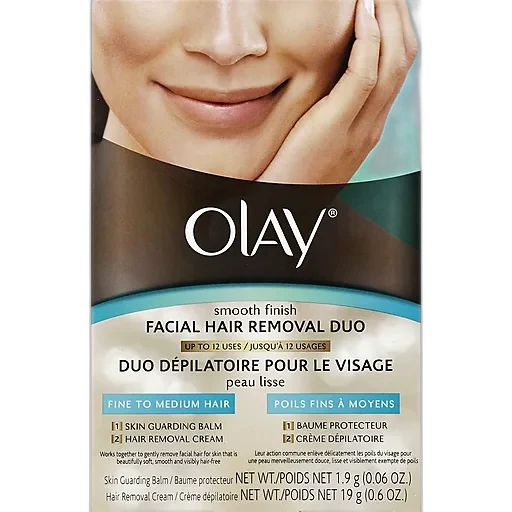
Smooth Finish Facial Hair Removal Duo
Discontinued Cult Favorite
 Verified reviewer
Pros & cons.
- +Skin Guarding Balm concept was genuinely innovative and reduced irritation significantly
- +Much milder lemon-citrus scent compared to harsh chemical smell of competitors
- +Effective and thorough removal of fine to medium facial hair in under 10 minutes
- +Pain-free and stubble-free alternative to waxing threading and shaving
- +Most users experienced minimal redness allowing immediate makeup application
- +Simple intuitive two-step process with clear instructions
- −Discontinued since 2018 and unavailable through normal retail channels
- −Ineffective on coarse or thick facial hair even in the stronger formulation
- −Expensive at roughly $20 for only 12 uses from very small tubes
- −Contains a chemical depilatory system that is inherently irritating for some skin
- −Results are temporary with regrowth appearing in 1-3 weeks
The full review.
Facial hair removal is a category people rarely discuss, yet roughly half the adult population thinks about it regularly. Options historically range from painful (waxing, threading) to irritating (depilatory creams that smell like sulfur and irritate skin) to tedious (tweezing individual hairs in a magnifying mirror). The Olay Smooth Finish Facial Hair Removal Duo, launched in 2011 and discontinued around 2018, offered a different approach: a depilatory that respected your skin.
The innovation was the Skin Guarding Balm — a waxy stick applied before the depilatory cream. The balm contains sucrose polycottonseedate, a film-forming sugar ester that creates a thin protective barrier between your skin and the alkaline chemistry that dissolves hair. No one else commercialized this simple idea for the at-home market. You apply the balm, apply the cream over it, wait six to eight minutes, and wipe it away. Your hair is gone. Your skin stays calm because the waxy barrier shields it.
The chemistry uses standard depilatory science. Calcium thioglycolate, activated by calcium hydroxide at a pH of twelve to thirteen, breaks the disulfide bonds in hair keratin. The hair dissolves at the skin surface. Sodium hydroxide maintains the alkaline environment. Aloe and boswellia gum soothe the skin. This is the same fundamental reaction in every depilatory cream on the market — the difference is how your skin reacts while the hair dissolves.
The difference was noticeable. Users reported less irritation compared to competing products. Many applied makeup immediately after treatment with no visible redness. The mild lemon-citrus scent was better than the sulfurous smell of traditional depilatories. It was not pleasant, but it was less offensive, which matters for an upper lip product.
The product worked best on fine to medium facial hair, like peach fuzz and light upper lip hair. It was quick, effective, painless, and gentle enough for use every two to three weeks. The Medium to Coarse Hair version received mixed reviews. Thick, wiry facial hair often survived the treatment, requiring extra tweezing.
The limitations were real. The product was expensive — roughly twenty dollars for a kit with a 19-gram tube of cream that lasted about twelve uses. For a treatment used every two to three weeks, the cost adds up. Users treating their full face rather than just the upper lip ran through a kit faster than expected.
In 2018, Olay confirmed on social media that the product was discontinued. No explanation was offered. The niche market for facial depilatories may not have justified the manufacturing and marketing costs for a P&G brand. The discontinuation sparked frustration that continues today. eBay listings for expired units cost well above the original retail.
The cult following shows a genuine unmet need. No one has replicated the two-step balm-and-cream concept since. Competing depilatories remain harsh. Threading and waxing remain painful. Laser and IPL are expensive and require multiple sessions. The Olay Smooth Finish filled a niche — gentle, quick, affordable facial hair removal — and its absence remains.
Evaluating a product you cannot buy through normal channels is awkward. The chemistry was sound, the innovation was genuine, and the user experience improved on the alternatives. But a discontinued product with uncertain availability and questionable shelf life from secondary markets cannot earn a strong recommendation now. If Olay or a competitor resurrects the skin-guarding-balm concept, the category would benefit.
Ingredient analysis.
Full INCI list
Skin Guarding Balm: Sucrose Polycottonseedate, Brassica Campestris/Aleurites Fordi Oil Copolymer, Ozokerite, Beeswax, Propylparaben, Ethylene Brassylate, Tocopherol, Propyl Gallate, Tocopheryl Acetate. Hair Removal Cream: Water, Cetearyl Alcohol, Mineral Oil, Calcium Thioglycolate, Calcium Hydroxide, Ceteareth-20, Sodium Hydroxide, Fragrance, Aloe Barbadensis Leaf Juice, Boswellia Serrata Gum, Sodium Silicate, Silica, Isostearyl Alcohol, Disodium EDTA, Sodium Benzoate, Potassium Sorbate
Skin match.
The science.
The Science
Chemical depilatory creams use a known mechanism: thioglycolate salts cleave keratin's disulfide bonds in a highly alkaline environment. Calcium thioglycolate is the active agent here. It is one of the mildest depilatory compounds for facial use, making it the standard for facial depilatories instead of the more aggressive strontium sulfide used in some body hair removers.
The Skin Guarding Balm uses formulation innovation rather than new chemistry. The sucrose polycottonseedate creates a semi-permeable film on the skin surface. This film is thin enough for depilatory chemicals to reach and dissolve hair protruding through the barrier, but thick enough to reduce direct contact between the alkaline cream and the stratum corneum. Cosmetics & Toiletries journal analyzed this concept, noting the formulation elegance of using a sugar-ester film former to selectively protect skin while allowing hair dissolution.
The alkaline environment (pH approximately 12-13) is necessary for thioglycolate activity but sits far above the skin's natural pH of approximately 4.5-5.5. This pH disruption causes the primary irritation in all chemical depilatories. The balm barrier mitigates but does not eliminate this exposure; this explains why this product was gentler than competitors but still not suitable for all users.
Aloe barbadensis and boswellia serrata (frankincense) in the formula provide anti-inflammatory support. Published research shows boswellic acids in boswellia have anti-inflammatory activity, though their efficacy in a depilatory context at likely low concentrations is unclear.
Dermatologist Perspective
Dermatologists generally consider chemical depilatories a safe method of facial hair removal when used according to instructions. Board-certified dermatologists note the skin-guarding balm concept in this product addressed a primary clinical concern with facial depilatories: the risk of chemical irritant contact dermatitis from direct and prolonged alkaline exposure. Dermatologists recommend performing a patch test 24-48 hours before first use, even with gentler formulations like this one. For patients using retinoids, AHAs, or other barrier-thinning treatments, dermatologists advise discontinuing these products for at least 48 hours before and after depilatory use to minimize irritation risk.
Where it fits in your routine.
Cleanse your face and pat it dry. Skip all other products beforehand. Use the slant-tip applicator to apply Skin Guarding Balm to the treatment area, covering all skin that touches the cream. Apply a thick layer of Hair Removal Cream over the balm until the hair and skin are hidden. Wait 6-8 minutes (maximum 10 minutes). Wipe the cream away gently with a damp cloth. Rinse well with lukewarm water. Apply a gentle, fragrance-free moisturizer. Avoid retinoids, exfoliants, or harsh actives on the treated area for 24-48 hours.
At its original retail price of about $20 for a 12-use kit, this product cost roughly $1.67 per treatment. This price is reasonable for professional-feeling facial hair removal at home, but threading costs more ($5-15 per session) and lasts longer. Secondary-market pricing since discontinuation ($30-60+ per kit) makes ongoing use impractical. During its active retail life, the cost-per-use value was fair but not exceptional.
People with fine to medium facial hair seeking a gentle, pain-free alternative to waxing or threading use this. It works best for users who had irritation from other depilatory creams and want the protective balm barrier. Note: this product is discontinued and only exists on secondary markets.
This product likely won't fully remove coarse or thick facial hair. People with sensitive skin, active rosacea, eczema, or compromised barriers should avoid chemical depilatories. Stop using retinoids or exfoliating acids 48 hours before use.
Product details.
The balm is a waxy solid. Use the slant-tip applicator like a lip balm. The cream is a thick, opaque white depilatory. Apply a layer thick enough to hide hair and skin.
Mild lemon-citrus fragrance — much less offensive than typical depilatories, but a faint chemical undertone remains.
A compact box holds a twist-up slant-tip wand of Skin Guarding Balm, a small squeeze tube of Hair Removal Cream, and an instruction booklet. The Olay branding is clean white.
The balm forms a thin waxy layer, then apply the cream on top. A mild warming or tingling sensation is normal during the 6-8 minute wait. Most users see immediate skin smoothness and minimal redness after wiping it away.
12 uses per kit, approximately 2-3 months with biweekly use
12 months
All Year
The backstory.
Launched in 2011, this product filled a gap between painful waxing and irritating depilatory creams. Its innovative skin-guarding balm earned praise from cosmetic chemists and users alike. Despite strong reviews and a loyal fanbase, Olay discontinued it around 2017-2018 for undisclosed reasons — possibly due to limited market size for the niche category. Its discontinuation sparked petitions and ongoing secondary-market demand.
About Olay
Legacy Brand (20+ years)Procter & Gamble acquired Olay in 1985 after its 1952 founding. This product discontinued around 2017-2018. Standard retail channels no longer carry it; only secondary markets sell it at inflated prices.
Common myths.
Depilatory creams make hair grow back thicker and darker.
Chemical depilatories dissolve hair at the skin surface but do not affect the follicle. Hair grows back with its natural thickness and color. The blunt-cut tip feels slightly coarser than a naturally tapered hair tip, but the hair itself is unchanged.
If you leave depilatory cream on longer, it works better.
Leaving the product on longer than 8-10 minutes increases chemical burn risk without improving hair removal. The active chemicals reach maximum efficacy within the recommended window.
FAQ.
Is the Olay Smooth Finish Facial Hair Removal Duo discontinued?
Olay discontinued this product around 2017-2018. Regular retail channels no longer carry it. You can find some units on secondary markets like eBay, but prices are much higher and expiration status is uncertain.
What makes the Olay Smooth Finish different from regular depilatory creams?
The two-step system uses a Skin Guarding Balm first. This balm forms a protective barrier between the skin and harsh depilatory chemicals. This reduces irritation and redness compared to applying depilatory cream directly to bare skin.
How long do results last from the Olay Smooth Finish?
Results last 1-3 weeks depending on individual hair growth rates. The product dissolves hair at the skin surface but does not remove it from the root, so regrowth happens sooner than with waxing or threading.
Can the Olay Smooth Finish be used on coarse facial hair?
A Medium to Coarse Hair version exists, but reviews show it works poorly on thick or wiry facial hair. The product works best on fine to medium peach fuzz. Users with coarser hair still use tweezers for remaining strands.
Is the Olay Smooth Finish safe during pregnancy?
Chemical depilatories are low-risk during pregnancy because systemic absorption is minimal. However, pregnancy makes skin more reactive, which increases irritation or chemical burn risks. A patch test is essential, and you must consult your healthcare provider.
What the community says.
"Significantly less irritating than competing depilatory creams thanks to the balm barrier"
"Pleasant mild lemon-citrus scent compared to harsh chemical smell of competitors"
"Effective and thorough removal of fine and peach fuzz facial hair"
"Pain-free alternative to waxing with no razor stubble or ingrown hairs"
"Minimal redness post-treatment allowing immediate makeup application"
"Simple two-step process takes only 8 minutes"
"Ineffective on coarse or thick facial hair even in the Medium to Coarse version"
"Expensive at roughly $20 for only about 12 uses from tiny tubes"
"Discontinued since 2018 and impossible to find at normal retail prices"
"Product amount is very small and runs out quickly for larger treatment areas"
"Results vary widely from 2-3 weeks of smoothness to regrowth in days"
People also looked at.