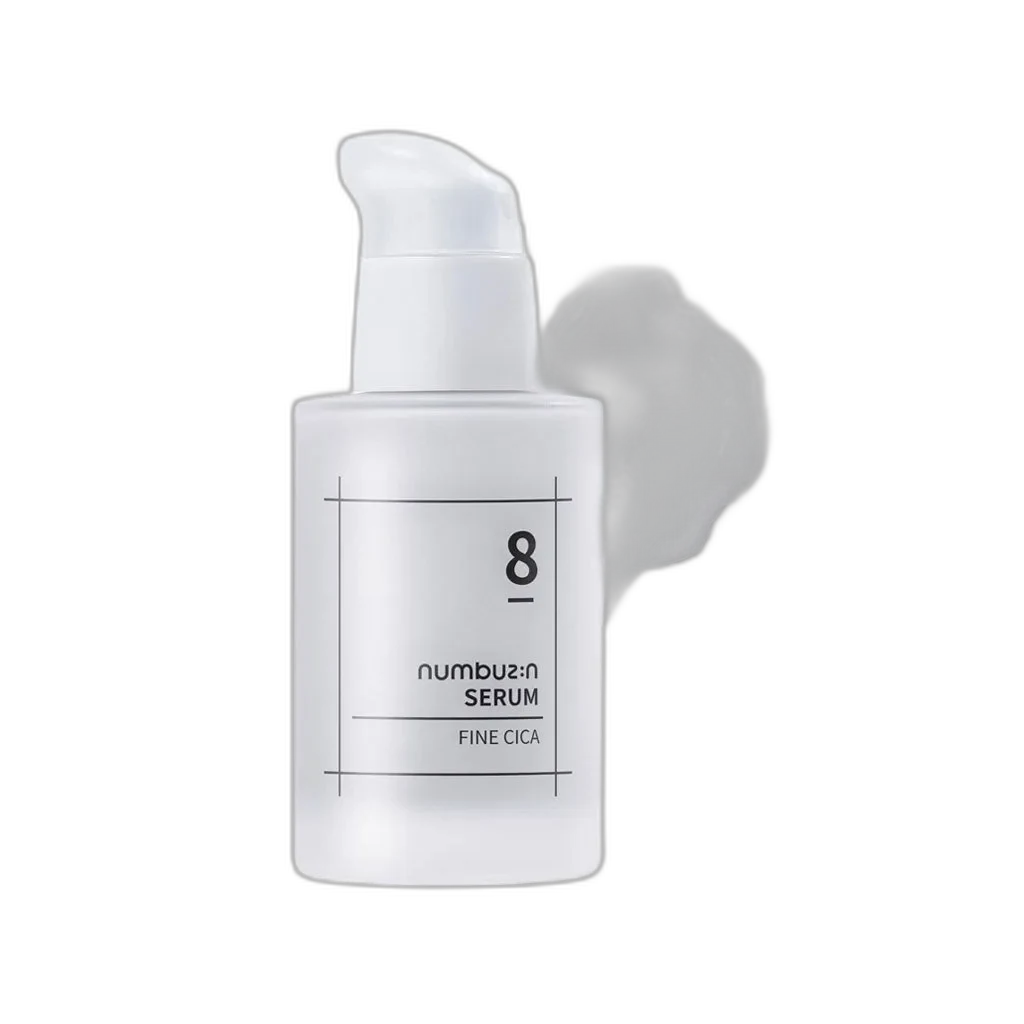
No. 8 Fine Cica Serum
Dermacosmetic Cica Repair
 Verified reviewer
Pros & cons.
- +Four isolated centella triterpenes provide the most comprehensive cica complex in Numbuzin's range
- +EGF and FGF growth factor peptides add active repair capability beyond passive soothing
- +Silky silicone base creates a protective, primer-like barrier over compromised skin
- +Niacinamide at 4-5% supports barrier strengthening and ceramide production
- +Fragrance-free and essential-oil-free — formulated for genuinely sensitive skin
- +Works as a functional makeup primer while treating skin underneath
- +Dramatically more affordable than clinical growth factor serums at similar positioning
- −Silicone-heavy base may not appeal to those avoiding silicones in skincare
- −Can pill under certain moisturizers and sunscreens if not fully absorbed first
- −Contains ethanol, even though at very low concentration, in a product targeting sensitive skin
- −Growth factor peptides appear low on the ingredient list suggesting modest concentrations
- −Higher price than the No. 6 and No. 7 serums without dramatically different real-world results for most users
The full review.
Some products bridge the gap between aesthetic clinics and home care. Numbuzin calls this ‘dermacosmetic,’ and the No. 8 Fine Cica Serum proves it: centella asiatica refined to four potent triterpenes pairs with growth factor peptides used in post-laser recovery protocols, all in a silky serum for morning and night use.
Growth factors set this apart from other cica serums. Oligopeptide-1 (EGF, Epidermal Growth Factor) and Oligopeptide-3 (FGF, Fibroblast Growth Factor) are signaling peptides that signal skin cells to increase renewal and collagen production. Clinicians recommend growth factor serums after microneedling, laser resurfacing, and chemical peels to speed healing. Numbuzin puts them in a daily serum to target active repair alongside chronic sensitivity.
This centella complex is the most complete in the Numbuzin range. The No. 7 serum uses three isolated triterpenes. The No. 8 uses four: asiaticoside, madecassic acid, asiatic acid, and madecassoside. Each has a specific role in the wound-healing cascade—asiaticoside and madecassoside stimulate type I collagen synthesis, madecassic acid provides anti-inflammatory activity, and asiatic acid increases tensile strength in healing tissue. Combined with the whole leaf extract, this is serious centella asiatica.
Niacinamide at 4-5% balances barrier strengthening with anti-inflammatory action. This is not the 10% found in brightening serums; it is calibrated for repair to support ceramide production and moisture retention while growth factors and centella handle cellular renewal.
Texture
The texture differs from lighter Numbuzin products. A cyclopentasiloxane and dimethicone base creates a silky, primer-like feel, unlike the watery No. 6 or gel No. 7. Application leaves skin feeling smoother and more protected, providing a tactile sense of a barrier over compromised skin. For post-procedure skin, this is functional. The silicone film creates a breathable shield that protects healing skin from environmental irritants without occluding pores.
Squalane adds emollient protection by mimicking natural skin sebum. Combined with glycerin, sodium hyaluronate, beta-glucan, and trehalose, the hydration system is thorough—multiple humectants draw in moisture, emollients smooth the surface, and the silicone barrier locks it in. It is a well-engineered moisture sandwich.
The formula contains ethanol later in the ingredient list, suggesting a concentration likely below 1%. At this level, it likely acts as a solubilizer for an active ingredient rather than a stand-alone component. This concentration is functionally undetectable for most users, including those with sensitive skin. For ingredient-obsessed users—and for marketing consistency in a product for compromised skin—it is a minor blemish on an otherwise clean label.
In practice, this serum works well. On irritated skin, it provides an immediate calming effect—the centella triterpenes and protective silicone layer provide biochemical and physical soothing. After several weeks of use, skin becomes more resilient. Triggers like wind, certain products, or post-workout flushing produce milder redness. The barrier feels stronger, not just temporarily patched.
The primer-like quality offers dual-use benefits. Under makeup, the serum creates a smooth, even base. Under sunscreen, it prevents the friction and irritation some SPF formulations cause on sensitive skin. It improves the performance of layered products.
Pilling can occur. The silicone base may ball up when layered with incompatible products, specifically water-based moisturizers or sunscreens with high mineral filter concentrations. To avoid this, let the serum absorb fully before the next step and use patting motions instead of rubbing.
At $25 for 50ml, this costs slightly more than the No. 6 and No. 7, which is fair for the growth factor peptides and the larger centella complex. It is much cheaper than clinical growth factor serums, which cost $100-200 for similar volumes. Whether the growth factors are at efficacious concentrations is unknown—they appear after squalane and sodium hyaluronate in the ingredient list—but the centella, niacinamide, and barrier-repair ingredients ensure meaningful results.
The No. 8 Fine Cica Serum shows Numbuzin at its most aspirational. It moves beyond basic soothing into active repair. While growth factor concentrations may be modest, the formulation is sophisticated. For those with chronic sensitivity, post-procedure recovery, or barrier damage requiring more than a light cica gel, this serum brings clinical thinking to an everyday price point.
Ingredient analysis.
Full INCI list
Purified Water, Glycerin, Cetearyl Alcohol, Cyclopentasiloxane, Polymethylsilsesquioxane, Cyclohexasiloxane, 1,2-Hexanediol, Niacinamide, Propanediol, Cetyl Ethylhexanoate, Dimethicone, Sodium Stearoyl Glutamate, Centella Asiatica Leaf Extract, Asiaticoside, Madecassic Acid, Asiatic Acid, Madecassoside, Oligopeptide-1, Oligopeptide-3, Squalane, Sodium Hyaluronate, Beta-Glucan, Hydrogenated Lecithin, Tromethamine, Dipropylene Glycol, Butylene Glycol, Carbomer, Trehalose, Panthenol, Acrylates/C10-30 Alkyl Acrylate Crosspolymer, Xanthan Gum, Ethanol, Caprylyl Glycol, Sodium Phosphate
Skin match.
The science.
The Science
The four centella triterpenes in this formula are the most studied part of Centella asiatica's bioactivity. Madecassoside — the fourth triterpene not in the No. 7 formula — inhibits inflammation by down-regulating iNOS and COX-2 expression and promotes collagen synthesis via TGF-beta signaling, according to research in the Journal of Ethnopharmacology. A Planta Medica study shows madecassoside has better anti-inflammatory activity than asiaticoside in certain inflammation models, making its inclusion a meaningful upgrade.
Stanley Cohen received the Nobel Prize in Physiology in 1986 for discovering Epidermal Growth Factor (Oligopeptide-1), which researchers study for wound healing. A 2012 clinical study in the Journal of Dermatological Treatment shows topical EGF significantly accelerates wound healing and reduces scarring on post-procedure skin. It works by binding to EGFR receptors on keratinocytes and fibroblasts to stimulate cell proliferation and migration.
Fibroblast Growth Factor (Oligopeptide-3) complements EGF by targeting dermal fibroblasts to stimulate collagen and elastin production. Research in the International Journal of Molecular Sciences shows the combination of EGF and FGF produces synergistic wound healing effects that exceed either growth factor alone — justifying the use of both in this formula.
Beta-glucan, a polysaccharide in this formula, stimulates macrophage activity and promotes wound healing while providing film-forming hydration, per studies in the Journal of Cosmetic Dermatology. Together with trehalose — a disaccharide that protects proteins and cell membranes from denaturation under stress — the formula protects cells during the repair process.
References
- Anti-inflammatory effects of madecassoside on inflammatory mediators — Journal of Ethnopharmacology (2009)
- Topical EGF for wound healing and scar prevention — Journal of Dermatological Treatment (2012)
Dermatologist Perspective
Clinical dermatologists use growth factor serums for post-procedure recovery, and this formula's EGF, FGF, and centella complex combination aligns with established recovery protocols. Board-certified dermatologists note that while cosmetic growth factor concentrations are typically lower than clinical-grade formulations, the centella and niacinamide ingredients provide validated soothing and barrier-repair benefits. K-beauty-aware dermatologists frequently recommend this serum for patients with chronic sensitivity or those transitioning off medical treatments who need continued barrier support.
Where it fits in your routine.
Apply 2-3 drops to clean, toned skin every morning and evening. Pat the skin gently. Do not rub, because the silicone base causes pilling. Wait 30-60 seconds for full absorption before you apply moisturizer or sunscreen. For post-procedure use, apply liberally to treated areas as your dermatologist directs. Use it as a soothing buffer before or after retinoid application.
At $25 for 50ml, this serum costs a modest premium over Numbuzin's other serums because it uses growth factor peptides and the range's most comprehensive centella complex. It offers extraordinary value compared to clinical brand growth factor serums ($100-200 range), even with lower peptide concentrations. This fragrance-free product provides soothing, repair, and protective functions at an accessible price.
This works for chronic sensitivity, compromised barriers, or post-procedure skin needing more than basic cica soothing. It suits users wanting growth factor technology at a K-beauty price point or those who use silicone-based serums as dual-use primers.
If you avoid silicones, the cyclopentasiloxane and dimethicone base won't work for you. Skip this if you prefer water-based, thin serum textures. This has a thick, protective feel that some find too heavy for oily skin.
Product details.
This lightweight serum has a silky texture and a smooth, primer-like finish from the silicone base. It glides on easily and sets to a soft, velvety feel.
Unscented — no detectable fragrance.
Frosted glass dropper bottle uses Numbuzin's signature numbered branding. The clean, clinical aesthetic reflects its dermacosmetic positioning.
The serum feels silky and smoothing on application, creating a primer-like base. It causes no irritation or tingling, even on sensitized skin. The serum provides instant comfort; skin feels protected and calm from the first use.
6-8 weeks with twice-daily use
12 months
All Year
The backstory.
Number eight in Numbuzin's system represents their 'dermacosmetic' line — products that bridge the gap between everyday skincare and clinical-grade formulations. The Fine Cica Serum was designed to offer post-procedure-level repair in a daily-use format, combining the traditional Korean reverence for centella asiatica with growth factor technology typically seen in medical aesthetics products.
About Numbuzin
Established Brand (5–20 years)Numbuzin launched in 2019 via Korea's Benow Inc. The No. 8 line uses dermacosmetic-grade ingredients, including growth factors (EGF, FGF) and a centella complex — components found in post-procedure clinical products.
Common myths.
Growth factors like EGF in skincare can cause cancer or abnormal cell growth.
Topically applied growth factor peptides like Oligopeptide-1 (EGF) work on the surface to promote normal cell turnover and wound healing. At cosmetic concentrations, they do not penetrate deep enough to affect systemic cell growth. This concern comes from confusion with injectable growth factors used in different medical contexts.
Silicones in skincare clog pores and trap bacteria.
The silicones in this formula (cyclopentasiloxane, dimethicone, polymethylsilsesquioxane) are non-comedogenic and breathable. They form a smooth protective film that protects compromised skin without occluding pores. These silicones are common in post-procedure products because they are non-irritating.
FAQ.
What makes the No. 8 different from the No. 7 soothing serum?
The No. 8 uses a clinical approach. It contains all four centella triterpenes (the No. 7 has three) plus EGF and FGF growth factor peptides to repair skin. It has a silicone-based texture that leaves a protective, primer-like finish, unlike the No. 7's lightweight water-gel.
Can I use this serum after laser treatments or chemical peels?
This serum targets post-procedure recovery. Four centella triterpenes promote wound healing, EGF and FGF support cellular renewal, and the silicone base creates a protective barrier. Follow your dermatologist's specific post-procedure instructions on when to reintroduce skincare products.
Does this serum contain EGF and is it safe?
Yes, it contains Oligopeptide-1 (EGF) and Oligopeptide-3 (FGF). These growth factor peptides promote normal skin cell renewal. At cosmetic concentrations, these peptides work at the skin surface to support repair without systemic effects. Clinical skincare uses them for wound healing.
Will this serum pill under moisturizer?
The silicone base sometimes pills under certain products, especially those with incompatible textures. To reduce pilling, let the serum absorb fully (30-60 seconds) before your next product, and pat rather than rub.
Is this serum fragrance-free?
Yes — this formula has no added fragrance or essential oils. It targets sensitive and post-procedure skin using clinical-grade repair ingredients.
What the community says.
"Effectively soothes irritated and post-procedure skin"
"Silky smooth texture that doesn't feel heavy"
"Noticeable improvement in skin barrier resilience"
"Growth factor peptides set it apart from basic cica serums"
"Fragrance-free and gentle on sensitive skin"
"Silicone-heavy formula may not suit those avoiding silicones"
"Contains ethanol which concerns some sensitive skin users"
"Pilling can occur under certain moisturizers or sunscreens"
"Higher price point than the No. 6 and No. 7 serums"
Featured in.
People also looked at.