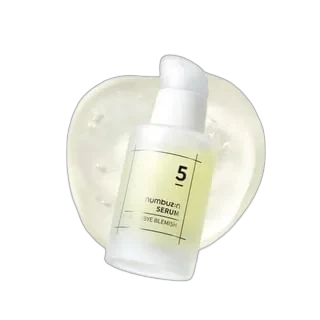
No. 5 Goodbye Blemish Serum
K-Beauty Dark Spot Eraser
 Verified reviewer
Pros & cons.
- +Triple vitamin C system provides staggered-release brightening activity across different timeframes
- +75% sea buckthorn extract delivers natural vitamins carotenoids and antioxidants as the base
- +Visible fading of post-acne hyperpigmentation within 3-4 weeks of consistent use
- +Lightweight gel texture absorbs instantly without stickiness or residue
- +Niacinamide and licorice root add complementary brightening mechanisms
- +Centella and panthenol provide soothing support for blemish-prone skin
- −Citrus essential oils (lemon orange lime) are phototoxic and contradict the serum's daytime use case
- −Golden-orange tint can temporarily stain light fabrics and towels
- −Not suitable for sensitive or eczema-prone skin due to citrus oils and vitamin C potency
- −Vitamin C concentrations of individual forms are not disclosed
- −Results on deeper hyperpigmentation and melasma require months of patient use
- −Fresh citrus scent may be too strong for fragrance-sensitive users
The full review.
A product’s color can make it memorable. The Numbuzin No. 5 Goodbye Blemish Serum pumps out a thick golden-orange gel because 75% sea buckthorn extract forms its base. While most vitamin C serums are clear or pale yellow, this one stands out. This visual distinction works well for skincare content creation.
Sea buckthorn — Hippophae rhamnoides — is an excellent ingredient that lacks mainstream fame. These small orange berries grow in Central Asia and Northern Europe. The extract contains vitamins C and E, beta-carotene, omega fatty acids, and flavonoids. Tibetan and Scandinavian traditional medicine use sea buckthorn for wound healing and skin repair. Numbuzin uses it as the dominant base ingredient rather than a minor extract in the INCI list, making this serum different from standard vitamin C formulations.
Three additional vitamin C forms create a staggered-release brightening system. Pure ascorbic acid provides immediate tyrosinase inhibition; it is the most potent form but also the most unstable. 3-O-Ethyl Ascorbic Acid adds stability because the ethyl group protects the molecule from oxidation, allowing it to penetrate the skin and convert to active ascorbic acid intracellularly. Ascorbyl Glucoside provides slow release; skin enzymes gradually convert this glucose-conjugated vitamin C to its active form over hours, extending the brightening window.
This multi-form approach is smarter than using one vitamin C derivative at a high concentration. Each form has a different onset and duration, creating overlapping waves of melanin-inhibiting activity.
Niacinamide brightens by blocking melanosome transfer from melanocytes to keratinocytes, interrupting pigmentation differently than vitamin C’s tyrosinase inhibition. Dipotassium glycyrrhizate from licorice root adds depigmenting and anti-inflammatory activity. The formula attacks dark spots from three angles.
The soothing ingredients suit blemish-prone skin. Centella asiatica calms post-inflammatory redness, allantoin promotes wound healing, panthenol supports barrier repair, and chamomile extract adds anti-inflammatory activity. These ingredients ensure the active brighteners do not irritate skin recovering from breakouts.
The texture is a standout. The serum has a lightweight gel consistency that absorbs rapidly without sticky or tacky residue. Despite the 75% extract base, it feels clean and weightless on skin. It layers well under moisturizer and sunscreen, which works for fast morning routines.
Users report improved radiance within one to two weeks, making skin look healthier. Post-acne hyperpigmentation fades visibly at the three-to-four-week mark, matching the typical melanin turnover cycle. Melasma or chronic sun damage takes longer to treat topically.
The main limitation is the citrus essential oil trilogy. Lemon peel oil, orange peel oil, and lime oil provide the fresh citrus scent. These oils contain furanocoumarins and other phototoxic compounds that increase skin sensitivity to UV radiation. Including phototoxic citrus oils in a morning serum containing photoprotective vitamin C is a formulation contradiction. It does not stop the vitamin C from working, but it adds an avoidable risk.
The golden-orange color can temporarily tint light fabrics and towels. This is cosmetic, not permanent, but note this if applying the serum before lying on white pillowcases.
At around twenty-two dollars for fifty milliliters, this serum offers value for the multi-vitamin-C, niacinamide, and botanical complex. The pump bottle protects oxidation-sensitive actives, and one bottle lasts two to three months with twice-daily use.
This serum is a compelling option for post-acne marks, dullness, or uneven skin tone. It delivers visible results within a realistic timeframe. The sea buckthorn base elevates it beyond standard vitamin C. Use sunscreen; with this formula, it is mandatory.
Texture
The texture is a standout. The serum has a lightweight gel consistency that absorbs rapidly without sticky or tacky residue. Despite the 75% extract base, it feels clean and weightless on skin. It layers well under moisturizer and sunscreen, which works for fast morning routines.
Scent
The main limitation is the citrus essential oil trilogy. Lemon peel oil, orange peel oil, and lime oil provide the fresh citrus scent. These oils contain furanocoumarins and other phototoxic compounds that increase skin sensitivity to UV radiation. Including phototoxic citrus oils in a morning serum containing photoprotective vitamin C is a formulation contradiction. It does not stop the vitamin C from working, but it adds an avoidable risk.
Packaging
At around twenty-two dollars for fifty milliliters, this serum offers value for the multi-vitamin-C, niacinamide, and botanical complex. The pump bottle protects oxidation-sensitive actives, and one bottle lasts two to three months with twice-daily use.
Best for
This serum is a compelling option for post-acne marks, dullness, or uneven skin tone. It delivers visible results within a realistic timeframe. The sea buckthorn base elevates it beyond standard vitamin C. Use sunscreen; with this formula, it is mandatory.
Ingredient analysis.
Full INCI list
Hippophae Rhamnoides Extract, Butylene Glycol, Methyl Gluceth-20, Dipropylene Glycol, Glycerin, 1,2-Hexanediol, Niacinamide, Melia Azadirachta Flower Extract, Ocimum Sanctum Leaf Extract, Melia Azadirachta Leaf Extract, Curcuma Longa (Turmeric) Root Extract, Corallina Officinalis Extract, Citrus Limon (Lemon) Peel Oil, Citrus Aurantium Dulcis (Orange) Peel Oil, Citrus Aurantifolia (Lime) Oil, Polygonum Cuspidatum Root Extract, Scutellaria Baicalensis Root Extract, Camellia Sinensis Leaf Extract, Glycyrrhiza Glabra (Licorice) Root Extract, Chamomilla Recutita (Matricaria) Flower Extract, Rosmarinus Officinalis (Rosemary) Leaf Extract, Centella Asiatica Extract, Ascorbyl Glucoside, Ascorbic Acid, 3-O-Ethyl Ascorbic Acid, Panthenol, Sodium Hyaluronate, Dipotassium Glycyrrhizate, Glycereth-26, Ammonium Acryloyldimethyltaurate/VP Copolymer, Polyglyceryl-10 Laurate, Carbomer, Allantoin, Tromethamine, Water, Hydrolyzed Jojoba Esters
Skin match.
The science.
The Science
The triple vitamin C approach uses the different pharmacokinetic profiles of each ascorbic acid derivative. Pure ascorbic acid (L-ascorbic acid) is the strongest tyrosinase inhibitor. A 2005 review in the Journal of the American Academy of Dermatology confirms its efficacy at 10-20% concentrations for photoaging and hyperpigmentation. But it is the least stable form and oxidizes fast when exposed to air and light.
3-O-Ethyl Ascorbic Acid solves this stability issue. A 2012 study in Chemical and Pharmaceutical Bulletin shows the ethyl modification protects the molecule from oxidative degradation while it still inhibits melanogenesis at concentrations as low as 1%. The skin cleaves the ethyl group intracellularly to release active ascorbic acid.
Ascorbyl Glucoside provides a controlled-release mechanism. Research in the International Journal of Cosmetic Science in 2004 shows alpha-glucosidase in the skin enzymatically converts ascorbyl glucoside to ascorbic acid. This provides sustained vitamin C delivery over hours, unlike the rapid but fleeting activity of free ascorbic acid.
Sea buckthorn extract has its own evidence. A 2011 review in the Journal of Ethnopharmacology documented the berry's high levels of vitamins C and E, carotenoids, and palmitoleic acid. Preclinical studies show anti-inflammatory, wound-healing, and photoprotective properties. The natural vitamin C in sea buckthorn extract complements the three synthetic forms.
Niacinamide's brightening mechanism works independently of vitamin C. A 2002 study in the British Journal of Dermatology showed 5% niacinamide reduced hyperpigmentation and increased skin lightness after 4 weeks. It does this by inhibiting melanosome transfer—a process occurring after melanin synthesis—which complements vitamin C's upstream tyrosinase inhibition.
References
- Vitamin C in Dermatology — Journal of the American Academy of Dermatology (2005)
- Stability and Melanogenesis Inhibition of 3-O-Ethyl Ascorbic Acid — Chemical and Pharmaceutical Bulletin (2012)
- Niacinamide Reduces Hyperpigmentation via Melanosome Transfer Inhibition — British Journal of Dermatology (2002)
Dermatologist Perspective
Dermatologists would value this multi-mechanism brightening approach. Combining three vitamin C forms with niacinamide and licorice root targets multiple steps in the melanin production pathway. Board-certified dermatologists often recommend layered antioxidant approaches for stubborn hyperpigmentation. However, the citrus essential oils would draw criticism. Dermatologists advise against phototoxic ingredients in daytime products, and citrus oils are well-documented photosensitizers. This serum works best with rigorous SPF 30+ application. Some dermatologists may suggest using it only at night to avoid the citrus oil photosensitivity concern.
Where it fits in your routine.
Apply one pump to fingertips after cleansing and toning. Pat and press into skin, targeting dark spots or uneven tone. Wait one to two minutes for absorption before applying moisturizer. Use morning and evening. Apply SPF 30+ over the top in the AM; vitamin C and citrus essential oils in the formula require this. Avoid eyes and open wounds.
At about $22 for 50ml, this serum provides a multi-form vitamin C formula for much less than SkinCeuticals or Drunk Elephant vitamin C serums. The 75% sea buckthorn base adds antioxidant value beyond synthetic vitamin C forms. The combination of triple vitamin C, niacinamide, licorice root, and centella makes this a strong value at this price. The citrus essential oils detract from this value; they require extra sun protection, which adds a hidden cost to using the product.
Normal and combination skin types with post-acne hyperpigmentation, dark spots, or dullness want an affordable multi-vitamin-C brightening serum. This serum works for people in their twenties and thirties addressing early pigmentation. It has a lightweight texture that layers easily and shows visible brightening results within a month.
Citrus essential oils and active vitamin C make this serum unsuitable for sensitive, rosacea-prone, or eczema-prone skin. Do not use a vitamin C serum with phototoxic oils if you skip daily sunscreen. The lightweight texture lacks moisture for very dry skin — use a thicker moisturizer or choose a more hydrating vitamin C formula.
Product details.
This lightweight, slightly viscous gel serum has a golden-orange tint from the sea buckthorn extract. It absorbs quickly into skin without stickiness or heaviness.
Lemon, orange, and lime essential oils create a noticeable citrusy scent. It is fresh and bright, not subtle, and stays present throughout application.
A 50ml pump bottle protects the vitamin C from light and air. The pump dispenses controlled amounts to minimize waste and oxidation.
The golden-orange gel feels refreshing and lightweight. The citrus scent is immediate. Skin looks brighter and more radiant after the first use. Most users feel no stinging or irritation, though those sensitive to vitamin C may feel mild warmth.
2-3 months with twice-daily use of one pump per application
12 months
All Year
The backstory.
Numbuzin's No. 5 line targets brightening and blemish care, and this serum was one of the brand's first products to gain traction in Western markets. The golden-orange color from the sea buckthorn extract became a visual signature that made the product instantly recognizable in unboxing videos and social media reviews, helping drive the brand's initial international awareness.
About Numbuzin
Emerging Brand (2–5 years)Numbuzin launched in 2019 via Korean beauty startup Benow. This blemish serum is an early brand product with a solid following, but independent clinical validation beyond brand-sponsored testing is limited.
Common myths.
The orange color means the vitamin C has already oxidized.
The 75% sea buckthorn extract provides the golden-orange tint via natural carotenoids. This color is intended, not a sign of oxidation. Oxidized vitamin C turns dark brown, not golden orange.
Avoid vitamin C serum during the day because it increases skin sensitivity to the sun.
Vitamin C is a photoprotective antioxidant that neutralizes UV-induced free radicals. It enhances sun protection when used under sunscreen. The citrus essential oils in this formula cause photosensitivity more than the vitamin C itself.
FAQ.
Is the Numbuzin Goodbye Blemish Serum good for acne-prone skin?
The lightweight gel formula is non-comedogenic. It uses anti-inflammatory ingredients like centella asiatica and licorice root to benefit acne-prone skin. This is a brightening serum for post-acne marks, not an acne treatment. Salicylic acid or benzoyl peroxide works better for active breakouts.
Why is the Numbuzin No. 5 Serum orange colored?
The 75% Hippophae Rhamnoides (sea buckthorn) extract provides the golden-orange tint. This extract contains natural carotenoids and beta-carotene. This color is intended and does not mean the vitamin C oxidized. If the serum turns dark brown, it has oxidized and you must discard it.
Can I use the Numbuzin Blemish Serum with retinol?
Yes — you can use vitamin C and retinol together. Some people use vitamin C in the morning and retinol at night to reduce irritation. If you layer them in one routine, apply this serum first, wait a few minutes, then apply retinol. The niacinamide and panthenol in the formula buffer the interaction.
Does the Numbuzin No. 5 Serum contain pure vitamin C?
Yes — the formula uses three forms of vitamin C: pure ascorbic acid for immediate activity, 3-O-ethyl ascorbic acid for better stability and penetration, and ascorbyl glucoside for slow-release conversion. The 75% sea buckthorn base also has natural vitamin C, so this is a multi-source vitamin C formula.
What the community says.
"Visible fading of post-acne dark spots within weeks"
"Lightweight gel texture absorbs quickly without residue"
"Noticeable glow and brightening effect"
"Does not cause breakouts despite targeting blemish-prone skin"
"Citrus essential oils may irritate sensitive skin"
"Orange-tinted color can temporarily stain light fabrics"
"Results on deeper hyperpigmentation take months"
"Vitamin C potency may decrease if not stored properly"
Featured in.
People also looked at.