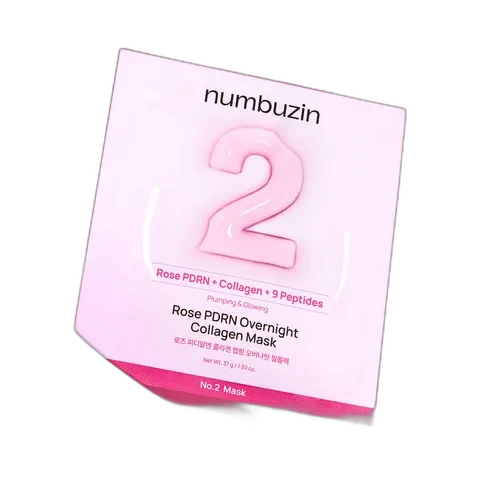
No. 2 Rose PDRN Overnight Collagen Mask
Overnight Collagen Cocoon
 Verified reviewer
Pros & cons.
- +Color-changing technology provides a visual indicator of mask absorption — genuinely useful and novel
- +69% collagen water base with PDRN and four peptides targets multiple aging pathways
- +Completely fragrance-free and essential oil-free for overnight use on sensitive skin
- +Overnight format maximizes active contact time during the skin's natural repair window
- +Exceptional value at $3 per mask for this ingredient density
- +Individual sealed packets maintain freshness and prevent contamination of active ingredients
- +Includes Dipotassium Glycyrrhizate for soothing — smart for layering over retinol
- −Very new 2025 launch with almost no independent long-term user data
- −Individual foil packets create more packaging waste than jar or tube formats
- −Rich texture may feel too heavy for oily or acne-prone skin types
- −Not vegan due to salmon-derived PDRN and collagen
- −Only 4 masks per box — frequent repurchasing needed for consistent use
The full review.
There’s something deeply satisfying about a skincare product that shows you it’s working. Most overnight treatments operate on faith — you slather something on, hope it absorbs, and check the mirror in the morning. Numbuzin’s Rose PDRN Overnight Collagen Mask adds a theatrical twist: it changes color as it absorbs, shifting from opaque to transparent over the first thirty minutes or so of wear. It’s part science, part performance art, and entirely consistent with K-beauty’s talent for making skincare feel like an event.
The technology behind the color shift is straightforward — gel-forming polymers respond to skin moisture and temperature, gradually becoming transparent as the formula integrates with the skin surface. It’s not a guarantee that every active has penetrated to the dermis, but it’s a genuinely useful visual indicator that the mask has spread evenly and begun its work. For anyone who’s ever woken up wondering if their overnight treatment just smeared on the pillow instead of their face, this is a welcome innovation.
Beneath the visual gimmick lies a legitimately well-constructed formula. The base is 69% collagen water — low-molecular-weight collagen fragments dissolved in water, providing the vehicle for everything else. Niacinamide sits high on the ingredient list, delivering its well-documented barrier-strengthening and brightening effects during the hours when skin is most receptive to treatment. Panthenol provides sustained hydration and repair support. Shea butter and jojoba esters create the occlusive layer that makes overnight masks work — trapping moisture and actives against the skin rather than letting them evaporate into your bedroom air.
The PDRN component is where the formula gets interesting and, honestly, where healthy skepticism is warranted. Salmon-derived polydeoxyribonucleotide is a genuine regenerative ingredient in injectable form, but the topical translation remains an open question. The argument in this product’s favor is contact time — where a serum sits on your skin for minutes before being covered by moisturizer and sunscreen, this overnight mask maintains active contact for six to eight hours. If there’s any format that gives topical PDRN its best chance at efficacy, it’s this one.
Four peptides round out the active roster: Tripeptide-1, Acetyl Tetrapeptide-2, Palmitoyl Pentapeptide-4 (Matrixyl), and Palmitoyl Tripeptide-1. This is a more focused peptide selection than the 15-peptide blitz in Numbuzin’s PDRN serum, and there’s an argument that fewer peptides at potentially higher individual concentrations is the smarter approach. Each targets collagen or elastin production — aligning perfectly with overnight use, when the skin’s natural repair processes are at their peak.
The texture is thick and creamy, spreading easily across the face without dragging. It feels rich initially, but as the color change progresses, the sensation becomes lighter — more like a breathable film than a heavy cream. It stays in place surprisingly well overnight, with minimal transfer to pillowcases. In the morning, skin looks noticeably plumper and more hydrated, with a healthy glow that lasts well into the day after cleansing.
What deserves praise is the absence list. No fragrance. No alcohol. No essential oils. For a product designed to sit on potentially sensitized skin for eight hours, these omissions are essential, not optional. The formula also includes Dipotassium Glycyrrhizate (licorice root derivative) for additional soothing — a thoughtful inclusion for a product that might be layered over retinol or other actives.
The individual packet format has trade-offs. On the plus side, each mask is perfectly portioned and sealed, maintaining freshness and preventing contamination — important for fragile actives like peptides. On the minus side, four foil packets per box creates more packaging waste than a jar or tube format, and you don’t have the flexibility to use more or less product per session.
At twelve dollars for four masks, the price-per-use is three dollars — remarkably affordable for a treatment mask with this ingredient profile. Used two to three times per week as recommended, a box lasts about two weeks. Monthly, that’s roughly twenty-four dollars for an anti-aging overnight treatment with PDRN, peptides, niacinamide, and collagen. That’s less than many brands charge for a single sheet mask.
The elephant in the room is data. This is a 2025 launch. There are barely any independent reviews, no long-term user studies, and no way to evaluate whether the impressive ingredient list translates to impressive real-world results over months of use. What we can say is that the formulation fundamentals are sound, the active selection is thoughtful for an overnight format, and the price removes most of the financial risk from trying it. If you’re curious about PDRN but not ready to commit to a $21 serum, this mask is a low-stakes entry point.
Ingredient analysis.
Full INCI list
Collagen Water, Glycerin, Dipropylene Glycol, Niacinamide, Cetyl Ethylhexanoate, 1,2-Hexanediol, Caprylic/Capric Triglyceride, Ceratonia Siliqua (Carob) Gum, Chondrus Crispus, Chondrus Crispus Powder, Panthenol, Water, Betaine, Cellulose Gum, Butyrospermum Parkii (Shea) Butter, Sodium Polyacrylate, Jojoba Esters, Glyceryl Stearates, Potassium Chloride, Stearyl Alcohol, Cetyl Alcohol, Sorbitan Sesquioleate, Sucrose, Hydroxyacetophenone, Helianthus Annuus (Sunflower) Seed Wax, Sodium Stearoyl Glutamate, Trehalose, Adenosine, Caprylyl Glycol, Butylene Glycol, Collagen, Polyglyceryl-10 Oleate, Hydrogenated Polyisobutene, Pantolactone, Sodium DNA, Octyldodecanol, Polyglycerin-3, Hydrogenated Lecithin, Cyanocobalamin, Ethylhexylglycerin, Dipotassium Glycyrrhizate, Rosa Damascena Extract, Polylactic Acid, Polyglyceryl-10 Laurate, Hyaluronic Acid, Tocopherol, Silica, Tripeptide-1, Anemarrhena Asphodeloides Root Extract, Acetyl Tetrapeptide-2, Palmitoyl Pentapeptide-4, Palmitoyl Tripeptide-1
Skin match.
The science.
The Science
The overnight mask format creates an extended occlusion window that fundamentally changes how active ingredients interact with the skin. Research published in the British Journal of Dermatology has demonstrated that occlusion increases stratum corneum hydration by up to 50%, which in turn enhances the penetration of both hydrophilic and lipophilic actives. In this context, the shea butter, jojoba esters, and gel-forming polymers create a breathable but occlusive film that amplifies the delivery of PDRN, peptides, and niacinamide.
The collagen water base contains low-molecular-weight collagen fragments — hydrolyzed collagen peptides that are small enough to penetrate the upper layers of the epidermis. A 2019 study in the Journal of Cosmetic Dermatology showed that topical hydrolyzed collagen can improve skin hydration and elasticity markers, though the effects are primarily surface-level rather than structural.
The four-peptide complex is more targeted than broader peptide blends. Palmitoyl Pentapeptide-4 (Matrixyl) is one of the most studied cosmetic peptides — research in the International Journal of Cosmetic Science demonstrated its ability to stimulate collagen I, III, and IV synthesis in fibroblast cultures. Palmitoyl Tripeptide-1 stimulates the TGF-beta pathway, promoting extracellular matrix production. Acetyl Tetrapeptide-2 targets thymopoietin, which is associated with skin immune function and aging.
The nighttime application timing aligns with chronobiology research showing that epidermal cell proliferation peaks during sleep. A study in the Journal of Investigative Dermatology documented that transepidermal water loss increases at night, and that the skin's permeability to topical agents is enhanced during nocturnal hours — making the overnight mask format particularly well-suited for delivering regenerative actives.
References
- Topical hydrolyzed collagen improves skin hydration and elasticity — Journal of Cosmetic Dermatology (2019)
- Effect of Matrixyl on collagen synthesis in human dermal fibroblasts — International Journal of Cosmetic Science (2005)
Dermatologist Perspective
Dermatologists generally view overnight masks favorably as a treatment format, since the extended contact time enhances active ingredient delivery during the skin's peak repair window. Board-certified dermatologists would note that the collagen, PDRN, and peptide complex in this mask is more sophisticated than typical sleeping masks, which often prioritize hydration over active treatment. The fragrance-free formulation makes this appropriate for patients with sensitive or reactive skin. Dermatologists would likely recommend this as a complement to a retinoid routine — the niacinamide, panthenol, and occlusive base can help buffer retinol irritation while the peptides support collagen production through an independent pathway. However, they would advise oily or acne-prone patients to use this sparingly, as the rich occlusive texture could exacerbate congestion in those skin types.
Guidance
Where it fits in your routine.
After your evening skincare routine (cleanser, toner, serum, treatment), tear open one packet and apply a thick, even layer to your entire face, avoiding the eye area. The mask starts opaque. It turns transparent over 15-30 minutes as it integrates with your skin. Leave it on overnight. In the morning, wash off any remaining film with your regular cleanser and start your morning routine. Use 2-3 times per week, or more often during periods of dryness or when recovering from irritating treatments.
At $12 for four masks ($3 per use), this PDRN and peptide treatment mask is very affordable. Using it 2-3 times per week costs about $24-36 monthly—similar to basic drugstore moisturizers rather than active treatment masks. The ingredient density per dollar is high: the formula contains collagen water, PDRN, four peptides, niacinamide, panthenol, and hyaluronic acid. This price removes the financial risk of trying an emerging ingredient like topical PDRN. For an emerging brand, this pricing shows Numbuzin prioritizes market share over margin with this product.
This mask works for dry to normal skin types wanting an affordable overnight anti-aging treatment with K-beauty ingredients like PDRN and peptides. It suits users who layer this over retinol to boost overnight recovery, skincare enthusiasts testing PDRN at a low price, and anyone who prefers fragrance-free formulations for overnight use.
Skip this if you have oily or acne-prone skin — the thick occlusive texture causes congestion with overnight use. Vegans should also avoid it because of the salmon-derived PDRN and animal collagen. If you want a minimalist overnight routine, the individual packet format and elaborate application process require more effort than you want at bedtime.
Product details.
No added fragrance. Botanical extracts leave a faint, barely perceptible natural scent.
Individual 37g foil packets (4 per box), each containing a single-use portion. Hygienic single-dose format ensures freshness and prevents contamination of actives like PDRN and peptides. Finish dewyglowy
The mask feels thick and creamy when applied to the face. The color shifts from opaque to transparent within 15-30 minutes as the formula absorbs. The remaining film feels slightly tacky but breathable. In the morning, skin looks plumper, smoother, and more hydrated. No stinging, tingling, or irritation occurs.
4 uses per box, recommended 2-3 times per week — one box lasts about 1.5-2 weeks
12 months
fall winter
The backstory.
This overnight mask extends Numbuzin's No. 2 Rose PDRN line from serums into the sleeping mask category, capitalizing on the Korean skincare philosophy that nighttime is the most valuable treatment window. The color-changing formulation was developed to address a common consumer frustration with overnight masks — never knowing if the product has actually been absorbed versus just sitting on top of the skin.
About Numbuzin
Emerging Brand (2–5 years)Numbuzin launched in 2019 via Korean startup Benow and won top honors at the 2022 Olive Young Awards. The brand uses a numbered product system and shows ingredient transparency, but lacks a long track record and independent clinical trials on its specific formulations.
Common myths.
Overnight masks are just thick moisturizers with fancy marketing.
Some sleeping masks are just moisturizers, but this formula uses active peptides and PDRN that need long contact times. The 6-8 hours of overnight wear lets these signal peptides interact with skin cells longer than a serum that gets layered over and potentially diluted within minutes.
The color change shows the product is fully absorbed into your skin.
The opaque-to-transparent shift happens because the formula's gel-forming polymers react to moisture and temperature changes on the skin surface. This shows the product spread and integrated with the skin's surface moisture, but it does not mean every active penetrated deeply. Use this as a proxy for good application, not a guarantee of deep delivery.
FAQ.
Do you need to rinse off the Numbuzin overnight mask?
Don't rinse the mask off at night; leave it on while you sleep. Cleanse your face as usual in the morning to remove any residual film. The mask delivers collagen, PDRN, and peptide actives overnight when your skin's natural repair processes work hardest.
Why does the Numbuzin overnight mask change color?
The mask turns from opaque to transparent when it meets skin moisture and temperature. This color change shows the formula spread evenly and started integrating with your skin surface. It signals even application, but does not mean all actives have fully penetrated.
Is the Numbuzin overnight mask fragrance-free?
This mask is fragrance-free and essential oil-free, so it works for sensitive and reactive skin. The formula uses active ingredients like PDRN, collagen, peptides, niacinamide, and panthenol without adding sensory fragrances.
Can I use this mask with retinol?
Yes — apply your retinol treatment first. Let it absorb, then layer this mask on top. The niacinamide, panthenol, and shea butter in the mask buffer retinol irritation, while the peptides complement retinol's collagen-stimulating effects. This combination works well for anti-aging routines.
Community
What the community says.
"Color-changing formula is a fun visual indicator of absorption"
"Waking up to plump, hydrated skin after overnight use"
"Fragrance-free formulation is gentle even on reactive skin"
"Affordable price for a multi-use overnight treatment"
"Very new product with minimal long-term feedback"
"Overnight mask format may feel too heavy for oily skin"
"Individual packet format creates packaging waste"
"Contains collagen and salmon DNA — not suitable for vegans"
People also looked at.