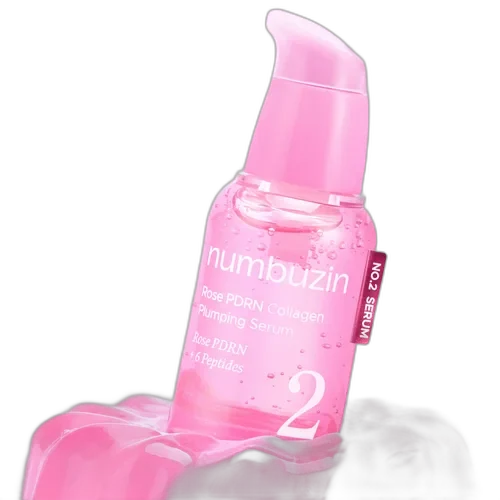
No. 2 Rose PDRN Collagen 2X Plumping Serum
K-Beauty Peptide Powerhouse
 Verified reviewer
Pros & cons.
- +Unprecedented 15-peptide complex targeting multiple aging pathways simultaneously
- +10% Rose PDRN brings a trending clinical ingredient into an accessible topical format
- +Completely fragrance-free and essential oil-free — ideal for sensitive aging skin
- +Multi-weight hyaluronic acid system provides layered hydration at different skin depths
- +5% niacinamide provides the most evidence-backed active ingredient support
- +Lightweight, non-sticky texture layers beautifully under other products
- +Impressive ingredient density for a $21 K-beauty serum
- −Brand-new 2025 launch with very limited real-world user data available
- −Individual peptide concentrations are likely very low given 15 types sharing the formula
- −Topical PDRN penetration remains scientifically unproven compared to injectable forms
- −30ml bottle is small and may last only 6-8 weeks with twice-daily use
- −Not vegan — contains salmon-derived PDRN and collagen
The full review.
For years, PDRN required Korean dermatology clinic visits—delivered via needle deep into the dermis at high prices. Derived from salmon DNA, the ingredient is a cornerstone of Korean aesthetic medicine because it kickstarts cellular regeneration. Now Numbuzin puts what works in a syringe into a dropper bottle, pairing PDRN with an ambitious peptide complex.
Fifteen peptides. Most peptide serums use one or three. Numbuzin uses Argireline for expression lines, Matrixyl for collagen stimulation, Copper Tripeptide-1 for wound healing, multiple growth factor peptides (SH-Oligopeptide-1, SH-Polypeptide-1, SH-Polypeptide-11), and others. The formula uses a wide range of peptides from a catalog; whether this is visionary or scattershot depends on your anti-aging philosophy.
The case for breadth is strong. Aging involves collagen degradation, reduced cell turnover, loss of elasticity, impaired wound healing, and oxidative damage occurring at once. A formula signaling through multiple biological pathways addresses more dimensions of aging than a single-peptide product. The counterargument is also valid: with 15 peptides in one bottle, individual concentrations are likely modest. You get a taste of everything rather than a therapeutic dose of one thing.
The PDRN component adds a new variable. With a claimed 10% concentration of Rose PDRN, this serum uses polydeoxyribonucleotides to activate adenosine A2A receptors topically. Clinical data for injectable PDRN is impressive; Korean medical journal studies show improved wound healing, increased collagen synthesis, and enhanced skin elasticity. Topical translation is less established. The stratum corneum keeps foreign molecules out, so whether PDRN fragments penetrate in meaningful quantities is unknown. Numbuzin includes Hydrolyzed Sponge (collagen spicules) to help; these microscopic spicule fragments create temporary microchannels in the skin surface to improve penetration of other actives.
The supporting formula is well-constructed. Niacinamide at a claimed 5% is the most evidence-backed active here; its effects on ceramide synthesis, hyperpigmentation, and cell communication are documented. Three forms of hyaluronic acid (crosspolymer, standard sodium hyaluronate, and hydrolyzed) create a layered hydration system that plumps at different depths. Resveratrol and vitamin E (tocopherol) provide antioxidant protection. Rosa Damascena flower extract adds anti-inflammatory benefits.
The texture is lightweight and slightly viscous with a faint pink tint that disappears on application. Two to three drops spread easily across the face without the tackiness or heaviness of many loaded serums. It absorbs quickly, leaving a dewy, non-greasy finish that layers under moisturizer and sunscreen.
The formula lacks fragrance, alcohol, and essential oils. This is the right choice for aging skin, which is often sensitive and reactive. Many K-beauty products add unnecessary sensory additives that undermine active ingredients. Numbuzin avoids this.
The limitation is novelty. As a 2025 launch, real-world data does not exist yet. The peptide complex looks impressive, the PDRN angle is scientifically intriguing, and the formulation fundamentals are sound. Until thousands use this consistently for months, we are evaluating potential rather than proven performance.
At twenty-one dollars for 30ml, the math works. This is not cheap for K-beauty, but for a serum with 15 peptides, PDRN, multi-weight HA, niacinamide, collagen, resveratrol, and vitamin C, it costs much less than Western brands with similar or lesser formulations. If half the theoretical benefits work, the value is exceptional. If low peptide concentrations limit efficacy, it remains a solid niacinamide-and-hyaluronic-acid serum with extras.
This product suits people who want to try promising ingredients early. It is ambitious, well-formulated, reasonably priced, and free of sensory additives. Only time and consistent use will show if it delivers on its promise.
Ingredient analysis.
Full INCI list
Water, Collagen, Water, Glycereth-26, Butylene Glycol, Glycerin, Niacinamide, Propanediol, Dipropylene Glycol, 1,2-Hexanediol, Diethoxyethyl Succinate, PEG-240/HDI Copolymer Bis-Decyltetradeceth-20 Ether, Polyacrylate Crosspolymer-6, Trehalose, Octyldodeceth-16, Methyl Diisopropyl Propionamide, Gardenia Florida Fruit Extract, Ethylhexylglycerin, Sodium DNA, Rosa Damascena Flower Extract, Pullulan, Polyglyceryl-10 Oleate, Adenosine, Octyldodecanol, Hydrolyzed Sponge, Morus Alba Bark Extract, Hydrogenated Lecithin, Artemisia Capillaris Extract, Camellia Sinensis Leaf Extract, Sodium Hyaluronate Crosspolymer, Hydrolyzed Glycosaminoglycans, Disodium EDTA, Polysorbate 20, Sodium Hyaluronate, Cyanocobalamin, Lecithin, Tocopherol, Potassium Laurate, Benzyl Glycol, Hyaluronic Acid, Caprylyl Glycol, Polylactic Acid, Resveratrol, Hydrolyzed Hyaluronic Acid, Acetyl Hexapeptide-1, Silica, Pentaerythrityl Tetraisostearate, Sodium Ascorbyl Phosphate, Hydrolyzed Collagen, Acetyl Hexapeptide-8, Acetyl Octapeptide-3, Tripeptide-1, Tripeptide-2, Palmitoyl Pentapeptide-4, Palmitoyl Tetrapeptide-7, Caprylic/Capric Triglyceride, Raspberry Ketone, Coptis Chinensis Root Extract, Stearalkonium Hectorite, Propylene Carbonate, Palmitoyl Tripeptide-1, Tripeptide-3, Copper Tripeptide-1, SH-Oligopeptide-1, SH-Polypeptide-1, SH-Polypeptide-11, Palmitoyl Hexapeptide-12, SH-Polypeptide-22
Skin match.
The science.
The Science
PDRN (polydeoxyribonucleotide) has been extensively studied in Korean medical literature as an injectable treatment. A 2019 study published in the Journal of Cosmetic Dermatology demonstrated that PDRN injections significantly improved skin hydration, elasticity, and wrinkle severity in clinical subjects. The mechanism is well-characterized: PDRN fragments activate adenosine A2A receptors on fibroblasts, stimulating cell proliferation, collagen synthesis, and angiogenesis. However, the critical distinction for this product is the delivery route. Injectable PDRN bypasses the stratum corneum entirely, while topical application must contend with the skin's primary barrier function.
The peptide complex spans several functional categories. Acetyl Hexapeptide-8 (Argireline) is among the most studied cosmetic peptides — a 2002 paper in the International Journal of Cosmetic Science demonstrated its ability to inhibit SNARE complex formation, reducing the exocytosis that drives muscle contraction and thereby smoothing expression lines. Palmitoyl Pentapeptide-4 (Matrixyl) was shown in a 2005 study in the International Journal of Cosmetic Science to stimulate collagen I, collagen III, and fibronectin production in fibroblast cultures. Copper Tripeptide-1 (GHK-Cu) has been studied for wound healing and skin remodeling, with research published in the Journal of Biological Chemistry documenting its role in stimulating glycosaminoglycan synthesis and promoting tissue repair.
The multi-weight hyaluronic acid approach is supported by research showing that different molecular weights penetrate to different skin depths. High-molecular-weight HA (represented by sodium hyaluronate crosspolymer) forms a surface film that reduces transepidermal water loss, while low-molecular-weight hydrolyzed HA can penetrate deeper into the epidermis to provide hydration from within, as demonstrated in a 2011 study in the Journal of Drugs in Dermatology.
Niacinamide at 5% concentration is one of the most well-validated cosmetic actives. A landmark 2003 study in the British Journal of Dermatology found that 5% niacinamide significantly improved fine lines, hyperpigmentation, skin texture, and red blotchiness over 12 weeks compared to vehicle alone.
References
- Clinical efficacy of polydeoxyribonucleotide (PDRN) injection for skin rejuvenation — Journal of Cosmetic Dermatology (2019)
- An anti-wrinkle peptide that inhibits the formation of the SNARE complex — International Journal of Cosmetic Science (2002)
- Topical niacinamide reduces yellowing, wrinkling, red blotchiness, and hyperpigmented spots — British Journal of Dermatology (2003)
Dermatologist Perspective
Dermatologists familiar with Korean aesthetic medicine will recognize PDRN as a well-regarded injectable treatment, but would note that topical delivery faces significant penetration challenges. Board-certified dermatologists would likely view this serum favorably for its peptide breadth, niacinamide concentration, and fragrance-free formulation, while counseling patients to maintain realistic expectations about the PDRN component specifically. The multi-peptide approach aligns with the dermatological understanding that aging involves multiple simultaneous processes, though dermatologists may question whether any individual peptide reaches therapeutic concentration in a formula containing fifteen. For patients seeking a comprehensive anti-aging serum at an accessible price, this represents a reasonable option — but dermatologists would emphasize that proven ingredients like tretinoin and vitamin C remain the gold standard for anti-aging efficacy.
Where it fits in your routine.
Cleanse and tone, then dispense 2-3 drops onto clean fingertips. Press and pat into the face and neck, avoiding the eye area unless your skin tolerates it. Wait one minute for absorption before applying moisturizer. Use morning and evening. In the AM, always follow with sunscreen — the peptides and collagen-stimulating actives make sun protection non-negotiable. Layer after water-based toners and before cream-based products.
At $21 for 30ml, this serum has more active ingredients than many cheaper options. Comparable Western peptide serums from clinical brands cost $50-150 for similar or fewer actives. Whether diverse ingredients at low concentrations offer better value than fewer actives at high concentrations remains the core question. This price sits at the higher end of Numbuzin's K-beauty range, marking this as a premium treatment product. The 30ml size lasts six to eight weeks. This costs roughly $130-180 annually, which stays competitive for a multi-peptide anti-aging serum. The fragrance-free formula includes niacinamide, hyaluronic acid, and resveratrol, so the value remains high even without the PDRN and peptide claims.
This serum works for people in their late twenties and older who want multi-pathway anti-aging without retinoid irritation. It suits sensitive skin types needing fragrance-free options, K-beauty enthusiasts using clinical ingredients like PDRN, and anyone preferring ingredient breadth over single-active intensity.
Skip this if you want proven, long-track-record results — this is a 2025 launch with limited user data. Avoid it if you prefer vegan skincare because it contains salmon-derived PDRN and collagen. If your anti-aging routine uses tretinoin or high-concentration vitamin C, this serum is redundant rather than complementary.
Product details.
No added fragrance. Minimal inherent scent from the botanical extracts.
Sleek 30ml bottle with dropper applicator. Clean Numbuzin branding with the No. 2 designation and rose-themed design elements.
The serum feels lightweight for a product with this many actives. The slight pink tint disappears when applied. Skin feels hydrated and has a subtle glow immediately. The fragrance-free, gentle formula causes no tingling, stinging, or adjustment period and is well-tolerated from day one.
1. 5-2 months with twice-daily use, using 2-3 drops per application
12 months
All Year
The backstory.
PDRN has been a mainstay of Korean aesthetic clinics for years, administered via mesotherapy injections for skin rejuvenation. Numbuzin's bet with this serum is bringing that clinical ingredient into a topical format at an accessible price, riding the K-beauty industry's ongoing mission to democratize professional-grade skincare. The '2X' designation indicates this is the upgraded version of their original Rose PDRN serum, with double the peptide concentration.
About Numbuzin
Emerging Brand (2–5 years)Numbuzin launched in 2019 via Korean startup Benow and won top honors at the 2022 Olive Young Awards. The brand uses a numbered product system and shows ingredient transparency, but lacks a long track record and independent clinical trials on its specific formulations.
Common myths.
Topical PDRN works the same way as PDRN injections used in clinics.
Injectable PDRN puts the ingredient directly into the dermis to activate A2A receptors on fibroblasts efficiently. Topical PDRN struggles to penetrate the stratum corneum, and evidence for topical efficacy is still emerging. This serum works through surface-level cellular signaling, but topical application does not match injection-level results.
More peptides means better anti-aging results.
This serum's 15-peptide complex is diverse, but each peptide needs enough concentration to work. With this many peptides, individual concentrations are likely low. This approach prioritizes broad biological targeting over depth in any single pathway — effectiveness depends on your skin's specific needs.
FAQ.
What is PDRN and how does it work in skincare?
PDRN (polydeoxyribonucleotide) comes from salmon DNA. Korean aesthetic clinics use it via injection for skin rejuvenation. It works by activating adenosine A2A receptors to stimulate fibroblast activity and collagen synthesis. This topical serum uses a 10% Rose PDRN concentration to deliver regenerative benefits through the skin's surface, though topical penetration is less direct than injectable delivery.
How many peptides are in the Numbuzin Rose PDRN 2X serum?
This serum contains 15 different peptides. These include Acetyl Hexapeptide-8 (Argireline) to smooth expression lines, Palmitoyl Pentapeptide-4 (Matrixyl) to stimulate collagen, Copper Tripeptide-1 for wound healing, and multiple growth factor peptides. This variety of peptide types is unusually comprehensive for this price point.
Is the Numbuzin PDRN serum fragrance-free?
This serum is fragrance-free and essential oil-free. Rosa Damascena flower extract adds a faint natural scent, but the formula contains no synthetic fragrances. This makes it suitable for sensitive and reactive skin types.
Can I use this serum with retinol?
Yes — the peptides, niacinamide, and hyaluronic acid in this formula can complement a retinol routine by supporting barrier repair and hydration. Use this serum in the morning and retinol in the evening, or apply this serum before retinol at night to provide a hydrating base.
What's the difference between the Numbuzin PDRN serum and the 2X version?
The '2X' version has twice the peptide concentration of the original Rose PDRN Collagen Plumping Serum and adds collagen spicules (Hydrolyzed Sponge) to improve delivery. Both contain PDRN, but the 2X is the more intensive treatment.
What the community says.
"Lightweight texture that absorbs quickly without residue"
"Noticeable plumping effect after consistent use"
"Fragrance-free formula doesn't irritate sensitive skin"
"Impressive ingredient list for the price"
"Very new product with limited long-term user data"
"30ml size feels small for the price"
"PDRN trend may be more hype than proven at cosmetic concentrations"
People also looked at.