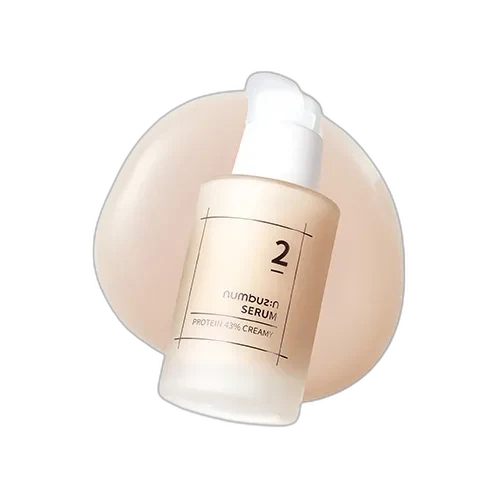
No. 2 Protein 43% Creamy Serum
Barrier Repair Innovator
 Verified reviewer
Pros & cons.
- +Unique 43% oat protein base addresses the protein side of barrier repair that most serums ignore
- +Comprehensive barrier support with ceramide NP, cholesterol, and five fatty acids alongside proteins
- +Niacinamide, panthenol, and adenosine provide multi-functional active support
- +Silky texture absorbs quickly and works beautifully under makeup or sunscreen
- +Lactobacillus ferment adds microbiome support to an already thorough formula
- +A small amount covers the entire face — tube lasts well beyond expectations
- +Affordable for the density of active ingredients included
- −Contains added fragrance — a puzzling choice for a barrier-repair focused product
- −Heavy silicone base may feel too rich or occlusive for oily skin types
- −Contains hydrolyzed milk, soy, and almond proteins — potential allergen concerns
- −Not vegan due to milk protein content
- −The creamy texture may pill under certain water-based products if layering order is wrong
The full review.
In the crowded arena of barrier-repair serums, the default formula is predictable: ceramides, maybe some cholesterol, possibly panthenol, call it a day. Numbuzin looked at that playbook and asked a question that deserves more attention — what about the protein half of the barrier equation?
The skin barrier isn’t just a lipid sandwich. The corneocytes — those flattened, protein-rich cells that form the bricks in the brick-and-mortar model — are held together by structural proteins like filaggrin and involucrin. Most barrier-repair products focus exclusively on the mortar (lipids), leaving the bricks to fend for themselves. This serum’s headline move is putting protein front and center, with Avena Sativa kernel extract at 43% concentration as the very first ingredient.
That oat extract isn’t just filler volume. Oat proteins deliver amino acids that serve as building blocks for the skin’s natural moisturizing factor (NMF), while oat-derived beta-glucans form a thin hydrating film and avenanthramides provide anti-inflammatory action. The result is a protein base that simultaneously soothes, hydrates, and provides raw materials for barrier reconstruction.
But Numbuzin didn’t stop at protein. Smartly, they layered in the lipid side too — Ceramide NP with cholesterol and fatty acids (palmitic, stearic, myristic, arachidic, lauric) in ratios that approximate the skin’s natural lipid composition. This dual approach means you’re supporting both the bricks and the mortar, which is theoretically more complete than either strategy alone.
The supporting cast is strong. Niacinamide sits mid-list, providing its characteristic versatility — stimulating endogenous ceramide production, evening skin tone, and managing sebum. Panthenol adds another layer of recovery support, accelerating wound healing and providing deep hydration. Allantoin soothes. Adenosine, the K-beauty industry’s quiet workhorse, contributes anti-wrinkle benefits. And a Lactobacillus ferment lysate nods to microbiome support, rounding out an impressively comprehensive approach to skin recovery.
Texture
This is unmistakably a silicone-forward serum — cyclopentasiloxane and phenyl trimethicone create that distinctive primer-like slip that makes skin feel instantly smooth and refined. If you enjoy the tactile experience of a serum that transforms your skin’s surface the moment it touches down, this delivers. A pea-sized amount spreads effortlessly across the entire face, absorbing into a satin finish that works under makeup or sunscreen without pilling.
Common Complaints
Here’s where the conversation gets honest. That silicone base is polarizing. For dry and normal skin types who want both treatment and a smooth canvas, it’s a feature. For oily skin types or anyone who prefers water-based formulations, it’s a dealbreaker. The silicones don’t make the actives less effective, but they do contribute a richness that not every skin type wants sitting on its face.
Scent
The fragrance issue deserves its standard callout. For a serum explicitly targeting compromised barriers, including fragrance is a puzzling choice. It’s the last ingredient on the list, suggesting minimal concentration, and it does dissipate quickly. But when your entire product philosophy is built around healing damaged skin, even a small amount of fragrance potential irritant feels like an unforced error.
Works for
The protein diversity is worth noting — beyond the oat base, there are hydrolyzed proteins from rice, milk, soy, lupine, corn, pea, sweet almond, and generic vegetable sources. This creates an amino acid profile broader than any single protein source could provide. However, it also introduces allergen concerns for anyone sensitive to dairy, soy, or tree nuts.
Common Praise
Performance-wise, this serum earns its reputation. Within the first week, expect calmer, less reactive skin with reduced tightness and flaking. By week three or four, the cumulative barrier strengthening becomes apparent — skin holds moisture better, tolerates active treatments more easily, and has a plumper, more resilient quality. The improvements are gradual and genuine, not just surface-level smoothing from the silicones.
Value
At approximately fifteen dollars for 50ml, the value is reasonable given the active ingredient density. You’re getting ceramide NP, niacinamide, panthenol, adenosine, and a 43% oat protein base — that’s a lot of functional ingredients for a K-beauty price point. The small tube lasts longer than expected because the silicone slip means a little covers a lot of surface area.
Summary
This is a serum that rewards patience and consistency. It’s not flashy, it won’t transform your skin overnight, and it makes no viral-worthy claims. What it does is quietly rebuild, session after session, using a broader toolkit than most of its competitors bother assembling.
Ingredient analysis.
Full INCI list
Avena Sativa Kernel Extract, Water, Cyclopentasiloxane, Butylene Glycol, Cetearyl Ethylhexanoate, Cyclohexasiloxane, Phenyl Trimethicone, Cetyl PEG/PPG-10/1 Dimethicone, Hydrogenated Poly(C6-14 Olefin), Niacinamide, Panthenol, 1,2-Hexanediol, Glycerin, Erythritol, Limnanthes Alba Seed Oil, Sodium Chloride, Allantoin, Ethylhexylglycerin, Tocopheryl Acetate, Adenosine, Dextrin, Theobroma Cacao Extract, Pantolactone, Ceramide NP, Cholesterol, Palmitic Acid, Oryza Sativa Seed Protein Extract, Stearic Acid, Hydrolyzed Milk Protein, Lactobacillus Ferment, Glycine Soja Protein, Hydrolyzed Lupine Protein, Glucose, Hydrolyzed Corn Protein, Hydrolyzed Rice Protein, Hydrolyzed Soy Protein, Hydrolyzed Sweet Almond Protein, Hydrolyzed Vegetable Protein, Myristic Acid, Hydrolyzed Pea Protein, Arachidic Acid, Lauric Acid, Sodium Succinate, Disodium EDTA, Fragrance
Skin match.
The science.
The Science
This serum uses the brick-and-mortar model of the stratum corneum, first described by Peter Elias in the 1980s. In this model, corneocytes (protein-rich dead cells) act as bricks, while a lipid matrix (ceramides, cholesterol, free fatty acids) acts as the mortar. Most barrier-repair products only target the lipids; this formula targets both.
Avena Sativa (oat) protein provides amino acids that add to the skin's natural moisturizing factor (NMF). A 2007 study in the Journal of Drugs in Dermatology shows that colloidal oatmeal formulations improve skin barrier function, reduce transepidermal water loss, and decrease inflammation markers in patients with compromised barriers. The avenanthramides in oat are well-studied—a 2008 paper in Archives of Dermatological Research confirms their anti-inflammatory activity by inhibiting NF-kB and pro-inflammatory cytokines.
Ceramide NP, cholesterol, and free fatty acids mirror the skin's natural lipid composition. Research in the Journal of Investigative Dermatology shows that applying these three lipid classes in physiological ratios accelerates barrier recovery faster than any single lipid alone. This formula includes five fatty acids (palmitic, stearic, myristic, arachidic, lauric) for a broader profile than most single-ceramide products.
A 2000 study in the British Journal of Dermatology shows niacinamide stimulates endogenous ceramide synthesis, increasing ceramide and free fatty acid levels in the stratum corneum. In this formula, it creates a feedback loop: the exogenous Ceramide NP provides immediate barrier repair while niacinamide promotes the skin's own ceramide production for sustained recovery.
Panthenol (provitamin B5) converts to pantothenic acid in the skin, where it stimulates fibroblast proliferation and accelerates re-epithelialization. A review in the Journal of Cosmetic Dermatology documents panthenol's wound-healing properties and its role as a deep-penetrating humectant.
References
- Colloidal oatmeal: history, chemistry and clinical properties — Journal of Drugs in Dermatology (2007)
- Anti-inflammatory activities of colloidal oatmeal (Avena sativa) contribute to the effectiveness of oats in treatment of itch associated with dry, irritated skin — Archives of Dermatological Research (2008)
- Niacinamide increases biosynthesis of ceramides as well as other stratum corneum lipids — British Journal of Dermatology (2000)
Dermatologist Perspective
Board-certified dermatologists often recommend barrier-repair formulations with ceramides, cholesterol, and fatty acids for patients with over-exfoliation, retinoid irritation, or environmental barrier damage. This serum's protein-forward approach is less conventional, but it aligns with new evidence that barrier health depends on both the protein and lipid components of the stratum corneum. Dermatologists would likely value the niacinamide and panthenol alongside Ceramide NP, but they would note the fragrance is an unnecessary risk for patients with compromised barriers. Patients with dairy or soy allergies should patch test this product or seek an alternative.
Where it fits in your routine.
Cleanse and tone, then warm a pea-sized amount between your fingertips. Press and pat the product into skin instead of rubbing; the silicone base spreads easily and patting helps protein actives absorb evenly. Apply water-based serums before this product, because its silicone film can block absorption of later water-based products. In the AM, use sunscreen. In the PM, use your regular moisturizer or use this alone as a lightweight night treatment if your skin isn't very dry. Use twice daily.
At approximately $15 for 50ml, this serum has high value for its ingredient density. The combination of 43% oat protein, ceramide NP with cholesterol and fatty acids, niacinamide, panthenol, adenosine, and a probiotic ferment costs less than similar Western clinical brands. For an emerging K-beauty brand, the pricing is confident but fair — you pay for functional ingredients, not packaging or brand cachet. The silicone base also spreads well, so the tube lasts longer than its size suggests.
This serum works for anyone with a damaged or compromised skin barrier from over-exfoliation, retinoid irritation, harsh weather, or naturally sensitive skin. It suits dry to normal skin types who want a silky, primer-like texture and a multifunctional serum for both barrier repair and anti-aging.
Skip this if oily skin reacts poorly to silicone-heavy products, or if you have known allergies to dairy, soy, or tree nut proteins. Users strictly committed to fragrance-free skincare should also pass, despite the barrier-friendly ingredient profile.
Product details.
Mild, slightly sweet fragrance that dissipates quickly after application
A plastic squeeze tube uses a narrow nozzle for controlled dispensing. Numbuzin uses clean, minimalist branding and its signature numbered system.
The first application provides immediate smoothness. The silicone base creates a soft-focus effect for instant skin refinement. The oat protein base makes the texture thicker than typical serums, but it melts in quickly. No adjustment period is needed; benefits accumulate with consistent use over weeks.
2-3 months with twice-daily use, as a small amount covers the full face
12 months
All Year
The backstory.
Numbuzin's No. 2 line focuses on skin strengthening and recovery, and this serum represents the brand's most ambitious formulation in that category. The 43% protein concentration became a talking point in Korean beauty communities, where it positioned itself as a science-forward alternative to the ceramide-only barrier creams dominating the market.
About Numbuzin
Emerging Brand (2–5 years)Numbuzin launched in 2019 via Korean startup Benow. It gained popularity after winning top honors at the 2022 Olive Young Awards. The brand uses a numbered product system and shows ingredient transparency, but lacks a long track record and independent clinical trials on its specific formulations.
Common myths.
Protein-based skincare causes allergic reactions in anyone with food allergies.
This serum contains hydrolyzed milk, soy, and almond proteins. These proteins can trigger contact reactions in sensitized individuals, though topical protein allergies do not perfectly overlap with food allergies. If you have known allergies to these foods, patch test before full-face application.
Silicone-heavy serums sit on the skin surface and do not deliver actives.
The cyclopentasiloxane and phenyl trimethicone in this formula spread active ingredients evenly and create an occlusive-like layer that reduces transepidermal water loss. The actives — niacinamide, panthenol, ceramide NP — still absorb through the stratum corneum; the silicones improve application and lock in hydration.
FAQ.
Is the Numbuzin No. 2 Protein Serum good for sensitive skin?
The oat protein base, ceramide NP, panthenol, and allantoin in this formula work well for sensitive skin. However, the serum contains fragrance, hydrolyzed milk, soy, and almond proteins that trigger reactions in some people. Patch test first if you have known sensitivities to these ingredients.
What does 43% protein mean in this serum?
The 43% is the concentration of Avena Sativa (oat) kernel extract. As the first ingredient, it makes up nearly half the formula. This protein-rich extract provides amino acids, beta-glucans, and soothing compounds. These support skin barrier repair via proteins, which complements the included ceramide and cholesterol lipids.
Can I use the Numbuzin Protein Serum with retinol?
Yes — this serum's barrier-strengthening ingredients (ceramide NP, cholesterol, oat protein, panthenol) buffer retinol irritation. Apply this serum before or after retinol based on the retinol's texture, or use it on alternate nights from your retinol to aid recovery.
Is this serum suitable for oily skin?
The silicone-heavy base and thick texture feel heavy on very oily skin. If you have oily skin with a compromised barrier, use this only at night and use a lighter hydrating serum during the day.
Does the Numbuzin Protein Serum contain dairy?
This formula contains Hydrolyzed Milk Protein, Glycine Soja (soybean) Protein, and Hydrolyzed Sweet Almond Protein. If you have dairy, soy, or tree nut allergies, consult a dermatologist before use or choose a protein-free barrier repair alternative.
What the community says.
"Silky, luxurious texture that absorbs without greasiness"
"Noticeable improvement in skin firmness and barrier strength after weeks of use"
"A little goes a long way — the 50ml tube lasts longer than expected"
"Skin feels plumper and more hydrated without heavy residue"
"Contains fragrance which may irritate reactive skin"
"Heavy silicone base can feel occlusive for oily skin types"
"Contains milk and soy proteins — not suitable for those with relevant allergies"
"Premium price point for a K-beauty serum"
Featured in.
People also looked at.