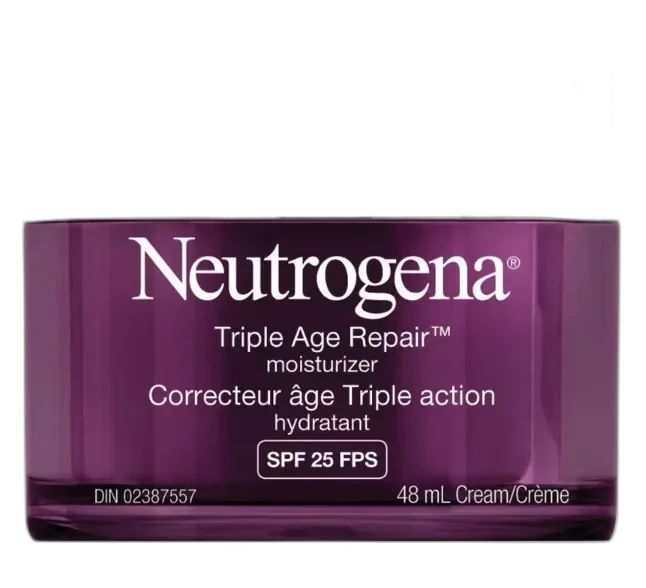
Triple Age Repair Moisturizer SPF 25
Dark Spot Fighting Day Cream
 Verified reviewer
Pros & cons.
- +Hexylresorcinol (Hexinol) is a research-backed brightening active far more potent than kojic acid or arbutin
- +Ascorbyl glucoside and hexylresorcinol create a dual-pathway approach to evening skin tone
- +Aquaxyl complex provides patented hydration that optimizes the skin's own moisture reserves
- +Soft-focus blurring from methyl methacrylate crosspolymer smooths appearance immediately
- +Rich yet quick-absorbing texture works well as a makeup base for dry and normal skin
- +Over 13,000 Amazon reviews with 4.5-star average documenting real dark spot improvement
- +Convenient all-in-one morning product combining moisturizer, brightener, and SPF
- −SPF 25 falls below the dermatologist-recommended minimum of SPF 30 for daily use
- −Contains fragrance — an unnecessary irritation risk in a product for potentially sensitized skin
- −Contains three parabens which many consumers actively prefer to avoid
- −Ethylhexyl palmitate and shea butter are comedogenic — not suitable for acne-prone skin
- −Jar packaging exposes air-sensitive active ingredients to degradation with each opening
- −Anti-wrinkle claims are somewhat overstated relative to the formulation's actual strengths
The full review.
About Neutrogena
Most drugstore anti-aging moisturizers with SPF are mediocre. They moisturize adequately, provide some sun protection, and include a few antioxidants for marketing. The Neutrogena Triple Age Repair Moisturizer SPF 25 follows this pattern, but it has one interesting ingredient most consumers have never heard of.
Myth
Hexylresorcinol, which Neutrogena calls Hexinol technology, is a tyrosinase inhibitor with published research on its potency. In vitro studies show an IC50 (the concentration needed to inhibit 50% of enzyme activity) of approximately 16 micromoles — compared to 658 micromoles for kojic acid or over 1,000 micromoles for arbutin. Hexylresorcinol is more effective at blocking the enzyme responsible for melanin production than those two brightening ingredients. Published research shows that at concentrations around 0.4-0.5%, its skin-lightening efficacy matches 2% hydroquinone — the former gold standard that lost favor due to safety concerns at high concentrations.
Reality
This is not a typical drugstore ingredient. Finding it in a thirty-dollar Neutrogena jar instead of a hundred-dollar dermatologist-dispensed product is notable. The formula does not disclose if the concentration is sufficient for clinical-grade results, but the ingredient’s presence elevates this product above generic niacinamide-and-vitamin-E moisturizers on the shelf.
How to Use
Ascorbyl glucoside, a stable vitamin C derivative, provides secondary brightening and antioxidant protection. It is less powerful than pure L-ascorbic acid but more stable in this formulation — a good trade-off for a daily-use product in a jar exposed to air. The Aquaxyl complex (xylitylglucoside, anhydroxylitol, xylitol) adds patented hydration technology that optimizes skin moisture reserves, while glycerin and shea butter handle conventional moisturizing.
Texture
The cream feels pleasant on the skin. It is thick enough to nourish dry and normal skin but absorbs cleanly without the greasy film left by heavier anti-aging creams. Methyl methacrylate crosspolymer provides a soft-focus blurring effect on pores and fine lines — a cosmetic trick that makes skin look smoother while active ingredients work on structural improvement underneath. Mica and titanium dioxide add subtle luminosity that looks better in photos than on an ingredient list.
SPF
The SPF 25 rating requires honesty. It is below the dermatologist-recommended minimum of SPF 30. The four-filter chemical system (avobenzone, homosalate, octisalate, octocrylene) provides broad-spectrum protection, but SPF 25 offers less margin than it should. Since most people underapply SPF products by 50-75%, real-world protection from this moisturizer may be around SPF 8-12 — better than nothing, but not adequate as sole sun protection during meaningful sun exposure. It works for commuting, errands, and indoor days with brief outdoor moments. For more, layer a dedicated sunscreen.
Scent
The fragrance is noticeable. It is not overwhelming, but it is present, and in a product with active brightening ingredients applied to potentially sensitized or hyperpigmented skin, it is an unnecessary irritation risk. The three parabens (methylparaben, ethylparaben, propylparaben) also deter consumers who prefer paraben-free products. Parabens at cosmetic concentrations are considered safe by every major regulatory body, but this formulation does not accommodate consumer preference.
Conflicts With
The comedogenic ingredients are a concern. Ethylhexyl palmitate and shea butter both clog pores in some individuals. If you have acne-prone or oily skin, this formula may cause breakouts — and an anti-aging product that causes new skin problems solves nothing. This cream is better for dry to normal skin that can handle the thick formulation.
Packaging
The jar packaging continues Neutrogena’s habit of putting light-sensitive and air-sensitive ingredients in containers that expose them to both. Ascorbyl glucoside is more stable than pure vitamin C, which helps, but hexylresorcinol and other actives would benefit from an airless pump or tube. Neutrogena has not solved this problem for this product line.
Common Praise
The brightening complex earns this product its keep. Users consistently report visible improvement in dark spots and skin tone evenness after four to eight weeks of daily use. This matches the hexylresorcinol mechanism — tyrosinase inhibition does not erase existing pigment but prevents new melanin deposition, so improvement is gradual and cumulative. The thirteen thousand reviews on Amazon with a 4.5-star average show a consistent story: it works for tone evening, moisturizes well, and simplifies a morning routine.
Price
At approximately twenty-two to twenty-nine dollars depending on the retailer, the value is reasonable but not exceptional. You pay a premium over basic SPF moisturizers for the hexylresorcinol technology. Whether that premium is worth it depends on if dark spots and uneven tone are your primary skin concerns — if they are, this is one of the few drugstore products with a research-backed active targeting them.
Bottom Line
The bottom line: this is a better product than it looks. The purple jar and generic anti-aging marketing hide the interesting ingredient technology inside. If you have dry to normal skin, want to fade dark spots, and need a convenient morning moisturizer, the hexylresorcinol alone makes this worth considering. Do not rely on the SPF 25 as your only sun protection, and note the fragrance and parabens if those are deal-breakers.
Ingredient analysis.
Full INCI list
Active Ingredients: Avobenzone 2%, Homosalate 4%, Octisalate 4%, Octocrylene 2%. Inactive Ingredients: Water, Propylene Glycol, Glycerin, Dimethicone, Ethylhexyl Palmitate, Isononyl Isononanoate, Steareth-2, Butyrospermum Parkii (Shea) Butter, Styrene/Acrylates Copolymer, Methyl Methacrylate Crosspolymer, Behenyl Alcohol, Hexylresorcinol, Steareth-21, Ammonium Acryloyldimethyltaurate/VP Copolymer, Dimethicone Crosspolymer, Caprylyl Glycol, Phenoxyethanol, Ascorbyl Glucoside, Fragrance, Sclerotium Gum, Methylparaben, Xylitylglucoside, Ethylparaben, Propylparaben, Anhydroxylitol, Disodium EDTA, Sodium Hydroxide, Xylitol, Bisabolol, Mica, Titanium Dioxide
Skin match.
The science.
The Science
Hexylresorcinol is the formulation's strongest scientific ingredient. A 2022 study in the International Journal of Cosmetic Science shows hexylresorcinol inhibits tyrosinase — the rate-limiting enzyme in melanin biosynthesis — with an IC50 value orders of magnitude lower than brightening agents like kojic acid and arbutin. Clinical studies show topical formulations with 0.4-0.5% hexylresorcinol produce skin-lightening effects similar to 2% hydroquinone but with a better safety profile.
Hexylresorcinol also has antioxidant and anti-glycation properties, making it a multi-functional anti-aging ingredient. Glycation — the non-enzymatic bonding of sugars to proteins — causes collagen stiffening and skin aging. By inhibiting this process, hexylresorcinol targets a structural aging mechanism most topical actives ignore.
Ascorbyl glucoside adds brightening through a separate mechanism. This stable vitamin C derivative is cleaved by glucosidase enzymes in the skin to release free ascorbic acid, which inhibits melanin synthesis via its own pathway and provides antioxidant protection against UV-generated free radicals. The combination of hexylresorcinol and ascorbyl glucoside creates complementary inhibition of melanin production — hexylresorcinol blocks tyrosinase directly, while ascorbic acid interferes with oxidation steps in the melanin synthesis cascade.
The Aquaxyl complex (xylitylglucoside, anhydroxylitol, xylitol) increases the skin's endogenous hyaluronic acid and chondroitin sulfate levels, optimizing the skin's own hydration machinery instead of relying only on topically applied humectants.
References
- Hexylresorcinol and niacinamide combination for skin brightening — International Journal of Cosmetic Science (2022)
Dermatologist Perspective
Dermatologists say hexylresorcinol is an underutilized brightening ingredient with strong clinical evidence for tyrosinase inhibition. Board-certified dermatologists recommend this product for patients with mild to moderate hyperpigmentation seeking a convenient morning routine — though they note the SPF 25 is insufficient and recommend a dedicated SPF 30+ sunscreen for adequate photoprotection. Dermatologists view the combination of hexylresorcinol and vitamin C derivative as a rational dual-pathway approach to melanin inhibition, but note that prescription-strength options like hydroquinone or tretinoin work better for stubborn hyperpigmentation.
Where it fits in your routine.
Apply this as the final step of your morning skincare routine after cleansing and any serums. Use a nickel-sized amount on your face and neck. Let it absorb for one minute before applying makeup. Layer a dedicated SPF 30+ sunscreen over this product on days with meaningful sun exposure for adequate sun protection. Use daily for best brightening results — hexylresorcinol's effects are cumulative and build over 4-8 weeks of consistent use.
At roughly $22-29 depending on retailer (with Amazon often discounting to $17-18), this multi-tasking anti-aging moisturizer offers decent value with its research-backed brightening active. Hexylresorcinol technology usually costs more in clinical or dermatologist-dispensed brands. The 1.7 oz jar lasts 2-3 months with daily use. The SPF 25 reduces value because you need a separate sunscreen for adequate protection, and the jar packaging may lower active ingredient potency over time.
This works for dry to normal skin types targeting dark spots, uneven tone, and early aging via a single morning step. It suits consumers with hyperpigmentation who want a research-backed brightening active at a drugstore price without a multi-step routine.
Skip this if you have oily or acne-prone skin (the comedogenic ingredients may cause breakouts), if you need SPF 30+ for your daily routine, or if you prefer fragrance-free and paraben-free products. Also not the best choice if hyperpigmentation isn't a primary concern — the hexylresorcinol technology is the main reason to choose this over simpler SPF moisturizers.
Product details.
The light fragrance is noticeable during application. Some users like it; others find fragrance unnecessary in an anti-aging product.
Purple/plum colored jar with gold/bronze accents and a screw-top lid, 1.7 oz. The jar format exposes the product to air and light every time you open it. This degrades the ascorbyl glucoside and other antioxidant ingredients. ***
The cream spreads easily on first application and leaves a creamy, slightly luminous finish. Skin feels moisturized and softened immediately. Methyl methacrylate crosspolymer creates a subtle blur effect that smooths pores and fine lines. Most users feel no tingling or irritation. Brightening results develop gradually over weeks.
2-3 months with daily morning application to face and neck ***
12 months ***
All Year ***
The backstory.
Launched around 2013, the Triple Age Repair line was Neutrogena's answer to consumers who wanted a single morning product addressing wrinkles, uneven tone, and firmness without a multi-step routine. The star ingredient, hexylresorcinol, was a relatively obscure but potent skin-brightening compound that Neutrogena branded as Hexinol technology — giving a drugstore moisturizer an active ingredient with clinical data typically associated with dermatologist-dispensed products. The product has quietly maintained a strong user following for over a decade.
About Neutrogena
Legacy Brand (20+ years)Neutrogena launched in 1930 and is the #1 dermatologist-recommended skincare brand in the United States. The Triple Age Repair line uses the brand's proprietary Hexinol technology (hexylresorcinol), a tyrosinase inhibitor with published research in the International Journal of Cosmetic Science.
Common myths.
SPF 25 provides enough daily sun protection.
Dermatologists recommend SPF 30 as the daily minimum; SPF 25 falls below this standard. Most people underapply sunscreen by 50-75%, so SPF 25 provides real-world protection closer to SPF 8-12 — which is inadequate. On high-exposure days, layer a dedicated SPF 30+ sunscreen over this moisturizer.
Parabens in skincare are dangerous and users avoid them.
Parabens are some of the most studied preservatives in cosmetics. The FDA, European Commission, and CIR Expert Panel all conclude that parabens at typical cosmetic concentrations are safe. Concern stems from a misinterpreted 2004 study that found parabens in breast tissue, but that study did not establish a causal link to cancer.
FAQ.
Is SPF 25 enough for daily protection?
Most dermatologists recommend SPF 30 as the daily minimum. SPF 25 protects against brief incidental sun exposure like commuting or errands, but fails during extended outdoor time. Use this moisturizer for low-exposure days and layer a dedicated SPF 30+ sunscreen on top for beach days, outdoor exercise, or prolonged sun exposure.
What is Hexinol technology in this product?
Hexinol is Neutrogena's name for hexylresorcinol. This tyrosinase inhibitor reduces melanin production to fade dark spots and even skin tone. Research shows hexylresorcinol is more potent than kojic acid and arbutin in vitro, and works like 2% hydroquinone at 0.4-0.5% concentrations. It is a powerful brightening active for a drugstore product.
Can I use this with retinol?
Yes — use this SPF moisturizer in the morning and your retinol product at night. The ascorbyl glucoside and hexylresorcinol in this product work on skin tone by day, while retinol stimulates cell turnover overnight. This combination addresses aging from multiple angles. Do not skip the morning SPF step, as retinol increases photosensitivity.
Does Neutrogena Triple Age Repair work for dark spots?
The hexylresorcinol in this formula is a potent OTC brightening ingredient. Published research shows it inhibits tyrosinase. Users report dark spot fading after 4-8 weeks of daily use. For stubborn hyperpigmentation, use a vitamin C serum underneath to enhance results.
Is this moisturizer suitable for oily or acne-prone skin?
This product contains shea butter and ethylhexyl palmitate. Both ingredients are comedogenic, so it is less suitable for oily or acne-prone skin. The thick cream texture feels heavy on very oily skin. Oily skin types should use an oil-free SPF moisturizer instead.
Why does this product contain parabens?
Methylparaben, ethylparaben, and propylparaben preserve the formula against bacteria and fungi. Parabens face consumer pushback, but the FDA, European Commission, and CIR Expert Panel approve them at typical cosmetic concentrations. This is not the right choice if you prefer paraben-free products.
What the community says.
"Absorbs smoothly and leaves skin feeling soft and hydrated all day"
"Noticeable improvement in dark spots and skin tone evenness over weeks"
"Works well as a makeup base with a smooth, satin finish"
"Convenient all-in-one moisturizer with built-in SPF for morning routine"
"Good value for a multi-tasking anti-aging product at drugstore pricing"
"Pleasant texture that doesn't feel heavy or greasy after absorption"
"SPF 25 is below the dermatologist-recommended minimum of SPF 30"
"Contains fragrance which can irritate sensitive skin or cause headaches"
"Contains three parabens which some consumers prefer to avoid"
"Comedogenic ingredients may cause breakouts on acne-prone skin"
"Anti-wrinkle claims feel overstated for the actual formulation"
"Jar packaging exposes active ingredients to air and light degradation"
People also looked at.