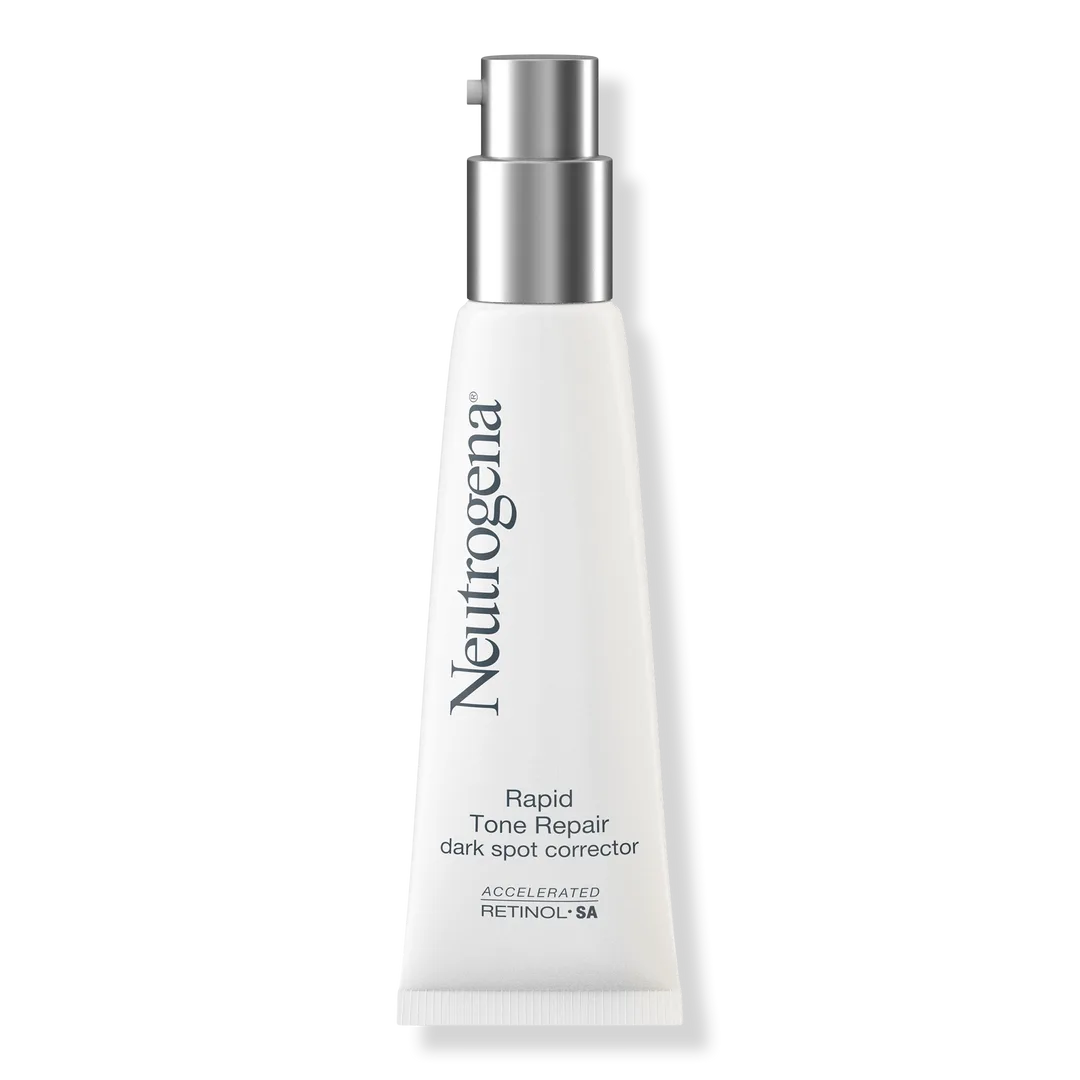
Rapid Tone Repair Dark Spot Corrector
Drugstore Dark Spot Fighter
 Verified reviewer
Pros & cons.
- +Sustained-release retinol delivery reduces irritation compared to standard retinol serums
- +Combines retinol and vitamin C in one stable formula — no need for separate products
- +Silky, primer-like texture absorbs quickly and layers well under most products
- +Immediate optical brightening from mica and titanium dioxide while actives work long-term
- +Affordable multi-active serum at roughly $22 for 2-3 months of nightly use
- +Paraben-free and oil-free formulation suitable for acne-prone skin types
- +Backed by published clinical research on the Retinol SA delivery system
- −Contains synthetic fragrance — unnecessary in a treatment product for potentially sensitized skin
- −Results are gradual and subtle, requiring 8-12 weeks of consistent use to see meaningful fading
- −Silicone-heavy base can pill when layered with certain water-based moisturizers
- −Retinol appears low on the INCI list, suggesting modest concentration
- −Only available in one small size (1 fl oz) with no economical larger option
The full review.
For years, the skincare industry treated retinol and vitamin C as rivals. Clashing pH requirements and stability issues meant users typically chose one for PM routines and the other for mornings. Neutrogena’s Rapid Tone Repair Dark Spot Corrector entered this market in 2013 with a solution.
The approach is practical. Instead of L-ascorbic acid—a vitamin C form that requires acidic conditions and degrades in light—Neutrogena uses ascorbyl glucoside. This stabilized derivative works at a neutral pH and skin enzymes convert it to active vitamin C. Combined with Retinol SA technology, which uses a glucose complex and myrtle leaf extract to release retinol gradually, these two actives coexist without the formula compromises found in most multi-active serums.
The texture is notable. This is not a watery serum. Dimethicone is second on the ingredient list, providing a silky, primer-like slip. It glides on smoothly, absorbs without tacky residue, and dries to a satin finish. This finish works as a final PM step or under makeup for immediate optical brightening. Mica and titanium dioxide in the formula act as light diffusers to create a luminous effect that makes skin look more even-toned from the first application. This provides an instant result that encourages continued use while the actives work.
The retinol profile is specific. Neutrogena does not disclose concentrations, and retinol appears relatively low on the INCI list, suggesting a lower-potency formula. This is not a drawback. The sustained-release mechanism delivers whatever retinol is present gradually over hours. This allows most people to tolerate the product without the peeling and redness common with retinol. If you previously stopped using retinol due to irritation, this gentler approach is worth revisiting.
Ascorbyl glucoside sits eighth on the ingredient list, suggesting a meaningful concentration. While less potent than pure L-ascorbic acid per milligram, research on ascorbyl glucoside complexes shows significant improvement in solar lentigos over extended use. Trading slightly slower results for better stability and tolerability is a pragmatic choice for a daily drugstore product.
This product has limits. It will not compete with prescription-strength hydroquinone for stubborn melasma or erase years of sun damage in one month. User reviews show results are real but gradual, with most noticing improvement around the 8-12 week mark. Some users report no visible change, likely due to the lower retinol concentration and the difficulty of treating certain hyperpigmentation with OTC ingredients.
The fragrance is a valid complaint. For a product targeting dark spots—often post-inflammatory hyperpigmentation on irritation-prone skin—synthetic fragrance is an unwelcome addition. It is not a heavy scent, but it will bother those seeking fragrance-free options. The BHT preservative may also concern those monitoring synthetic antioxidant preservatives, though the concentration is minimal.
Pilling is another issue. The silicone-rich base can ball up when layered with certain water-based moisturizers. To fix this, wait two to three minutes before applying the next product and pat rather than rub.
At roughly twenty-two dollars for a one-ounce tube that lasts two to three months, the value is strong. You get a multi-active treatment serum with a proprietary delivery system for less than the price of a single-ingredient vitamin C serum from most prestige brands. The tube is small, but a pea-sized amount per application lasts a long time due to the concentrated formula.
Neutrogena’s status as the number-one dermatologist-recommended brand in the US reflects decades of clinical partnerships and research. The Retinol SA technology appears in published clinical trials, including a 2015 study in the Journal of Drugs in Dermatology that showed significant improvement in mottled pigmentation over 52 weeks. This product relies on documented science rather than hype.
The Rapid Tone Repair Dark Spot Corrector is like a reliable mid-range sedan. It is not flashy, but it starts every morning, does what it claims, and costs much less than alternatives. For those starting to address dark spots without a complex routine or prestige price tag, this is a smart starting point.
Ingredient analysis.
Full INCI list
Water, Dimethicone, Aluminum Starch Octenylsuccinate, Dimethicone Crosspolymer, Ammonium Acryloyldimethyltaurate/VP Copolymer, Trisiloxane, Nylon-12, Ascorbyl Glucoside, C12-15 Alkyl Benzoate, Glycerin, Caprylyl Glycol, Polyacrylamide, Xanthan Gum, C13-14 Isoparaffin, Fragrance, Sodium Hyaluronate, Sodium Lactate, Hydrolyzed Myrtus Communis Leaf Extract, Sodium Hydroxide, BHT, Disodium EDTA, Laureth-7, Polysorbate 20, Retinol, Sodium PCA, Sorbitol, Proline, Hinokitiol, Mica, Titanium Dioxide
Skin match.
The science.
The Science
Controlled studies back the Retinol SA system in this product. A 2015 double-blind, vehicle-controlled trial in the Journal of Drugs in Dermatology (Randhawa et al., PMID: 25738849) shows that 0.1% stabilized retinol improves mottled pigmentation by 84% and reduces fine lines by 44% over 52 weeks. Histochemical analysis shows increased type I procollagen, hyaluronan, and Ki67 expression—markers of real skin renewal, not just surface effects.
A 2016 open-label trial (Herndon et al., Journal of Drugs in Dermatology, PMID: 27050703) supports the retinol-vitamin C combination strategy. In this study, 44 women using a retinol and vitamin C regimen showed statistically significant improvement in all hyperpigmentation parameters by weeks 8-12, with some changes appearing by week four.
The use of ascorbyl glucoside as the vitamin C vehicle is a smart choice. L-ascorbic acid requires a pH below 3.5 to penetrate well and oxidizes quickly when exposed to light and air. In contrast, ascorbyl glucoside stays stable at neutral pH and skin glucosidases enzymatically convert it to active ascorbic acid. A 2024 study in the International Journal of Molecular Sciences (Takada et al.) found that an ascorbyl glucoside complex significantly improved solar lentigos over 24 weeks without adverse effects, proving this derivative works for pigmentation.
The sustained-release mechanism also affects hyaluronic acid production. A 2017 study in Archives of Dermatological Research (Li et al., PMID: 28247017) shows that stabilized retinol formulations induce all three hyaluronic acid synthase genes. This means the retinol in this product can stimulate the skin's own hyaluronic acid production, adding to the sodium hyaluronate already in the formula.
References
- One-year topical stabilized retinol treatment improves photodamaged skin in a double-blind, vehicle-controlled trial — Journal of Drugs in Dermatology (2015)
- An Open Label Clinical Trial to Evaluate the Efficacy and Tolerance of a Retinol and Vitamin C Facial Regimen in Women With Mild-to-Moderate Hyperpigmentation and Photodamaged Facial Skin — Journal of Drugs in Dermatology (2016)
- Treatment with Ascorbyl Glucoside-Arginine Complex Ameliorates Solar Lentigos — International Journal of Molecular Sciences (2024)
- Topical stabilized retinol treatment induces the expression of HAS genes and HA production in human skin in vitro and in vivo — Archives of Dermatological Research (2017)
Dermatologist Perspective
Dermatologists often recommend OTC retinol as a first-line treatment for mild to moderate hyperpigmentation when patients cannot use prescription-strength retinoids or hydroquinone. The sustained-release delivery in this product solves a major issue: irritation during the adjustment period, which often causes patients to stop retinol therapy. Board-certified dermatologists note that combining retinol (for cell turnover) and a vitamin C derivative (for tyrosinase inhibition) targets pigmentation through complementary mechanisms. This aligns with evidence-based hyperpigmentation management. This product works as an accessible starting point for patients new to retinol, though more potent prescription options exist for deeper or stubborn pigmentation.
Where it fits in your routine.
Apply a pea-sized amount to clean, dry skin every evening. Use it every other night for the first two weeks to check tolerance, then use it nightly. Smooth it over your face and neck, focusing on hyperpigmentation. Wait 2-3 minutes before applying moisturizer to prevent pilling. Avoid the immediate eye area. Always apply broad-spectrum SPF 30 or higher the next morning — retinol increases sun sensitivity, and UV exposure worsens dark spots.
At about $22 for a 1 oz tube that lasts 2-3 months, this serum provides multi-active treatment for much less than prestige brands. Mid-range and luxury retinol-plus-vitamin-C serums usually cost $45-85 for similar volumes. The Retinol SA delivery system and stabilized vitamin C derivative add value beyond the ingredient quality. The only downside is the single size offering; there is no larger, more economical option for long-term users. This drugstore product has a strong price-to-performance ratio and published clinical research.
This is an affordable, low-commitment entry into retinol-based dark spot treatment. It works for retinol beginners, people with mild to moderate sun spots or post-acne marks, and budget-conscious consumers wanting multi-active treatment without a prestige price tag.
The fragrance and retinol combination makes this unsuitable for sensitive or rosacea-prone skin. Do not use this product if you are pregnant or nursing. This OTC formula lacks the potency required for deep, stubborn melasma or severe hyperpigmentation.
Product details.
Thick, silicone-based serum with a smooth, creamy consistency. It glides on easily and feels velvety, not watery.
Light synthetic fragrance that dissipates quickly after application.
White squeeze tube with a screw-on cap and navy Neutrogena branding. The 1 fl oz size is compact and travel-friendly.
The first application feels silky and primer-like, with optical brighteners providing immediate, subtle luminosity. Most users feel no stinging or burning. Mild flaking or dryness occurs during the first 1-2 weeks as skin adjusts to the retinol; this is normal and typically subsides.
2-3 months with nightly application of a pea-sized amount to the face
12 months
All Year
The backstory.
Developed as part of Neutrogena's Rapid Tone Repair line, this product was designed to bring multi-active dark spot correction to the mass market at a fraction of prestige pricing. The Retinol SA delivery system was a key innovation, addressing the primary reason consumers abandon retinol — irritation during the adjustment period.
About Neutrogena
Legacy Brand (20+ years)Neutrogena launched in 1930 and has been the #1 dermatologist-recommended skincare brand in the United States for decades. Extensive clinical research partnerships back the brand, and dermatological literature widely references its formulations.
Common myths.
Retinol and vitamin C cancel each other out, so they cannot be in the same product.
This formula uses ascorbyl glucoside, a vitamin C derivative stable at neutral pH. It does not compete with or degrade retinol like L-ascorbic acid does in acidic formulations. The two actives use different brightening mechanisms and coexist in this formula.
Dark spot correctors should show results within days.
Melanin turnover takes time. This product's retinol speeds cell turnover and the vitamin C inhibits new melanin production, but you see visible results after 4-12 weeks of consistent nightly use. Optical diffusers cause the immediate brightening, not pigment correction.
FAQ.
How long does Neutrogena Rapid Tone Repair take to fade dark spots?
Most users see subtle dark spot lightening within 2-4 weeks of consistent nightly use. The retinol SA accelerates cell turnover and the ascorbyl glucoside inhibits new melanin production, but full results take 8-12 weeks. The immediate luminosity from first application comes from optical brighteners (mica and titanium dioxide), not pigment correction.
Can I use Neutrogena Rapid Tone Repair Dark Spot Corrector with other retinol products?
Do not layer this with other retinoids. Doubling up causes irritation, peeling, and barrier damage. This product contains Neutrogena's sustained-release retinol, so you do not need more retinol. If you use a prescription retinoid like tretinoin, use only one in your PM routine.
Is Neutrogena Rapid Tone Repair safe during pregnancy?
No — this product contains retinol, which is not recommended during pregnancy or nursing. Neutrogena advises consulting a physician if pregnant or planning pregnancy. For pregnancy-safe dark spot options, use products with vitamin C, azelaic acid, or niacinamide instead.
Why does Neutrogena Rapid Tone Repair pill under my moisturizer?
The silicone-heavy base (dimethicone is the second ingredient) pills when layered with certain water-based moisturizers or products containing conflicting polymers. To prevent pilling, let this serum absorb for 2-3 minutes before applying moisturizer. Do not rub; pat your next product on instead.
What is Retinol SA and how is it different from regular retinol?
Retinol SA means 'Sustained Action'. This Neutrogena proprietary delivery system pairs retinol with a glucose complex and myrtle leaf extract for time-released delivery. It releases retinol gradually rather than all at once to avoid the irritation spike that causes many people to quit. This method aims to maintain efficacy while reducing side effects like peeling and redness.
Does Neutrogena Rapid Tone Repair work on acne scars?
It fades post-inflammatory hyperpigmentation (the dark marks left after acne heals) using retinol-driven cell turnover and vitamin C-based melanin inhibition. It does not improve textural acne scarring (indented or raised scars), which needs different treatments like professional chemical peels, microneedling, or laser therapy.
Do I need to wear sunscreen with Neutrogena Rapid Tone Repair?
This is non-negotiable. Retinol increases photosensitivity, and UV exposure causes the dark spots you want to treat. Using this product without daily SPF 30+ is counterproductive. Apply it at night only, and wear broad-spectrum sunscreen every morning regardless of weather.
Community ---
What the community says.
"Visible fading of dark spots and acne marks with consistent use"
"Lightweight, silky texture that absorbs quickly"
"Non-greasy finish works well under makeup"
"Affordable price for a multi-active retinol serum"
"Immediate subtle brightening effect on application"
"Results are subtle and gradual rather than dramatic"
"Contains fragrance which may irritate sensitive skin"
"Can pill or flake when layered under certain moisturizers"
"Small 1 oz tube runs out quickly with daily use"
"Some users report no visible improvement after months of use"
People also looked at.