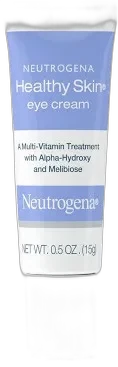
Healthy Skin Eye Firming Cream
Budget Eye Area Entry Point
 Verified reviewer
Pros & cons.
- +Combines glycolic acid and retinyl palmitate — a dual-active approach rare at any price point for eye care
- +Fragrance-free and ophthalmologist-tested for the sensitive periorbital area
- +Bisabolol provides anti-inflammatory soothing that buffers the AHA-retinoid combination
- +Panthenol counterbalances glycolic acid's drying potential with humectant hydration
- +Squeeze tube protects light-sensitive retinyl palmitate and ascorbic acid from degradation
- +Exceptional value at $13 for a 2-3 month supply of an active eye treatment
- −Dated preservative system includes parabens and diazolidinyl urea (a formaldehyde releaser)
- −Active ingredient concentrations appear low based on INCI list positioning
- −Dark circle improvement is temporary and cosmetic only — mica provides optical illusion, not treatment
- −Not suitable during pregnancy due to retinyl palmitate content
- −Not recommended for sensitive or eczema-prone skin around the eyes
- −Contains retinyl palmitate which must convert through multiple steps to the active retinoic acid form
The full review.
The eye cream category lacks credibility. Skincare aisles hold dozens of products promising to erase crow’s feet, banish dark circles, and lift sagging lids, but most contain only glycerin, dimethicone, and marketing. Many eye creams are just face moisturizers in smaller, more expensive packaging with no active ingredients for periorbital aging.
Neutrogena’s Healthy Skin Eye Firming Cream has defied this pattern for over two decades. It is not glamorous and never went viral. The packaging looks like a drugstore design from an era prioritizing information over aesthetics. However, the tube contains a genuine combination of glycolic acid and retinyl palmitate, two actives with published evidence for reducing fine lines and improving skin texture.
Glycolic acid serves two purposes. At this low, buffered concentration—this is not a peel and should not sting—it promotes gentle cell turnover in thin periorbital skin. It also helps retinyl palmitate penetrate better. AHAs temporarily thin the outermost layer of dead cells, letting the retinoid reach living skin cells to stimulate collagen synthesis. This one-two approach makes each ingredient more effective than alone.
Retinyl palmitate is the gentlest retinoid, a deliberate choice here. Periorbital skin is the thinnest on the face, roughly 0.5mm compared to 2mm on the cheeks. Stronger retinoids like retinol or tretinoin cause irritation, flaking, and redness in most people here. Retinyl palmitate requires multiple enzymatic steps to reach active retinoic acid, resulting in slower, gentler results. A published split-face study showed retinyl palmitate creams reduced wrinkling by six to eight percent over 60 days. These results are not dramatic, but they are real, measurable, and honest for a thirteen-dollar drugstore product.
The supporting ingredients are thoughtful. Panthenol provides humectant hydration to offset the glycolic acid’s potential drying. Bisabolol, from chamomile, offers anti-inflammatory soothing to make the AHA-retinoid combination tolerable near the eyes. Tocopheryl acetate and a small amount of ascorbic acid provide antioxidant protection. Mica provides immediate cosmetic smoothing—optical trickery that makes fine lines look softer upon application. It does not solve problems permanently, but it bridges the gap while actives work long-term.
The formula has limitations. The preservative system is the main weakness. Diazolidinyl urea is a formaldehyde-releasing preservative; it is safe at these concentrations by regulatory standards, but it is a dated choice modern formulations have abandoned. Methylparaben and propylparaben are safe by current scientific consensus but remain controversial with consumers. These choices reflect a formula designed decades ago that was never fully modernized.
Active ingredient concentrations are modest. Glycolic acid and retinyl palmitate sit in the middle-to-lower range of the INCI list, suggesting functional but not aggressive levels. This suits the eye area, as high-strength AHA near the eyes is undesirable, but results will be subtle and gradual. This product will not visibly change established deep crow’s feet or significant under-eye hollowing.
The dark circle claim needs scrutiny. Mica provides real but cosmetic temporary brightening. The small amount of ascorbic acid near the bottom of the ingredient list likely lacks the concentration to deliver meaningful brightening. If dark circles are your primary concern, do not use this product.
As an affordable, fragrance-free entry point into active eye care, it remains competent after twenty years. The glycolic acid and retinyl palmitate combination is uncommon at this price point; most drugstore eye creams contain neither, and many prestige eye creams contain only one. Using both, calibrated for the periorbital area and buffered by bisabolol and panthenol, was an approach ahead of its time in 2003 that remains rare at thirteen dollars.
The squeeze tube is a meaningful advantage. Retinyl palmitate and ascorbic acid are light- and air-sensitive. A tube protects them better than the jar packaging many eye creams use. You squeeze out what you need and close the cap to keep the remaining product stable. Neutrogena made the right packaging choice.
This product is not for those seeking cutting-edge technology, elegant textures, or Instagram moments. It is for anyone who wants an eye cream that contains more than moisturizer and prefers spending thirteen dollars on proven actives over sixty dollars on peptide-infused hope.
Ingredient analysis.
Full INCI list
Water, Cetyl Alcohol, C12-15 Alkyl Benzoate, Stearic Acid, Glycerin, Glyceryl Stearate, PEG-100 Stearate, Ethylhexyl Palmitate, Dimethicone, Tocopheryl Acetate, Silica, Glycolic Acid, Sodium Hydroxide, Xanthan Gum, Diazolidinyl Urea, Methylparaben, Panthenol, Bisabolol, Melibiose, Propylparaben, Tetrasodium EDTA, Ascorbic Acid, Retinyl Palmitate, Tocopherol, Mica
Skin match.
The science.
The Science
The Neutrogena Healthy Skin Eye Firming Cream uses two mechanisms for anti-aging: AHA-mediated cell turnover and retinoid-stimulated collagen synthesis.
Glycolic acid is the smallest AHA molecule and has evidence for reducing fine lines and improving skin texture. A 2001 study in the Journal of Dermatological Science shows glycolic acid reduced wrinkle length, with the greatest improvement in subjects in their 50s. This formula uses a low, buffered concentration of glycolic acid for thin periorbital skin; it works as a penetration enhancer for the retinyl palmitate rather than a standalone exfoliant.
Retinyl palmitate is the gentlest but slowest-acting retinoid because it requires enzymatic conversion into retinol and retinaldehyde before reaching active retinoic acid. A 2018 study in the Journal of Cosmetic Dermatology shows over-the-counter retinyl palmitate creams reduced skin wrinkling by 6.68-8.27% over 60 days in a split-face design. Research in Experimental Dermatology (2023) shows retinyl palmitate reduces collagen degradation and apoptosis in UVB-exposed skin cells and promotes cell migration for repair.
A 2024 review in the International Journal of Women's Dermatology highlights a gap in the evidence: few clinical trials evaluate ingredient efficacy in eye cream formulations applied to periorbital skin. Most evidence for glycolic acid and retinyl palmitate comes from facial skin studies. Because periorbital skin is thinner, has fewer sebaceous glands, and is more mobile, efficacy and tolerability differ from broader facial studies.
References
- The efficacy of glycolic acid for treating wrinkles: analysis using newly developed facial imaging systems equipped with fluorescent illumination — Journal of Dermatological Science (2001)
- Comparative efficacy of two anti-aging products containing retinyl palmitate in healthy human volunteers — Journal of Cosmetic Dermatology (2018)
- Efficacy and mechanism of retinyl palmitate against UVB-induced skin photoaging — Experimental Dermatology (2023)
- A review of the efficacy of popular eye cream ingredients — International Journal of Women's Dermatology (2024)
Dermatologist Perspective
Dermatologists view the glycolic acid and retinyl palmitate combination as a modest anti-aging approach for the periorbital area. Board-certified dermatologists note that most over-the-counter eye creams lack meaningful active ingredients; this dual-active formula is an honest budget option for patients avoiding prescription-strength treatments. However, dermatologists advise patients with sensitive skin or active inflammatory conditions around the eyes to avoid the glycolic acid component, and they recommend sunscreen when using any AHA or retinoid-containing product.
Where it fits in your routine.
Apply a small amount (about a pea-sized drop for both eyes) to the orbital bone area morning and evening after cleansing and toning, but before moisturizer. Tap the product around the orbital bone with your ring finger — the lightest-touch finger — instead of rubbing. Do not apply directly to the eyelid or too close to the lash line. Use SPF 30+ sunscreen in the morning, because glycolic acid and retinyl palmitate increase photosensitivity.
At about $13 for 0.5 ounces — a tube lasting 2-3 months — the Healthy Skin Eye Firming Cream has one of the best values in active eye creams. The glycolic acid and retinyl palmitate combination is rare at this price, as most eye creams only use basic emollients and humectants. The single size means no larger bottle offers better per-unit value, but the 15-20 cents daily cost makes this an accessible entry into active eye care.
This works for anyone seeking affordable active eye care beyond simple hydration. It suits people in their late twenties to forties with early fine lines and texture around the eyes who want proven actives without a prestige price tag.
The glycolic acid and retinyl palmitate may irritate sensitive, eczema-prone, or rosacea-affected skin around the eyes. Pregnant or nursing individuals should avoid this product because of the retinoid content. Skip this if you avoid parabens or formaldehyde-releasing preservatives.
Product details.
Fragrance-free with no detectable scent. ***
Small 0.5 oz squeeze tube with a screw cap. This tube format protects retinyl palmitate and ascorbic acid from light and air degradation better than a jar. It fits easily in travel kits. The packaging is standard drugstore style. ***
The cream feels lightweight on first application and absorbs within 30-60 seconds. Mica creates a subtle smoothing, light-reflecting effect that brightens the under-eye area immediately. Most users feel no stinging or tingling. Users with very sensitive skin may feel mild warmth from the glycolic acid that subsides quickly. ***
2-3 months with twice-daily use on the eye area ***
12 months ***
All Year ***
The backstory.
The Neutrogena Healthy Skin line was developed to democratize dermatological active ingredients — bringing AHAs and retinoids from prescription and prestige products into the drugstore aisle. The Eye Firming Cream extended this philosophy to the targeted eye care category, offering budget-conscious consumers access to a glycolic acid and retinoid combination that was typically only found in professional or luxury products. It has been on the market for over two decades, making it one of the longest-running AHA-containing eye creams available.
About Neutrogena
Legacy Brand (20+ years)Neutrogena launched in 1930 and is the number-one dermatologist-recommended skincare brand in the United States. The Healthy Skin line brings dermatologically-backed active ingredients — specifically AHAs and retinoids — to the mass market at accessible price points.
Common myths.
The glycolic acid in this eye cream burns or damages the thin skin around your eyes.
This ophthalmologist-tested formula uses a low, buffered concentration of glycolic acid to increase ingredient penetration and mild cell turnover. The bisabolol in the formula soothes skin to minimize irritation potential.
This eye cream removes dark circles permanently.
The mica in the formula creates a subtle light-reflecting effect that temporarily minimizes dark circles. It does not address pigmentation, thin skin, or visible blood vessels. The effect disappears when you wash off the product.
Parabens in eye cream will cause serious health issues.
The FDA, EU, and most global regulatory bodies approve Methylparaben and propylparaben as safe preservatives at cosmetic concentrations. While some people have contact sensitivities to parabens, current scientific consensus does not support systemic health risks at these concentrations.
FAQ.
Does Neutrogena Healthy Skin Eye Firming Cream really work for wrinkles?
Glycolic acid promotes gentle cell turnover and retinyl palmitate stimulates collagen production. Both reduce fine lines over time in clinical studies. Because this formula uses modest concentrations, expect gradual, subtle improvements in fine lines and texture over 6-8 weeks instead of dramatic wrinkle reduction. It works best for prevention or early fine lines.
Can I use this eye cream with retinol?
Use caution — this formula contains retinyl palmitate (a retinoid). Layering another retinol product on thin periorbital skin causes irritation, dryness, and peeling. If you use a separate retinol on your face, skip the eye area or use this eye cream on alternating nights.
Is Neutrogena Healthy Skin Eye Cream safe during pregnancy?
No — this formula uses retinyl palmitate, a vitamin A derivative. Retinyl palmitate is milder than prescription retinoids, but dermatologists advise avoiding all retinoid-containing products during pregnancy as a precaution. Use a retinoid-free eye cream during pregnancy.
Does this eye cream help with dark circles?
Mica in the formula diffuses light to temporarily brighten the under-eye area. This is a cosmetic effect, not a treatment. The low concentration of ascorbic acid may provide minor long-term brightening, but this product targets fine lines and texture instead of dark circles.
Why does this eye cream contain parabens?
This legacy formulation uses methylparaben and propylparaben as preservatives. Newer products mostly avoid this older approach. Global regulatory bodies approve parabens as safe at cosmetic concentrations, but consumers seeking paraben-free products should look elsewhere.
What the community says.
"Affordable drugstore price for an active eye treatment"
"Fragrance-free and hypoallergenic for the sensitive eye area"
"Lightweight texture absorbs without greasy residue"
"Visible smoothing effect from the mica particles"
"Non-irritating for most users despite containing glycolic acid"
"Easy-to-use squeeze tube dispenses the right amount"
"Limited effectiveness for deeper wrinkles and established crow's feet"
"Dark circle improvement is temporary and cosmetic only (mica)"
"Contains parabens and diazolidinyl urea — dated preservative system"
"Not moisturizing enough for very dry under-eye skin"
"Active ingredient concentrations appear low based on INCI positioning"
"Better options available at similar or slightly higher price points"
Featured in.
People also looked at.