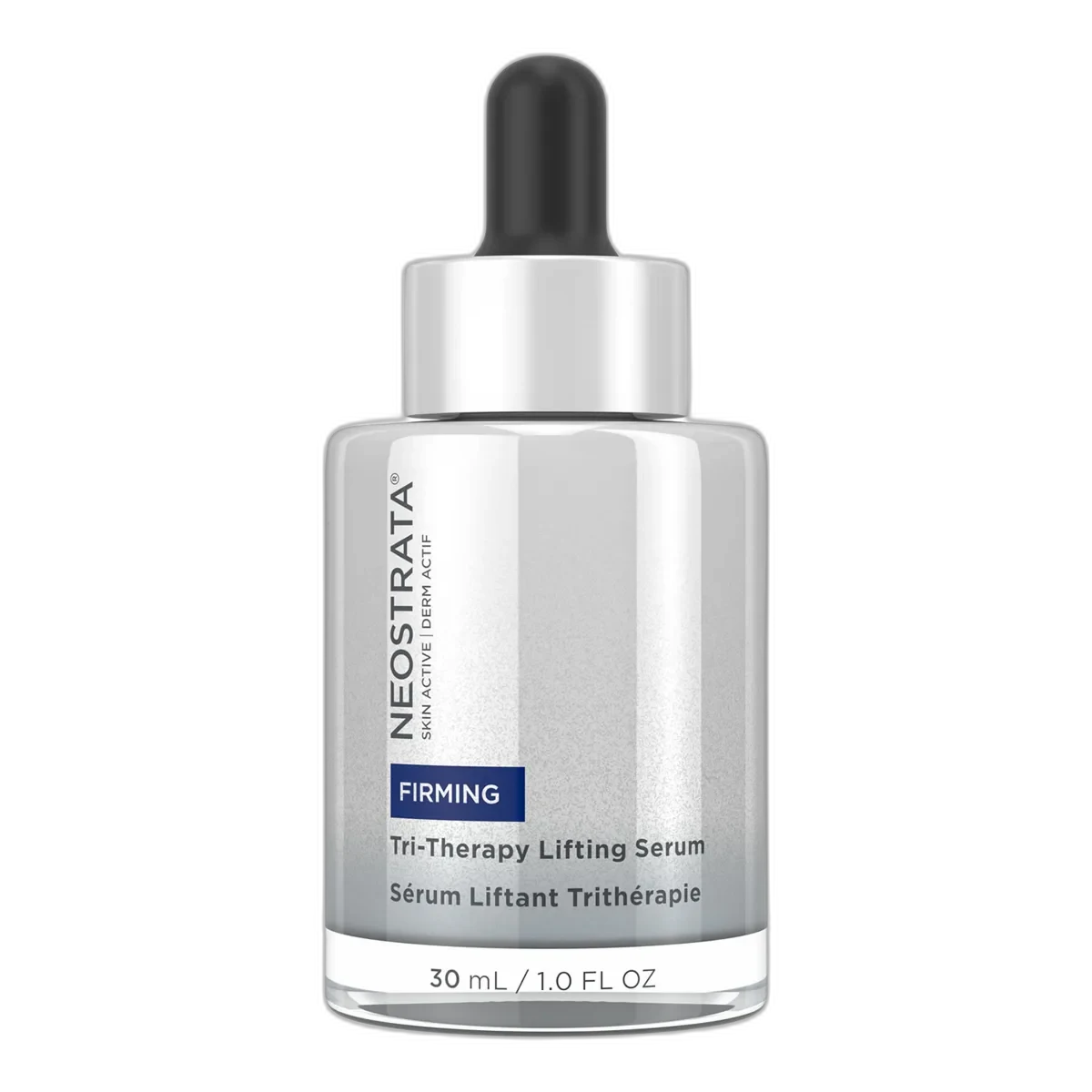
Tri-Therapy Lifting Serum
Three-Depth Volumizer
 Verified reviewer
Pros & cons.
- +Three-mechanism approach simultaneously targets deep volume loss, mid-level dehydration, and surface texture
- +Exceptionally gentle — 8% PHA exfoliation with no stinging, redness, or photosensitivity
- +Low-molecular-weight hyaluronic acid provides deeper penetration and more effective plumping than standard HA
- +Silky, lightweight texture absorbs quickly and works well as a makeup primer when properly applied
- +Suitable for sensitive, rosacea-prone, and post-procedure skin without irritation concerns
- +Proprietary Aminofil technology offers a unique approach to topical volume restoration
- −$100 for 1 oz is steep, especially with limited independent validation of the proprietary Aminofil ingredient
- −Contains fragrance components (methyldihydrojasmonate) unnecessary in a clinical anti-aging serum
- −Colorants (Red 33, Blue 1) add no skin benefit and may concern sensitive-skin users
- −Lifting claims set expectations higher than the gradual plumping results most users experience
- −Can pill when layered with incompatible moisturizers or silicone-heavy primers
The full review.
Topical skincare struggles most with volume loss. Retinoids address fine lines. Vitamin C and niacinamide treat hyperpigmentation. Peptides and growth factors modestly improve laxity. However, mid-face deflation, temple hollowing, and cheekbone prominence usually require filler. NeoStrata’s Tri-Therapy Lifting Serum attempts to bring volume concerns into skincare.
The tri-therapy approach targets three skin depths. The logic holds, even if the name is aspirational. Aminofil (acetyl tyrosinamide) at 1.25% works at the deepest level. NeoStrata’s testing shows it stimulates glycosaminoglycan (GAG) production—the structural molecules that make young skin plump. GAGs decrease with age; restoring even some production can create a volumizing effect.
Gluconolactone at 8% works on the surface. In this NeoStrata lineup review, you know gluconolactone: it exfoliates gently without stinging, hydrates as a humectant, and chelates metal ions for antioxidant protection. In this serum, it keeps the surface smooth, radiant, and renewed for the deeper treatments. It provides visible results while slower actives work beneath.
Hydrolyzed sodium hyaluronate at 0.5% bridges these layers. This low molecular weight form penetrates past the stratum corneum into the viable epidermis to pull in water and plump mid-layers. You feel this immediately. Within minutes, fine lines around the eyes and mouth soften, and the skin looks dewy and full.
The serum texture is a highlight. It is silky, lightweight, and slips on easily for twice-daily use. The silicone base creates a smooth, primer-like finish that works under makeup if it doesn’t pill. Some users report pilling when layering with silicone-heavy moisturizers or primers. To avoid this, use a thin layer, wait two minutes, and test compatibility with your routine.
The assessment: Aminofil is a proprietary NeoStrata ingredient. Clinical evidence comes mostly from NeoStrata’s own studies. Independent peer-reviewed research on topical acetyl tyrosinamide is limited. This doesn’t mean it fails—NeoStrata has a strong scientific pedigree—but at $100 per ounce, buyers may want more independent validation.
The fragrance is a strange choice. Methyldihydrojasmonate and other scent molecules are on the INCI list, giving the serum a faint floral note. Since NeoStrata markets many products as fragrance-free for sensitive skin, adding fragrance to a premium anti-aging serum is a misstep. The colorants (Red 33, Blue 1) are also unnecessary; they provide a purple tint but no skin benefit.
The “lifting” name sets expectations the formula only partially meets. Users describe results as plumping and hydrating rather than filler-like lifting. Skin looks fuller, more hydrated, and smoother, but the jawline won’t redefine and nasolabial folds won’t vanish. NeoStrata’s clinical data shows improved firmness, but the gap between clinical metrics and visible change makes the $100 price point difficult for some.
The serum excels in tolerability. With 8% PHA and no traditional AHAs or retinoids, it is one of the gentlest anti-aging serums available. Sensitive, rosacea-prone, or post-procedure skin can use this safely. For those who cannot tolerate retinol, vitamin C, or glycolic acid, the Tri-Therapy is a legitimate, non-irritating alternative.
At $100 for 1 oz, the serum is expensive. 8% gluconolactone and 0.5% hyaluronic acid exist in cheaper products; the premium pays for Aminofil and the NeoStrata brand. If you value the tri-depth approach, tolerability, and NeoStrata’s research, it is worth it. Otherwise, a separate PHA moisturizer and hyaluronic acid serum may provide 80% of the benefits at 40% of the cost.
Formula
Texture
The serum texture is a highlight. It is silky, lightweight, and slips on easily for twice-daily use. The silicone base creates a smooth, primer-like finish that works under makeup if it doesn’t pill. Some users report pilling when layering with silicone-heavy moisturizers or primers. To avoid this, use a thin layer, wait two minutes, and test compatibility with your routine.
Scent
The fragrance is a strange choice. Methyldihydrojasmonate and other scent molecules are on the INCI list, giving the serum a faint floral note. Since NeoStrata markets many products as fragrance-free for sensitive skin, adding fragrance to a premium anti-aging serum is a misstep. The colorants (Red 33, Blue 1) are also unnecessary; they provide a purple tint but no skin benefit.
Common Praise
Users describe results as plumping and hydrating rather than filler-like lifting. Skin looks fuller, more hydrated, and smoother, but the jawline won’t redefine and nasolabial folds won’t vanish. NeoStrata’s clinical data shows improved firmness, but the gap between clinical metrics and visible change makes the $100 price point difficult for some.
Works for
The serum excels in tolerability. With 8% PHA and no traditional AHAs or retinoids, it is one of the gentlest anti-aging serums available. Sensitive, rosacea-prone, or post-procedure skin can use this safely. For those who cannot tolerate retinol, vitamin C, or glycolic acid, the Tri-Therapy is a legitimate, non-irritating alternative.
Best for
If you value the tri-depth approach, tolerability, and NeoStrata’s research, the investment is justified. Otherwise, a separate PHA moisturizer and hyaluronic acid serum at lower price points may deliver 80% of the benefits at 40% of the cost.
Ingredient analysis.
Full INCI list
Aqua/Water/Eau, PEG-8, Gluconolactone, 1,2-Hexanediol, Cyclopentasiloxane, Glycerin, Pentylene Glycol, PEG-12 Dimethicone, Polymethylsilsesquioxane, Acetyl Tyrosinamide, Cyclohexasiloxane, Hydrolyzed Sodium Hyaluronate, Dimethiconol, Biosaccharide Gum-1, Polyacrylate-13, Polyisobutene, Isopropyl Myristate, Polysorbate 20, Sodium Sulfite, BHT, Ammonium Hydroxide, Caprylyl Glycol, Xanthan Gum, Methyldihydrojasmonate, 2,6-Dimethyl-7-Octen-2-Ol, Ethyl Acetoacetate, Methyl Benzodioxepinone, Phenoxyethanol, Chlorphenesin, Red 33 (CI 17200), Blue 1 (CI 42090)
Skin match.
The science.
The Science
The tri-therapy mechanism targets three structural and biochemical aspects of skin aging. Aminofil (acetyl tyrosinamide), NeoStrata's proprietary amino acid derivative at 1.25%, stimulates glycosaminoglycan (GAG) synthesis in dermal fibroblasts. GAGs — including hyaluronic acid, dermatan sulfate, and chondroitin sulfate — are the water-binding molecules that provide young skin volume and bounce. Published research shows GAG content in the dermis declines with age; NeoStrata's clinical studies reported that topical Aminofil increased measurable skin volume by up to 15% in facial hollowing areas after 12 weeks of use.
The 8% gluconolactone component delivers surface-level renewal through the PHA mechanisms in NeoStrata's published literature: gentle desquamation by disrupting corneocyte adhesion, humectant hydration via multiple hydroxyl group water-binding, and antioxidant protection through metal ion chelation. At 8%, gluconolactone provides clinically meaningful exfoliation comparable to lower-concentration AHAs without the sensory irritation or photosensitivity.
Hydrolyzed sodium hyaluronate at 0.5% is a low-molecular-weight HA fraction designed for better epidermal penetration. Research in the Journal of Clinical and Aesthetic Dermatology shows that low-MW HA (below 50 kDa) penetrates the viable epidermis more effectively than standard high-MW HA, where it stimulates keratinocyte proliferation and improves hydration at deeper tissue levels. Combining topical low-MW HA for immediate hydration with Aminofil for long-term GAG stimulation creates complementary pathways to restore skin fullness.
Dermatologist Perspective
Board-certified dermatologists who recommend this serum typically use it as a gentle, topical complement to — not a replacement for — injectable volume restoration. Dermatologists value the PHA-based formulation for patients who cannot tolerate retinoids or traditional AHAs, especially those with rosacea or sensitized skin. Aminofil technology offers a topical approach to volume loss, though dermatologists set patient expectations for modest, gradual improvement rather than filler-level results. This serum is frequently recommended for maintenance between filler appointments or for patients who prefer non-invasive approaches to facial aging.
Where it fits in your routine.
Apply 2-3 pumps to a clean, dry face and neck morning and evening. Wait 1-2 minutes for full absorption before applying moisturizer. Use a thin, even layer; excess product increases pilling risk. Use it alone as a lightweight treatment on humid days. Always follow with SPF in the morning. It works with most other serums and treatments, but test layering compatibility with your specific products to avoid pilling.
NeoStrata sells this premium serum for $100 per 1 oz. The value depends on the proprietary Aminofil technology; gluconolactone and hyaluronic acid exist in cheaper products. The unique combination justifies the cost for users seeking a gentle, multi-depth anti-aging approach without retinoids or traditional AHAs. One tube lasts 2-3 months with twice-daily facial application. However, consumers can get similar results using a PHA moisturizer ($50-66) and a hyaluronic acid serum ($15-30), leaving only the Aminofil component out. This makes the $100 price hard to justify by ingredients alone.
Mature skin types with volume loss, fine lines, and textural changes seeking a gentle, non-irritating anti-aging serum. It works well for people who cannot tolerate retinoids, traditional AHAs, or vitamin C serums because of sensitivity or rosacea. This fits anyone wanting a NeoStrata-based anti-aging routine who wants one product to provide exfoliation, hydration, and volumizing.
Budget-conscious consumers can get similar hydration and exfoliation from separate, cheaper products. People seeking dramatic lifting or volume restoration should manage expectations — injectable fillers show more visible results. Those sensitive to fragrance ingredients should note the methyldihydrojasmonate and other scent components in this formula.
Product details.
Lightweight, silky gel-serum with a smooth, slightly silicone-based slip
Faint floral scent from fragrance components (methyldihydrojasmonate)
Pump bottle in NeoStrata's Skin Active line dark packaging
The serum applies smoothly with a silky, lightweight feel. The 8% gluconolactone content causes no tingling or stinging. Skin feels hydrated and slightly plumped immediately. The faint floral scent dissipates quickly. Let the serum absorb fully before applying moisturizer to avoid pilling.
2-3 months with twice-daily face and neck application
12 months
All Year
The backstory.
NeoStrata developed the Tri-Therapy Lifting Serum as a non-injectable approach to the volume loss that defines aging skin after 40. Rather than competing with fillers, they designed a topical formula that addresses the three layers of aging — deep structural volume loss, mid-level dehydration, and surface texture degradation — using their proprietary Aminofil compound alongside proven PHA and hyaluronic acid technology. The concept reflects the brand's signature approach of combining multiple mechanisms rather than relying on a single hero ingredient.
About NeoStrata
Legacy Brand (20+ years)Dermatologist Dr. Van Scott and dermatopharmacologist Dr. Ruey Yu founded NeoStrata in 1988. They invented alpha and polyhydroxy acid technology. NeoStrata has over 110 patents and nearly 250 published clinical studies and journal papers.
Common myths.
Topical serums can replace injectable fillers for volume loss.
This serum does not replicate the immediate, dramatic volume restoration of hyaluronic acid fillers. Aminofil stimulates natural GAG production for gradual, subtle plumping. It supports your skin's own volume-producing capacity instead of injecting volume externally. The results are real but slower and more subtle than injectable treatments.
More active ingredients always mean a better serum.
This serum works through three mechanisms at different skin depths rather than ingredient count. The formula is streamlined: Aminofil, gluconolactone, and low-MW hyaluronic acid each target a specific layer. More actives could disrupt this targeted approach without adding proportional benefit.
FAQ.
Does NeoStrata Tri-Therapy Lifting Serum actually lift the skin?
The serum provides gradual volumizing and firming instead of a dramatic lift. Aminofil stimulates skin glycosaminoglycan production for subtle volume restoration over 6-8 weeks. The 8% gluconolactone and low-MW hyaluronic acid improve texture and hydration. Most users report results like plumped, firmer, and more hydrated skin rather than visible lifting.
Can I use NeoStrata Tri-Therapy with retinol?
Yes — the 8% gluconolactone PHA in this serum is gentle enough for use with retinol products. PHAs do not increase sun sensitivity like traditional AHAs, which reduces cumulative irritation risk. Apply the Tri-Therapy serum first, let it absorb, then apply your retinol product. If you experience irritation, alternate nights.
Is this serum worth $100?
Value depends on your goals. NeoStrata uses unique Aminofil technology and a tri-depth approach, and the formula works well for sensitive aging skin. However, gluconolactone and hyaluronic acid appear in cheaper products. The price makes sense if you want Aminofil volumizing technology from a legacy dermatologist-developed brand. If you want hydration and gentle exfoliation, cheaper alternatives exist.
Does this serum work well under makeup?
Results vary. The silicone base feels smooth and primed, but some users report pilling when layering with certain foundations or primers. Apply a thin layer, wait at least 2 minutes for complete absorption, and test compatibility with your specific makeup products before daily use.
How long does it take to see results from NeoStrata Tri-Therapy?
Hyaluronic acid provides noticeable hydration and surface plumping within the first week. The 8% gluconolactone improves texture after 2-4 weeks. Aminofil stimulates GAG production in the dermis for deeper volumizing, which shows after 6-8 weeks of consistent twice-daily use.
Community
What the community says.
"Provides noticeable hydration and plumping effect within the first week"
"Smooth, silky texture absorbs quickly"
"Gentle enough for sensitive and mature skin"
"Improves skin firmness and fine line appearance with consistent use"
"$100 is very expensive for a 1 oz serum with limited unique active ingredients"
"Can pill under makeup or when layered with certain products"
"Lifting claims feel overstated — results are more hydrating than lifting"
"Contains fragrance components and colorants unnecessary in a clinical product"
Featured in.
People also looked at.