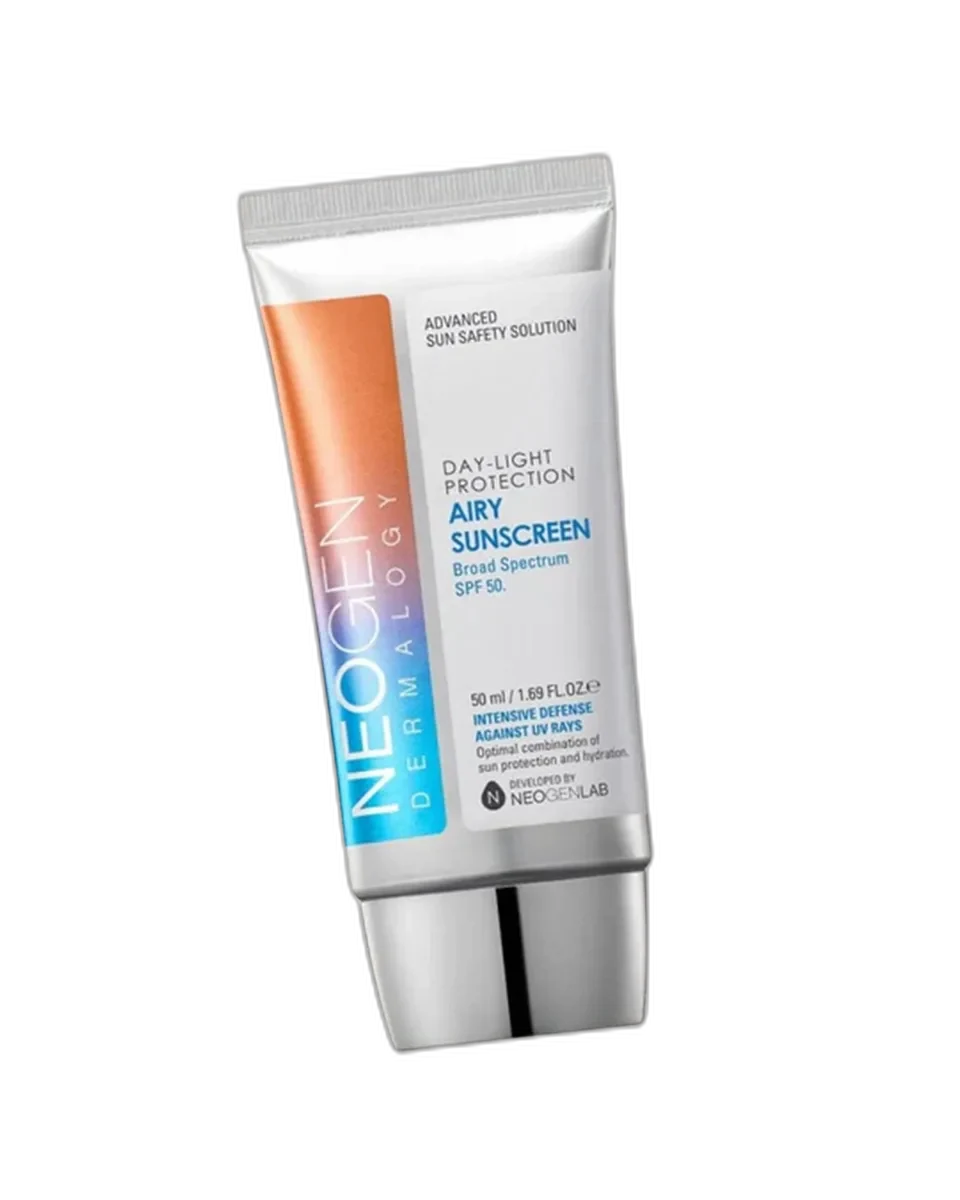
Day-Light Protection Airy Sunscreen SPF 50
K-Beauty Cosmetically Elegant SPF
 Verified reviewer
Pros & cons.
- +Genuinely airy, cosmetically elegant texture
- +No white cast on any skin tone
- +Layers cleanly under makeup without pilling
- +Standard broad-spectrum chemical filter system (octocrylene, homosalate, avobenzone)
- +Established K-beauty favorite with 10+ years of track record
- +Reasonable price for the category at $32 for 50ml
- −Long list of essential oils creates unnecessary irritation risk
- −Strong herbal-citrus scent is polarizing
- −Not suitable for sensitive, rosacea-prone, or eczema-reactive skin
- −Korean SPF testing doesn't translate directly to US FDA standards
- −Contains octocrylene, controversial in reef-safety discussions
- −Fragrance and essential oils preclude use near eye area
The full review.
Daily sunscreen’s main challenge isn’t the SPF number. It is whether you wear it every day, year-round, in the amount needed for protection. Dermatologists have said this for years: the best sunscreen is the one you use. K-beauty sunscreens became a cult subcategory in US skincare routines not because Korean SPF 50 tests better than American SPF 50 in lab comparisons, but because K-beauty brands solved the cosmetic elegance problem earlier and more completely than the US sunscreen industry. Neogen’s Day-Light Protection Airy Sunscreen, launched around 2015, helped establish this category in the American K-beauty vocabulary.
Texture
The ‘airy’ name is accurate. The tube dispenses a thin, watery lotion that spreads easily and absorbs within seconds into a nearly invisible finish—no white cast, no tackiness, minimal sheen, and a slight powdery feel from the silica. If you resent wearing chunky, greasy chemical sunscreens, this texture works. It layers under makeup without pilling, does not interact poorly with most moisturizers, and disappears into combination and oily skin to make daily compliance achievable. For this cosmetic problem, Neogen’s Day-Light Protection Airy Sunscreen is one of the stronger solutions on the US K-beauty shelf and has been for nearly a decade.
Formula
The UV filter system is standard and effective. Octocrylene, homosalate, and avobenzone form the standard chemical filter combination for a broad-spectrum SPF 50 lotion. Octocrylene and homosalate handle UVB, avobenzone handles UVA, and octocrylene photostabilizes avobenzone, which is unstable on its own. Vitamin E acts as an antioxidant supporter. Silica delivers the airy finish. These are the functional core of the formulation; the filter choices are reasonable and well-established.
Scent
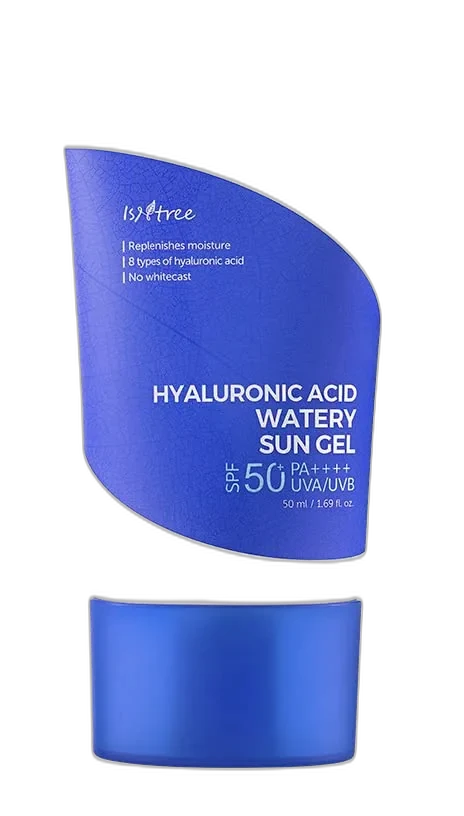
The ingredient list beyond the sunscreen actives is a drawback. The INCI contains a long list of essential oils: bergamot, litsea cubeba, lavender, tea tree, clove, lime, orange peel, and camphor. While present at low concentrations, they collectively give the product a strong herbal-citrus scent that lingers for several minutes and creates an irritation risk for the sensitive-skin and rosacea communities. Bergamot oil can be photosensitizing—a strange choice for a product worn in sunlight—though modern formulations often use bergamot variants with the furocoumarins removed. If you have reactive skin, fragrance-sensitivity, or an active inflammatory condition, do not use this. The sensitive-skin K-beauty category has better options (Beauty of Joseon Relief Sun, Round Lab Birch Juice, Purito Daily Soft Touch, Isntree Hyaluronic Acid Watery) that launched after Neogen’s original formula.
Reality
The regulatory context matters. Neogen’s Day-Light Protection Airy Sunscreen uses Korean SPF testing procedures, which differ from US FDA OTC monograph testing. The filters are all approved in the US, so this is not a case of banned ingredients, but a product sold in the US with a Korean-tested SPF label. US users should not assume Korean SPF 50 is equivalent to US SPF 50. Independent tests of most K-beauty sunscreens show acceptable, but not always category-leading, performance relative to label claims. Reapplication is vital: use a generous amount (about a quarter teaspoon for face alone), reapply every two hours during sun exposure, and treat the label number as a guideline rather than a guaranteed ceiling.
Price
At $32 for 50ml, the price is fair. Using a proper quantity daily, one tube lasts about 6-8 weeks. This monthly cost aligns with mid-tier Western drugstore sunscreens and sits below luxury options. You pay a premium for the airy texture and K-beauty formulation elegance over a pure drugstore chemical SPF. If you will not wear a greasier sunscreen daily, this elegance tax is worth it because it improves compliance.
Who Should Buy
This product serves oily, combination, and normal-skinned users without fragrance sensitivity who want a cosmetically elegant daily sunscreen that layers under makeup. It is a solid choice for office commutes, errands, and general sun exposure, especially when building a K-beauty routine. It is not for beach or water sports (use a mineral or more substantive chemical formulation), and it is not for sensitive, rosacea-prone, or eczema-reactive skin. The essential oil content is a real limit; many dermatologists now suggest cleaner-ingredient K-beauty SPFs over this formula. As an established, cosmetically elegant chemical sunscreen for the right user, Neogen’s Day-Light Protection Airy still earns its shelf space.
Ingredient analysis.
Full INCI list · pH 6
Water, Octocrylene, Homosalate, Isododecane, Dipropylene Glycol, Silica, Avobenzone, 1,2-Hexanediol, Octyldodeceth-16, Acrylates/C10-30 Alkyl Acrylate Crosspolymer, Tromethamine, Ethylhexylglycerin, Tocopheryl Acetate, Coptis Japonica Root Extract, Butylene Glycol, Xanthan Gum, Citrus Aurantium Dulcis (Orange) Peel Oil, Litsea Cubeba Fruit Oil, Citrus Aurantium Bergamia (Bergamot) Fruit Oil, Pelargonium Graveolens Flower Oil, Lavandula Angustifolia (Lavender) Oil, Melaleuca Alternifolia (Tea Tree) Leaf Oil, Citrus Aurantifolia (Lime) Oil, Eugenia Caryophyllus (Clove) Leaf Oil, Cinnamomum Camphora (Camphor) Bark Oil, Maltodextrin, Persea Gratissima (Avocado) Fruit Extract, Oenothera Biennis (Evening Primrose) Flower Extract, Pinus Palustris Leaf Extract, Ulmus Davidiana Root Extract, Pueraria Lobata Root Extract, Citrus Limon (Lemon) Fruit Extract, Glycerin, Rosa Damascena Extract, Lippia Citriodora Leaf Extract
Skin match.
The science.
The Science
The UV protection here is straightforward and well-established at the filter level. Avobenzone (butyl methoxydibenzoylmethane) is the most widely used organic UVA filter globally. It has strong evidence for protecting against long-wavelength UVA radiation that causes photoaging, hyperpigmentation, and DNA damage. Its main limitation is photoinstability: avobenzone degrades under UV exposure at rates that change with formulation conditions, so it almost always pairs with a photostabilizer. Octocrylene is the photostabilizer here and also acts as a UVB filter. Research shows Octocrylene can extend avobenzone's effective life by 2-3 times in a well-formulated system. Homosalate adds more UVB coverage. This filter combination produces a reasonable broad-spectrum profile at SPF 50, though real-world SPF and UVA performance depends on application amount, formulation stability, and reapplication frequency. One complication: research shows octocrylene can form benzophenone (a controversial degradation product) over time, especially in aged products. This is a limited concern for a 12-month PAO (period after opening) window, but not zero. The antioxidant component is vitamin E supported by botanical extracts. Vitamin E as tocopheryl acetate is a stable ester form that provides an antioxidant layer once skin converts it to active tocopherol. The botanical extracts (avocado, evening primrose, rose, lemon balm) show various in vitro antioxidant activities, but their contribution is modest at the concentrations in a finished sunscreen. The essential oil complex — bergamot, lavender, tea tree, clove, and others — uses an older K-beauty formulation style that modern dermatological research flags as an unnecessary source of contact sensitization, especially in daily-wear products on sun-exposed skin. Bergamot oil specifically has historical phototoxicity concerns due to furocoumarins, though most modern cosmetic-grade bergamot has these compounds removed.
Dermatologist Perspective
Dermatologists generally see this sunscreen as a cosmetically-appealing daily wear option for specific patients — namely, oily or combination-skinned patients without fragrance sensitivity who want a K-beauty alternative to drugstore chemical SPF options. Board-certified dermatologists typically caution patients about the essential oil content and recommend fragrance-free K-beauty sunscreens for anyone with sensitive skin, rosacea, eczema, or reactive conditions. Dermatologists often consider this product reasonable for daily commutes and incidental sun exposure; for beach or water sports, they typically prefer mineral or more substantial chemical formulations. The dermatology consensus remains that compliance matters more than the specific SPF product chosen — and the airy texture here improves compliance for users who otherwise skip sunscreen entirely.
Where it fits in your routine.
Apply this as the last step of your morning routine, after moisturizer. Use about 1/4 teaspoon (1.25 ml) — roughly two finger-lengths from tip to base — for the face. Spread it evenly and wait 15 minutes to set before sun exposure. Reapply every 2 hours for outdoor activity. Apply more often after sweating or swimming. Avoid the direct eye area because of the essential oil content. Use a separate sunscreen for the body at a larger, more cost-effective quantity. Store at room temperature away from direct sunlight to keep filter stability.
At $32 for 50ml, this product sits in the mid-tier K-beauty sunscreen category — more expensive than drugstore chemical options and cheaper than luxury sunscreens. One tube lasts 6-8 weeks with proper daily application, making the monthly cost about $16-21. This price is reasonable for a cosmetically elegant SPF 50 that users actually use. For a true value comparison, look at modern fragrance-free K-beauty alternatives that cost slightly less and offer similar texture without essential oil irritation risk — Beauty of Joseon Relief Sun, for example, costs about the same and is better tolerated by sensitive users. Choosing Neogen depends on texture preference and brand loyalty.
Buy this for oily, combination, or normal skin if you lack fragrance sensitivity and want a cosmetically elegant K-beauty chemical sunscreen. It has an airy finish and layers cleanly under makeup. This works well for daily office commutes, errands, and incidental sun exposure where a pleasant texture improves compliance.
Skip this if you have sensitive, rosacea-prone, eczema-reactive, or fragrance-sensitive skin — the essential oil content increases irritation risk and fragrance-free K-beauty alternatives exist. Skip this for beach, water sports, or reef-sensitive environments, and use a mineral or more substantive chemical SPF for high-exposure outdoor activities.
Product details.
This ultra-lightweight, watery lotion absorbs fast and leaves a silky, powder-like finish.
A strong herbal-citrus scent comes from the essential oil blend of lavender, tea tree, bergamot, and clove.
50ml white plastic tube has a flip-top cap and minimal Korean-style branding.
The first application feels light for a chemical sunscreen. The texture absorbs fast, leaves no white cast, and sets to an almost matte finish within a minute. The essential oil scent is immediate and stays for several minutes before fading.
Use daily as a face sunscreen with a quarter teaspoon per face for 6-8 weeks.
12 months
All Year
The backstory.
Day-Light Protection Airy Sunscreen launched around 2015 as Neogen's daily-wear sunscreen entry and became one of the brand's most successful international exports. It predates the current wave of K-beauty SPF popularity in the US market and helped establish expectations for what a lightweight Korean chemical sunscreen should feel like. The formulation has remained largely stable, though the essential oil content has drawn increasing criticism from the sensitive-skin skincare community as US sunscreen standards have evolved.
About Neogen
Established Brand (5–20 years)Neogen launched in South Korea in 2001. Day-Light Protection Airy Sunscreen is one of its most famous exports and sits on shelves in US K-beauty specialty retailers. The brand has a proven history in the K-beauty sunscreen category, but independent US clinical sunscreen testing is limited. Most efficacy data comes from Korean regulatory testing instead of US FDA procedures.
Common myths.
K-beauty sunscreens have higher SPF than US sunscreens because Korean regulations are stricter.
Korean and US sunscreen regulations use different testing methods and UV filter approvals. K-beauty sunscreens often feel more cosmetically elegant because they use newer filters not approved in the US. However, the SPF number on the label does not translate cleanly between regulatory systems — US users cannot assume a Korean SPF 50 performs identically to a US-tested SPF 50 without reapplication.
FAQ.
Does Neogen Day-Light Airy Sunscreen leave a white cast?
No. The chemical filter system (octocrylene, homosalate, avobenzone) avoids the white cast common in mineral sunscreens. The silica-based airy texture sets to a nearly invisible finish on most skin tones.
Is this sunscreen suitable for sensitive skin?
Not ideally. The formula uses many essential oils — bergamot, lavender, tea tree, clove, lemon, and others — which often irritate sensitive skin and rosacea-prone users. Use fragrance-free K-beauty alternatives like Beauty of Joseon Relief Sun or Round Lab Birch Juice Moisturizing Sunscreen instead.
Can I wear this sunscreen under makeup?
Yes — the light texture makes this one of the better K-beauty SPF options for layering under makeup. It absorbs fast, does not pill under most primers, and sets to a matte-ish finish that foundation sits on cleanly.
What is the UV filter system in this sunscreen?
The filters are octocrylene, homosalate, and avobenzone. Octocrylene and homosalate target UVB, while avobenzone targets UVA. Octocrylene also stabilizes avobenzone. This is a standard chemical filter combination for a broad-spectrum SPF 50 product.
How much should I apply for the SPF rating to be effective?
Use about 1/4 teaspoon (1.25 mL) for the face, or two finger-lengths from tip to base. Most users apply too little sunscreen, which reduces real-world protection. Reapply every 2 hours during outdoor sun exposure.
Is this sunscreen reef-safe?
It contains octocrylene, which causes controversy in reef-safety discussions due to degradation products. Use a mineral-only sunscreen for snorkeling, ocean swimming, or reef environments.
Does it meet US FDA sunscreen regulations?
Neogen Day-Light Protection Airy Sunscreen uses US FDA-approved filters but follows Korean testing regulations instead of US OTC monograph procedures. Korean SPF ratings differ from US ratings; US users should assume a lower rating and reapply regularly.
What the community says.
"Genuinely airy, non-greasy texture"
"No white cast"
"Layers well under makeup"
"Cosmetically elegant for a K-beauty chemical SPF"
"Essential oil scent is polarizing"
"Not suitable for sensitive skin"
"Won't meet US FDA SPF regulations"
"Small size for the price"
People also looked at.