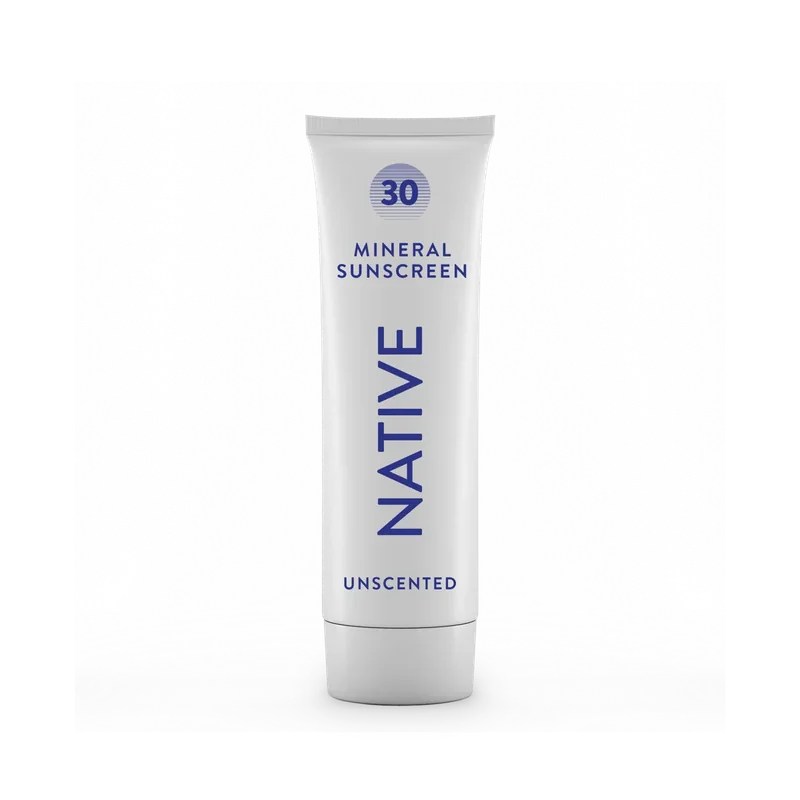
Mineral Face Sunscreen SPF 30
Clean Mineral Pick
 Verified reviewer
Pros & cons.
- +20% zinc oxide provides robust broad-spectrum UVA/UVB protection as a single active
- +Completely unscented — ideal for sensitive and reactive facial skin
- +Lightweight texture that's notably more pleasant than typical mineral sunscreens
- +Silicone-free, fragrance-free, and paraben-free with only 17 total ingredients
- +Hawaii reef-safe compliant — no oxybenzone or octinoxate
- +Cruelty-free and vegan with Leaping Bunny certification
- −Small 1.7 oz tube at $15.99 provides poor per-ounce value for daily use
- −Not water or sweat resistant — unsuitable for outdoor sports or swimming
- −May still show white cast on medium-deep to deep skin tones
- −Can pill when layered over silicone-based products underneath
- −Only SPF 30 — some dermatologists prefer SPF 50 for daily facial protection
The full review.
It is bold for a brand famous for natural deodorant to launch a mineral face sunscreen. Deodorant and sun care require different formulations, and many brands fail when they enter new categories using only brand loyalty. When Native introduced its mineral sunscreen line around 2022, the question was not if people would buy it—they would, given Native’s distribution and following—but if the formula works.
The formula is competent. It uses 20% zinc oxide as the sole UV filter. Zinc oxide provides broad-spectrum coverage against UVA and UVB radiation. At 20% concentration, this provides robust protection. There are no chemical filters like oxybenzone or octinoxate—only a physical mineral barrier.
The inactive ingredient list has seventeen ingredients. The base uses caprylic/capric triglyceride and coconut alkanes—lightweight, coconut-derived emollients that disperse the zinc oxide and reduce chalkiness. Glycerin provides hydration. Avocado oil and sunflower seed oil add emolliency. Tocopherol (vitamin E) provides antioxidant support. It contains no silicones, no fragrance, no essential oils, and no unnecessary botanical extracts.
Texture
The texture is pleasant for a mineral sunscreen. It is a lightweight, creamy lotion—thinner and more fluid than thick, pasty mineral sunscreens. It spreads easily across the face without tugging and sets within a minute or two to a soft, slightly dewy finish. It does not feel heavy, greasy, or suffocating.
White Cast
The white cast is better than average but not perfect. On light to medium skin tones, the zinc oxide blends in after a minute of gentle rubbing, leaving minimal residue. On deeper skin tones, some white cast remains. This is a standard challenge with untinted 20% zinc oxide; coconut alkanes do not eliminate it. A tinted mineral sunscreen works better for deeper complexions.
Scent
Being unscented is an advantage. Many sunscreens include fragrance that irritates sensitive facial skin. Native excludes it, making this a smart choice for people with reactive skin, rosacea, or fragrance sensitivities. The only scent is a faint, natural smell from the zinc oxide and plant oils that dissipates immediately.
Water Resistance
This sunscreen is not water or sweat resistant. This is acceptable for daily commuting, office work, or running errands. For outdoor activities involving sweating or water, you need a water-resistant formula. This is a casual-wear, daily-use sunscreen.
Value
The value is a point of tension. At $15.99 for 1.7 fl oz, the per-ounce price is a premium compared to mineral sunscreens with similar or better formulations in larger sizes. If you apply the recommended amount (about a nickel-sized amount) and reapply during the day, one tube lasts three to four weeks. This adds up over a year. The price reflects Native’s clean-beauty positioning and the P&G-backed brand premium, but other mineral sunscreens offer better zinc oxide dispersion, added antioxidants, or tinted options at comparable or lower per-ounce prices.
Pilling
Some users report occasional pilling when layering this sunscreen over certain serums or moisturizers. The xanthan gum in the formula can interact with silicone-based products underneath. If pilling occurs, apply the sunscreen to bare moisturized skin instead of a multi-step serum routine, and pat rather than rub.
Summary
Native’s Mineral Face Sunscreen is a solid entry. It protects skin from UV damage with a clean, gentle formula that is comfortable for daily wear. It is not innovative, and the price-to-size ratio is high, but for those in the Native ecosystem wanting a mineral face sunscreen that fits the brand’s simple philosophy, it is a reliable choice.
Formula
Ingredient analysis.
Full INCI list
Active Ingredient: Zinc Oxide 20%. Inactive Ingredients: Water, Caprylic/Capric Triglyceride, Coconut Alkanes, Glycerin, Cetearyl Alcohol, Coco-Glucoside, Arachidyl Alcohol, Behenyl Alcohol, Arachidyl Glucoside, Polyhydroxystearic Acid, Benzyl Alcohol, Xanthan Gum, Coco-Caprylate/Caprate, Tocopherol, Persea Gratissima (Avocado) Oil, Helianthus Annuus (Sunflower) Seed Oil
Skin match.
The science.
The Science
Zinc oxide is one of two FDA-approved mineral UV filters, alongside titanium dioxide. It is the only single ingredient that provides true broad-spectrum protection against UVA and UVB radiation. At a 20% concentration — the maximum typically used in cosmetic sunscreens — it delivers an SPF around 30 depending on the formulation base, blocking approximately 97% of UVB rays.
The mechanism of action is physical: zinc oxide particles sit on the skin surface to scatter, reflect, and absorb UV photons before they penetrate the stratum corneum. Mineral sunscreens provide protection immediately upon application, unlike chemical UV filters that require a 15-20 minute absorption period. A 2019 study in the Journal of the American Academy of Dermatology confirmed that zinc oxide sunscreens do not enter systemic circulation like chemical filters, addressing consumer concerns about sunscreen chemical absorption.
The formula's coconut alkanes and caprylic/capric triglyceride do more than provide emolliency — they help disperse zinc oxide particles more uniformly across the skin surface. This improves protection consistency and reduces visible white cast. Polyhydroxystearic acid in the formula is a common zinc oxide dispersant that coats mineral particles to improve spreadability in the emulsion base.
Tocopherol (vitamin E) provides supplementary antioxidant defense to complement the physical UV barrier. Research shows UV exposure generates free radicals even with sunscreen applied; topical antioxidants help neutralize these reactive species, adding a secondary layer of photoprotection.
References
- Effect of Sunscreen Application Under Maximal Use Conditions on Plasma Concentration of Sunscreen Active Ingredients — Journal of the American Medical Association (JAMA) (2019)
Dermatologist Perspective
Dermatologists recommend mineral sunscreens containing zinc oxide for patients with sensitive skin, rosacea, or those avoiding chemical UV filters. The 20% zinc oxide concentration in this formula is robust and appropriate for daily facial use. Board-certified dermatologists note that SPF 30 provides adequate protection for routine daily exposure, though patients spending extended time outdoors may benefit from SPF 50. The fragrance-free, silicone-free formulation is generally well-tolerated by dermatology patients. The lack of chemical filters makes it a safe choice during pregnancy and for those with contact sensitivity to common chemical sunscreen ingredients like avobenzone or oxybenzone.
Where it fits in your routine.
Apply a nickel-sized amount to the face and neck after moisturizer as the last step of your morning skincare routine. Gently pat and spread it evenly. Do not rub aggressively, as this causes pilling and uneven coverage. Let it set for 1-2 minutes before applying makeup. Reapply every 2 hours during sun exposure or immediately after toweling off. This formula is not water-resistant, so reapply more often if you sweat or encounter water.
At $15.99 for 1.7 fl oz ($9.41/oz), this daily sunscreen is expensive. One small tube lasts about a month with daily use, making the annual cost roughly $190 for face-only use. The formula is clean and works well, but it is not exceptional. Established mineral sunscreen brands offer similar or better zinc oxide formulations for less money per ounce, often including tinting, antioxidant complexes, or water resistance. You pay for Native's brand trust and clean-ingredient positioning. The price works for an occasional-use face sunscreen. For a daily essential, the cost adds up.
This fragrance-free mineral sunscreen uses a clean ingredient list for sensitive, reactive, or rosacea-prone skin. It also works for pregnant or nursing individuals who avoid chemical UV filters.
Choose this for water-resistant protection during sports or outdoor activities. People with deep skin tones wanting zero white cast should use a tinted mineral sunscreen. Daily sunscreen users on a budget may find better per-ounce value elsewhere.
Product details.
This lightweight, creamy lotion is thinner than many mineral sunscreens. It spreads easily without tugging. It sets to a soft, slightly dewy finish instead of a heavy, chalky one.
Unscented — no detectable fragrance. Zinc oxide and oils create a faint, natural base scent, but it does not linger.
Small white squeeze tube with a flip-top cap. The 1.7 fl oz size is compact and travel-friendly. The clean, minimal design matches Native's branding. Dispensing is easy to control.
This mineral sunscreen applies smoothly and blends in within one to two minutes. The white cast is minimal on light to medium skin tones but shows on deeper complexions. It feels moisturizing but not greasy. There is no stinging or irritation on first use.
3-4 weeks with daily facial application and proper reapplication
12 months
All Year
The backstory.
Native's move into sunscreen in 2022 represented a significant category expansion for a brand built on deodorant. The mineral face sunscreen was developed to align with the brand's clean-beauty ethos — simple ingredients, no chemical UV filters, and Hawaii reef-safe compliance. It filled a gap for consumers who wanted a clean-label mineral option from a brand they already trusted for personal care.
About Native
Established Brand (5–20 years)Procter & Gamble acquired Native in 2017 after its 2015 founding. Native built its reputation in deodorant, but its sunscreen expansion is recent. The mineral sunscreen line is dermatologist-tested and uses a simple zinc oxide formula, though Native lacks the decades of sun care research legacy sunscreen brands have.
Common myths.
Mineral sunscreens always leave a thick white cast that does not blend.
Zinc oxide sunscreens show more white cast than chemical filters, but modern formulations like this one use particle dispersion technology and emollient bases to reduce visible residue. The 20% zinc oxide in this formula blends into light and medium skin tones with minimal white cast, though deeper skin tones may still notice some.
SPF 30 lacks strength; use at least SPF 50 for real protection.
SPF 30 blocks about 97% of UVB rays, and SPF 50 blocks about 98%. This difference is marginal. Application amount (a nickel-sized amount for the face) and reapplication every two hours matter more. Correctly applied SPF 30 outperforms sparingly applied SPF 50.
FAQ.
Does Native Mineral Face Sunscreen leave a white cast?
The formula uses coconut-derived emollients to minimize white cast and help the zinc oxide blend smoothly. On light to medium skin tones, the white cast is minimal after proper blending. On deeper skin tones, some residual white cast remains, a common limitation of 20% zinc oxide formulas.
Is Native Mineral Face Sunscreen water resistant?
This sunscreen is not water or sweat resistant. Reapply more often if you swim, exercise, or sweat heavily. Use a dedicated water-resistant sunscreen for water activities.
Can I wear makeup over Native Mineral Face Sunscreen?
The lightweight formula sets to a natural finish and works as a makeup base. Wait 1-2 minutes for the sunscreen to absorb before you apply foundation or powder. Some users report occasional pilling when layered over certain serums — if this happens, pat the product instead of rubbing it.
Is Native Mineral Face Sunscreen safe for sensitive skin?
This formula works well for sensitive skin. It uses zinc oxide as its only UV filter, which is one of the least irritating options. It is fragrance-free, silicone-free, and is dermatologist tested. The short ingredient list also reduces potential sensitizers.
Is Native sunscreen reef safe?
This sunscreen is Hawaii reef-safe compliant. It uses zinc oxide as its only UV filter and lacks oxybenzone or octinoxate, which harm coral reef ecosystems. The formula meets Hawaii's reef-safe sunscreen requirements.
Community
What the community says.
"Minimal white cast compared to many mineral sunscreens"
"Unscented formula is great for sensitive skin"
"Clean, simple ingredient list"
"Lightweight texture that doesn't feel heavy on the face"
"Works well as a daily sunscreen under makeup"
"Small bottle for the price — runs out quickly"
"Not water or sweat resistant"
"Can pill when layered over certain serums or moisturizers"
"Some users still notice a slight white cast on deeper skin tones"
"SPF 30 may not be sufficient for extended outdoor activities"
People also looked at.