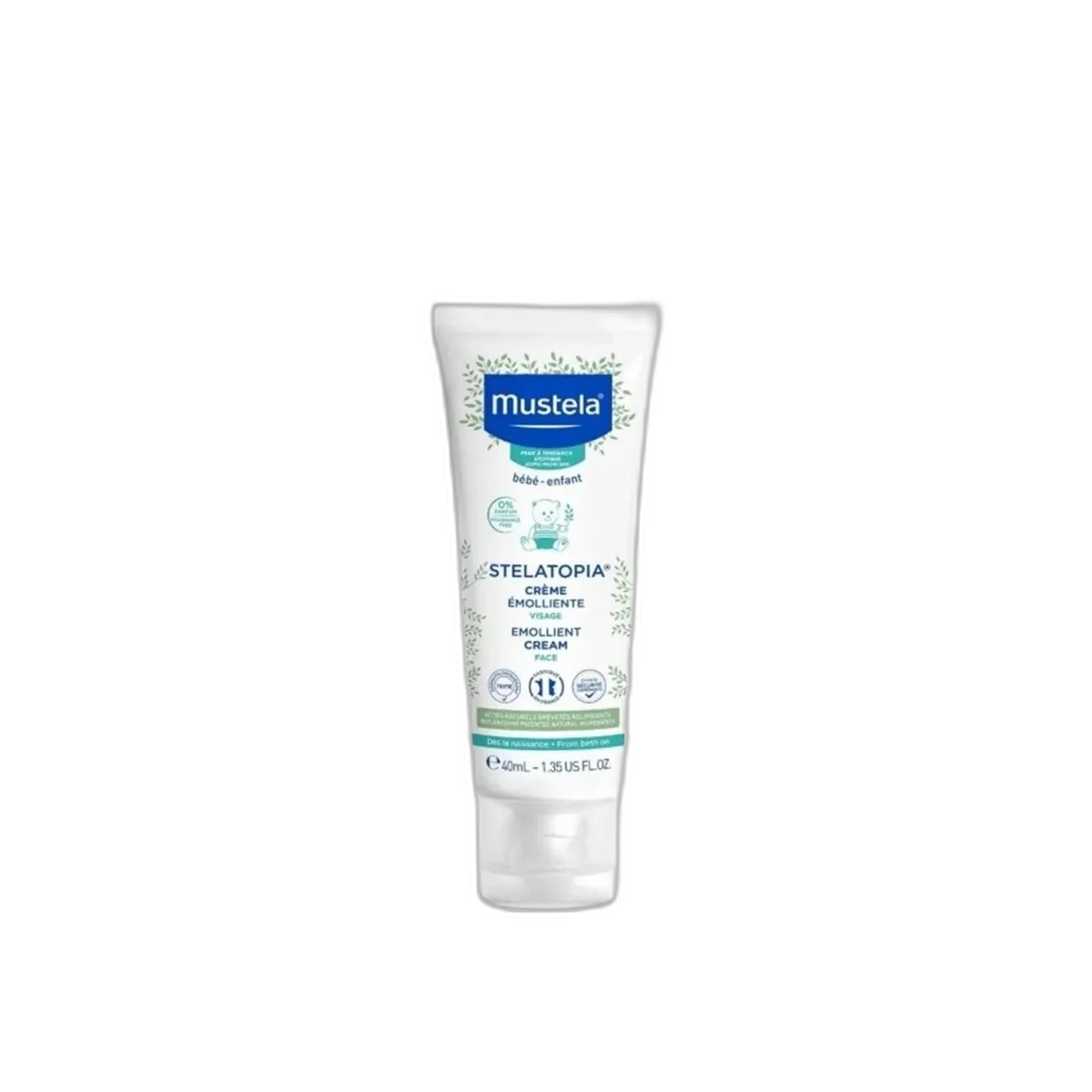
Stelatopia Emollient Face Cream
Facial Eczema Specialist
 Verified reviewer
Pros & cons.
- +Ceramide NP and phytosphingosine provide evidence-based barrier repair for facial eczema
- +Dipotassium glycyrrhizate adds targeted anti-inflammatory action not found in the body cream
- +Lighter texture than the body cream, specifically designed for thin facial skin
- +Explicitly formulated for safe eyelid application, covering a common eczema zone
- +Completely fragrance-free with an exceptionally clean ingredient profile
- +4.8-star average across 900+ reviews demonstrates consistent real-world effectiveness
- +97% natural-origin ingredients with no parabens, silicones, or phenoxyethanol
- −Small 40ml tube at ~$20 is expensive for daily facial use
- −No larger size available to improve value for regular users
- −Too rich for faces without genuine dryness or eczema-prone tendencies
- −Requires purchasing the separate body cream for complete head-to-toe eczema care
The full review.
Baby eczema ignores anatomical boundaries, but formulations shouldn’t. Infant facial skin is thinner, more vascular, and more reactive than body skin. The periorbital area around the eyes is a common eczema flare site in young children. Applying the same petrolatum-heavy body cream to a baby’s cheeks and eyelids is not ideal. Mustela’s decision to develop a separate facial formula shows a sophistication most baby skincare brands lack.
The Stelatopia Emollient Face Cream uses the same ceramide NP and phytosphingosine technology as its body cream sibling. This dual-supply approach to lipid replenishment makes the Stelatopia line scientifically interesting. However, similarities end after those two ingredients. The base differs fundamentally: propanediol dicaprylate replaces petrolatum as a lightweight emollient that avoids a heavy occlusive film on the face. Shea butter provides a gentler protective barrier than petrolatum, and the texture is lighter.
The most significant addition is dipotassium glycyrrhizate, a licorice root derivative with documented anti-inflammatory properties. This ingredient is absent from the body cream formula; its inclusion targets facial eczema’s visible redness. When eczema flares on a baby’s cheeks, the visible inflammation often distresses parents more than body eczema. The licorice-derived anti-inflammatory calms redness at the source, addressing both the barrier deficiency and the inflammatory response.
The fragrance-free formulation follows the Stelatopia line’s goal of eliminating unnecessary sensitizers. This matters more on the face, where skin is thinner and more permeable. Every ingredient in this formula has a functional purpose, with no cosmetic fillers or sensory-enhancing additives.
The texture is surprising. Despite shea butter and castor seed oil, it melts into facial skin with a velvety smoothness and a satin finish rather than a greasy one. This lighter consistency is a practical improvement for parents who find heavy eczema creams migrate into tear ducts or eyelashes near a baby’s eyes. The formula is explicitly designed for eyelid application, a claim many eczema creams do not make.
A 4.8-star average across over 900 reviews is unusually high for baby skincare. When over 80% of reviewers give five stars, the product consistently delivers on its core promise. Reviews frequently highlight visible improvement in facial eczema, an absence of irritation, and a non-greasy finish that works under other products or throughout the day.
The limitation is the same as all Mustela face products: the 40ml tube. At around $20, the per-ounce cost is steep for a product applied twice daily to the face. Facial application requires small amounts, making the economics more manageable, but parents treating extensive facial eczema with generous coverage will feel the cost. A 75ml or 100ml option would improve the value.
The Stelatopia Emollient Face Cream complements, rather than replaces, the body cream. The face uses this lighter, licorice-enhanced formula, while the body uses the heavier, petrolatum-based emollient. Together, they form a head-to-toe eczema management system optimized for specific anatomical targets. This level of formulation specificity is unusual in baby skincare and reflects Mustela’s pharmaceutical heritage.
The ingredient list is clean: 22 ingredients, no fragrance, no parabens, no phenoxyethanol, and no silicones. Everything present serves a structural, emollient, or preservative purpose. This formula is transparent for parents navigating baby skincare ingredient lists.
This is quiet excellence. There are no flashy marketing claims or viral social media campaigns, just a well-formulated cream that does what it promises for skin that needs help. The 4.8-star rating comes from thousands of parents watching their baby’s facial eczema improve, not hype.
Ingredient analysis.
Full INCI list
Aqua/Water/Eau, Propanediol Dicaprylate, C10-18 Triglycerides, Glycerin, Triisostearin, Glyceryl Stearate Citrate, Ricinus Communis (Castor) Seed Oil, Butyrospermum Parkii (Shea) Butter, Helianthus Annuus (Sunflower) Seed Oil Unsaponifiables, 1,2-Hexanediol, Cetyl Alcohol, Polyacrylate Crosspolymer-6, Sodium Stearoyl Glutamate, Glyceryl Caprylate, Hydrogenated Castor Oil, Sodium Citrate, Citric Acid, Dipotassium Glycyrrhizate, Tocopherol, Persea Gratissima (Avocado) Fruit Extract, Ceramide NP, Phytosphingosine
Skin match.
The science.
The Science
The face-specific Stelatopia formula uses the same ceramide science as the body cream but adds dipotassium glycyrrhizate for targeted anti-inflammatory support.
Dipotassium glycyrrhizate comes from licorice root (Glycyrrhiza glabra) and has extensive anti-inflammatory research. Research in the Journal of Dermatological Science shows glycyrrhizin and its derivatives inhibit pro-inflammatory cytokines and reduce erythema in irritated skin. A clinical study in Skin Pharmacology and Physiology found topical glycyrrhizin reduced redness and discomfort scores in subjects with irritated skin. Its efficacy matches low-potency topical corticosteroids without the side effect of skin thinning.
The ceramide NP component addresses the ceramide deficiency in atopic skin. Ceramide NP is the predominant ceramide species depleted in atopic dermatitis. Research in the Journal of Lipid Research mapped the ceramide composition of atopic versus healthy skin; restoring ceramide NP levels correlates with improved barrier function and reduced TEWL.
Phytosphingosine's antimicrobial activity against Staphylococcus aureus matters for facial eczema. Infants touch, drool, and eat on their faces, which introduces bacteria to compromised skin. Studies in Antimicrobial Agents and Chemotherapy document phytosphingosine's bactericidal activity against S. aureus at concentrations found in topical formulations.
The face formula replaces petrolatum with propanediol dicaprylate and shea butter to meet facial skin's barrier needs. Facial skin has a higher density of sebaceous glands and a thinner stratum corneum than body skin, so it needs lighter occlusion. Shea butter's phytosterol content provides anti-inflammatory benefits and moderate occlusion, making it more appropriate for the face than the near-complete occlusion of petrolatum.
Dermatologist Perspective
Pediatric dermatologists recognize the need for face-specific eczema formulations because the periorbital and malar areas of the face present unique challenges. Board-certified dermatologists note the lighter formulation without petrolatum suits facial skin, where heavy occlusives can cause milia or discomfort. Adding dipotassium glycyrrhizate aligns with the dermatological practice of using anti-inflammatory agents with emollients for visible facial eczema. Dermatologists frequently recommend this as a first-line daily moisturizer for infants with facial atopic dermatitis, noting the fragrance-free formula and the safe eyelid application claim.
Where it fits in your routine.
Apply a small amount to clean, dry facial skin twice daily, morning and evening. Gently pat (don't rub) onto cheeks, forehead, chin, nose, and eyelids. Use it more often during flares or in dry conditions. Use after gentle cleansing with a fragrance-free cleanser. A pea-sized amount covers an infant's entire face.
At about $20 for 40ml, this costs more than most baby face creams. The ceramide NP, phytosphingosine, and dipotassium glycyrrhizate justify the higher price because these are clinically validated, pharmaceutical-grade ingredients. You only need small amounts for facial application, so one tube lasts 4-6 weeks with twice-daily use. For parents managing facial eczema, the high user ratings show this is a better value than less effective alternatives that require more frequent reapplication or supplemental treatments.
Parents of babies and children with facial eczema, atopic dermatitis, or chronically dry, reactive facial skin. Use this if you want a fragrance-free, ceramide-based face cream safe for eyelid application. It also works for adults with sensitive facial eczema.
Parents of babies with normal, healthy facial skin that lacks eczema-level barrier repair needs. Users wanting an all-in-one face and body cream should note this is face-only; a separate body product is needed for complete care.
Product details.
Completely fragrance-free. No detectable scent.
Small 40ml squeeze tube. Compact and travel-friendly, though daily facial use requires frequent repurchasing. Finish satinvelvetynon-greasy What to Expect on First Use The cream soothes skin immediately upon application. It melts in without stinging or tingling, even on irritated facial skin. Skin feels protected and hydrated within minutes. How Long It Lasts 4-6 weeks with twice-daily facial application Period After Opening 12 months
All Year
The backstory.
Mustela developed this as a companion to the Stelatopia body cream, recognizing that facial skin requires a different formulation approach. The face is thinner, more visible, and more reactive than body skin, and the periorbital area around the eyes is a common eczema hotspot in infants. This formula was specifically engineered for application on the face and eyelids, areas where the heavier body cream would be inappropriate.
About Mustela
Legacy Brand (20+ years)Laboratoires Expanscience founded Mustela in 1950. The Stelatopia line is their clinical eczema-care range, using ceramide and phytosphingosine technology for atopic-prone infant skin.
Common myths.
The Stelatopia face cream is the body cream in a smaller tube.
The formulas differ significantly. The face cream swaps petrolatum for lighter emollients, adds dipotassium glycyrrhizate for facial anti-inflammatory support, and uses a different emulsion system (glyceryl stearate citrate) for the thinner skin of the face.
You shouldn't apply moisturizer near baby's eyes.
This cream is specifically formulated for use on the face including eyelids. The eczema-prone periorbital area needs moisturization, and this fragrance-free, gentle formula is designed for safe application in that sensitive zone.
FAQ.
Can you use Mustela Stelatopia Face Cream on eyelids?
Yes, this cream works on the face and the eyelid area, a common eczema site in infants. The fragrance-free, gentle formula uses ceramide NP and soothing dipotassium glycyrrhizate, making it safe for this delicate zone.
What's the difference between Stelatopia Face Cream and Stelatopia Emollient Cream?
The face cream uses lighter emollients (propanediol dicaprylate and shea butter instead of petrolatum), adds dipotassium glycyrrhizate for facial anti-inflammatory support, and has a different emulsion system optimized for thinner facial skin. The body cream is heavier and more occlusive for larger body areas.
Is Mustela Stelatopia Face Cream fragrance-free?
Yes, this cream is completely fragrance-free. Unlike Mustela's standard line (Hydra Bébé, Cold Cream) which contains parfum, the entire Stelatopia range is formulated without fragrance to minimize irritation risk on eczema-prone skin.
Can adults use Mustela Stelatopia Face Cream?
The ceramide NP, phytosphingosine, shea butter, and licorice root extract combination works on eczema-prone facial skin at any age. Many adults use this fragrance-free face cream for sensitive or atopic skin.
How often should you apply Stelatopia Face Cream?
Apply to clean facial skin at least twice daily, morning and evening. For babies with active dryness or eczema patches, use an additional midday application to maintain the moisture barrier. Consistent daily use works better than intermittent application.
What the community says.
"Dramatically improves facial eczema and dryness"
"Truly fragrance-free and gentle on the most sensitive skin"
"Rich texture without being greasy or heavy on the face"
"Safe for use on eyelids"
"Small 40ml tube at ~$20 is expensive for daily facial use"
"No larger size option available"
"Too rich for faces that aren't genuinely dry or eczema-prone"