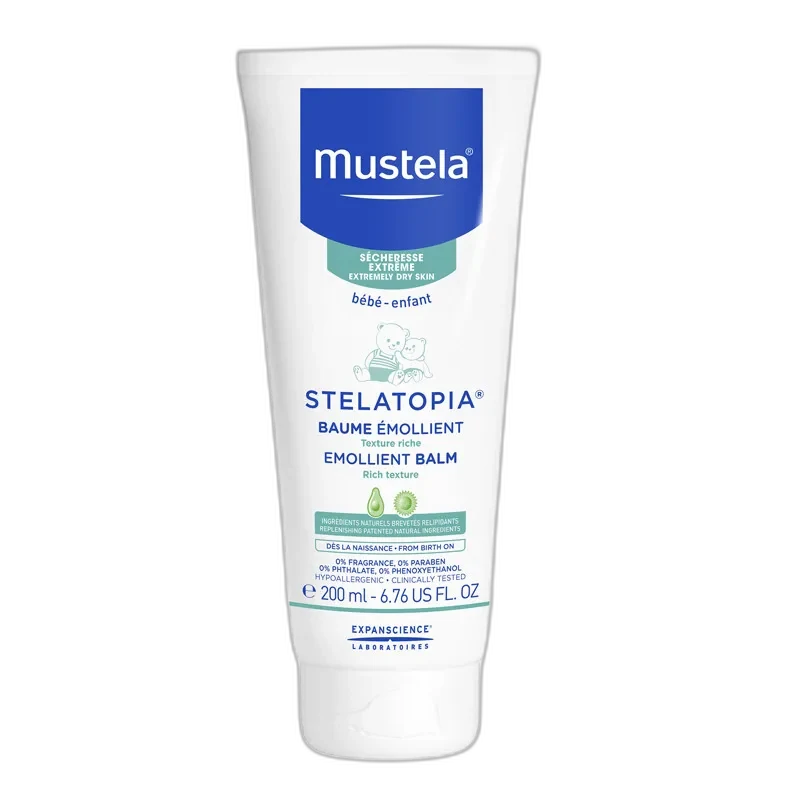
Stelatopia Emollient Cream
Eczema-Prone Skin Essential
 Verified reviewer
Pros & cons.
- +Ceramide NP and phytosphingosine address the structural lipid deficiency in atopic skin
- +Completely fragrance-free with a minimalist, clean irritant profile
- +Petrolatum provides gold-standard occlusion for chronically compromised barriers
- +Sunflower unsaponifiables deliver anti-inflammatory phytosterols in concentrated form
- +Velvety texture absorbs well despite the rich occlusive content
- +200ml size offers reasonable value for a full-body eczema emollient
- +94% clinical study agreement on soothing discomfort and itching
- −Too rich and occlusive for non-dry or non-eczema skin types
- −Petrolatum may concern parents who prefer plant-only formulations
- −Body cream only — a separate face cream purchase is needed for complete care
- −Can feel heavy in warm, humid weather even on eczema-prone skin
The full review.
At its core, eczema-prone skin has a ceramide problem. The stratum corneum of atopic skin contains fewer ceramides than healthy skin, specifically ceramide NP. This creates gaps in the lipid lamellae, like holes in a roof. Moisture escapes, irritants enter, and the inflammation-dryness cycle continues. This mechanism explains why Mustela’s Stelatopia Emollient Cream differs from the rest of the brand’s lineup.
Where Hydra Bébé hydrates and the Cold Cream protects, Stelatopia repairs. The formula uses a ceramide NP and phytosphingosine partnership to address lipid deficiency from two directions. Ceramide NP is supplied exogenously to fill structural gaps in the damaged lipid matrix. Phytosphingosine acts as a precursor in the ceramide biosynthesis pathway, stimulating the skin to produce more ceramides endogenously. This dual-supply approach—supplementing what is missing while boosting endogenous production—is more sophisticated than adding ceramides alone.
Petrolatum sits third on the ingredient list and provides the occlusive backbone. In the clean beauty era, the most effective barrier-protecting ingredient is often the most maligned. Petrolatum reduces transepidermal water loss more effectively than any plant butter, silicone, or exotic oil. For skin chronically leaking moisture through a compromised barrier, this occlusion is therapeutic. Mustela includes it at a meaningful concentration.
The sunflower seed oil unsaponifiables are a thoughtful choice. Instead of whole sunflower oil, which adds heavy emollient bulk, Mustela selected the unsaponifiable fraction. This concentrated extract contains phytosterols and tocopherols—the anti-inflammatory and antioxidant components—without the extra lipid load. This decision shows pharmaceutical thinking.
Squalane adds another layer to the lipid strategy. As a skin-identical lipid that mirrors skin sebum, it fills intercellular spaces naturally. This creates a tiered lipid system: petrolatum seals the surface, squalane fills intercellular gaps, and ceramide NP integrates into the lamellar structure. Three lipids work at three different levels of the skin’s architecture.
The texture is impressive for a formula with this many occlusives. The velvety cream melts on contact and spreads smoothly without the dragging resistance of heavy emollients. For a parent applying this to an irritated toddler, the smooth application helps. It absorbs to a satin finish that transfers to clothing or bedding less than pure petrolatum.
Stelatopia stands apart from the rest of Mustela’s line because it lacks fragrance. The brand removed the parfum here to prioritize skin needs. For eczema-prone skin, fragrance is a potential trigger that can start or worsen the inflammation cycle. Mustela reserves this fragrance-free treatment for their most medically oriented line, showing that cosmetic appeal is secondary to skin health.
Mustela’s clinical data is encouraging. In a study under dermatological and pediatric control, 94% of participants agreed the cream soothed discomfort and itching. While brand-funded studies require skepticism, the result matches the ingredient science: a ceramide-replenishing, petrolatum-occluded formula should reduce discomfort in barrier-compromised skin.
At roughly $26 for 200ml, the value is reasonable for a ceramide-containing, fragrance-free emollient. Eczema management requires liberal application, often twice daily, so costs rise. However, compared to prescription emollients and many adult ceramide creams with higher prices for smaller volumes, Stelatopia offers value. The 200ml size is appropriate for a body product.
This product does not need trendy ingredients or elaborate marketing. It is a competent, pharmaceutically minded emollient that does what eczema-prone skin needs: replenish lipids, seal moisture, and calm inflammation without unnecessary irritants. If every Mustela product used this same discipline, the brand would be untouchable.
Formula
Ingredient analysis.
Full INCI list
Aqua/Water/Eau, Glycerin, Petrolatum, Caprylic/Capric Triglyceride, Hydrogenated Vegetable Oil, Sucrose Distearate, Dextrin, Helianthus Annuus (Sunflower) Seed Oil Unsaponifiables, Prunus Domestica Seed Extract, 1,2-Hexanediol, Candelilla Cera/Euphorbia Cerifera (Candelilla) Wax/Cire De Candelilla, Squalane, Sucrose Stearate, Glyceryl Caprylate, Xanthan Gum, Glucose, Sorbitol, Persea Gratissima (Avocado) Fruit Extract, Ceramide NP, Phytosphingosine
Skin match.
The science.
The Science
The scientific foundation of Stelatopia rests on the well-documented ceramide deficiency in atopic skin. Research published in the Journal of Clinical Investigation has established that the stratum corneum of patients with atopic dermatitis contains significantly reduced levels of ceramides, particularly ceramide NP (previously classified as ceramide 3). This deficiency disrupts the lamellar lipid organization that provides the barrier's primary water-retention function.
Ceramide NP supplementation has been validated in multiple clinical studies. A randomized controlled trial published in the Journal of the American Academy of Dermatology (2003) demonstrated that a ceramide-dominant barrier repair cream significantly reduced TEWL and improved clinical signs of atopic dermatitis in children. The study found that ceramide supplementation restored lamellar body secretion and corrected the extracellular lipid matrix.
Phytosphingosine's role extends beyond ceramide precursor activity. Research in the Journal of Investigative Dermatology has shown that phytosphingosine possesses antimicrobial properties against Staphylococcus aureus, a bacterium that colonizes the skin of up to 90% of atopic dermatitis patients and contributes to disease exacerbation. This dual function, lipid synthesis support and antimicrobial defense, makes it particularly valuable in eczema-prone formulations.
Petrolatum's efficacy as a barrier agent is among the most well-documented in dermatology. Studies published in the Journal of the American Academy of Dermatology have demonstrated that petrolatum reduces TEWL by over 98%, far exceeding any other commonly used occlusive. In atopic skin, where TEWL is chronically elevated, this near-complete occlusion creates the optimal environment for barrier repair to occur.
The sunflower oil unsaponifiable fraction provides phytosterols, particularly beta-sitosterol, which have been shown in research published in Skin Pharmacology and Physiology to exert anti-inflammatory effects comparable to mild topical corticosteroids without the associated side effects of skin thinning.
Dermatologist Perspective
Board-certified pediatric dermatologists widely recognize ceramide-based emollients as a cornerstone of atopic dermatitis management in children. Dermatologists note that the combination of exogenous ceramide NP with phytosphingosine as a biosynthesis precursor represents a more comprehensive approach to lipid replenishment than ceramide supplementation alone. The inclusion of petrolatum at a meaningful concentration aligns with clinical guidelines that recommend strong occlusives for atopic skin. Dermatologists frequently recommend daily emollient use as a preventive measure, not just a reactive treatment, and products like Stelatopia with their fragrance-free, minimally formulated profiles are considered appropriate for this baseline therapy.
Where it fits in your routine.
Apply a generous amount to clean, dry skin on baby's body at least twice daily. Apply immediately after bathing while skin is still slightly damp. Focus on eczema-prone areas: inner elbows, behind knees, wrists, and any areas with dryness or irritation. Use enough cream to create a visible layer that melts in. Reapply during the day as needed. For best eczema management, use every day, not just during flares.
At about $26 for 200ml, Stelatopia offers good value among ceramide-containing eczema emollients. Adult-targeted ceramide creams from brands like CeraVe or Dr. Jart+ often cost more per ounce, while prescription barrier repair creams cost much more. The 200ml size accounts for the liberal application eczema management requires, keeping the per-use cost low. For a fragrance-free base containing ceramide NP, phytosphingosine, squalane, and pharmaceutical-grade petrolatum, the price-to-quality ratio is strong.
Parents of babies and children with eczema-prone, atopic, or chronically dry skin use this fragrance-free, ceramide-based emollient for its pharmaceutical-grade ingredients. It also works for adults with atopic dermatitis who want a well-formulated, reasonably priced daily body emollient.
Parents of babies with normal or oily skin do not need this level of occlusion and barrier repair. Those who oppose petrolatum-based products will find this formula incompatible with their preferences, though no plant-based alternative matches the occlusive efficacy of petrolatum.
Product details.
Completely fragrance-free. No detectable scent.
200ml tube with a flip-top cap. This size works for body products that require liberal application. One hand squeezes and dispenses it easily. Finish satinvelvetynon-greasy
Skin feels soothed and coated in a comfortable protective layer immediately. The cream melts in without the heavy, waxy feel of pure petrolatum. It causes no stinging, tingling, or discomfort on actively irritated eczema patches.
3-5 weeks with twice-daily full-body application on an infant; longer with targeted use
12 months
All Year
The backstory.
Mustela developed the Stelatopia line specifically for the growing population of children with atopic-prone skin, drawing on their decades of infant skin research. The name combines 'stela' from their brand heritage with 'atopia,' directly naming the condition it addresses. The formula reflects a pharmaceutical approach: identify the structural deficiency (ceramide depletion in atopic skin) and supply both the missing lipids and the precursors to stimulate the skin's own production.
About Mustela
Legacy Brand (20+ years)Laboratoires Expanscience, a family-owned French pharmaceutical company, founded Mustela in 1950. The company has over 70 years of pediatric skin research. The Stelatopia line is their most clinically focused eczema-care range, made specifically for atopic-prone infant skin.
Common myths.
Petrolatum clogs pores and is harmful to baby skin.
Petrolatum is a top dermatologist-recommended occlusive agent with extensive study. It reduces transepidermal water loss better than almost any other ingredient. In eczema-prone skin with a chronically leaking barrier, petrolatum's strong occlusion is a therapeutic necessity.
Apply emollient cream only when eczema is flaring.
Daily emollient use manages eczema, not just flares. Consistent application prevents flares by maintaining the barrier. Clinical guidelines recommend applying emollients at least twice daily as a baseline, not just during active episodes.
FAQ.
Is Mustela Stelatopia Emollient Cream safe for newborns?
Yes, this fragrance-free, minimally formulated cream works for use from birth. Dermatologists and pediatricians clinically tested it. No fragrance, parabens, or phenoxyethanol makes it appropriate for delicate newborn skin.
Can Mustela Stelatopia be used on active eczema flares?
Stelatopia maintains eczema-prone skin daily. Use it during mild flares to soothe and protect, but active, severe flares with broken or weeping skin may need a dermatologist-prescribed treatment first. The cream prevents flares by providing consistent daily barrier support.
What makes Stelatopia different from regular Mustela moisturizers?
Stelatopia is fragrance-free and uses ceramide NP and phytosphingosine to fix the lipid deficiency in atopic skin. Regular Mustela products like Hydra Bébé use fragrance and focus on general hydration instead of barrier repair. Stelatopia also uses petrolatum for stronger occlusion and sunflower oil unsaponifiables for anti-inflammatory phytosterols.
Is this cream the same as Mustela Stelatopia Emollient Face Cream?
No, this is the body cream (200ml) for full-body use. The Stelatopia Emollient Face Cream is a separate, smaller product (40ml) made for thinner, more sensitive facial skin. Both use the ceramide-phytosphingosine approach but have different bases and textures.
Can adults with eczema use Mustela Stelatopia?
The ceramide NP, phytosphingosine, and petrolatum combination works on eczema-prone skin at any age. Many adults with atopic dermatitis use this daily body emollient, favoring the fragrance-free formula and pharmaceutical-grade ingredient quality.
Does Mustela Stelatopia contain steroids?
No, this is a steroid-free emollient cream. It treats eczema-prone skin using barrier repair (ceramides, phytosphingosine) and occlusion (petrolatum) instead of anti-inflammatory steroids. You can use it safely every day for maintenance, and doctors often recommend it with prescribed treatments.
What the community says.
"Effectively soothes eczema-prone skin and reduces itching"
"Fragrance-free formula is genuinely gentle"
"Rich but non-greasy texture absorbs well"
"94% of clinical study participants agreed it soothed discomfort and itching"
"Can feel heavy in warm, humid conditions"
"Petrolatum content concerns some clean-beauty-minded parents"
"Price is higher than basic emollients for a product used generously on the body"