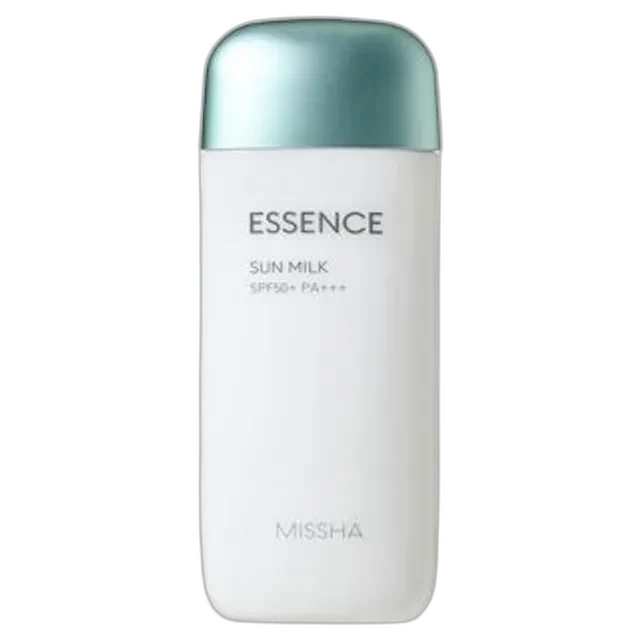
All Around Safe Block Essence Sun Milk SPF 50+
K-Beauty Filter Tech Leader
 Verified reviewer
Pros & cons.
- +Tinosorb S provides next-generation photostabilization unavailable in US-manufactured sunscreens
- +Five-filter UV system delivers genuinely durable broad-spectrum SPF 50+ protection
- +Completely invisible with zero white cast on all skin tones
- +Lightweight satin finish absorbs in under two minutes without greasiness
- +Over twenty botanical extracts provide layered antioxidant support alongside UV protection
- +Outstanding value at fifteen dollars for a filter system that rivals fifty-dollar European sunscreens
- +Paraben-free formula with a consistent 4.5-star rating across over 2,000 reviews
- −Alcohol denat. as the second ingredient can dry and disrupt the barrier with daily use
- −Added fragrance is unnecessary in a daily-use facial sunscreen
- −Botanical array includes potential sensitizers like cinnamon bark and geranium extracts
- −Can pill under silicone-heavy foundations if not given adequate setting time
- −Contains octinoxate which is restricted in reef-protection zones like Hawaii
- −WIMJ rates irritancy risk as high despite the comfortable texture
The full review.
The gap between American sunscreens and the rest of the world is about UV filter technology, not SPF numbers. The FDA’s approval process for new sunscreen active ingredients is slow. No new UV filter has been approved for US sunscreens since the 1990s, even though Europe, Asia, and Australia have used next-generation filters safely for over twenty years. This regulatory bottleneck forces American consumers to import better UV filter technology.
The Missha All Around Safe Block Essence Sun Milk SPF 50+ is an accessible way to do this. It uses a five-filter UV system including Tinosorb S — formally known as bis-ethylhexyloxyphenol methoxyphenyl triazine — a broad-spectrum organic filter that acts as both a UV absorber and a photostabilizer. A 2001 study by Chatelain and Gabard in Photochemistry and Photobiology shows that Tinosorb S prevents avobenzone photodegradation in a concentration-dependent manner, maintaining SPF protection after irradiation equivalent to thirty minimal erythemal doses. Simply put: it keeps other filters working longer in the sun.
This matters because avobenzone — the only globally available chemical UVA filter with meaningful broad-spectrum coverage — is photounstable. When paired with octinoxate, as in many American sunscreens, avobenzone degrades under UV light and loses UVA protection during the day. The Missha formula fixes this: Tinosorb S and octocrylene stabilize the avobenzone, while octisalate and octinoxate provide primary UVB coverage. The filter system is well-engineered.
The wear experience shows why Korean sunscreens attract an audience American products miss. The formula is a light, milky fluid that absorbs within a minute. The second ingredient, alcohol denat., makes it fast-drying and airy without greasiness. Silica and nylon-12 microspheres add a soft-focus mattifying effect without a powdery look. The finish is a natural satin that looks like skin, just more refined. It leaves zero white cast on any skin tone.
A botanical array sits beneath the UV filters, resembling a traditional Korean herbal formulary. Over twenty plant extracts — from camellia japonica to artemisia to lotus flower — provide antioxidants. Green tea extract delivers EGCG, a well-documented topical antioxidant. Portulaca oleracea offers anti-inflammatory support. Rhodiola rosea provides adaptogenic stress-resistance. In sunscreen, these botanicals work with UV filters to neutralize free radicals that UV radiation generates after filters absorb their target wavelengths.
The limitations are real. Alcohol denat. is the second ingredient; it makes the formula lightweight but can dry out dry skin and disrupt the skin barrier with daily use. The fragrance is mild but unnecessary for a daily facial product. For sensitive skin, the botanical extracts include Cinnamomum Cassia Bark Extract — a known sensitizer — and Pelargonium Graveolens Flower Water (geranium), a common allergen. The science-based review site WIMJ rated the formula’s irritancy risk as high.
Octinoxate is the environmental issue. It is restricted in Hawaii and other areas due to potential marine ecosystem impact, making this sunscreen unsuitable for reef-conscious beachgoers. Those swimming in protected marine environments should use a mineral-only or octinoxate-free alternative.
The value is outstanding. You get a five-filter UV system anchored by Tinosorb S — technology European brands sell for thirty to fifty dollars — for approximately fifteen dollars for seventy milliliters. The product has existed in various formulations since approximately 2013, with over two thousand reviews across K-beauty retailers averaging four-and-a-half stars. The 2022 EX version upgrades the PA rating to PA++++ and changes the emulsifier system, but adds beeswax (making it non-vegan).
For oily, combination, and normal skin types wanting superior UV filter technology in a lightweight, invisible, non-greasy, and affordable format, the Missha Essence Sun Milk delivers what the American market cannot. The filter system is sophisticated. The texture is elegant. The price is honest. Just note the contents: alcohol, fragrance, and a botanical extract list that trades simplicity for antioxidant abundance.
Ingredient analysis.
Full INCI list
Helichrysum Arenarium Extract, Alcohol Denat., Ethylhexyl Methoxycinnamate, Octocrylene, Ethylhexyl Salicylate, Butylene Glycol, Butyl Methoxydibenzoylmethane, Methyl Methacrylate Crosspolymer, Silica, Althaea Rosea Root Extract, Bis-Ethylhexyloxyphenol Methoxyphenyl Triazine, Rosa Davurica Bud Extract, Portulaca Oleracea Extract, Nelumbo Nucifera Flower Extract, Aloe Barbadensis Leaf Extract, Abronia Villosa Leaf Extract, Cinchona Succirubra Bark Extract, Rhodiola Rosea Root Extract, Psidium Guajava Leaf Extract, Limonia Acidissima Extract, Camellia Sinensis Leaf Extract, Pueraria Lobata Root Extract, Diospyros Kaki Leaf Extract, Morus Alba Fruit Extract, Artemisia Princeps Leaf Extract, Cinnamomum Cassia Bark Extract, Chrysanthemum Indicum Flower Extract, Camellia Japonica Flower Extract, Prunus Mume Flower Extract, Calendula Officinalis Flower Water, Pelargonium Graveolens Flower Water, Salvia Officinalis Water, Dimethicone, Nylon-12, Acrylates/C10-30 Alkyl Acrylate Crosspolymer, BHT, Sodium Hydroxide, Betaine, Caprylyl Methicone, Methoxy PEG/PPG-25/4 Dimethicone, Bis-PEG/PPG-20/5 PEG/PPG-20/5 Dimethicone, Caprylic/Capric Triglyceride, Disodium EDTA, Caprylyl Glycol, Ethylhexylglycerin, 1,2-Hexanediol, Fragrance
Skin match.
The science.
The Science
The Missha Essence Sun Milk uses Tinosorb S to photostabilize avobenzone, solving a decades-old sunscreen formulation problem. A 2001 study by Chatelain and Gabard in Photochemistry and Photobiology shows Tinosorb S prevents avobenzone photodegradation based on concentration, sustaining SPF and UVA ratios after irradiation up to thirty minimal erythemal doses. This study explains the three-filter stabilization approach (Tinosorb S plus octocrylene plus octisalate) used in this formula.
Literature well-documents avobenzone's photolability. UV radiation—especially with octinoxate—triggers keto-enol tautomerism in avobenzone, irreversibly converting it from the UV-absorbing enol form to a non-absorbing diketo form. Unprotected avobenzone-based sunscreens lose UVA protection throughout the day. Tinosorb S absorbs excess energy from photoexcited avobenzone and dissipates it as heat, stopping the tautomeric conversion and maintaining UVA protection during wear.
The five-filter combination covers the full UV spectrum: octinoxate and octisalate cover UVB (290-320 nm), octocrylene bridges UVB and short UVA-II (280-320 nm), avobenzone covers the UVA-I range (320-400 nm), and Tinosorb S provides broad UVA and UVB coverage while stabilizing the system.
A 2024 case report (PMID 39011994) documented emerging allergic contact dermatitis to Tinosorb S. While rare, sensitivity to this filter is an emerging concern for clinicians, especially for patients with a history of photoallergic contact dermatitis.
References
- Photostabilization of Butyl methoxydibenzoylmethane (Avobenzone) and Ethylhexyl methoxycinnamate by Bis-ethylhexyloxyphenol methoxyphenyl triazine (Tinosorb S), a New UV Broadband Filter — Photochemistry and Photobiology (2001)
Dermatologist Perspective
Dermatologists familiar with international UV filters recognize Tinosorb S as a highly effective photostabilizer. Its inclusion makes this formula's UV filter technology superior to most US-manufactured sunscreens. Board-certified dermatologists note the five-filter system provides robust broad-spectrum protection and durability that single-filter or unprotected-avobenzone formulas lack. However, dermatologists flag the alcohol denat., fragrance, and extensive botanical extract list as potential irritants for sensitive or reactive skin. Apply generously, reapply every two to three hours during outdoor exposure, and choose a simpler-formulated alternative if sensitization occurs.
Where it fits in your routine.
Apply this as the final morning step, after moisturizer and before makeup. Use a generous quarter-sized amount — about one and a half to two milliliters — for the face. Spread it evenly over the face, neck, and ears. Let the formula set for one to two minutes before applying makeup. Reapply every two to three hours during outdoor sun exposure, or after sweating, swimming, or toweling off. Double cleanse in the evening to remove the UV filter film completely.
At about fifteen dollars for seventy milliliters, the Missha Essence Sun Milk offers high value for its UV filter technology. Its main selling point is a five-filter system using Tinosorb S—the same technology in thirty to fifty dollar European pharmaceutical sunscreens—at a K-beauty price. The EX version offers a forty-milliliter size for those testing the product first. One seventy-milliliter bottle lasts about one to two months with daily facial application, keeping annual sunscreen costs low.
Choose this if you want UV filter technology unavailable in American sunscreens in a lightweight, weightless format. Missha Sun Milk provides real photostability at a budget-friendly price for normal, combination, or oily skin types that prioritize an invisible sunscreen finish.
Skip this if you have sensitive or reactive skin — the alcohol, fragrance, and long list of botanical extracts risk irritation. Skip this if you need a reef-safe sunscreen (octinoxate is restricted in some marine protection zones) or want mineral-only UV protection. The alcohol content may worsen dehydration for those with very dry skin during daily use.
Product details.
This lightweight lotion has a fluid, milky consistency despite its name. The alcohol denat. makes it dry fast and feel airy. It absorbs within one to two minutes into a comfortable, thin film. Silica and nylon-12 microspheres create a soft-focus, non-greasy finish.
Botanical extracts and added fragrance create a mild floral fragrance. It dissipates quickly after application. A faint alcoholic note shows during initial application but disappears as the formula dries.
White pump bottle comes in 70 ml. It is functional and straightforward. Some versions need gentle shaking before use.
The formula is a light, milky fluid that spreads easily. A brief alcohol scent appears during application but vanishes within thirty seconds. The texture feels weightless as it absorbs, leaving a satin finish without the look or feel of sunscreen. It leaves no white cast on any skin tone. Most users find it comfortable and note how lightweight a five-filter SPF 50+ formula feels.
1-2 months with daily facial application
12 months
All Year
The backstory.
Missha was founded in South Korea in 2000 during the first wave of K-beauty innovation and became one of the brands that introduced Western consumers to the concept that sunscreen could be lightweight, elegant, and invisible. The All Around Safe Block line launched around 2013 and has been reformulated multiple times, most recently as the 2022 EX version with an upgraded PA++++ rating. The Essence Sun Milk variant specifically targets users who want the lightest possible texture without sacrificing filter sophistication.
About Missha
Established Brand (5–20 years)Missha launched in South Korea in 2000. It is a pioneering K-beauty brand that helped popularize Korean skincare globally. The All Around Safe Block line has been a staple since roughly 2013. This line has multiple reformulations, including a 2017 SPF 50+ upgrade and a 2022 EX version with PA++++ rating.
Common myths.
Korean sunscreens provide less UV protection than Western sunscreens because they feel lightweight.
The SPF 50+ rating uses the same international ISO 24444 standard. Silicone derivatives, microspheres, and alcohol carriers create the lightweight texture, not lower UV filter concentrations. This formula includes Tinosorb S, a filter not in US sunscreens, which provides better photostability.
Use mineral sunscreens instead of chemical sunscreens, which are unsafe.
Chemical UV filters like those in this formula are approved by regulatory agencies worldwide and have decades of safety data. The concentrations used are within established safety limits. The specific advantage of this formula's chemical filter system is superior UVA coverage and photostability compared to most mineral-only sunscreens, with zero white cast.
FAQ.
What UV filters does the Missha Sun Milk use?
This formula uses a five-filter system: octinoxate (UVB), octocrylene (UVB/short UVA), octisalate (UVB), avobenzone (UVA), and Tinosorb S (broad-spectrum UVA/UVB plus photostabilizer). Tinosorb S is the standout. This next-generation filter is not in US-manufactured sunscreens and stops the other filters from degrading under UV exposure.
Does the Missha Sun Milk leave a white cast?
No — this sunscreen uses only chemical (organic) filters. It has no mineral UV filters like zinc oxide or titanium dioxide. It applies invisible on all skin tones and leaves zero white cast.
Is this sunscreen good for sensitive skin?
Despite the 'Safe Block' name, this formula has alcohol denat. early in the INCI list, added fragrance, and potential sensitizers like Cinnamomum Cassia Bark Extract. People with sensitive or reactive skin should patch test first. The science-based review site WIMJ rates its irritancy risk as high.
What is the difference between the standard and EX versions?
The 2022 EX version increases the PA rating from PA+++ to PA++++, changes the emulsifier system, adds baobab seed extract, and swaps some silicones for olive-derived emulsifiers. The EX version also includes beeswax, which makes it slightly more emollient but not vegan.
Is the Missha Sun Milk reef-safe?
No — it contains octinoxate (ethylhexyl methoxycinnamate). Hawaii and some other jurisdictions restrict this ingredient because it impacts marine ecosystems. Choose a mineral-only or octinoxate-free formula if you want reef-safe sunscreen.
How often should I reapply this sunscreen?
Reapply every two to three hours during outdoor sun exposure, or immediately after sweating, swimming, or toweling off. For primarily indoor days, a single morning application provides adequate protection, though reapplication before afternoon outdoor time is recommended.
Community
What the community says.
"No white cast — completely invisible on all skin tones"
"Lightweight non-greasy texture that absorbs quickly"
"Comfortable satin finish that works well under makeup"
"Affordable for the quality of UV filter technology included"
"Performs reliably in humid conditions and during sweating"
"Alcohol content early in the INCI can feel drying on dry skin types"
"Fragrance inclusion is unnecessary in a daily-use sunscreen"
"Can pill under silicone-heavy foundations if not given time to set"
"Extensive botanical extract list includes potential sensitizers like cinnamon bark"
"Contains octinoxate which is restricted in some reef-protection zones"
People also looked at.