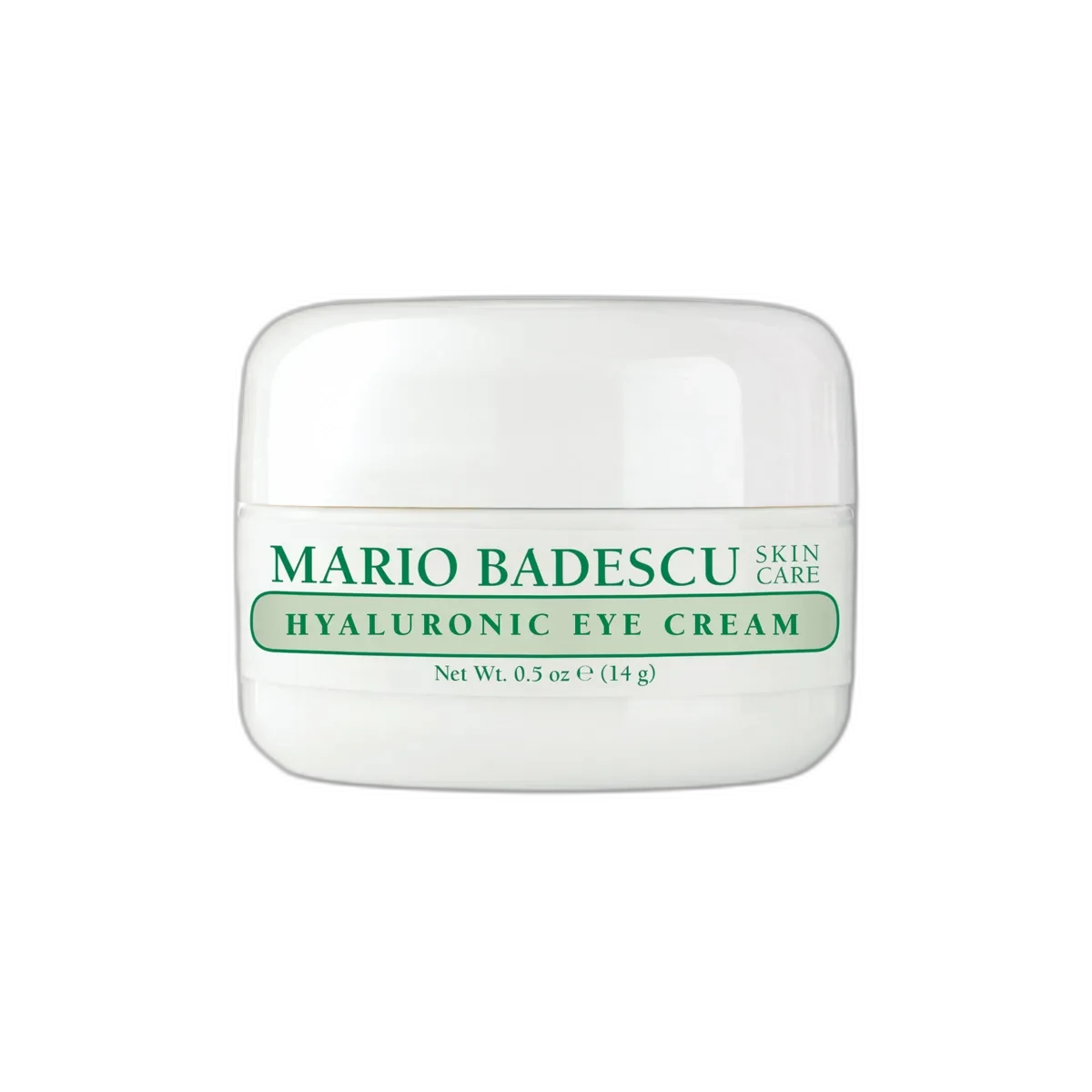
Hyaluronic Eye Cream
Budget HA Eye Cream
 Verified reviewer
Pros & cons.
- +Dual-form hyaluronic acid provides both surface and deeper hydration for thin periorbital skin
- +Petrolatum occlusion effectively locks in moisture for lasting hydration
- +Excellent value at 8 — significantly cheaper than most HA eye creams
- +Fragrance-free formula avoids one of the most common eye area irritants
- +Eyebright extract is a thoughtful, eye-specific botanical with emerging research support
- +Lightweight enough to sit comfortably under concealer without creasing
- −Contains diazolidinyl urea — a formaldehyde-releasing preservative applied near mucous membranes
- −Includes methylparaben and propylparaben in a product for the delicate eye area
- −Synthetic dyes (Yellow 5 and Yellow 6) serve no function and Yellow 5 is a known allergen
- −Jar packaging without a spatula is unhygienic for an eye cream
- −No targeted ingredients for dark circles, puffiness, or anti-aging beyond hydration
- −Mineral oil base may feel too occlusive for oily-skinned users
The full review.
Before hyaluronic acid became a skincare staple, it worked quietly in products like the Mario Badescu Hyaluronic Eye Cream. This formula has stayed in the brand’s lineup for roughly two decades, spanning the era from medical niche to mass-market phenomenon. The eye cream has remained largely unchanged, which shows either a perfected formula or a lack of scientific evolution. The reality is both.
The hydration architecture works. Glycerin — the second ingredient — acts as the primary humectant, supported by a dual-form hyaluronic acid system using both native hyaluronic acid and sodium hyaluronate. Native hyaluronic acid provides surface-level hydration and plumping, while the lower molecular weight sodium hyaluronate penetrates deeper into the thin periorbital skin. Petrolatum creates an occlusive barrier to prevent moisture loss. This glycerin, HA, and petrolatum approach works because the science is sound. Petrolatum is the most effective occlusive agent in dermatology, and dual-form HA has documented benefits for immediate hydration and sustained moisture retention.
The eyebright extract reflects Mario Badescu’s roots in European herbal skincare. Euphrasia officinalis has been used in folk medicine for eye ailments for centuries; recent in-vitro research shows anti-inflammatory activity in corneal cells and photoprotective properties against UVB damage. It is unclear if these benefits translate at the concentrations in this cream, but it is a thoughtful choice for an eye area product.
The texture is a comfortable middle ground — lighter than expected for mineral oil and petrolatum, but less silky than silicone-based alternatives. It absorbs well and sits under concealer without significant creasing or pilling. The yellowish-green tint from synthetic dyes is visible in the jar but disappears on application. There is no functional reason for these dyes.
The preservative system is a product of a different era. Diazolidinyl urea is a formaldehyde-releasing preservative; it works by slowly releasing small amounts of formaldehyde, a documented contact allergen and sensitizer. This is applied near mucous membranes in one of the face’s most reactive areas. Methylparaben and propylparaben provide additional preservation, adding ingredients many consumers and researchers avoid.
Synthetic colorants add to this concern. CI 19140, Yellow 5, is a common dye allergen in cosmetics. CI 15985, Yellow 6, adds no functional value. Both sit millimeters from the eyes in a cream for the face’s most delicate skin. The absence of fragrance is a positive, but unnecessary dyes and a formaldehyde-releasing preservative undermine it.
Performance-wise, this eye cream delivers hydration. The under-eye area feels plumped and moisturized, fine dehydration lines soften, and the effect lasts through the day when sealed with moisturizer and SPF. It does not significantly correct dark circles. There is no caffeine for de-puffing, no vitamin C or niacinamide for brightening, and no vitamin K for vascular discoloration. This is a hydrating eye cream. It performs well for dryness and fine lines from dehydration, but look elsewhere for dark circle correction.
At 8 for half an ounce, the price is a strong argument. Eye creams are often expensive per milliliter, and this one uses proven ingredients at a fraction of the cost of competitors. The small jar lasts three to four months with twice-daily use, making the per-application cost negligible. Consumers must decide if the savings justify the formulation trade-offs based on their own ingredient priorities and sensitivities.
Mario Badescu built this formula when fewer people read INCI lists and formaldehyde-releasing preservatives were standard. The hydrating ingredients remain excellent and the delivery is effective. However, the scaffolding — the parabens, the formaldehyde releaser, and the unnecessary dyes — has not kept pace with modern understanding of eye area safety. For ingredient-agnostic consumers seeking affordable hydration, this eye cream delivers. For those with sensitivity concerns or preservative preferences, it is a harder sell.
Formula
Ingredient analysis.
Full INCI list
Aqua (Water, Eau), Glycerin, Paraffinum Liquidum (Mineral Oil, Huile Minerale), Cetearyl Alcohol, Olus Oil (Vegetable Oil, Huile Vegetale), Aloe Barbadensis Leaf Extract, Carthamus Tinctorius (Safflower) Seed Oil, Petrolatum, Ceteareth-20, Tocopherol, Hyaluronic Acid, Euphrasia Officinalis Extract, Tocopheryl Acetate, Sodium Hyaluronate, Propylene Glycol, Glyceryl Acrylate/Acrylic Acid Copolymer, PVM/MA Copolymer, Polyquaternium-24, Sodium Chloride, Diazolidinyl Urea, Propylparaben, Methylparaben, CI 19140 (Yellow 5), CI 15985 (Yellow 6)
Skin match.
The science.
The Science
Research supports the dual-form hyaluronic acid in this formula. A Pavicic et al. study in the Journal of Drugs in Dermatology (PMID: 22052267) shows 0.1% HA formulations improve skin hydration and elasticity. Low-molecular-weight forms — like the sodium hyaluronate in this cream — reduce wrinkle depth over 60 days. Combining high and low molecular weight HA provides immediate surface hydration and deeper, sustained moisture. This matters for the periorbital area, where skin is approximately 0.5mm thick.
Glycerin is the primary humectant here and has extensive evidence. Fluhr et al. published a review in the British Journal of Dermatology (PMID: 18510666) showing glycerin improves stratum corneum hydration, skin barrier function, and mechanical properties via mechanisms like aquaporin-3 upregulation.
Eyebright extract (Euphrasia officinalis) has emerging data. A 2018 Choi et al. study in the International Journal of Molecular Sciences (PMC6275060) found eyebright extract reduced UVB-induced MMP-1 and MMP-3 levels and preserved type I procollagen in human dermal fibroblasts. This suggests photoprotective potential for the sun-exposed eye area. A 2014 study in the Balkan Medical Journal (PMC4115993) showed anti-inflammatory activity in corneal cells, supporting the traditional use of this botanical for the eye area.
References
- Efficacy of cream-based novel formulations of hyaluronic acid of different molecular weights in anti-wrinkle treatment — Journal of Drugs in Dermatology (2011)
- Glycerol and the skin: holistic approach to its origin and functions — British Journal of Dermatology (2008)
- Protective Effects of Euphrasia officinalis Extract against Ultraviolet B-Induced Photoaging in Normal Human Dermal Fibroblasts — International Journal of Molecular Sciences (2018)
Dermatologist Perspective
Dermatologists see the dual-form HA and glycerin-petrolatum approach as sound for periorbital hydration. Board-certified dermatologists often recommend petrolatum-based products for dry skin, and the hydration science here is solid. However, most dermatologists would flag the preservative system. diazolidinyl urea is a known contact allergen and is problematic for the reactive periorbital area. Dermatologists treating contact dermatitis or periocular eczema would likely recommend gentler preservative systems. The synthetic dyes are also unnecessary additions to an eye-area product.
Where it fits in your routine.
Tap a rice grain-sized amount onto the ring finger. Gently tap it around the orbital bone, moving from the inner corner outward. Apply after serum and before moisturizer during AM and PM routines. Do not apply directly to the eyelid. Wait 1-2 minutes for absorption before applying concealer or makeup.
At 8 for 14 mL, this is among the most affordable hyaluronic acid eye creams available. The dual-form HA, glycerin, and petrolatum provide hydration, and the jar lasts 3-4 months with twice-daily use. For budget-conscious consumers whose skin tolerates the preservative system, the per-use cost is negligible. The trade-off is clear: you save money but use a preservative system and unnecessary additives that more modern formulations have abandoned. Whether that trade-off is worthwhile depends on individual sensitivity and ingredient priorities.
This works for budget-conscious consumers with dry to normal skin who need under-eye hydration and lack sensitivity to parabens or formaldehyde-releasing preservatives. It suits those whose main eye area concerns are dryness and fine dehydration lines instead of dark circles or puffiness.
People with known sensitivity to formaldehyde releasers, parabens, or synthetic dyes. Those with periocular eczema, contact dermatitis, or very reactive eye-area skin. Consumers seeking dark circle correction, anti-aging peptides, or caffeine for puffiness — this cream provides hydration only.
Product details.
Lightweight, slightly whipped cream texture with a faint yellowish-green tint from synthetic colorants. It absorbs well without leaving much residue. It lacks the silkiness of silicone-based eye creams but feels comfortable for most users.
No added fragrance or essential oils. The base ingredients have a faint, barely noticeable scent.
Small glass jar has a screw-top lid and standard Mario Badescu white and green branding. No spatula comes with it. The jar format requires finger-dipping, which raises hygiene concerns for eye area products.
The cream provides immediate hydration and smooths the eye area. It blends easily and sits comfortably under the eyes without feeling heavy. Most users experience no tingling or adjustment period, but those sensitive to the preservatives may feel irritation. The yellowish tint disappears once applied.
3-4 months with twice-daily application to both eyes
12 months
All Year
The backstory.
This eye cream has been a quiet workhorse in the Mario Badescu lineup for nearly two decades, predating the hyaluronic acid trend that exploded in mainstream skincare around 2015. Mario Badescu was incorporating HA into formulations when it was still primarily known as a medical ingredient used in joint injections and wound healing, rather than the skincare superstar it is today.
About Mario Badescu
Legacy Brand (20+ years)Romanian esthetician Mario Badescu founded Mario Badescu in New York City in 1967. The brand manufactures all products in-house at its Edison, New Jersey facility. Mario Badescu has nearly six decades of market presence, but dermatologists did not develop the brand and it has faced past controversies.
Common myths.
Mineral oil in eye cream clogs pores and causes milia.
Cosmetic-grade mineral oil is non-comedogenic in controlled testing and has been used safely in ophthalmic products for decades. It creates an occlusive environment that traps other comedogenic ingredients, so individual responses vary. If you are prone to milia, monitor your response carefully.
Hyaluronic acid can eliminate dark circles.
HA plumps skin by attracting water. This reduces shadows from dehydration and thinning skin. Dark circles from pigmentation, genetics, or vascular issues need targeted treatments like vitamin C, vitamin K, or medical procedures. This cream hydrates well but does not correct dark circles.
FAQ.
Does Mario Badescu Hyaluronic Eye Cream contain parabens?
Yes — the formula contains methylparaben, propylparaben, and diazolidinyl urea, a formaldehyde-releasing preservative. If you want to avoid these ingredients, choose eye creams using alternative preservation systems like phenoxyethanol or ethylhexylglycerin.
Will this eye cream help with dark circles?
The dual-form hyaluronic acid and glycerin in this cream hydrate skin and reduce dehydration-related shadows. This cream lacks brightening agents like vitamin C, vitamin K, or caffeine for pigmentation-based dark circles. Expect improved hydration and plumping instead of significant dark circle correction.
Why does this eye cream contain synthetic dyes?
The formula uses Yellow 5 (CI 19140) and Yellow 6 (CI 15985) for color. These dyes have no skincare function and are unnecessary—especially near the eye area because Yellow 5 is a known allergen for some individuals.
Is this eye cream suitable for sensitive skin?
Use caution. Although it is fragrance-free, diazolidinyl urea (formaldehyde releaser), parabens, propylene glycol, and synthetic dyes can sensitize skin. The delicate periorbital skin reacts easily to these ingredients. Patch test on the inner wrist before applying near the eyes.
How does this compare to more expensive hyaluronic acid eye creams?
At 8, this eye cream hydrates using dual-form HA, glycerin, and a petrolatum seal. These core ingredients work. Compared to pricier alternatives, this formula uses a preservative system with parabens and a formaldehyde releaser, plus unnecessary synthetic dyes that modern formulations avoid.
What the community says.
"Lightweight texture that absorbs well without feeling heavy or greasy"
"Effective hydration for dry, dehydrated under-eye area"
"Good value at 8 for an eye cream with hyaluronic acid"
"Works well under concealer and makeup"
"A little product goes a long way"
"Contains parabens and diazolidinyl urea — a formaldehyde-releasing preservative"
"Jar packaging is unhygienic for an eye cream applied near the eyes"
"Unnecessary synthetic yellow dyes near the delicate eye area"
"Mixed results on dark circles — hydrates well but does not correct pigmentation"
"Some users report stinging or irritation around the eye area"
People also looked at.