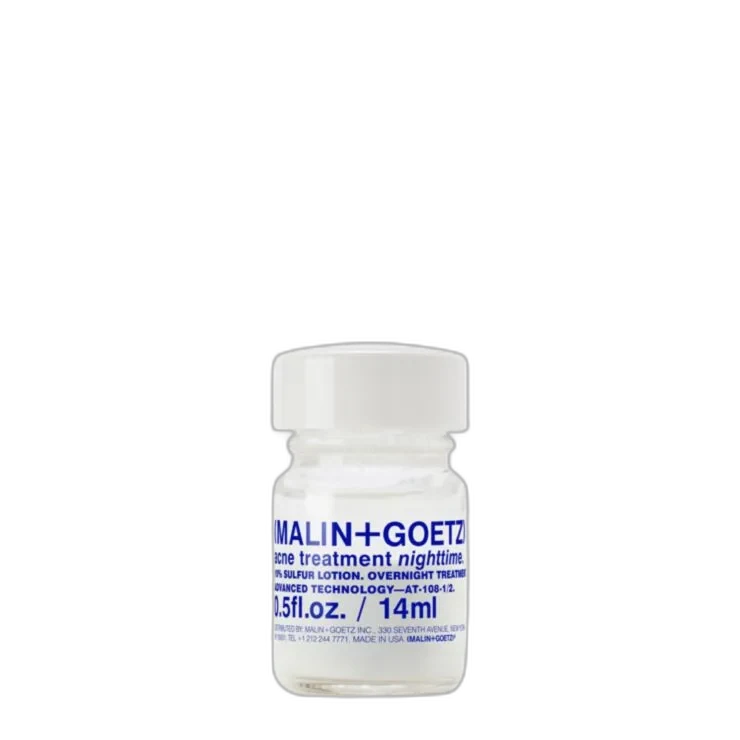
Acne Treatment Nighttime Serum
Cult NYC Apothecary Spot Treatment
 Verified reviewer
Pros & cons.
- +10% sulfur at OTC ceiling reliably flattens whiteheads overnight
- +Fragrance-free, vegan, and free of benzoyl peroxide for retinoid users
- +Pink sediment is visible so you can target precisely
- +Twenty-year track record with barely any reformulation
- +Gentle enough for most sensitive skin when used as a spot treatment
- +One small bottle typically lasts six months to a year
- +Pregnancy-compatible unlike most retinoid-based acne treatments
- +Washes off cleanly in the morning with no staining
- −Sulfur smell is unmistakable for the first minute after application
- −Isopropyl alcohol carrier is too drying for full-face use
- −Will not meaningfully shrink deep cystic lesions
- −Reactive only — does not prevent future breakouts
- −Per-ounce price sits well above drugstore sulfur lotions
The full review.
Dermatologists used a trick before TikTok acne patches: mix 10% precipitated sulfur with zinc oxide, camphor, and a touch of salicylic acid, let it settle, and dab it on a whitehead with a cotton swab before bed. You wake up with a pale pink dot and a smaller pimple underneath. That compounded sulfur lotion sat behind dermatology office counters for decades. Malin + Goetz, an apothecary brand founded in a small Chelsea storefront in 2004, bottled that exact idea and has kept the formula nearly identical since. That continuity is one of its best features. The brand packages it in a sleek frosted-glass bottle with a black cap, featuring a layer of clear isopropyl alcohol over a settled pink sediment. Do not shake it — that is the most common mistake. Instead, dip a clean cotton swab into the sediment, pick up a tiny bead of pink paste, and dab it onto the blemish. The alcohol flashes off in seconds, leaving the sulfur and zinc oxide as a chalky disc on the pimple that stays put until morning. Mechanistically, this is a well-designed stack. Sulfur at 10% hits the OTC ceiling and is keratolytic — it breaks down the protein plug inside a clogged pore. Salicylic acid acts as a lipid-soluble secondary exfoliant that enters sebum to speed shedding. Zinc oxide absorbs surface oil and provides mildly antimicrobial action. Camphor gives a faint cooling tingle to soothe an inflamed spot. No ingredient in the formula is novel in 2026, but the delivery — a settled two-phase precipitate applied by hand — lacks a good drugstore equivalent. The experience is specific. You will smell sulfur for about a minute. It smells like a soft-boiled egg and fades once the alcohol evaporates. The pink residue stays visible on the skin, which is useful: you see exactly where the treatment sits, and it washes off cleanly in the morning with your usual cleanser. On a genuine whitehead, the morning result is reliable — flatter, less red, and often with the plug loosened. On an early papule, you usually need two or three nights for the same effect. On a deep cystic lesion, it calms surface redness but will not meaningfully shrink the nodule, as no topical treatment will. The honest limitations: this is a reactive product, not a preventive one. Dabbing it on active spots does not stop the next breakout, so it does not replace a daily retinoid, benzoyl peroxide wash, or oral acne routine. Do not layer it on the same spot as benzoyl peroxide or a strong AHA the same night — you will only dry out the surrounding skin without extra benefit. Because the carrier is isopropyl alcohol, people with rosacea, eczema, or a compromised barrier will find it too stripping if used on anything but a very small, targeted spot. On the money, the picture is mixed. Thirty-eight dollars for half a fluid ounce sounds wild — CeraVe’s salicylic acid lotion is cheaper by the cup — but since you only use a cotton swab dab at a time, one bottle lasts six months to a year for most users. As a two-pimples-a-week habit, the per-use cost is low. As a whole-face acne routine, it is bad value. It earns its cult status in the first framing, not the second. Who this is really for: the stress-pimple population. People whose skin is otherwise clear but get an occasional monthly whitehead on the chin. People already on a tretinoin or adapalene regimen who want a spot treatment that will not compete with their retinoid. People who cannot tolerate benzoyl peroxide. If you fit those profiles, this is one of the best things on the shelf, and the twenty-year track record provides reassurance. If you have widespread active acne, start with a daily regimen first and keep this on standby for stubborn holdouts.
Ingredient analysis.
Full INCI list
Active: Sulfur 10%. Inactive: Isopropyl Alcohol, Water/Aqua/Eau, Zinc Oxide, Camphor, Magnesium Aluminum Silicate, Salicylic Acid.
Skin match.
The science.
The Science
Topical sulfur has one of the longest evidence bases of any anti-acne active, with monograph approval by the US FDA for OTC acne treatment at concentrations of 3-10%. Its mechanism is keratolytic: sulfur interacts with cysteine in the stratum corneum to loosen the corneocyte bonds inside a comedone, and it has modest antimicrobial activity against Cutibacterium acnes. A commonly cited comparative trial published in the Journal of Drugs in Dermatology in 2009 found sulfur-based preparations comparable in efficacy to lower-concentration benzoyl peroxide for mild-to-moderate acne, with a lower incidence of erythema and dryness. What is specific to this formula is the delivery. The two-phase system — isopropyl alcohol over a settled sulfur/zinc oxide/salicylic acid/magnesium aluminum silicate sediment — is functionally similar to the compounded sulfur-calamine spot lotions described in older dermatology textbooks. The alcohol flashes off on application, and the solids precipitate onto the blemish in a thin film that sits undisturbed overnight. That static contact time is likely why the product punches above what you would expect from the ingredient list alone: low-percentage salicylic acid in a leave-on film can meaningfully exfoliate inside the follicle over eight hours. The zinc oxide on top is doing double duty as an oil-absorber and as a mild antimicrobial — zinc salts have documented activity against C. acnes. There is no independent clinical trial published specifically on the Malin + Goetz product, so the evidence is best characterized as monograph-level confidence in the actives plus twenty years of retail-scale user feedback on the specific formulation.
Dermatologist Perspective
Dermatologists frequently reach for sulfur-based spot treatments in patients who cannot tolerate benzoyl peroxide, who are already on a topical retinoid, or who are pregnant and need a monograph-safe option. Board-certified dermatologists note that 10% sulfur combined with salicylic acid is a reasonable, evidence-based approach for targeted use on inflammatory papules and whiteheads, and the leave-on overnight format maximizes contact time with the follicle. Because of the isopropyl alcohol carrier, this is generally recommended for spot use rather than full-face application, particularly in patients with rosacea, eczema, or an already compromised barrier. Clinicians also point out that sulfur has a long history in compounded prescription acne lotions dating back decades, which gives a product like this an unusually deep foundation of clinical familiarity even without brand-specific trials.
Where it fits in your routine.
Use at night, only on active blemishes. After cleansing and any water-based serums, and before moisturizer, dip a clean cotton swab into the pink sediment at the bottom of the bottle — do not shake. Dab a small amount directly onto the pimple and let it air-dry into a chalky film. Apply your moisturizer around the treated spot, not over it. Leave on overnight and rinse off in the morning with your regular cleanser. Do not combine on the same spot as benzoyl peroxide, a strong AHA/BHA exfoliant, or a retinoid the same night — rotate instead. Limit to 2-3 spots per night.
At $38 for 0.5 fl oz, the price per ounce is high—much higher than drugstore sulfur lotions like De La Cruz or Mario Badescu Drying Lotion, which cost around $17. Usage determines the real cost: since you only use a cotton-swab dab at a time, one small bottle lasts six months to a year for the stress-pimple population it targets. This makes the per-use cost low. If you have widespread active acne and use a bottle in weeks, a cheaper sulfur lotion or a prescription routine offers better value. For an established brand with a two-decade track record and clinical plausibility, the price reflects reliability rather than packaging.
This works for people with occasional stress whiteheads on clear skin, retinoid users needing a spot treatment that won't compete with nightly prescriptions, and anyone who finds benzoyl peroxide too drying or bleaching on towels. It is also a strong pick during pregnancy when retinoid-based acne options are unavailable.
This is a spot fix, not a regimen for anyone using daily systemic or prescription treatments for widespread active acne. Skip this if you have rosacea, eczema, or a visibly compromised barrier; the isopropyl alcohol carrier strips skin even when used on specific spots.
Product details.
A clear alcohol-based solvent sits over a pink, chalky sediment. Shake it to pick up the sediment with a cotton swab; it dries to a pale matte cake on the skin.
It is fragrance-free, but smells of sulfur (like soft-boiled egg) when applied. The smell fades in minutes as the alcohol flashes off.
A frosted glass apothecary-style bottle has a black screw cap. It has no dropper; use a cotton swab to dip into the settled sediment.
The camphor causes a faint tingle and the sulfur odor lasts one or two minutes. By morning, an active whitehead is usually smaller, and the pink residue wipes off with your AM cleanser. This is a reactive spot treatment, not a purging product, so it only works on the spots you treat.
6-12 months with typical spot-only use on 1-3 blemishes a few nights a week.
12 months
All Year
The backstory.
Founded in 2004 by Matthew Malin and Andrew Goetz out of a tiny Chelsea apothecary, Malin + Goetz built its catalog around minimalist, gender-neutral formulations. The nighttime acne treatment was one of their earliest hero products and was inspired by the classic compounded sulfur-and-calamine spot lotions dermatologists used to mix in-office. It has barely been reformulated in twenty years, which is itself a kind of endorsement.
About Malin + Goetz
Matthew Malin and Andrew Goetz founded the NYC apothecary brand Malin + Goetz in 2004. The brand has 20 years of experience with minimalist, fragrance-conscious formulations and sells at Sephora, Nordstrom, and high-end hotels worldwide. Established Brand (5–20 years)
Common myths.
Benzoyl peroxide outperforms sulfur spot treatments.
Sulfur works differently—it is keratolytic and oil-absorbing instead of oxidative—and sensitive or rosacea-adjacent skin often tolerates it better. The AAD acne guidelines still list it as a monograph ingredient.
You should shake this bottle before use to mix it up.
The instructions tell you not to — the pink sediment settles, and you dip a cotton swab into the sediment itself instead of shaking it into the alcohol layer.
FAQ.
Does this Malin + Goetz treatment contain benzoyl peroxide?
No. The active ingredient is 10% sulfur, plus salicylic acid and zinc oxide. This works as an alternative for people who react to benzoyl peroxide or use a retinoid and want a gentler spot treatment.
Why does the Malin + Goetz acne treatment smell like eggs?
The 10% sulfur active has a natural sulfur scent; that faint rotten-egg note shows the product works. The smell fades within one or two minutes as the isopropyl alcohol evaporates and the sulfur-zinc paste sets onto the blemish.
Is the Malin + Goetz nighttime acne treatment safe during pregnancy?
Topical sulfur and low-dose salicylic acid in a spot-use product are generally acceptable during pregnancy. This formula contains no retinoids or hydroquinone. Always confirm with your OB or dermatologist, especially if you use it on more than an occasional pimple.
Can I use this on cystic pimples or only whiteheads?
The keratolytic sulfur breaks down plugs in surface-level whiteheads and early-stage papules. On deep cystic lesions, it reduces surface redness and oil but does not shrink the underlying cyst. Those typically require in-office cortisone injection or prescription intervention.
How long does one bottle of Malin + Goetz acne treatment last?
Using the 0.5 oz bottle on 1-3 blemishes a few nights a week lasts 6-12 months. Since you use only a cotton-swab's worth per application, one bottle lasts a long time for the price.
Community
What the community says.
"shrinks whiteheads overnight"
"does not over-dry surrounding skin"
"fragrance-free"
"cult favorite for stress pimples"
"sulfur smell"
"pink sediment is messy to apply"
"pricey for 0.5 oz"
"does not prevent new breakouts"
People also looked at.