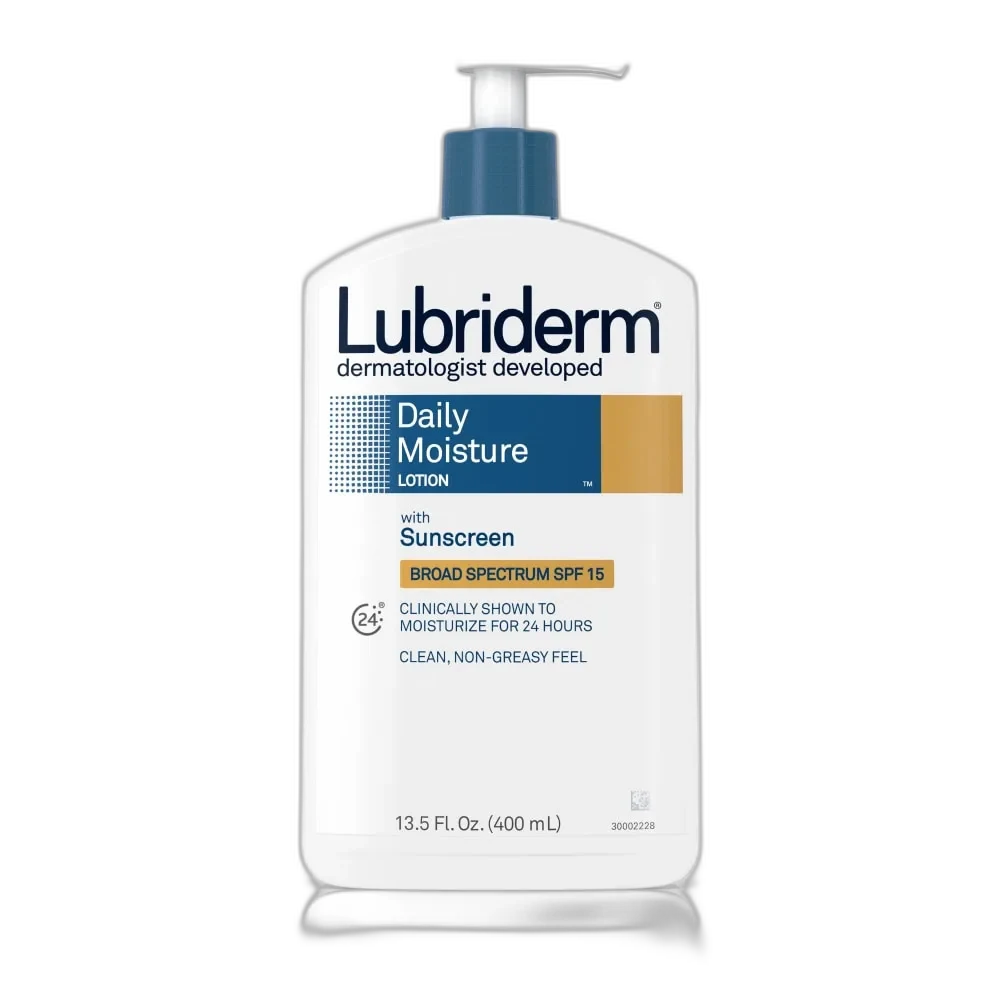
Daily Moisture Lotion SPF 15
Discontinued Classic
 Verified reviewer
Pros & cons.
- +Made daily body SPF effortless by integrating it into an existing moisturizing routine
- +Lightweight, non-greasy texture felt identical to a regular body lotion
- +Broad-spectrum protection combining UVA and UVB filters
- +Large 13.5 oz pump bottle was convenient for full-body application
- +Glycerin and panthenol provided genuine moisturizing benefits alongside sun protection
- −Discontinued — no longer manufactured or widely available
- −SPF 15 falls below current dermatological recommendation of SPF 30 minimum
- −Contains homosalate and octocrylene, now facing increased regulatory and consumer scrutiny
- −Fragrance and multiple fragrance allergens make it unsuitable for sensitive skin
- −No mineral or newer-generation chemical filter options
The full review.
For years, Lubriderm’s Daily Moisture Lotion SPF 15 solved a problem millions didn’t realize they had: they weren’t wearing body sunscreen. This wasn’t due to lack of care, but because adding a separate, often sticky or heavy body sunscreen felt like too many steps in a morning routine. Lubriderm’s solution was simple: add broad-spectrum SPF 15 to the lightweight, fast-absorbing moisturizer people already used. No extra step or behavioral change was required. You just swapped one bottle for another to get daily body sun protection.
The formula used a chemical UV filter system of homosalate, octocrylene, and avobenzone—the standard mid-2000s sunscreen trio. These filters are lightweight and cosmetically elegant, so the lotion felt almost identical to the non-SPF Daily Moisture. You could apply it to your entire body and dress within a minute without sticky, greasy, or white-cast issues. As a daily-use body moisturizer that included sun protection, it worked well.
Glycerin provided the moisturizing base, supplemented by panthenol for soothing and vitamin E for antioxidant protection. The texture was fluid and lightweight, spreading easily and absorbing quickly. For people who dislike the feeling of sunscreen—most people applying it to the body—this product made the experience invisible.
Why did Lubriderm discontinue it? The answer is two decades of evolving science and consumer awareness. When this product launched, SPF 15 was considered adequate daily protection. The American Academy of Dermatology now recommends SPF 30 as the minimum. The gap between SPF 15 and SPF 30 is larger than the numbers suggest: SPF 15 allows approximately twice as much UVB radiation through compared to SPF 30. For a product meant for daily use, that difference compounds over years of sun exposure.
The UV filter system also aged poorly in public opinion. Homosalate and octocrylene, once unremarkable sunscreen ingredients, face scrutiny over potential endocrine-disrupting effects and environmental concerns. While dermatologists and regulatory bodies still debate the evidence, consumer sentiment has shifted toward mineral filters and newer-generation chemical filters.
The fragrance was another growing issue. Unlike the fragrance-free Daily Moisture line, this SPF version contained added perfume and EU-listed fragrance allergens—linalool, limonene, benzyl salicylate, hydroxycitronellal, citronellol, alpha-isomethyl ionone, and benzyl benzoate. Applying this over large body areas daily creates a sensitization risk that modern formulation standards avoid.
If you still have bottles: the product works until its expiration date. The moisturization is reliable, the texture is pleasant, and SPF 15 is better than no SPF. However, you should upgrade to a modern body sunscreen at SPF 30 or higher, ideally with a newer UV filter system. Several brands now replicate this convenience with SPF 30+ in a daily moisturizer, even if finding this exact lightweight body-lotion texture is difficult.
Lubriderm’s Daily Moisture Lotion SPF 15 deserves respect for making daily body sun protection accessible and habitual for millions. Its discontinuation is a graduation, not a failure. The product did its job, science evolved, and better options exist. The lesson remains: the best sunscreen is the one you actually wear, and making that as easy as applying regular moisturizer drives compliance.
Ingredient analysis.
Full INCI list
Water, Homosalate, Glycerin, Octocrylene, Cetyl Alcohol, Stearyl Alcohol, C12-15 Alkyl Benzoate, Butyl Methoxydibenzoylmethane, Styrene/Acrylates Copolymer, Phenoxyethanol, Glyceryl Stearate, PEG-100 Stearate, Caprylyl Glycol, Carbomer, Xanthan Gum, Disodium EDTA, Fragrance, Sodium Hydroxide, Acrylates/C10-30 Alkyl Acrylate Crosspolymer, Linalool, Panthenol, Tocopheryl Acetate, Benzyl Salicylate, Hydroxycitronellal, Citronellol, Alpha-Isomethyl Ionone, Limonene, Benzyl Benzoate
Skin match.
The science.
The Science
The SPF 15 in this formula filters about 93.3% of UVB, while SPF 30 filters 96.7%. This 3.4% difference means SPF 15 lets roughly twice the erythema-causing UVB radiation reach the skin. A 2017 study in the Journal of the American Academy of Dermatology shows that cumulative UV exposure from daily activities—commuting, walking outdoors, or window exposure—adds up over years. This makes the gap between SPF 15 and SPF 30 clinically meaningful for long-term photoaging and skin cancer risk.
The avobenzone (butyl methoxydibenzoylmethane) protects against UVA in the 310-400nm range but is photounstable and degrades upon UV exposure. The octocrylene in this formula does two things: it adds UVB absorption and stabilizes the avobenzone to extend UVA protection. This stabilization strategy was standard in mid-2000s sunscreen formulation but newer formulations now use more photostable UVA filters.
Homosalate is the second ingredient listed and faces increasing regulatory scrutiny. In 2021, the European Commission's Scientific Committee on Consumer Safety (SCCS) suggested reducing homosalate concentrations from 10% to 0.5% due to potential endocrine activity, though regulatory bodies worldwide have not universally adopted this recommendation.
References
- Cumulative UV exposure and the importance of adequate SPF for daily use — Journal of the American Academy of Dermatology (2017)
- SCCS opinion on homosalate safety assessment — Scientific Committee on Consumer Safety (2021)
Dermatologist Perspective
Dermatologists now uniformly recommend SPF 30 as the daily minimum, so this SPF 15 product is outdated by current standards. Board-certified dermatologists note this product helped normalize daily body SPF use—since compliance is the most critical factor in sun protection—but modern alternatives provide better protection without losing the lightweight texture that made this product popular. The chemical UV filter system works, but newer-generation filters offer better photostability and safety profiles.
Where it fits in your routine.
Apply as a daily morning body moisturizer to all sun-exposed skin areas. Spread it generously and evenly; sunscreen efficacy requires adequate application thickness. Reapply after swimming, sweating, or every 2 hours of continuous sun exposure. Note: SPF 15 is not enough protection for extended outdoor activities; use a higher SPF product for prolonged sun exposure.
At $12 for 13.5 oz, this product offered good value as a combined moisturizer-sunscreen. Because it is discontinued, remaining stock on secondary marketplaces may be expired or much more expensive. The SPF 15 level also lowers the value, as it fails current dermatological recommendations. Shoppers should instead buy a modern SPF 30+ body moisturizer or apply a separate body sunscreen over Lubriderm Daily Moisture.
This product is discontinued and no longer recommended for new purchase. Users with unexpired bottles can continue using them, but switching to an SPF 30+ alternative provides better protection.
This product is discontinued. If you have remaining bottles, switch to SPF 30+ products, especially if you have fair skin, a history of sun damage, or spend much time outdoors. People with fragrance sensitivities should avoid remaining stock because it contains multiple fragrance allergens.
Product details.
A lightweight, fluid lotion similar in texture to the standard Daily Moisture Lotion. Spreads easily over large body areas and absorbs quickly without leaving a white cast or greasy film.
This version has added fragrance with a light, clean scent. The fragrance-free Daily Moisture line differs from this SPF version, which has a mild but detectable perfume.
A 13.5 fl oz pump bottle uses Lubriderm's standard design and shows SPF 15 prominently. The large pump bottle format works well for full-body application.
The lotion applied like a standard lightweight body moisturizer. It has no heavy sunscreen feeling, no white cast, and no sticky residue. This ease of use is the main selling point; daily body SPF feels effortless instead of like an extra step.
4-6 weeks with daily full-body application
12 months
spring summer
The backstory.
The Daily Moisture Lotion SPF 15 extended Lubriderm's moisturizing heritage into sun protection, recognizing that the easiest way to get people to wear daily body SPF was to put it in the lotion they were already using. Discontinued around 2022-2023, likely due to evolving dermatological recommendations favoring SPF 30+ and growing consumer concern about chemical UV filters like homosalate and oxybenzone. Lubriderm has not released a replacement.
About Lubriderm
Legacy Brand (20+ years)Lubriderm was developed by pharmacist Louis Schleuse in 1945 and used exclusively in dermatological and hospital settings for thirty years before becoming publicly available in 1975. Now owned by Kenvue, the brand carries over 80 years of therapeutic moisturization heritage. Note: This specific SPF 15 product has been discontinued.
Common myths.
SPF 15 provides adequate daily sun protection.
Dermatologists now recommend SPF 30 as the daily minimum. SPF 15 blocks about 93% of UVB rays, while SPF 30 blocks 97%. This small numerical gap means SPF 15 lets twice as much UVB radiation through, which builds up during daily exposure. This product's discontinuation follows this changing standard.
FAQ.
Is the Lubriderm Daily Moisture Lotion SPF 15 discontinued?
Kenvue (formerly Johnson & Johnson) discontinued this product around 2022-2023. The official Lubriderm website lists it under discontinued products. You may find remaining stock on secondary marketplaces, but check expiration dates before you buy.
Why was Lubriderm SPF 15 discontinued?
Reasons likely include new dermatological standards favoring SPF 30 or higher for daily use, rising consumer concern about specific chemical UV filters, and an industry shift toward higher-SPF, modern sunscreen formulations.
What can I use instead of Lubriderm Daily Moisture SPF 15?
Choose body lotions with SPF 30+ from brands like Neutrogena, Eucerin, or CeraVe for body moisturizer with SPF. Or, use the regular Lubriderm Daily Moisture Lotion (fragrance-free) and a separate SPF 30+ body sunscreen for better UV protection.
Is SPF 15 enough for daily use?
Dermatological guidelines recommend SPF 30 as the daily minimum. SPF 15 blocks about 93% of UVB rays, while SPF 30 blocks about 97%. SPF 15 provides some protection for incidental sun exposure, but SPF 30+ is the standard for adequate daily protection.
Is this Lubriderm SPF lotion fragrance-free?
No, the SPF 15 version contains added fragrance and multiple fragrance allergens like linalool, limonene, benzyl salicylate, and others, unlike the fragrance-free Daily Moisture Lotion. This limits its appeal for sensitive skin users.
What the community says.
"Convenient two-in-one moisturizer and sunscreen for daily body use"
"Lightweight texture that absorbed well without greasiness"
"Made daily SPF application easy and habitual for body skin"
"Good value for the amount of product in the bottle"
"SPF 15 is considered insufficient by modern dermatological standards"
"Contains fragrance and multiple fragrance allergens"
"Discontinued and increasingly difficult to find"
"Chemical UV filters like homosalate and octocrylene are controversial"
Featured in.
People also looked at.