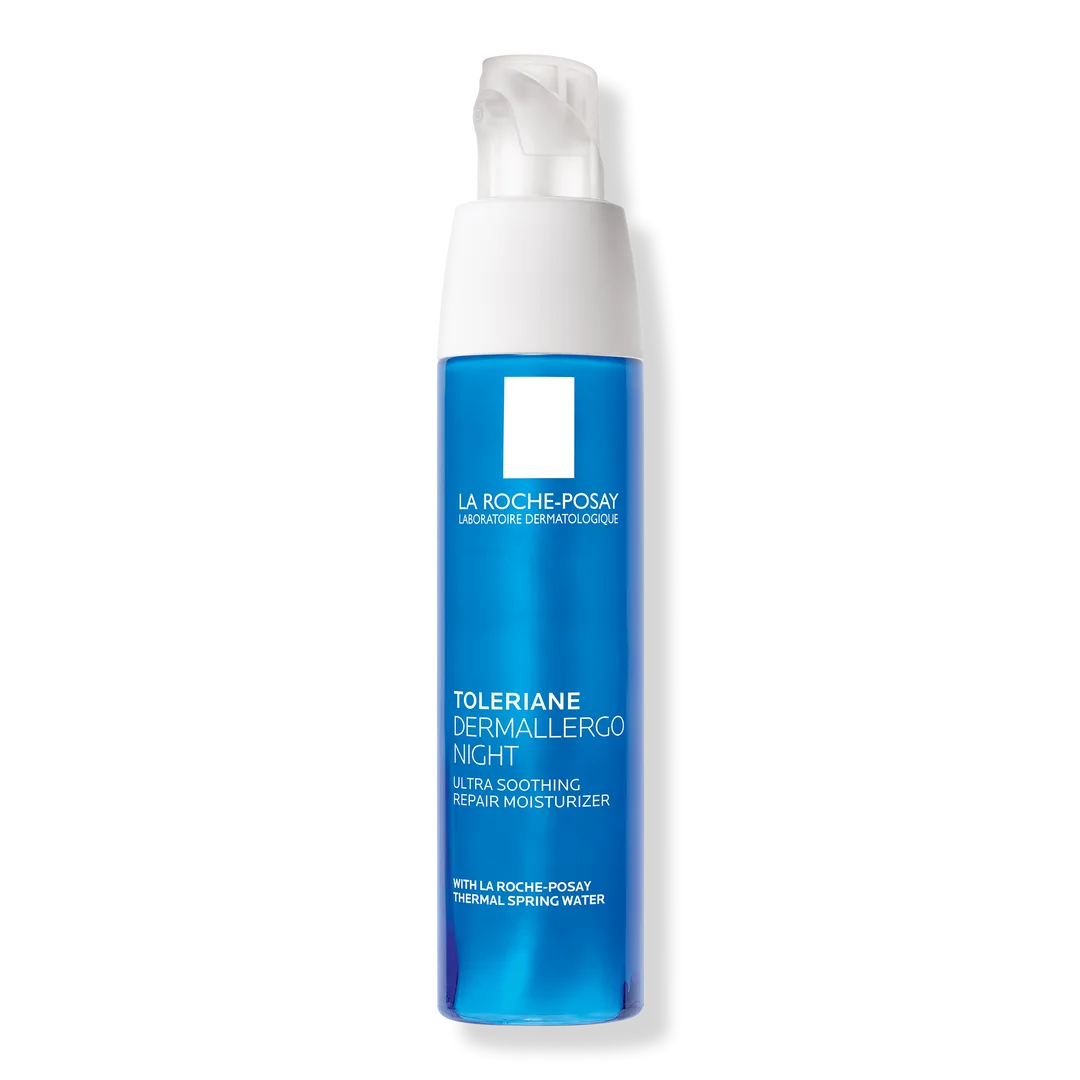
Toleriane Ultra Night Moisturizer
Sensitive Skin Night Shield
 Verified reviewer
Pros & cons.
- +Neurosensine peptide targets neurogenic inflammation at the nerve-signaling level
- +Preservative-free hermetic packaging eliminates a common irritation trigger
- +Completely fragrance-free, alcohol-free, and minimal-ingredient formula
- +Carnosine provides overnight antioxidant repair from daytime environmental damage
- +Lightweight texture doesn't trap heat or irritants against sensitive skin
- +Niacinamide strengthens barrier overnight during the body's peak repair window
- −Premium price at $34.99 for just 1.35 ounces
- −Too lightweight for very dry skin — may need layering with a richer product
- −Lower average rating (4.1) suggests it doesn't satisfy users seeking a rich night cream
- −No larger size available — frequent repurchasing required
- −Neurosensine is proprietary with limited published independent research
The full review.
There is a particular kind of frustration that belongs to people with ultra-sensitive skin: the products designed to help them are often the products that make them worse. A night cream with soothing botanical extracts that triggers a rash. A gentle moisturizer with a preservative system that makes your cheeks burn. A fragrance-free label on a product that still contains fragrance in the form of essential oils. For this population — and it’s larger than the skincare industry likes to admit — the Toleriane Ultra Night represents La Roche-Posay’s most serious attempt at a solution.
The formula’s signature ingredient is Neurosensine, the brand’s proprietary soothing peptide (INCI: Acetyl Dipeptide-1 Cetyl Ester). To understand what Neurosensine does, you need to understand why sensitive skin is sensitive. It’s not just about the barrier, though barrier damage is part of it. Hyper-reactive skin has overactive sensory nerve endings that fire disproportionate signals in response to normal stimuli — temperature changes, product application, even air movement. This neurogenic inflammation creates the stinging, burning, and redness that sensitive skin types know intimately. Neurosensine targets this nerve-level overreaction, helping to calm the signaling pathway itself rather than just treating the surface symptoms.
The overnight application timing is deliberate. The body’s repair and regeneration processes peak during sleep, making nighttime the optimal window for calming neural inflammation and rebuilding barrier integrity. While you sleep, the Neurosensine works to down-regulate the oversensitive nerve responses, niacinamide stimulates ceramide production to strengthen the barrier, and squalane provides skin-identical lipid reinforcement without the heaviness that traditional night creams impose.
Carnosine adds a dimension that most sensitive skin products overlook: antioxidant repair. During the day, skin accumulates oxidative damage from UV exposure, pollution, and blue light. Carnosine, a naturally occurring dipeptide, helps neutralize the reactive oxygen species and advanced glycation end products (AGEs) that this exposure generates. Including it in a night cream acknowledges that overnight repair isn’t just about hydration — it’s about reversing the chemical damage of daytime environmental exposure.
Allantoin provides gentle anti-inflammatory and cell-regenerating support alongside the Neurosensine. It’s one of the most well-tolerated soothing agents in dermatology, with virtually zero sensitization risk — important in a product designed for skin that reacts to nearly everything.
The packaging deserves its own discussion because it’s not just aesthetic — it’s functional. The Toleriane Ultra line uses a hermetic pump system that dispenses each dose without allowing air to enter the container. This airtight design eliminates the need for preservatives entirely. The formula contains no phenoxyethanol, no parabens, no benzisothiazolinone, no methylisothiazolinone — none of the standard preservation systems that, while safe for most people, can trigger reactions in the most sensitive skin. For someone who has traced their facial stinging back to the preservative system in their moisturizer, this packaging engineering is the difference between a product they can use and one they cannot.
The texture is intentionally lightweight — a silky, quickly-absorbing cream rather than a rich, heavy balm. This is a design choice that will divide users. People accustomed to luxuriously thick night creams may feel this isn’t doing enough. But for sensitive skin, heavyweight formulations can cause occlusive overheating and trap irritants against the skin. The lighter texture allows the active ingredients to work without creating conditions that trigger reactivity.
Squalane serves as the primary emollient, providing skin-identical lipid replenishment in a form that’s non-comedogenic and virtually impossible to react to. It’s supplemented by shea butter for additional fatty acid support and dimethicone for a smooth, protective feel. Glycerin provides the humectant hydration base.
At $34.99 for 1.35 ounces, this is not inexpensive — roughly $26 per ounce for a night cream. The preservative-free hermetic packaging adds manufacturing cost that’s reflected in the price, and the Neurosensine peptide is a proprietary ingredient not available in generic alternatives. For people with genuine ultra-sensitivity who’ve exhausted cheaper options, the price represents a solution to a problem worth solving. For people with mild sensitivity who can tolerate standard products, the premium may not be justified.
The 4.1-star average rating — lower than other Toleriane products — reflects an inconsistent experience profile. For the target audience of genuinely ultra-sensitive skin, it’s revelatory. For normal-to-dry skin types who picked it up hoping for a rich night cream, it can feel underwhelming. This is a product that serves a specific, extreme need extraordinarily well rather than a product that’s universally impressive.
For the person who has tried everything — who has a graveyard of half-used night creams that each promised gentleness and delivered irritation — the Toleriane Ultra Night offers something rare: a night cream formulated by a pharmaceutical brand that has taken the concept of ‘for sensitive skin’ to its logical extreme. No fragrance, no preservatives, no unnecessary ingredients, and an active peptide that calms the very nerve responses that make sensitive skin sensitive. It’s boring, clinical, and exactly what ultra-reactive skin needs.
Formula
Texture
The texture is intentionally lightweight — a silky, quickly-absorbing cream rather than a rich, heavy balm. This is a design choice that will divide users. People accustomed to luxuriously thick night creams may feel this isn’t doing enough. But for sensitive skin, heavyweight formulations can cause occlusive overheating and trap irritants against the skin. The lighter texture allows the active ingredients to work without creating conditions that trigger reactivity.
Packaging
The packaging deserves its own discussion because it’s not just aesthetic — it’s functional. The Toleriane Ultra line uses a hermetic pump system that dispenses each dose without allowing air to enter the container. This airtight design eliminates the need for preservatives entirely. The formula contains no phenoxyethanol, no parabens, no benzisothiazolinone, no methylisothiazolinone — none of the standard preservation systems that, while safe for most people, can trigger reactions in the most sensitive skin. For someone who has traced their facial stinging back to the preservative system in their moisturizer, this packaging engineering is the difference between a product they can use and one they cannot.
Best for
For the person who has tried everything — who has a graveyard of half-used night creams that each promised gentleness and delivered irritation — the Toleriane Ultra Night offers something rare: a night cream formulated by a pharmaceutical brand that has taken the concept of ‘for sensitive skin’ to its logical extreme. No fragrance, no preservatives, no unnecessary ingredients, and an active peptide that calms the very nerve responses that make sensitive skin sensitive. It’s boring, clinical, and exactly what ultra-reactive skin needs.
Ingredient analysis.
Full INCI list
Aqua/Water, Glycerin, Squalane, Propanediol, Butylene Glycol, Butyrospermum Parkii Butter/Shea Butter, Pentylene Glycol, Niacinamide, Dimethicone, Ammonium Polyacryloyldimethyl Taurate, Polymethylsilsesquioxane, Polysorbate 20, Tocopherol, Acetyl Dipeptide-1 Cetyl Ester, Allantoin, Toluene Sulfonic Acid, Dimethiconol, Xanthan Gum, Carnosine, Disodium EDTA, Citric Acid, Aluminum Starch Octenylsuccinate, Glyceryl Acrylate/Acrylic Acid Copolymer
Skin match.
The science.
The Science
The Neurosensine peptide (Acetyl Dipeptide-1 Cetyl Ester) targets neurogenic inflammation — a pathway increasingly recognized in dermatological research as a driver of skin sensitivity beyond barrier dysfunction alone. Research published in the Journal of the European Academy of Dermatology and Venereology has documented that sensitive skin demonstrates heightened neuropeptide release and exaggerated nerve fiber activation in response to environmental triggers. Neurosensine is designed to modulate this neurogenic response, reducing the disproportionate nerve signaling that manifests as stinging, burning, and redness.
Carnosine, a naturally occurring dipeptide (beta-alanyl-L-histidine), provides antioxidant protection through multiple mechanisms. Research published in Molecular Aspects of Medicine has demonstrated that carnosine scavenges reactive oxygen species, inhibits lipid peroxidation, and prevents the formation of advanced glycation end products (AGEs) that accumulate in aging skin. In an overnight repair context, carnosine addresses the oxidative burden accumulated during daytime environmental exposure.
Squalane — the hydrogenated, stable form of squalene — is a skin-identical lipid that naturally decreases in the skin with age. Research in the International Journal of Cosmetic Science has confirmed that topical squalane improves skin hydration, elasticity, and barrier function without comedogenic risk. Its molecular similarity to sebum makes it one of the most biocompatible emollients available, which is critical in a formula designed for ultra-sensitive skin.
The preservative-free approach is enabled by the hermetic packaging system. Research on preservative-induced contact dermatitis published in Contact Dermatitis has documented that preservative systems — even those considered safe for general use — can trigger type IV hypersensitivity reactions in sensitized individuals. The hermetic system eliminates this risk entirely.
References
- Neurogenic inflammation and sensitive skin — Journal of the European Academy of Dermatology and Venereology (2017)
- Carnosine as a multifunctional antioxidant in skin aging — Molecular Aspects of Medicine (2005)
Dermatologist Perspective
Dermatologists recommend the Toleriane Ultra Night for patients with the most extreme sensitivity — those who react to standard sensitive-skin products. Board-certified dermatologists note that the preservative-free packaging addresses a genuine clinical need for patients with documented preservative allergies confirmed by patch testing. The Neurosensine peptide aligns with emerging dermatological understanding that sensitive skin involves neurogenic inflammation beyond simple barrier dysfunction. Dermatologists frequently recommend this as the night cream for patients on irritating prescription treatments (retinoids, azelaic acid) whose skin needs maximum overnight soothing.
Where it fits in your routine.
Apply 1-2 pumps to clean, dry skin as your last evening step. Layer it over retinol, prescription treatments, or hydrating serums. The pump dispenses a controlled amount; one pump covers the full face. Apply a second pump to cheeks or jawline for extra-dry areas. Use nightly. Store upright so the pump works.
At $34.99 for 1.35 ounces, the Toleriane Ultra Night costs more. The preservative-free hermetic packaging increases manufacturing costs, and the proprietary Neurosensine peptide is absent from cheaper alternatives. This is a targeted solution for ultra-sensitive skin that failed with standard night creams. For mildly sensitive or normal skin, cheaper options in the Toleriane line (like the Double Repair) work well for less. One tube lasts 2-3 months with nightly use, making the monthly cost about $12-17.
Use this if you have ultra-sensitive, reactive skin that stings or burns from conventional night creams. It is essential for people with documented preservative allergies who need a preservative-free option. It works for retinol users who need maximum overnight soothing. It also suits anyone with rosacea or chronic sensitivity targeting the neurogenic component of their condition.
People with very dry skin needing a thicker, more occlusive night cream. Budget-conscious consumers — the Toleriane Double Repair offers excellent sensitive-skin care for less. Anyone without genuine sensitivity issues who wants a standard fragrance-free moisturizer.
Product details.
It is completely fragrance-free. There is no detectable scent — the preservative-free, fragrance-free formula is neutral.
Airtight pump bottle with a metallic tip. The hermetic packaging system removes the need for preservatives — each pump delivers a sterile dose without air entering the container. This is the Toleriane Ultra line's signature packaging innovation. Finish satinlightweightnon-greasy What to Expect on First Use Applies as a light, silky cream that absorbs in 30-60 seconds. Sensitive skin types feel immediate calming — the product soothes stinging, tingling, or reactivity from earlier steps. The product itself causes no burning, tingling, or sensation. Skin feels comfortable and hydrated without heaviness.
2-3 months with nightly facial application
6 months
All Year Background
The backstory.
The Toleriane Ultra Night was developed as the evening companion to the Toleriane Ultra day cream, applying La Roche-Posay's Neurosensine technology to overnight repair. The logic was that the body's natural repair cycle peaks during sleep, making nighttime the ideal window for calming hyper-reactive nerve endings and rebuilding the barrier. The preservative-free packaging was an engineering response to the most extreme sensitivity — even standard preservatives like phenoxyethanol can trigger reactions in the most reactive skin.
About La Roche-Posay
Legacy Brand (20+ years)La Roche-Posay launched in 1975 near central France's thermal springs. The Toleriane line is the brand's flagship sensitive skin range, built with dermatologists for gentleness. This night cream uses the brand's proprietary Neurosensine peptide.
Common myths.
Night creams must be thick to work while you sleep.
Overnight repair depends on ingredients, not weight. This lightweight formula uses Neurosensine, niacinamide, squalane, and carnosine — actives that work during sleep regardless of the cream's weight. Heavy night creams often just occlude without delivering active repair.
Preservative-free claims are marketing; preservatives are safe.
Standard preservatives are safe for most people. But for ultra-sensitive skin that reacts to phenoxyethanol, parabens, or other common preservatives, a preservative-free formula removes a real trigger. Hermetic packaging makes this possible without compromising product safety or shelf life.
FAQ.
Why is this preservative-free?
The hermetic pump packaging delivers each dose without letting air enter the container, so it uses no preservatives. This helps ultra-sensitive skin that reacts to standard preservatives like phenoxyethanol. The sealed system keeps the formula sterile during use without chemical preservation.
Can I use this over retinol?
Yes — this night cream works well over retinol treatments. The Neurosensine peptide, niacinamide, and allantoin soothe retinol-induced irritation and sensitivity, while squalane and shea butter provide hydration to counteract dryness.
Is this rich enough for very dry skin?
This is a lightweight night cream — those with very dry skin may need a richer product, especially in winter. Consider layering a hydrating serum underneath, or using the Toleriane Double Repair Moisturizer (which has ceramides) for added barrier support. For extremely dry skin, the Lipikar AP+M may be more appropriate.
What is Neurosensine?
Neurosensine (Acetyl Dipeptide-1 Cetyl Ester) is La Roche-Posay's proprietary peptide. It targets neurogenic inflammation, which is the overactive nerve-ending response causing sensitive skin to sting, burn, and react. It works by calming the nerve signaling pathway and reduces how much the skin reacts to stimuli.
How is this different from the Toleriane Ultra day cream?
Both contain Neurosensine and follow the same ultra-sensitive skin philosophy. The night version uses carnosine for antioxidant repair and allantoin for cell regeneration to work overnight. The day version is lighter to layer under makeup and SPF. Both use hermetic packaging and are preservative-free.
What the community says.
"Calms reactive, stinging-prone skin overnight"
"Preservative-free formula feels genuinely clean"
"Lightweight enough to not feel heavy on the pillow"
"Squalane and shea butter provide hydration without greasiness"
"Neurosensine peptide provides noticeable soothing over time"
"Expensive at $35 for just 1.35 ounces"
"Not rich enough for very dry skin in winter"
"Pump can be difficult to control amount dispensed"
"Some users find it too lightweight for a night cream"
"Lower rating than other Toleriane products suggests inconsistent experience"