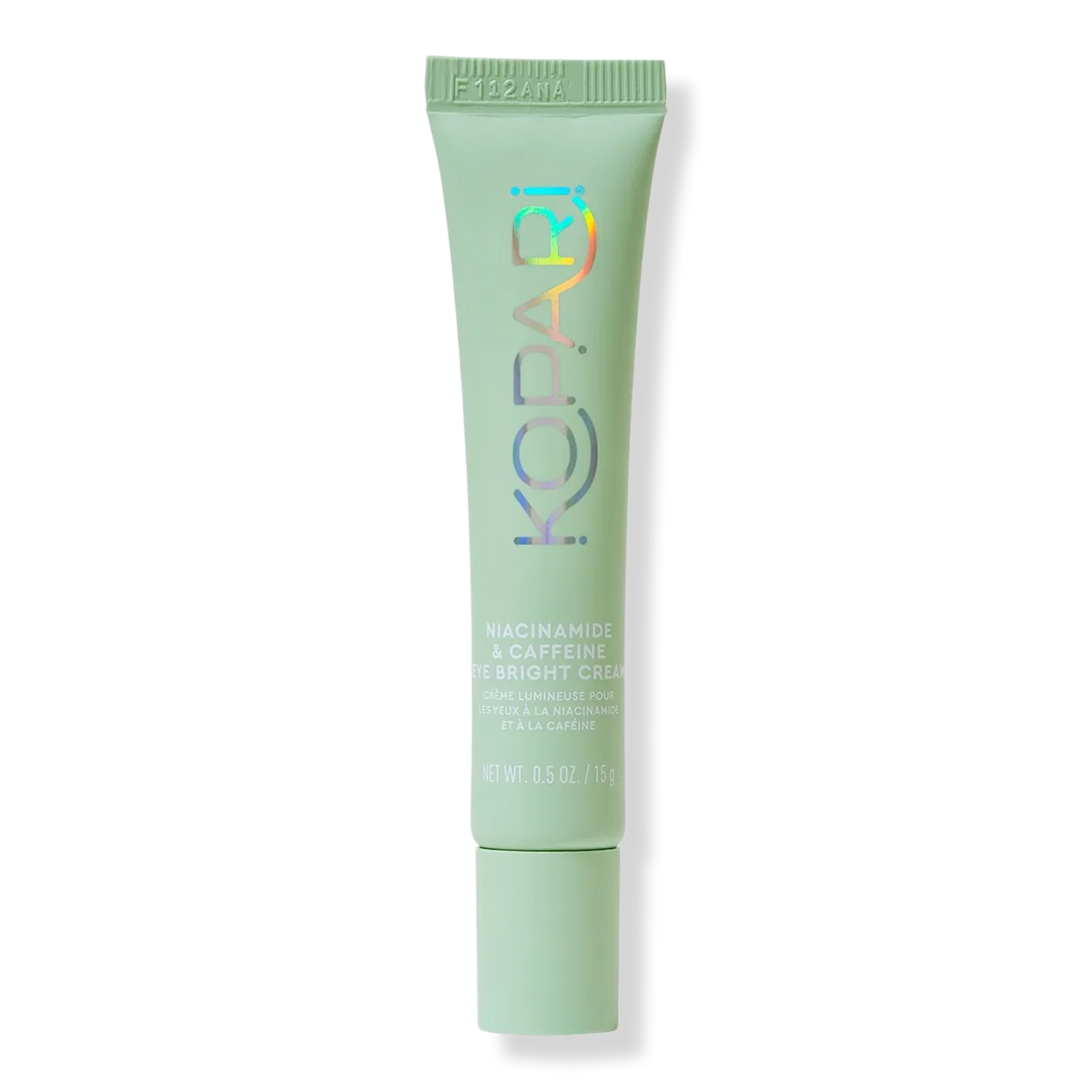
Niacinamide & Caffeine Eye Bright Cream
Tropical Beauty Pick
 Verified reviewer
Pros & cons.
- +Immediate visible brightening from light-reflecting mica particles upon application
- +Lightweight, silky texture absorbs quickly and layers beautifully under makeup
- +Effective basic hydration from glycerin, cocoa butter, and coconut oil blend
- +Temporary line-filling effect from HDI crosspolymer 'Ultra Filling Spheres' technology
- +Leaping Bunny certified cruelty-free and fully vegan formulation
- +Pleasant sensory experience with quick absorption and no greasy residue
- +Pregnancy-safe formula with no retinoids or flagged ingredients
- −Niacinamide concentration appears well below the 2-5% range studied for pigmentation benefits
- −No standalone caffeine in INCI list despite being a headline claim
- −Contains comedogenic coconut oil and cocoa butter near the milia-prone eye area
- −Fragrance allergens linalool and limonene present in a sensitive eye-area product
- −Jar packaging compromises hygiene and ingredient stability with each opening
- −Price-to-active-concentration ratio is poor compared to clinical-grade alternatives
The full review.
About Kopari
Some eye creams work the moment you apply them. When you dab Kopari’s Niacinamide & Caffeine Eye Bright Cream under your eyes, the area looks more luminous within seconds. It works, but not for the reasons you expect.
Mica and polymethylsilsesquioxane provide the immediate brightening. These light-reflecting particles create a soft-focus effect on the skin. This cosmetic trick works well to make you look more awake at seven in the morning. The question is whether the actives on the jar deliver more than that initial glow.
Kopari built this formula around niacinamide and ‘Java Berry Extract’ — which the INCI list identifies as Piper Cubeba Fruit Extract, a cubeb pepper derivative. Niacinamide is nineteenth on a forty-three-ingredient list, appearing after the preservative system. This indicates a modest concentration. Studies showing niacinamide inhibits melanosome transfer and reduces hyperpigmentation typically use two to five percent. This formula likely falls below that threshold.
The caffeine profile is also complex. The INCI does not list caffeine as a standalone ingredient. Piper Cubeba extract may contain trace caffeine-adjacent compounds, but it lacks the concentrated topical caffeine used in clinical studies for periorbital puffiness. Those studies show mixed results. A 2009 evaluation in the Journal of the American Academy of Dermatology found caffeine-containing eye products improved dark circles and puffiness, but a separate study on caffeine gels suggested the cooling effect of application mattered more than the caffeine.
What this cream does well is hydrate. Glycerin is third on the ingredient list and acts as the workhorse, drawing moisture into the thin periorbital skin. Theobroma Cacao Seed Butter and Cocos Nucifera Oil add emollient weight, and the HDI/Trimethylol Hexyllactone Crosspolymer — Kopari’s ‘Ultra Filling Spheres’ — creates a subtle effect that temporarily smooths fine lines. Acmella Oleracea Extract, a natural muscle relaxant, adds to this ‘instant improvement’ approach.
Texture
The texture is lightweight, silky, and slightly whipped due to the silicone crosspolymers. It absorbs quickly and sits well under makeup, which is useful for twice-daily use around the eyes.
Scent
Linalool and limonene create a subtle tropical scent. It is not bothersome for most, but people with fragrance sensitivities should note its presence in an eye cream.
Packaging
Using coconut oil and cocoa butter fits the Kopari brand, but it is a questionable formulation choice. Both are comedogenic ingredients. While the eye area is less prone to breakouts, those prone to milia — tiny white bumps around the eyes — should proceed carefully.
The jar packaging matches Kopari’s clean brand identity but is not ideal for a formula containing botanical extracts and niacinamide. Opening the jar exposes the formula to air and finger bacteria. A tube or airless pump would better preserve the efficacy and hygiene of the product.
Who Should Buy
At thirty-six dollars for half an ounce, this eye cream sits in an awkward middle ground. It is too expensive to recommend as a simple hydrating cream with cosmetic brightening, but it lacks the active concentrations to compete with targeted treatments at similar prices. The Leaping Bunny certification and vegan status add value for some consumers, and the immediate luminosity works for anyone wanting to look more awake without concealer.
Kopari makes approachable, tropical-themed products, and this eye cream follows that brand promise. It leaves the under-eye area feeling hydrated and looking brighter immediately. Based on the formulation, it will not meaningfully treat the underlying causes of dark circles or chronic puffiness. If you want a feel-good eye cream for easier mornings, this delivers. If you want clinical-level brightening, the ingredient concentrations suggest you look elsewhere.
Ingredient analysis.
Full INCI list
Water/Aqua/Eau, Polymethylsilsesquioxane/Silica Crosspolymer, Glycerin, Polysilicone-11, Polysorbate 20, Theobroma Cacao Seed Butter, Caprylic/Capric Glycerides, Hydroxyethyl Acrylate/Sodium Acryloyldimethyl Taurate Copolymer, Phenoxyethanol, Carthamus Tinctorius Oleosomes, Ethylhexyl Palmitate, Sorbitol/Sebacic Acid Copolymer Behenate, Cocos Nucifera Oil, Caprylic/Capric Triglyceride, Ethylhexylglycerin, Mica, Laureth-12, Piper Cubeba Fruit Extract, Niacinamide, Polysorbate 60, Sorbitan Isostearate, Melia Azadirachta Leaf Extract, HDI/Trimethylol Hexyllactone Crosspolymer, Polymethylsilsesquioxane, Apium Graveolens Seed Extract, Cucumis Sativus Extract, Melia Azadirachta Flower Extract, Corallina Officinalis Extract, Acmella Oleracea Extract, Gluconolactone, Trihydroxystearin, Coccinia Indica Fruit Extract, Amber Powder, Solanum Melongena Fruit Extract, Sodium Benzoate, Ocimum Sanctum Leaf Extract, Curcuma Longa Leaf Extract, Moringa Oleifera Seed Oil, Sodium Hyaluronate, Glucomannan, Linalool, Limonene, CI 77891
Skin match.
The science.
The Science
The two main ingredients — niacinamide and caffeine — have scientific backing, but context determines if a product delivers on its claims.
Niacinamide brightens skin by inhibiting melanosome transfer from melanocytes to keratinocytes, which reduces hyperpigmentation. A 2002 Hakozaki et al. study in the British Journal of Dermatology shows 5% niacinamide significantly reduces hyperpigmentation and increases skin lightness after 4 weeks. Concentration matters. Clinical studies use 2-5% concentrations, but this formula places niacinamide after phenoxyethanol (usually 0.5-1%) in the INCI, suggesting a concentration below that therapeutic threshold.
The caffeine claim is complex. The INCI lists Piper Cubeba Fruit Extract instead of caffeine. Cubeb pepper contains bioactive compounds, but it is not a recognized source of topical caffeine. Clinical evidence for topical caffeine on periorbital concerns is mixed: a Journal of Cosmetic Dermatology study (Ahmadraji & Srivastava, 2015) found caffeine helps reduce puffiness via vasoconstriction and lipolysis, but another evaluation of caffeine gels found the cooling effect drove de-puffing more than the caffeine itself.
A 2024 review in the International Journal of Women's Dermatology found that while niacinamide and caffeine show promise, the lack of clinical trials for periorbital formulations is a limitation. Acmella Oleracea Extract shows emerging evidence as a natural muscle-relaxing agent, but studies are preliminary and cosmetic concentrations are rarely disclosed.
Glycerin and sodium hyaluronate have robust evidence for hydration. This is where the product works — providing basic, effective moisture to the periorbital area.
References
- The effect of niacinamide on reducing skin pigmentation and suppression of melanosome transfer — British Journal of Dermatology (2002)
- A review of the efficacy of popular eye cream ingredients — International Journal of Women's Dermatology (2024)
Dermatologist Perspective
Dermatologists view niacinamide and caffeine as reasonable for the periorbital area, but concentration and formulation quality matter most. Board-certified dermatologists note many eye creams use headline actives at concentrations too low for clinical results — a concern for this formulation. Coconut oil and cocoa butter are not standard in dermatological recommendations for the eye area, as they can cause milia in some people. Dermatologists typically recommend fragrance-free formulas for thin, sensitive periorbital skin, so the linalool and limonene in this product may affect patients with fragrance sensitivities.
Where it fits in your routine.
Use your ring finger to apply a small amount — about a grain of rice per eye — to the orbital bone area. Pat in a half-moon arc from the inner corner outward. Apply morning and evening after serums but before moisturizer. In the morning, wait one minute for absorption before applying makeup. Do not pull or drag the delicate periorbital skin. You can also apply it to the brow bone area to brighten skin.
At $36 for 0.5 oz, this eye cream is mid-range but lacks ingredient quality to justify the cost. The niacinamide and caffeine concentrations are sub-therapeutic. You mostly pay for a hydrating eye cream with cosmetic light-reflecting particles. The Leaping Bunny certification and vegan status add value for ethical consumers, and the texture and sensory experience feel pleasant. However, brands with stronger clinical credentials offer fragrance-free formulations and higher active concentrations at this same price point.
This eye cream provides immediate cosmetic brightening and basic under-eye hydration. It suits clean beauty fans and those who like Kopari's tropical aesthetic, prioritizing ethical certifications and sensory experience over clinical-grade active concentrations.
People with sensitive eye-area skin, fragrance allergies, or milia-prone skin should avoid this. The active concentrations in this formula are too low for those seeking evidence-based treatment for persistent dark circles or chronic puffiness.
Product details.
Silky, lightweight cream feels slightly whipped due to silicone crosspolymers. It uses mica micro-shimmer particles to brighten skin instantly upon application.
Linalool and limonene create a subtle tropical-floral scent that is noticeable but not overpowering.
Small glass jar with a screw-top lid. The jar format exposes the product to air and bacteria every time you use it. A pump or tube preserves the botanical extracts better.
Mica particles create an immediate brightening illusion around the eyes on first application. The cream absorbs fast and sits well under makeup. It causes no tingling or adjustment period.
2-3 months with twice-daily application to both eyes
12 months
All Year
The backstory.
Kopari built its brand on virgin coconut oil products and gradually expanded into targeted treatments. This eye cream represents the brand's attempt to move beyond simple hydration into active skincare, combining their signature tropical ingredients with trending actives like niacinamide and caffeine to compete in the crowded eye cream space.
About Kopari
Established Brand (5–20 years)Kopari launched in 2015 as a clean beauty brand focused on coconut oil and now has a broader skincare line. The brand is Leaping Bunny certified and uses tropical-inspired formulations, but lacks the dermatological research pedigree of clinical skincare brands.
Common myths.
The niacinamide in this cream fades dark circles within weeks.
Niacinamide treats hyperpigmentation at 2-5% concentrations, but this formula contains it below that threshold because the INCI placement is past the preservative system.
Caffeine in eye creams permanently reduces under-eye puffiness.
Clinical evidence for topical caffeine reducing puffiness is mixed — some studies suggest the cooling effect of gel application matters more than the caffeine itself. Any de-puffing effect is temporary and returns once use stops.
FAQ.
Does Kopari Eye Bright Cream actually reduce dark circles?
Mica particles in this formula reflect light to brighten skin and visually minimize dark circles on application. However, the niacinamide concentration is below the 2-5% range clinically studied for pigmentation reduction. Long-term fading of dark circles may be limited compared to dedicated brightening treatments.
Is Kopari Eye Bright Cream good for sensitive skin?
This formula contains linalool and limonene — common fragrance allergens — and botanical extracts that trigger reactions in sensitive periorbital skin. If your eye area skin is reactive or allergy-prone, patch test first or use a fragrance-free alternative.
Can I use Kopari Eye Bright Cream with retinol?
Yes, you can layer this cream over retinol products to hydrate and buffer. The coconut oil and cocoa butter act as occlusives to reduce retinol-related dryness around the eyes. Apply retinol first, wait a few minutes, then pat on the eye cream.
Is Kopari Eye Bright Cream pregnancy safe?
This formula lacks retinoids, salicylic acid, or other ingredients flagged during pregnancy. The niacinamide, hyaluronic acid, and botanical extracts are safe for pregnancy and breastfeeding.
How does Kopari Eye Bright Cream compare to more expensive eye creams?
At $36 for 0.5 oz, this is mid-range. The active concentrations (especially niacinamide) are lower than clinical-grade eye creams at similar or slightly higher prices. It works well as a hydrating, cosmetically brightening eye cream but lacks the targeted treatment results of more concentrated formulas.
What are the shimmery particles in Kopari Eye Bright Cream?
Mica (CI 77891) and light-reflecting polymethylsilsesquioxane particles provide the immediate brightening effect. These particles create a soft-focus, luminous finish that visually blurs dark circles and fine lines. This is a cosmetic effect, not a long-term treatment.
Is Kopari Eye Bright Cream comedogenic?
This formula contains coconut oil, cocoa seed butter, and ethylhexyl palmitate — all known comedogenic ingredients. The eye area breaks out less often than other facial zones, but users with acne-prone skin or milia tendencies around the eyes should use caution.
What the community says.
"Immediate brightening effect from light-reflecting particles"
"Lightweight texture that layers well under makeup"
"Pleasant tropical scent"
"Hydrates the under-eye area without feeling heavy"
"Dark circle reduction is minimal for some users"
"Can feel slightly drying after initial hydration fades"
"Fragrance components may irritate sensitive eye area"
"Price feels high for the ingredient quality"
People also looked at.