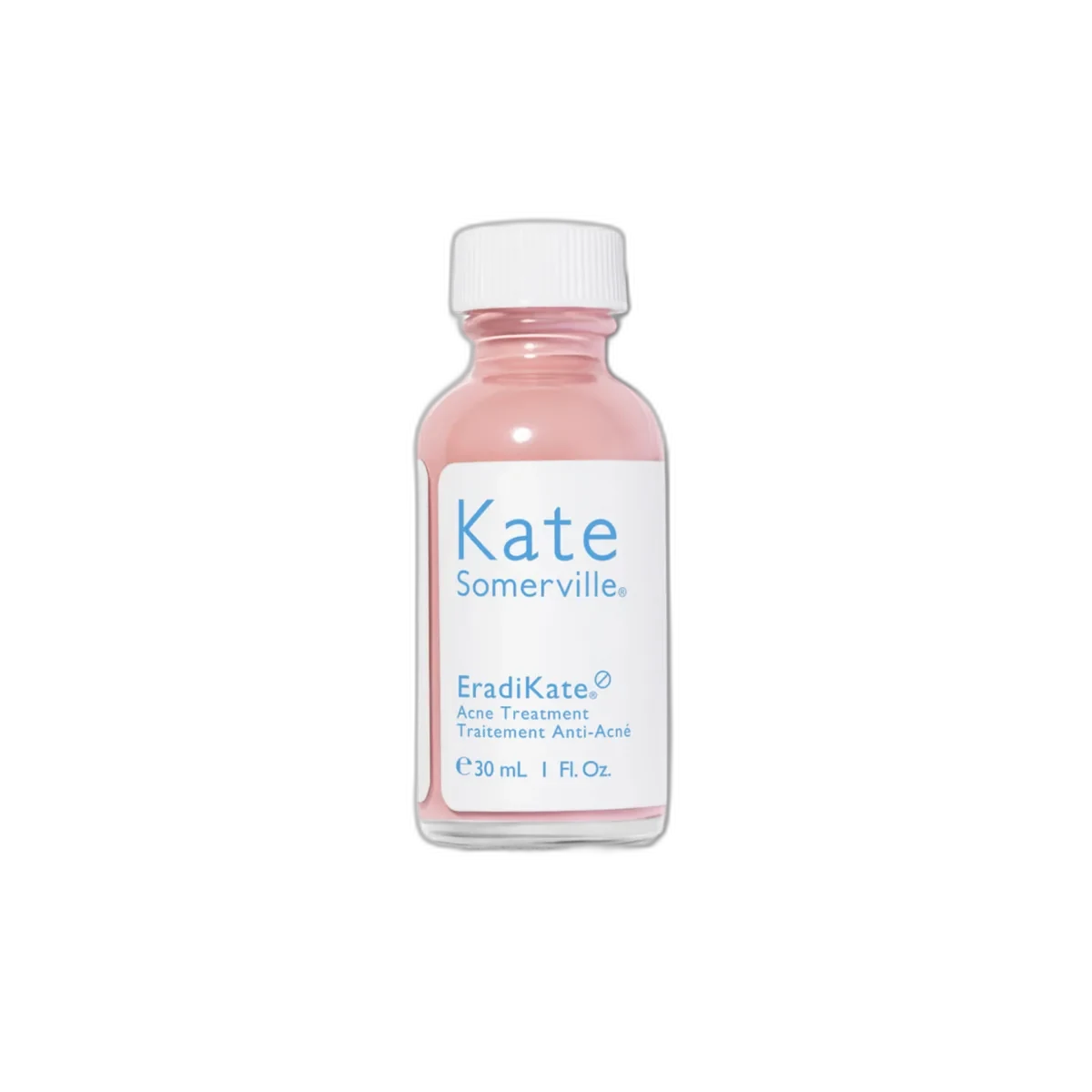
EradiKate Acne Treatment
Overnight Blemish Eraser
 Verified reviewer
Pros & cons.
- +Visibly flattens blemishes overnight — one of the fastest-acting OTC spot treatments available
- +10% sulfur at FDA maximum provides potent keratolytic and antimicrobial action
- +Two-phase suspension delivers concentrated treatment precisely to individual blemishes
- +Fragrance-free and fungal-acne-safe formula with a short, transparent ingredient list
- +One bottle lasts 3-6 months making the per-treatment cost very low
- +Effective against both surface blemishes and early-stage cystic acne
- +PETA cruelty-free certified and FSA/HSA eligible as an OTC drug product
- −Isopropyl alcohol as the primary solvent is harsh on dry or sensitive skin
- −Unmistakable sulfur smell is unpleasant and noticeable to anyone nearby
- −Pink sediment stains pillowcases and clothing on contact
- −Visible pink residue means it cannot be worn under makeup during the day
- −Glass bottle is fragile and not ideal for travel despite compact size
The full review.
A blemish appearing the night before an important event makes any skincare routine feel like a betrayal. EradiKate exists for that specific moment of dermatological panic. Kate Somerville developed this product in her West Hollywood clinic for celebrity clients who needed a visible pimple gone by the next morning’s camera call. The formula has not changed in nearly two decades, and neither has the problem it solves.
The product looks different from most modern acne treatments. It comes in a small glass bottle with a clear liquid on top and a thick pink sediment at the bottom. The instructions are simple: dip a cotton swab through the liquid, collect the pink paste from the bottom, dab it on your blemish, and sleep. Do not shake the bottle. This simplicity feels like a secret shared between friends rather than a product bought at Sephora.
The pink sediment contains the active ingredients. Sulfur at 10%—the maximum concentration the FDA allows in over-the-counter acne products—is the primary active. Sulfur has treated skin conditions since antiquity and survives every skincare trend. It works as a keratolytic agent, breaking down dead skin cells that trap sebum and bacteria inside pores. It is antimicrobial, targeting the bacteria that drive inflammatory acne, and anti-inflammatory, calming the redness and swelling of a blemish.
The formula is more than just sulfur. Zinc oxide adds oil absorption to help dry the blemish while the sulfur performs its keratolytic work. Salicylic acid is an inactive ingredient—likely at a low concentration—but still helps penetrate pores to dissolve oily debris. Camphor provides a distinctive cooling sensation upon application, offering mild antimicrobial and anti-inflammatory effects while providing a psychological sense that the product works.
The two-phase design is functional. By keeping the sulfur sediment at the bottom and the isopropyl alcohol solution on top, the formula delivers a higher concentration of active ingredients to the blemish than a pre-mixed product. Dipping a cotton swab to the bottom collects a potent paste that dries into a chalky, sulfur-rich treatment layer. This is targeted therapy, not a diluted compromise.
Isopropyl alcohol is the first inactive ingredient. It speeds evaporation, helps the treatment dry quickly, and creates a tight, slightly stinging sensation on open or irritated skin. This is tolerable for oily and combination skin types. However, the product is less friendly for dry or sensitive skin. Isopropyl alcohol can disrupt the skin barrier; while spot application limits exposure, frequent use on compromised skin can create a dryness-irritation cycle.
Ingredient analysis.
Full INCI list
Active Ingredient: Sulfur 10%. Inactive Ingredients: Isopropyl Alcohol, Aqua/Water/Eau, Zinc Oxide, Camphor, Magnesium Aluminum Silicate, Salicylic Acid, CI 77491 (Iron Oxides)
Skin match.
The science.
The Science
Sulfur has a long dermatological history. At 10% concentration, EradiKate delivers the maximum OTC dose. A 2004 review in the Journal of Drugs in Dermatology by Lin and colleagues shows sulfur's acne mechanisms: keratolytic activity that sheds dead skin cells from the follicular wall, antimicrobial effects against Cutibacterium acnes (formerly P. acnes), and anti-inflammatory properties that reduce redness and swelling in active lesions.
The EradiKate formula layers complementary mechanisms. Zinc oxide adds antimicrobial activity and absorbs excess sebum at the blemish site—a property shown in studies linking zinc to reduced inflammatory acne lesions. A 2010 study in the Journal of Clinical and Aesthetic Dermatology showed that sodium sulfacetamide-sulfur combinations effectively reduce both inflammatory and non-inflammatory acne lesions.
Salicylic acid is listed as an inactive ingredient at a low concentration, but it penetrates the lipid-rich environment of clogged pores to dissolve the sebaceous debris that feeds acne. In this spot treatment, it provides secondary pore clearance that works with sulfur's surface-level keratolytic action.
Recent research confirms sulfur's role in modern acne treatment. A 2025 narrative review in PMC confirms sulfur and its derivatives remain standard in dermatological practice, especially for patients who cannot tolerate benzoyl peroxide or want a different mechanism of action.
References
- The use of sulfur in dermatology — Journal of Drugs in Dermatology (2004)
- The use of sodium sulfacetamide 10%-sulfur 5% emollient foam in the treatment of acne vulgaris — Journal of Clinical and Aesthetic Dermatology (2010)
Dermatologist Perspective
Dermatologists recognize sulfur as an established acne treatment with decades of clinical evidence. EradiKate's 10% concentration reaches the upper limit of OTC efficacy. Board-certified dermatologists often recommend sulfur-based treatments to patients who find benzoyl peroxide irritating or need a different mechanism of action. Adding zinc oxide for sebum control and salicylic acid for pore penetration creates a multi-mechanism spot treatment that matches current dermatological approaches to targeted acne therapy. However, dermatologists note the isopropyl alcohol base can compromise barrier function if overused; use this product as a targeted spot treatment rather than a broad-coverage acne solution.
Where it fits in your routine.
Do not shake the bottle. Finish your evening skincare routine before bed and let all products absorb. Dip a clean cotton swab through the clear liquid layer to the bottom of the glass bottle to collect the concentrated pink sulfur sediment. Dab the liquid directly onto individual blemishes; do not spread it over larger areas. Leave it on overnight. Wash it off in the morning with your regular cleanser. Use nightly on active blemishes as needed. Stop use if excessive dryness or irritation develops.
At $29 for 1 fluid ounce, EradiKate costs more than drugstore spot treatments. But spot treatment economics are forgiving. Because you apply tiny dabs of sediment per blemish, one bottle lasts three to six months. This makes the monthly cost roughly $5-10, which competes with or undercuts many drugstore alternatives. The per-treatment value is strong for the speed and reliability of results.
This works for oily or combination skin with occasional to moderate breakouts needing fast-acting overnight spot treatment. It works best for early blemishes, like the first sign of a hard bump under the skin. It is also a strong choice for people who cannot tolerate benzoyl peroxide and need an alternative active ingredient.
The isopropyl alcohol base is too harsh for dry, sensitive, or eczema-prone skin. People with a sulfur allergy must avoid this product. A daily leave-on BHA or prescription retinoid works better than a drying lotion for broad-coverage acne management instead of targeted spot treatment.
Product details.
Sulfur smells like eggs. There is no added fragrance. The smell is strong when you apply the product, but it dissipates as it dries.
Compact 1 fl oz glass bottle with screw-top cap. The glass construction enables the two-phase design — heavy sulfur sediment settles at the bottom, and users dip a cotton swab through the clear liquid to collect the treatment. The size works for travel but the glass is fragile.
On first use, expect a noticeable sulfur smell and a cooling sensation from the camphor. The pink sediment dries within minutes to a visible chalky paste on the skin. Most users see a flattened, less red blemish by morning. A slight drying or tightness around the treated area is normal — if significant peeling or irritation occurs, reduce frequency.
3-6 months with typical spot treatment use, as only tiny dabs of sediment are needed per blemish
12 months
All Year
The backstory.
EradiKate was born in Kate Somerville's West Hollywood clinic, where the aesthetician developed it for celebrity clients who needed fast blemish resolution before red carpet events and photo shoots. The two-phase drying lotion concept draws on a long tradition of sulfur-based acne treatments, but the specific combination and delivery method became one of the brand's signature innovations and earliest hero products.
About Kate Somerville
Established Brand (5–20 years)Kate Somerville launched her eponymous skincare line in 2004 from her West Hollywood medispa clinic to serve celebrity clients. Unilever acquired the brand in 2015 and sold it to Rare Beauty Brands in late 2025. Kate Somerville is a licensed aesthetician, not a dermatologist, but the brand has a strong clinical reputation spanning two decades.
Common myths.
Shake the bottle before use to mix the sulfur sediment evenly.
Do not shake EradiKate. The two-phase design is intentional — the concentrated sulfur sediment at the bottom is the active treatment. Dip a clean cotton swab through the clear liquid to the bottom to collect only the pink sediment. Shaking dilutes the treatment and reduces its effectiveness.
Sulfur acne treatments are outdated compared to modern ingredients like benzoyl peroxide.
Sulfur is an FDA-recognized acne treatment used in dermatology for centuries. It works via a keratolytic mechanism rather than the oxidative mechanism of benzoyl peroxide. This makes Sulfur an effective alternative for people who cannot tolerate benzoyl peroxide or prefer a different approach.
FAQ.
Can you use EradiKate with retinol?
Do not apply EradiKate and retinol to the same blemish at once. Both ingredients dry the skin, and combining them causes irritation and peeling. Use retinol on the rest of your face while spot-treating blemishes with EradiKate, but watch for irritation at the overlap zones.
Is EradiKate safe during pregnancy?
Most dermatological guidelines consider 10% Sulfur safe for topical use during pregnancy. This formula lists salicylic acid as an inactive ingredient at a low concentration. Always confirm with your healthcare provider before using any acne treatment during pregnancy.
How long does it take for EradiKate to work?
Many users see visible blemish reduction hours after the first application. Brand-sponsored testing shows 94% of participants had visible improvement within 1 hour, and 97% had reduced redness and inflammation after 2 days. Results work fastest when applied at the first sign of a blemish.
Why does EradiKate smell bad?
The 10% sulfur active ingredient causes an inherent sulfur smell — this concentration makes the scent unavoidable in a sulfur-based treatment. The smell lessens as the product dries but peaks during application. Because this is a nighttime treatment, the smell usually does not affect daytime use.
What is the difference between EradiKate and EradiKate Salicylic Acid Acne Treatment?
The original EradiKate uses 10% sulfur as the main active in a two-phase drying lotion suspension. The EradiKate Salicylic Acid version is a separate product using 2% salicylic acid instead of sulfur. They target acne via different mechanisms and use different formulations — the original is a spot treatment suspension, while the EradiKate Salicylic Acid version uses a different product format.
What the community says.
"Visibly reduces blemish size and redness overnight or within hours"
"Effective on cystic and hormonal acne when applied at first sign"
"Fragrance-free formula suitable for reactive skin"
"Small bottle lasts months since only tiny amounts are needed"
"Simple no-fuss application with cotton swab"
"Strong sulfur smell described as egg-like or match-like"
"Pink sediment can stain pillowcases and clothing"
"Visible pink residue makes it unsuitable to wear under makeup"
"Very drying when overused or applied to larger skin areas"
"Isopropyl alcohol base feels harsh on sensitive or compromised skin"
"Premium price for 1 oz bottle despite small per-use amounts"
People also looked at.