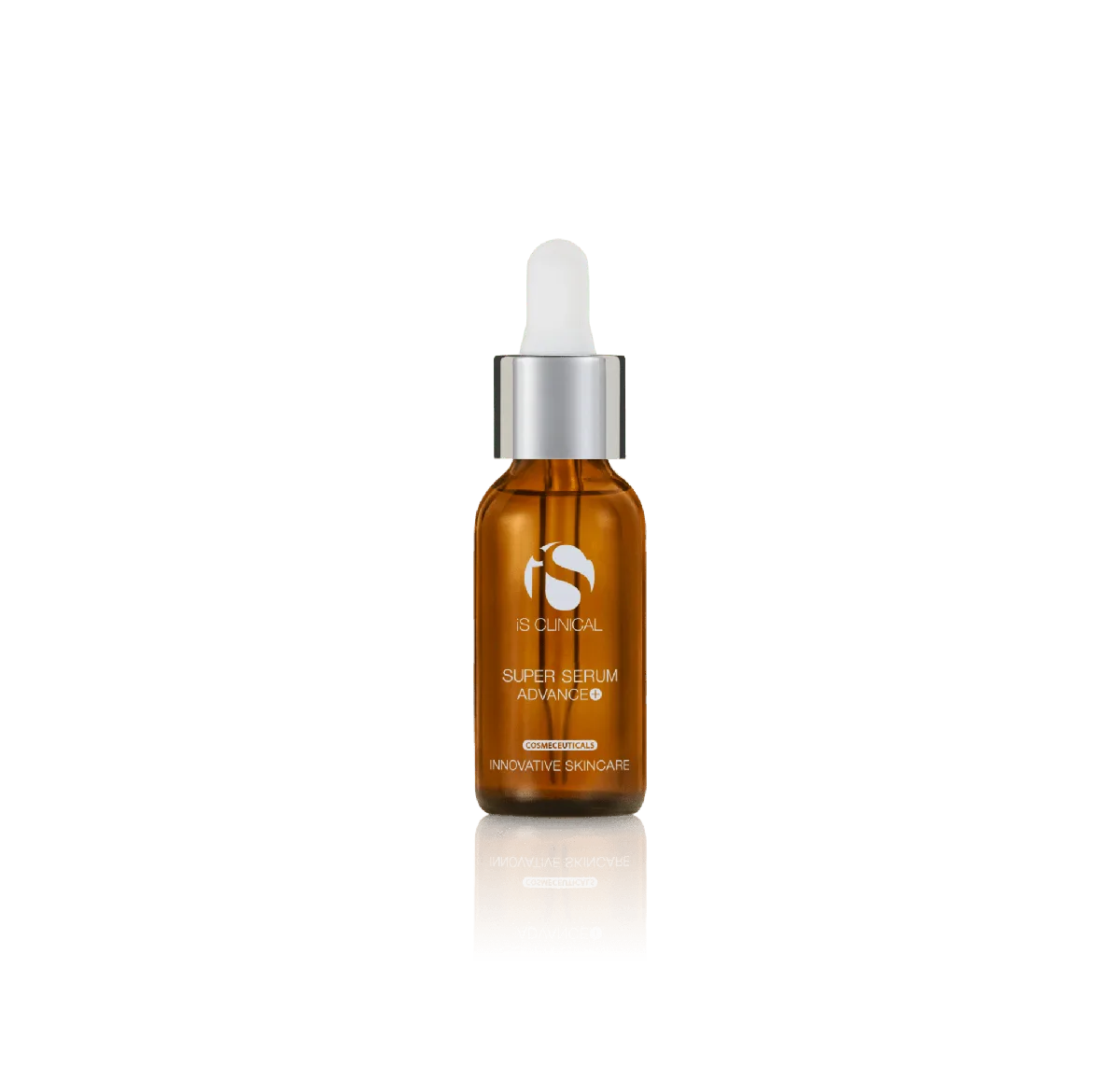
Super Serum Advance+
Clinical Scar Treatment Hero
 Verified reviewer
Pros & cons.
- +Combines 15% L-ascorbic acid with GHK peptide for dual collagen and scar-remodeling action
- +Alcohol-free formula is notably gentler than many vitamin C serums at this concentration
- +Isolated centella triterpenoids provide targeted anti-inflammatory wound-healing support
- +Arbutin and vitamin C create dual-pathway brightening for post-inflammatory hyperpigmentation
- +Clean seventeen-ingredient formula with no fragrance, silicones, or unnecessary fillers
- +Pregnancy-safe alternative to the retinol-containing Pro-Heal Serum
- +Proven clinical adoption for scar management protocols in professional settings
- −At $177 per ounce, commands luxury pricing for a vitamin C serum
- −Six-month PAO means the product must be used consistently before oxidation occurs
- −Scar improvement requires 12+ weeks of daily use — patience and commitment are required
- −Small bottle depletes relatively quickly at 3-4 drops per application
- −Lacks the CE ferulic acid network that some competing formulas offer
The full review.
Every brand has a ‘super’ something. Super hydrating. Super brightening. Super whatever marketing decided would move units this quarter. But iS Clinical’s Super Serum Advance+ was named with unusual precision. This is the brand’s most concentrated treatment serum — 15% L-ascorbic acid combined with bioidentical Tripeptide-1 (the GHK copper peptide fragment), isolated centella triterpenoids, arbutin, and hyaluronic acid — all in a seventeen-ingredient formula that is cleaner and more focused than most products half its potency.
The star pairing here is vitamin C and GHK peptide, and understanding why they work together explains why this serum has found a genuine niche in scar management. L-ascorbic acid is a cofactor for prolyl hydroxylase and lysyl hydroxylase — the enzymes that stabilize collagen’s triple helix structure. Without adequate vitamin C, collagen production falters. Tripeptide-1, meanwhile, triggers a different phase of the process entirely. The GHK fragment signals fibroblasts to ramp up collagen, elastin, and glycosaminoglycan production while also stimulating the tissue-remodeling pathways that turn disorganized scar tissue into more organized, normal-looking skin.
Most vitamin C serums can brighten the dark discoloration that scars leave behind. This one can also help improve the textural component — the raised or depressed areas where collagen was deposited haphazardly during wound healing. That dual-action (color plus texture) is what gives it clinical credibility for scar treatment that single-ingredient serums can’t match.
The centella triterpenoids — asiaticoside, asiatic acid, and madecassic acid — appear again here, individually isolated as in the Hydra-Cool Serum. Their anti-inflammatory and wound-healing properties provide the foundation for the peptide and vitamin C to work on. You cannot effectively remodel tissue that is actively inflamed, and the centella component ensures the inflammatory environment is managed while the constructive actives do their work.
Arbutin adds the brightening dimension, inhibiting tyrosinase through a mechanism complementary to vitamin C. For those dealing with post-inflammatory hyperpigmentation — the dark marks left behind by acne, injuries, or procedures — this dual approach offers meaningful depigmenting activity.
On the skin, this serum is notably gentler than the Pro-Heal. The absence of denatured alcohol is immediately apparent — no sting, no burning, no tightness. A mild tingle from the 15% ascorbic acid is possible, but the hyaluronic acid, glycerin, and centella triterpenoids buffer the experience considerably. The texture is light and slightly viscous, absorbing within a minute with no residue. Under sunscreen, it is invisible.
Results follow a predictable vitamin C trajectory for the first month: brightening by week one, improved tone evenness by week three, enhanced radiance by week four. The peptide and scar-remodeling benefits take longer — twelve weeks or more for visible changes in scar texture. This is not a quick fix; it is a sustained investment. And given the six-month PAO, you are looking at roughly two bottles to see a full scar-treatment cycle through.
The price — $177 for one ounce — is identical to the Pro-Heal and represents iS Clinical’s premium tier. For a vitamin C serum, this is luxury territory. The value argument is strongest for those who need the scar-treatment dimension and would otherwise be purchasing separate vitamin C, peptide, and brightening products. For those who simply want a good vitamin C serum, the ingredient list is compelling but the price may not be.
What earns the Super Serum its name is the breadth of what it accomplishes in a single step. This is not a vitamin C serum with some peptides thrown in as marketing garnish. The GHK peptide is a deliberate, research-backed addition that gives this product a treatment profile you genuinely cannot replicate with a vitamin C serum plus a peptide cream. The whole is greater than the sum of its parts — and in a market glutted with ‘super’ products, that is a distinction worth noting.
Formula
Texture
The texture is light and slightly viscous, absorbing within a minute with no residue.
Scent
No scent mentioned.
Best for
- Scar treatment
- Post-inflammatory hyperpigmentation
- Brightening
- Improving tone evenness
- Enhancing radiance
Works for
No specific “Works for” information.
Not ideal for
No specific “Not ideal for” information.
AM routine
No specific “AM routine” information.
PM routine
No specific “PM routine” information.
Ingredient analysis.
Full INCI list
Water/Aqua/Eau, Ascorbic Acid, Hyaluronic Acid, Pentylene Glycol, Arbutin, Polyporus Umbellatus (Mushroom) Extract, Calcium Pantothenate, Zinc Sulfate, Urea, Glucose, Guanidine HCl, Tripeptide-1, Glycerin, Phenoxyethanol, Asiaticoside, Asiatic Acid, Madecassic Acid
Skin match.
The science.
The Science
This formula uses L-ascorbic acid and Tripeptide-1 (GHK peptide) to manage collagen. L-ascorbic acid is an essential cofactor for prolyl and lysyl hydroxylase, the enzymes that stabilize collagen cross-linking. A 2017 review in Nutrients confirmed that topical vitamin C at 10-20% concentration promotes collagen gene expression and provides photoprotection by scavenging free radicals.
Research in BioMed Research International shows Tripeptide-1 (glycyl-L-histidyl-L-lysine, or GHK) has tissue-remodeling properties. GHK stimulates collagen synthesis, elastin production, glycosaminoglycan synthesis, and growth factor secretion by fibroblasts. GHK also modulates metalloproteinase activity—the enzymes that break down collagen—to balance synthesis and degradation in scarred tissue. This remodeling capability distinguishes GHK-containing products from simple anti-aging serums.
Centella triterpenoids (asiaticoside, asiatic acid, madecassic acid) create the anti-inflammatory environment needed for tissue remodeling. Multiple dermatological studies document their activity through TGF-β/Smad and NF-κB signaling pathways. For scar management, these ingredients modulate inflammatory cytokines and support collagen synthesis, making them natural partners for the GHK peptide.
Arbutin inhibits tyrosinase, offering a safer alternative to hydroquinone for post-inflammatory hyperpigmentation. Because vitamin C inhibits melanin synthesis at a different enzymatic step, the formula provides dual-mechanism brightening with a favorable safety profile for extended use.
References
- The Roles of Vitamin C in Skin Health — Nutrients (2017)
- GHK Peptide as a Natural Modulator of Multiple Cellular Pathways in Skin Regeneration — BioMed Research International (2015)
Dermatologist Perspective
Dermatologists often recommend Super Serum Advance+ for scar management protocols, specifically for post-acne scarring and post-surgical scar improvement. Board-certified dermatologists note that the 15% L-ascorbic acid and GHK peptide combination addresses both pigmentary and textural scarring—a dual-action approach single-ingredient products cannot replicate. The alcohol-free, fragrance-free formulation works on healing skin and fits into post-procedure home care regimens alongside in-office treatments like microneedling and fractional lasers.
Where it fits in your routine.
Apply 3-4 drops to clean, dry skin every morning. Press into the face and neck with fingertips. Wait 1-2 minutes for absorption before you apply moisturizer and sunscreen. For scar treatment, apply to specific scar areas in the evening. Use consistently for at least 12 weeks for optimal scar results. Store in a cool, dark place and use within six months of opening.
At $177 for 1 fl oz, the Super Serum costs the same premium as the Pro-Heal. A 0.5 fl oz option at $104 offers a lower-commitment entry point. The value is highest for patients managing active scars — the combination of vitamin C, GHK peptide, centella triterpenoids, and arbutin in one product replaces three or four separate serums. For general anti-aging and brightening, the price is harder to justify because effective vitamin C serums cost less. The six-month PAO also makes waste a concern if usage is inconsistent.
Use this if you have post-acne scarring, post-inflammatory hyperpigmentation, or aging concerns and want a clinical-grade serum for texture and color. It works well for patients needing a pregnancy-safe vitamin C alternative to retinol-containing serums.
Budget-conscious consumers seeking vitamin C for general brightening can find effective options at a fraction of this price. This formula also lacks the CE ferulic acid network for maximum photoprotection, using peptides and centella instead.
Product details.
This water-based serum is lightweight and slightly viscous. It absorbs fast without leaving a sticky or greasy residue.
No added fragrance. The L-ascorbic acid has a faint, clean, vitamin-like scent that dissipates quickly.
Frosted glass bottle with dropper cap. Opaque glass protects the light-sensitive L-ascorbic acid from degradation.
The 15% ascorbic acid may cause a mild tingle on first use. However, the alcohol-free, fragrance-free formula is gentler than many vitamin C serums at this concentration. Skin feels hydrated and subtly brighter immediately.
2-3 months with daily application of 3-4 drops to face and neck
6 months
All Year
The backstory.
Super Serum Advance+ represents iS Clinical's flagship treatment serum, built to be the most comprehensive vitamin C product in the clinical skincare space. Where Pro-Heal Serum Advance+ was designed around healing inflammation, Super Serum was designed around rebuilding — using the GHK peptide to trigger the skin's own remodeling processes. The product gained particular recognition in the professional channel for its use in scar management protocols, where the combination of vitamin C, peptides, and centella triterpenoids offered a non-invasive adjunct to in-office treatments.
About iS Clinical
Established Brand (5–20 years)iS Clinical was founded in 2002 by biochemists Bryan Johns and Alec Call under the Innovative Skincare umbrella. The brand is widely used in dermatology offices and medical spas, with multiple peer-reviewed clinical studies supporting its formulations. Products are pharmaceutical-grade and free from parabens, phthalates, and sulfates.
Common myths.
Vitamin C serums should sting to show they're working.
This serum is alcohol-free. It uses hyaluronic acid, glycerin, and centella triterpenoids to buffer the 15% ascorbic acid. Minimal tingling is normal; significant stinging usually shows a compromised barrier, not potency.
Topical vitamin C and peptides can't meaningfully improve scars.
Deep scars may need in-office procedures, but the GHK peptide in this formula has documented collagen-remodeling activity. L-ascorbic acid is a cofactor for collagen synthesis. Together, they improve the texture and color of superficial to moderate scarring over time.
FAQ.
What is the difference between iS Clinical Super Serum and Pro-Heal Serum?
Both contain 15% L-ascorbic acid but work differently. Pro-Heal uses retinol, vitamin E, and zinc sulfate to heal inflammation—best for acne and sun damage. Super Serum uses Tripeptide-1 (copper peptide) and centella triterpenoids for structural repair—better for scar treatment, anti-aging, and collagen remodeling. Super Serum is alcohol-free and gentler on sensitive skin.
Can iS Clinical Super Serum help with acne scars?
Yes — this is a primary clinical use. The Tripeptide-1 (GHK peptide) stimulates collagen remodeling to improve scar texture, while 15% L-ascorbic acid treats post-inflammatory hyperpigmentation and supports new collagen synthesis. Scar improvement typically takes 12+ weeks of consistent daily use.
Is iS Clinical Super Serum safe during pregnancy?
Unlike the Pro-Heal Serum (which contains retinol), the Super Serum does not contain retinoids and is generally considered pregnancy-safe. However, always consult your OB-GYN or dermatologist before adding new actives during pregnancy.
How should I store iS Clinical Super Serum to prevent oxidation?
Store in a cool, dark place away from direct sunlight. The frosted glass bottle offers protection, but a drawer or medicine cabinet extends shelf life. Use within six months once opened — L-ascorbic acid oxidizes and loses potency over time. If the serum turns dark orange or brown, it has oxidized and you must replace it.
Can I use Super Serum Advance+ with retinol at night?
Yes — use the Super Serum in the morning for antioxidant protection and brightening, then apply your retinol product at night. This separation maximizes the benefits of both actives and minimizes potential irritation from layering them simultaneously.
What the community says.
"Visible brightening and more even skin tone within weeks"
"Noticeably improved scar appearance over months of use"
"Clean, alcohol-free formula that doesn't sting as much as other vitamin C serums"
"Lightweight texture absorbs instantly without residue"
"At $177, one of the most expensive vitamin C serums available"
"Small 1 oz bottle doesn't last long at 3-4 drops per application"
"Takes months to see scar improvement"
"The six-month PAO means you must use it before it oxidizes"
People also looked at.