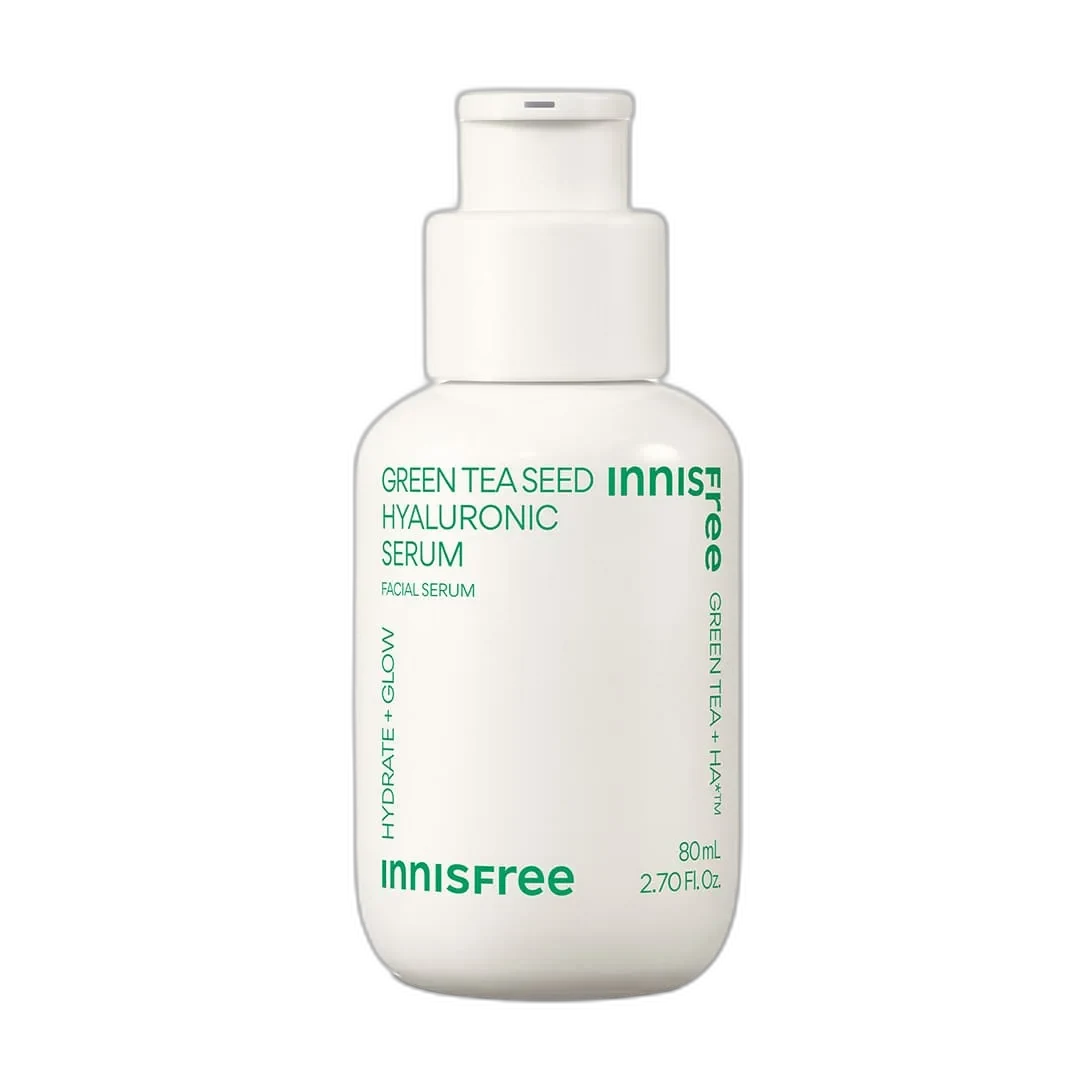
Green Tea Seed Hyaluronic Serum
K-Beauty Hydration Icon
 Verified reviewer
Pros & cons.
- +Five-type hyaluronic acid complex provides genuine multi-depth hydration
- +Multi-functional formula includes niacinamide, vitamin C, squalane, and postbiotics beyond basic HA
- +Outstanding value at $30 for 80 mL with $25 refill option available
- +Fragrance-free US formulation is genuinely suitable for sensitive and reactive skin
- +Lightweight watery texture absorbs in seconds and layers perfectly in multi-step routines
- +Silicone-free and vegan with recycled glass packaging and refill program
- +Built on 14 years of reformulation experience from a 27-million-bottle-selling line
- −Major reformulation disappointed fans of the original 75.9% green tea extract formula
- −Watery texture may feel insubstantial for users who prefer viscous, rich serums
- −Not fungal acne safe due to several olive-derived emulsifiers in the formula
- −International version contains fragrance — purchasing from K-beauty retailers risks getting wrong formulation
- −Not sufficient as standalone moisture for very dry skin — still needs a cream on top
The full review.
Twenty-seven million bottles. That number defines the Innisfree Green Tea Seed Serum, a record the current lineup must uphold. Selling that many units across seventeen countries since 2010 makes any reformulation a massive gamble on consumer trust.
The fourth generation, rebranded as the Green Tea Seed Hyaluronic Serum, changes the line most significantly. The original serum used 75.9 percent Camellia sinensis extract as its first ingredient. This version uses water first and centers on five types of hyaluronic acid. Long-time fans of the concentrated green tea formula may dislike this shift. However, for new users, it is one of the most intelligently built hydrating serums at this price.
The five-type hyaluronic acid complex provides the structure. Standard hyaluronic acid and sodium hyaluronate offer multi-weight hydration. Hydrolyzed HA uses smaller fragments for deeper penetration. Sodium hyaluronate crosspolymer creates a viscoelastic surface film that resists washing or rubbing—likely supporting the brand’s 72-hour hydration claim. Sodium acetylated hyaluronate is the most interesting ingredient; its acetyl group increases skin affinity, helping it bind to the stratum corneum. Whether five types outperform two or three depends on concentrations Innisfree does not disclose, but the logic is sound.
Supporting ingredients elevate this beyond a basic hydrator. Niacinamide, listed fifth, adds brightening and barrier-strengthening benefits. Three-O-ethyl ascorbic acid is a stable, dual-soluble vitamin C derivative and a functional antioxidant. Dipotassium glycyrrhizate from licorice root adds anti-inflammatory and soothing properties. Lactobacillus ferment lysate provides postbiotic microbiome support. Squalane offers lightweight occlusion. Panthenol and allantoin deliver soothing hydration. This is not a one-note serum; it compresses an entire first-half-of-your-routine into one step.
The texture is K-beauty standard—watery, clear, and light. It feels like applying elegant water containing many actives. A few drops spread across the face, absorb in seconds, and leave skin plumper and slightly dewy. A brief tackiness lasts about thirty seconds before the serum settles. This is not for people seeking a heavy or thick feel. It is for people who want skincare to disappear and leave only results.
The fragrance-free US formulation is a smart choice. The international version contains citrus peel oil, spearmint leaf oil, cardamom seed oil, and multiple fragrance allergens. The US version removes these, making it usable for sensitive and reactive skin. This is a major difference. If buying from Asian retailers, check the INCI list, as the formulations differ.
Green tea remains via Camellia sinensis leaf extract, seed oil, and seed extract, but it is now a supporting ingredient. The leaf extract provides EGCG-driven antioxidant protection. The seed oil adds linoleic acid and lightweight emolliency. This is no longer a green tea serum that hydrates; it is a hydration serum with green tea benefits.
The packaging is effective. The glass bottle uses twenty-five percent recycled glass from Innisfree’s BOTTLE RE:PLAY program. A refill pouch costs twenty-five dollars—five dollars less than the full bottle. This sustainability infrastructure is notable for a K-beauty serum at Sephora. The dropper dispenses consistent amounts, and the eighty-milliliter volume lasts three to five months with twice-daily use.
At thirty dollars for eighty milliliters, the value is strong. You get five types of HA, niacinamide, a vitamin C derivative, squalane, postbiotics, licorice root, panthenol, allantoin, and green tea extract—fragrance-free, silicone-free, vegan, and cruelty-free—for less than many single-ingredient serums. The 130 mL jumbo at forty-two dollars increases the value.
The Innisfree Green Tea Seed Hyaluronic Serum may have lost the concentrated green tea profile that sold twenty-seven million bottles. It gained a formula that does more, irritates less, and costs the same. For most skin types and routines, that is an upgrade.
Ingredient analysis.
Full INCI list
Water, Propanediol, Glycerin, 1,2-Hexanediol, Niacinamide, Betaine, Saccharide Isomerate, Camellia Sinensis Seed Oil, Xylitol, Cetearyl Olivate, Hydrogenated Lecithin, Butylene Glycol, Sorbitan Olivate, Lactobacillus Ferment Lysate, Acrylates/C10-30 Alkyl Acrylate Crosspolymer, Squalane, Panthenol, Allantoin, Hydroxyethyl Acrylate/Sodium Acryloyldimethyl Taurate Copolymer, Tromethamine, Ethylhexylglycerin, Ceratonia Siliqua (Carob) Gum, Sodium Metaphosphate, Camellia Sinensis Leaf Extract, Dipotassium Glycyrrhizate, Sodium Hyaluronate, Hyaluronic Acid, Dextrin, Theobroma Cacao (Cocoa) Extract, 3-O-Ethyl Ascorbic Acid, Sorbitan Isostearate, Sodium Citrate, Citric Acid, Glyceryl Oleate, Tocopherol, Lecithin, Sucrose, Lauryl Glucoside, Polyglyceryl-6 Laurate, Myristyl Glucoside, Xanthan Gum, Lactic Acid, Hydrolyzed Hyaluronic Acid, Sodium Hyaluronate Crosspolymer, Sodium Acetylated Hyaluronate
Skin match.
The science.
The Science
This serum's five-type hyaluronic acid system uses modern dermatological knowledge of multi-weight HA delivery. Pavicic et al. (2011) showed in the Journal of Drugs in Dermatology that topical hyaluronic acid with different molecular weights improves skin hydration, elasticity, and roughness. Low-molecular-weight HA (like the hydrolyzed form in this formula) penetrates better and stimulates keratinocyte proliferation, while high-molecular-weight HA provides better surface hydration and film-forming properties.
Niacinamide does more than brighten in this formula. Bissett et al. (2005) published in the Journal of Cosmetic Dermatology that topical niacinamide improved fine lines, wrinkles, hyperpigmentation, skin texture, and red blotchiness in a 12-week double-blind, split-face study. At the molecular level, niacinamide increases ceramide and free fatty acid synthesis in the stratum corneum, supporting the barrier that the HA hydrates.
The 3-O-ethyl ascorbic acid is a smart vitamin C choice for a water-based serum. L-ascorbic acid oxidizes fast in aqueous formulations, but the ethyl modification improves both stability and skin penetration. Research shows that 3-O-ethyl ascorbic acid inhibits melanogenesis and provides antioxidant protection similar to L-ascorbic acid at equivalent concentrations, without the pH and stability constraints.
Lactobacillus ferment lysate supports the microbiome aspect of skin barrier health. A randomized study in Scientific Reports (2023) showed that topical ferment lysate formulations decreased transepidermal water loss and improved skin hydration markers over 30 days. This postbiotic approach — using bacterial fermentation metabolic byproducts instead of live cultures — is an emerging, supported strategy for barrier reinforcement.
The green tea component (Camellia sinensis) delivers EGCG, a heavily studied botanical antioxidant. Katiyar et al. showed that EGCG inhibits UVB-induced oxidative stress, inflammatory cell infiltration, and immunosuppression in human skin — adding a photoprotective layer that complements the hydrating and barrier-repairing actives in this formula.
References
- Efficacy of cream-based novel formulations of hyaluronic acid of different molecular weights in anti-wrinkle treatment — Journal of Drugs in Dermatology (2011)
- A randomized trial of the effects of niacinamide on skin condition — Journal of Cosmetic Dermatology (2005)
- Topical application of Lactobacillus ferment lysate decreases TEWL and improves skin hydration — Scientific Reports (2023)
Dermatologist Perspective
Dermatologists would see this serum as a solid hydrating vehicle with useful supplementary actives. The multi-weight HA approach is sound. Including niacinamide, panthenol, and allantoin creates a formula that hydrates and supports barrier function — a combination board-certified dermatologists frequently recommend. Dermatologists would specifically endorse the fragrance-free US formulation, especially for patients with sensitive or reactive skin using active treatments like retinoids that need a hydrating buffer layer.
Where it fits in your routine.
After cleansing and toning, dispense 2-3 drops into your palm. Press and pat the serum onto your face and neck — the watery texture spreads easily with little product. Apply to slightly damp skin to increase absorption. Follow with moisturizer and sunscreen in the AM. You can layer it — apply a second round of drops to dry areas. On retinol nights, apply this serum first as a hydrating buffer before your retinol treatment.
At $30 for 80 mL, this serum offers high value in Sephora's K-beauty category. The $0.375/mL cost competes with drugstore serums but provides more complex ingredients. The $25 refill lowers the price to $0.3125/mL. The 130 mL jumbo at $42 ($0.323/mL) gives the best absolute value. This fragrance-free formula contains five types of HA, niacinamide, a vitamin C derivative, squalane, postbiotics, and green tea in recycled glass packaging, prioritizing substance over style.
This multi-functional hydrating serum does more than deliver hyaluronic acid. It suits combination to dry skin types needing hydration, barrier support, brightening, and antioxidant protection in one lightweight step. It works for K-beauty enthusiasts who want serious ingredients at accessible pricing.
Users seeking the original 75.9% green tea formula's concentrated botanical extract will find this product is fundamentally different. Those with fungal acne should avoid this because it uses olive-derived emulsifiers. This watery serum lacks heavy-duty moisture; pair it with a substantive cream.
Product details.
This clear, watery, lightweight liquid serum is thicker than a toner but thinner than a viscous serum. It spreads easily and absorbs within seconds.
Unscented — the current US formulation is fragrance-free and contains no essential oils
Innisfree's signature green glass bottle uses a dropper dispenser and is recyclable. It contains 25% recycled glass from the BOTTLE RE:PLAY campaign. Refill pouches cost $25 and reduce packaging waste.
The first application feels like hydrating water. It spreads thin and absorbs almost instantly, leaving skin plump and slightly dewy. A brief tackiness lasts 30-60 seconds before the serum settles. There is no stinging or adjustment period.
3-5 months with twice-daily facial application (80 mL size)
12 months
All Year
The backstory.
The Green Tea Seed Serum is Innisfree's origin story in a bottle — first launched in 2010, it became the brand's global bestseller with 27 million units sold. The fourth-generation hyaluronic version represents the most significant departure from the original, shifting from a 75.9% green tea extract base to a water-based formula with five types of HA. This controversial reformulation traded nostalgia for modern multi-active science, a calculated bet that the brand's loyal base would follow the evolution.
About Innisfree
Established Brand (5–20 years)Innisfree's Green Tea Seed Serum is the brand's most iconic product. It has sold over 27 million bottles since 2010 across 17 countries. The current hyaluronic version is the fourth-generation reformulation of a line Amorepacific's R&D infrastructure has refined for over a decade.
Common myths.
The reformulation removed green tea, so it's no longer a green tea product.
Camellia sinensis leaf extract, seed oil, and seed extract remain in the formula, but green tea is no longer the main ingredient by volume. The formula shifted from green-tea-with-hydration to hydration-with-green-tea. This changes the product's identity but not its antioxidant contribution.
Watery serums are less effective than thick, viscous ones.
Serum efficacy depends on active ingredient concentration and formulation, not viscosity. This thin texture improves absorption — the actives reach the skin faster without the thickening agents viscous serums use for sensory appeal.
FAQ.
Is the Innisfree Green Tea Seed Hyaluronic Serum the same as the original Green Tea Seed Serum?
No — this is the fourth-generation reformulation launched around 2022. The original used 75.9% green tea extract as the primary ingredient. The current hyaluronic version uses water as the base and adds five types of hyaluronic acid, niacinamide, and vitamin C derivative. Green tea stays in the formula but is no longer the dominant ingredient by volume.
Does this serum contain fragrance?
The US formulation at Sephora and innisfree.com is fragrance-free, containing no parfum or essential oils. The international/Korean version on YesStyle, Olive Young, and other Asian retailers has citrus peel oil and other essential oils. Check the INCI list before buying from non-US sources.
Can I use this serum with retinol?
Yes — this serum's hydrating and soothing ingredients (hyaluronic acid, panthenol, allantoin, niacinamide) buffer retinol use well. Apply the serum first to hydrate the skin, then apply your retinol treatment. The niacinamide also complements retinol's anti-aging effects.
Is the refill worth buying?
At $25 for 80 mL versus $30 for the full bottle, the refill saves $5 per cycle (about 17% savings) and reduces packaging waste. Consistent use of this serum makes the refill the more economical and sustainable option. The 130 mL jumbo size at $42 offers even better per-mL value.
Why does the serum feel so watery compared to other serums?
The watery texture is intentional — it lets the multi-weight hyaluronic acid and other water-soluble actives absorb fast without thickening agents that make viscous serums feel heavy. This lightweight consistency works for layering in multi-step routines, not as a sign of lower efficacy.
What the community says.
"Lightweight watery texture absorbs almost instantly with no residue"
"A little goes a long way — 80 mL bottle lasts several months"
"Skin feels immediately hydrated, plump, and smooth after application"
"Works well under makeup and layers beautifully with other products"
"Refill option is both cost-effective and environmentally conscious"
"Multi-functional beyond hydration with niacinamide and vitamin C"
"Reformulation disappointed fans of the original 75.9% green tea extract version"
"Watery consistency feels insubstantial compared to thicker serums"
"Slight tackiness before fully absorbing that some users notice"
"International version contains fragrance — ordering confusion"
"Not sufficient as standalone moisture for very dry skin types"
People also looked at.