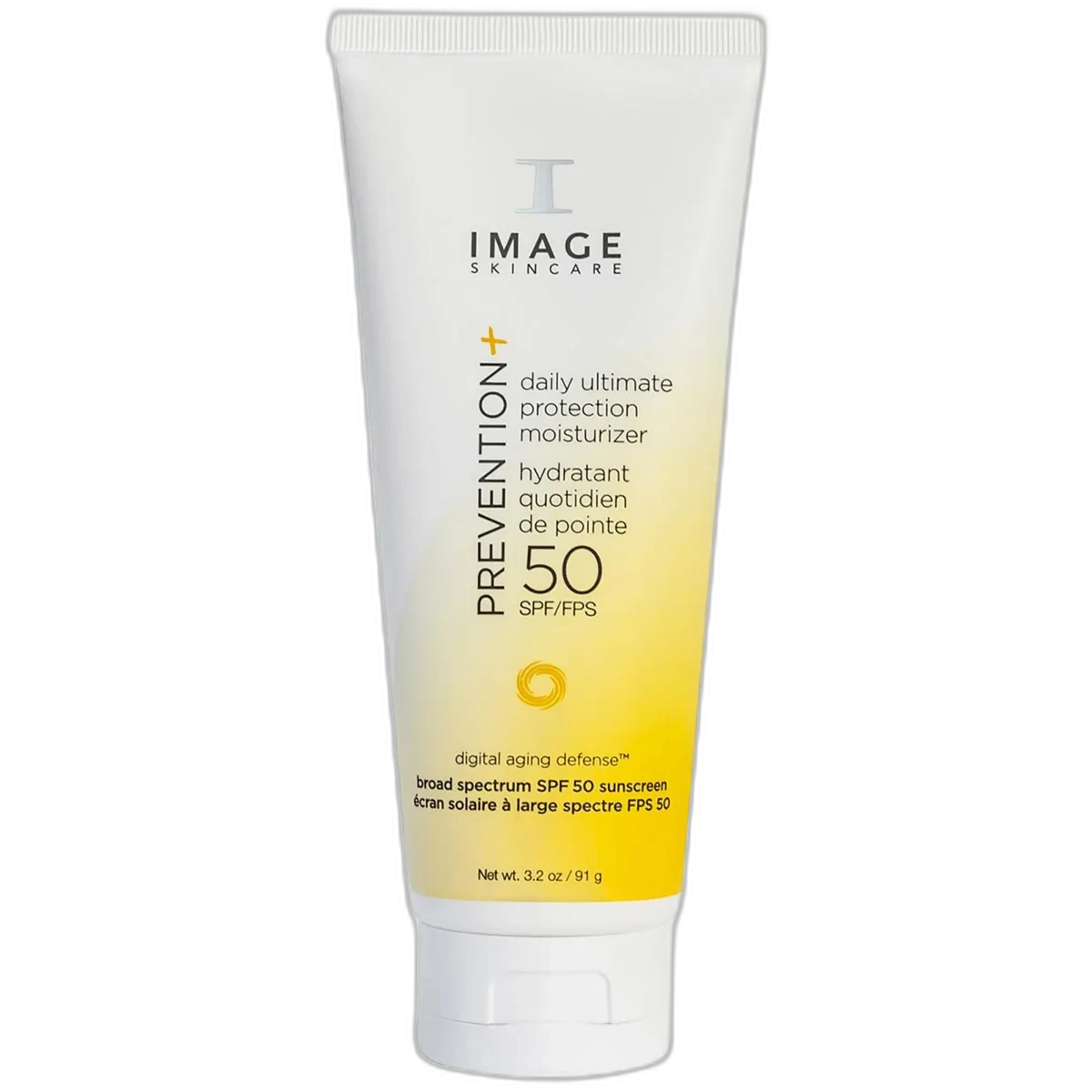
Prevention+ Daily Ultimate Protection Moisturizer SPF 50
High-SPF Daily Shield
 Verified reviewer
Pros & cons.
- +Four-filter SPF 50 system provides robust broad-spectrum protection for high-UV-exposure needs
- +DNA repair enzyme (Thermus Thermophillus Ferment) addresses UV damage after it occurs
- +Genuinely hydrating formula with glycerin, HA, sunflower oil, and panthenol
- +Generous 3.2 oz size lasts 3-4 months and offers strong per-ounce value
- +Stable vitamin C and vitamin E provide layered antioxidant defense
- +Professional-grade formula developed under plastic surgeon's medical direction
- −Rich texture is too heavy for oily and combination skin types
- −Citrus essential oils add sensitization risk to a daily sun protection product
- −Contains three chemical UV filters — not suitable for pregnancy or reef-safe priorities
- −Product is discontinued and transitioning to DAILY PREVENTION line
- −Dewy finish reads as oily rather than glowing on some skin types
The full review.
Sunscreen needs vary. A person managing melasma knows minutes of unprotected exposure can undo weeks of treatment. Post-laser patients have temporarily barrier-compromised skin that is vulnerable. Outdoor workers need protection for hours of direct exposure. For these users, SPF 30 is the bare minimum; they use SPF 50 like a large umbrella in a downpour.
Image Skincare’s Prevention+ Daily Ultimate Protection Moisturizer SPF 50 targets this group—people needing maximum daily protection in a wearable formula. This professional-channel formula uses four UV filters and feels like skincare rather than sunscreen.
The protection uses a four-filter hybrid system. Zinc oxide at 9% provides the UVA backbone to address long-wave UV radiation, photoaging, hyperpigmentation, and melanoma risk. Homosalate at 10% (maximum FDA-allowed concentration), octisalate at 5%, and octocrylene at 6% handle UVB absorption and extra UVA coverage. This four-filter approach reaches SPF 50 while keeping single filter concentrations moderate for formulation elegance. Most modern high-SPF products use this same multi-filter philosophy.
Two distinctive ingredients set this apart from basic SPF 50 products. Thermus Thermophillus Ferment is a DNA repair enzyme from thermophilic bacteria found in hot springs. Research shows this enzyme helps repair UV-induced DNA damage, cleaning up molecular damage that even good sunscreen cannot entirely prevent. Melanin is also in the inactive ingredients—the same pigment the body produces for UV protection—to add light absorption.
The hydration is strong. Glycerin forms the humectant base, sodium hyaluronate binds moisture deeply, sunflower seed oil delivers essential fatty acids, and panthenol (vitamin B5) soothes and conditions. For dry skin, this combination provides all-day moisture and replaces a separate morning moisturizer. The texture is thick, emollient, and creamy. This is not a sheer, watery SPF; it is a moisturizer that provides SPF 50.
This thickness is both a strength and a limit. For dry and normal skin types seeking maximum protection and hydration, the texture works. For oily or combination skin, it is too much. Users report oiliness and shine within hours; the dewy finish feels greasy on sebum-prone faces. Image Skincare made the Prevention+ Matte Moisturizer SPF 32 for that group, though both products are being phased out.
Citrus essential oils are a recurring issue in the Prevention+ line. Orange peel oil, mandarin peel oil, and limonene are in this formula and the SPF 30 version, adding fragrance that introduces photoactive sensitizers. This is a puzzling choice for a formula developed under a plastic surgeon’s direction for post-procedure skin.
The formula includes Digital Aging Defense technology, adding ergothioneine and other antioxidants to target blue light and environmental pollution. The inclusion of tetrahexyldecyl ascorbate (stable vitamin C) and tocopherol (vitamin E) provides standard antioxidant support for high-SPF protection.
At $50 for 3.2 ounces, the value competes in the professional SPF tier. The size lasts three to four months of daily use, and the dual moisturizer-SPF function removes one step from morning routines. Prestige brand SPF 50 products often charge $40-60 for 1.7 ounces, so Image Skincare offers nearly twice the product for a similar or lower price.
As the product transitions to the new DAILY PREVENTION Ultra Defense Moisturizer SPF 50, remaining Prevention+ inventory is a last chance for loyalists or a risky buy for newcomers. The formula delivers high SPF, real hydration, and professional-grade antioxidant support, but the market now has more elegant options. Whether Image Skincare fixes the texture and essential oil issues in the successor will determine if the Prevention line stays relevant.
Formula
Ingredient analysis.
Full INCI list
Active: Homosalate 10%, Octisalate 5%, Octocrylene 6%, Zinc Oxide 9%. Inactive: Aqua/Water/Eau, Caprylic/Capric Triglyceride, Glycerin, Cyclopentasiloxane, Cetyl PEG/PPG-10/1 Dimethicone, Thermus Thermophillus Ferment, Polyacrylate-13, Cetearyl Ethylhexanoate, Phenoxyethanol, Polyisobutene, Polyglyceryl-6 Polyricinoleate, Lecithin, Isostearic Acid, Polyglyceryl-3 Polyricinoleate, Polyhydroxystearic Acid, Sodium Chloride, Cetearyl Dimethicone, Marrubium Vulgare Extract, Helianthus Annuus Seed Oil, Xanthan Gum, Polyglyceryl-2 Isostearate, Disteardimonium Hectorite, Polysorbate 20, Citrus Aurantium Dulcis Peel Oil, Limonene, Sorbitan Isostearate, Ethylhexylglycerin, Panthenol, Citrus Nobilis Peel Oil, Disodium EDTA, Sodium Hyaluronate, Melanin, Erythritol, Citric Acid, Vanilla Planifolia Fruit Extract, Glucose, Potassium Sorbate, Hydrolyzed Pea Protein, Tocopherol, PEG-8/SMDI Copolymer, Tetrahexyldecyl Ascorbate, Tocopheryl Acetate, Barosma Betulina Leaf Oil, Sodium Benzoate
Skin match.
The science.
The Science
This formula uses a four-filter UV protection system with complementary mechanisms across the UV spectrum. Zinc oxide at 9% provides broad-spectrum attenuation via physical scattering and absorption, especially in the UVA-I range (340-400nm). Homosalate, octisalate, and octocrylene are organic (chemical) filters that absorb UV radiation in the UVB and UVA-II ranges and convert it to heat. Together, they reach SPF 50 — blocking about 98% of UVB radiation.
Thermus Thermophillus Ferment adds a new approach to photoprotection. This enzyme comes from bacteria in extreme thermal environments and recognizes and excises UV-induced DNA photoproducts (specifically cyclobutane pyrimidine dimers). Research in the Journal of Investigative Dermatology (Stege et al., 2000) shows that liposomal delivery of the bacterial DNA repair enzyme T4 endonuclease V — a related photlyase technology — significantly reduced UV-induced immunosuppression and actinic keratosis development rates in xeroderma pigmentosum patients over 12 months. This formula uses a different enzyme source, but the principle of topically applied DNA repair enzymes supporting skin repair mechanisms has clinical precedent.
The melanin inclusion is scientifically logical: melanin is the body's UV-absorbing pigment, and topical melanin absorbs UV radiation and scavenges reactive oxygen species. The concentration in this formula is likely low, but it adds a biologically coherent layer to the photoprotection strategy.
Tetrahexyldecyl ascorbate (vitamin C) and tocopherol (vitamin E) provide the antioxidant backbone. Vitamins C and E work synergistically in photoprotection; research in the Journal of the American Academy of Dermatology shows that topical application of combined vitamins C and E provides more protection against UV-induced erythema than either vitamin alone.
Dermatologist Perspective
Board-certified dermatologists often recommend SPF 50 for patients with high photoprotection needs — melasma, post-procedure recovery, skin cancer history, or high daily UV exposure. The hybrid mineral-chemical approach in this formula is clinically acceptable, providing full spectral coverage without the cosmetic issues of ultra-high-concentration zinc oxide formulations. Dermatologists note the DNA repair enzyme inclusion aligns with emerging photoprotection science, though most evidence on topical DNA repair enzymes comes from prescription-level formulations. The product's role as a moisturizer-SPF hybrid helps compliance, as patients apply sunscreen more consistently when it is part of an enjoyable skincare step. However, citrus essential oils remain a concern in dermatological settings, especially for post-procedure patients with compromised barriers susceptible to contact sensitization.
Where it fits in your routine.
Apply a nickel-sized dollop to clean skin as your last morning step. The chemical filters need 15 minutes to activate before sun exposure — apply before dressing or leaving. This works as your only morning moisturizer for normal and dry skin. Reapply every 2 hours during extended outdoor time. Let the product set for 2-3 minutes before applying makeup.
At $50 for 3.2 oz, this is a strong value for professional-grade SPF 50 moisturizers. The per-ounce price is lower than many prestige brands with smaller sizes, and the dual moisturizer-SPF functionality removes one step from the morning routine. DNA repair enzymes, stable vitamin C, and melanin add formulation sophistication missing from basic SPF 50 products. However, its discontinued status affects value for those seeking a reliable long-term product. The successor DAILY PREVENTION Ultra Defense Moisturizer SPF 50 costs $26 (per LovelySkin) and may offer better long-term value as a replacement.
Normal to dry skin types needing maximum daily SPF protection — especially melasma patients, post-procedure recoverers, outdoor workers, or anyone whose dermatologist requires SPF 50 as the minimum. This works for those wanting a hydrating, skincare-forward sun protection product that also acts as a moisturizer.
Oily skin types will find this too heavy and dewy. Pregnant or breastfeeding individuals should check the chemical filter content. Those seeking reef-safe formulas need a mineral-only alternative. Since this is discontinued, anyone building a long-term routine should use the DAILY PREVENTION successor products instead.
Product details.
Thick, emollient cream with body. The four-filter SPF system uses hydrating oils and silicones to feel more like a traditional moisturizer than a sunscreen.
Citrus scent from orange and mandarin peel oils — not fragrance-free.
3.2 oz tube uses Image Skincare's Prevention line branding. This large size offers good value for daily use.
The cream feels thick and hydrating on first application. It blends well but takes more effort than lightweight chemical sunscreens. The dewy finish is noticeable; users used to matte products may find it too glowy. The citrus scent is apparent but fades within minutes. Wait 15 minutes for the chemical filters to fully activate before sun exposure.
3-4 months with once-daily face and neck application
12 months
All Year
The backstory.
The Ultimate Protection Moisturizer was Image Skincare's highest-SPF offering in the Prevention+ line, designed for patients who need maximum daily protection — post-procedure skin, melasma patients, and anyone spending significant time outdoors. Developed under Dr. Marc Ronert's surgical direction, it was formulated for the professional skincare channel where estheticians could match the right SPF level to each patient's exposure needs. The product is now transitioning to the DAILY PREVENTION Ultra Defense Moisturizer SPF 50.
About Image Skincare
Established Brand (5–20 years)Image Skincare was founded in 2003 by aesthetician Janna Ronert and board-certified plastic surgeon Dr. Marc Ronert. The brand is the #1 professional skincare brand in the global spa and salon category, with formulations developed under medical direction.
Common myths.
SPF 50 offers significantly more protection than SPF 30.
SPF 30 blocks about 97% of UVB rays, and SPF 50 blocks about 98%. This difference in daily protection is marginal for most people. SPF 50 works best for high UV exposure, post-procedure skin, or conditions like melasma where small UV amounts trigger hyperpigmentation.
Chemical filters make hybrid mineral-chemical sunscreens unsafe.
All four UV filters in this product — including the chemical ones — are FDA-approved and have decades of use history. The mineral (zinc oxide) and chemical (homosalate, octisalate, octocrylene) filters cover different parts of the UV spectrum, providing more complete protection than either approach alone.
What the community says.
"High SPF 50 protection prevents sunburn during extended outdoor time"
"Dual-purpose moisturizer and sunscreen simplifies morning routine"
"Hydrating formula works well for dry and normal skin types"
"Creates a dewy, glowing base for makeup application"
"Thick texture can be difficult to blend evenly"
"Too heavy and oily for oily or acne-prone skin types"
"Formula change disappointed longtime users who preferred original version"
"Contains citrus essential oils that add unnecessary sensitization risk"
People also looked at.