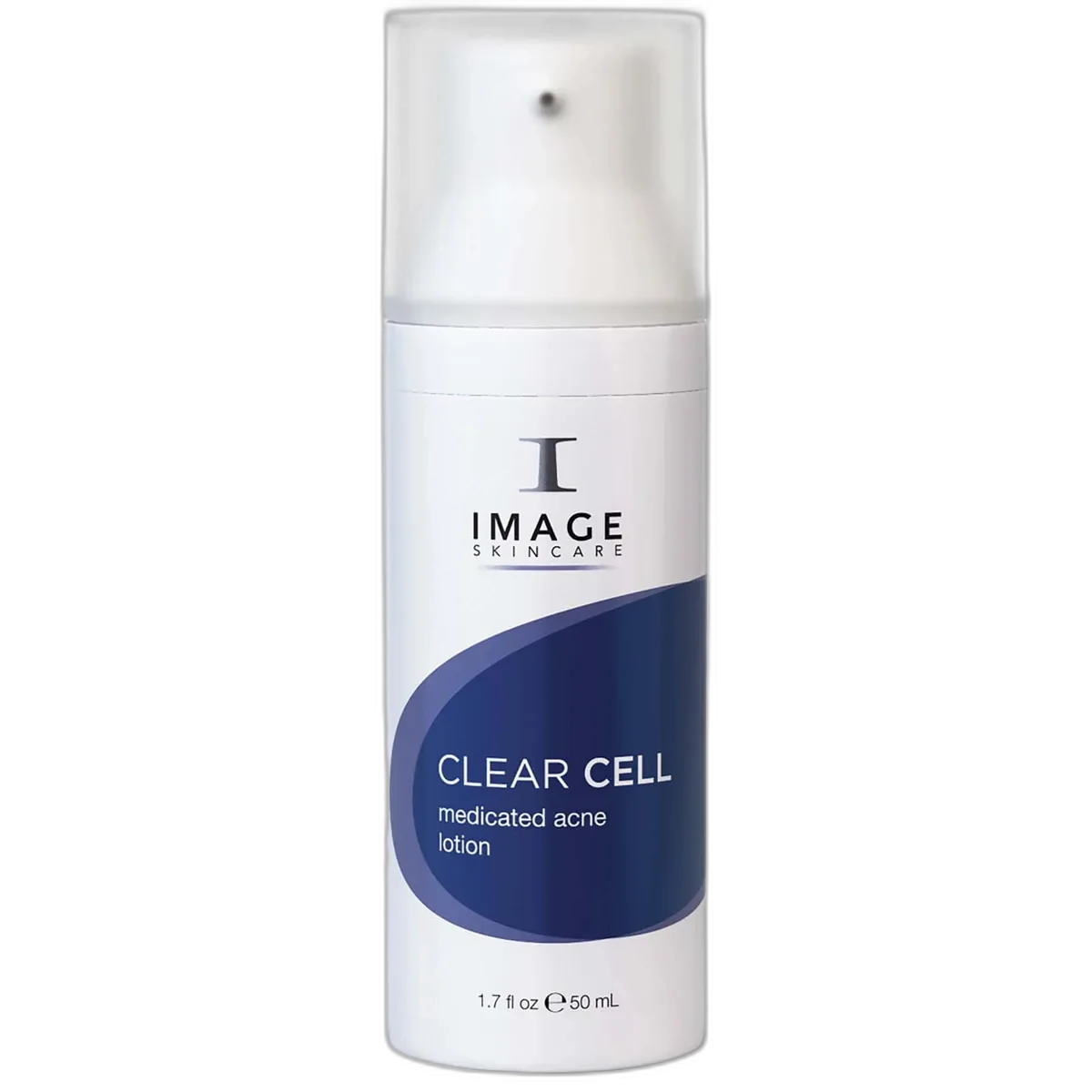
Clear Cell Medicated Acne Lotion
Professional Acne Fighter
 Verified reviewer
Pros & cons.
- +5% benzoyl peroxide at the evidence-based sweet spot for efficacy and tolerability
- +Antimicrobial peptide (Oligopeptide-10) provides dual-mechanism antibacterial action
- +Botanical complex with chamomile, arnica, and green tea buffers typical BP drying effects
- +Lightweight lotion texture absorbs cleanly and works under moisturizer and makeup
- +Appropriate for both spot treatment and full-face preventive application
- +Professional-grade formulation developed under medical oversight
- −Contains tea tree, spearmint, and eucalyptus essential oils — unnecessary sensitizers
- −Premium price at $44 for 1.7 oz when effective BP products cost a fraction
- −Significant drying and peeling still occurs in the first 1-2 weeks of use
- −Limited consumer reviews compared to mainstream acne treatments
- −Will bleach colored fabrics — an unavoidable trait of all benzoyl peroxide products
The full review.
Benzoyl peroxide has treated acne since the 1960s. It is not novel, and it will bleach your pillowcase if you are not careful. But it works reliably and predictably. Bacteria struggle to develop resistance to its mechanism, unlike antibiotics that lose effectiveness over time. The question for any new benzoyl peroxide product is not whether it kills acne bacteria—it will—but whether the formula justifies the price and packaging.
Image Skincare’s Clear Cell Medicated Acne Lotion makes a stronger case than most. Built for the professional skincare channel—the esthetician’s treatment room rather than the drugstore shelf—it wraps 5% benzoyl peroxide in a botanical and peptide framework. This addresses the main complaint about BP: it dries skin, causes peeling, and creates irritation while killing bacteria.
The formula uses caprylic/capric triglyceride as the primary emollient base. This lightweight, non-comedogenic carrier delivers the BP without the thick, paste-like texture found in many benzoyl peroxide products. The inclusion of Oligopeptide-10 is interesting; this antimicrobial peptide provides a second antibacterial mechanism alongside the BP. While benzoyl peroxide kills bacteria via oxidative stress, this peptide disrupts bacterial cell membranes. This dual approach follows the Image Skincare philosophy: use multiple mechanisms for comprehensive treatment.
The botanical list acts as an anti-inflammatory toolkit. Chamomile extract and lilac extract provide calming, anti-redness support. Arnica montana helps with inflammation. Green tea delivers antioxidant protection. Rice bran extract adds soothing properties. Together, they counter the drying effects of benzoyl peroxide. In practice, this formula feels less punishing than drugstore BP treatments. The lotion absorbs cleanly, leaves a matte finish that is not desert-dry, and avoids the immediate tightness many BP users fear.
However, some formula choices are harder to defend. Tea tree oil, spearmint oil, and eucalyptus oil are in the inactive list. Each has mild antimicrobial properties, but their contribution is negligible in a formula already containing 5% benzoyl peroxide and an antimicrobial peptide. They do add fragrance and sensitization risk. For acne-prone skin—which is often inflamed and sensitized—adding three documented skin sensitizer essential oils seems counterproductive. The calming botanicals fight inflammation while the essential oils may reignite it.
Performance on active breakouts is solid. When applied to inflamed pimples, the BP works within hours; an angry cystic bump can lose intensity overnight. Consistent use on acne-prone zones keeps bacterial populations low to prevent new breakouts. The botanical buffer reduces the worst drying effects, though significant peeling and flaking in the first one to two weeks remains normal. The formula works under moisturizer and makeup without pilling, making daytime use practical compared to heavy, white BP products.
The price is a factor. At approximately $44 for 1.7 ounces, this is a premium benzoyl peroxide lotion. The active ingredient is inexpensive and available in many formulations for much less. You pay for the formulation intelligence—the antimicrobial peptide, the botanical complex, the professional-grade vehicle—and the Image Skincare brand’s clinical credibility. For those buying through an esthetician as part of a treatment plan, the price fits a professional skincare investment. For retail shoppers, the math is harder to justify when effective 5% BP products cost under ten dollars.
Image Skincare has led professional skincare for over two decades, and the Clear Cell line shows their commitment to acne treatment. Under board-certified plastic surgeon Dr. Marc Ronert, the brand develops formulations with medical oversight most consumer brands lack. This pedigree matters if you value professional guidance and sophisticated formulation. But pedigree does not change the fact that a 5% benzoyl peroxide lotion is still a 5% benzoyl peroxide lotion.
For the right user—someone with moderate acne who wants professional-grade formulation, finds drugstore BP products too harsh, and will pay more for comfort—the Clear Cell Medicated Acne Lotion delivers. It does not reinvent benzoyl peroxide, but it makes using it more pleasant. Whether that comfort is worth three to four times the price of simpler alternatives is a personal calculation.
Ingredient analysis.
Full INCI list
Active: Benzoyl Peroxide 5%. Inactive: Aqua, Caprylic/Capric Triglyceride, Oligopeptide-10, Cetearyl Olivate, Syringa Vulgaris (Lilac) Extract, Chamomilla Recutita (Matricaria) Flower Extract, Oryza Sativa (Rice) Bran Extract, Sorbitan Olivate, Aloe Barbadensis Leaf Extract, Stearic Acid, Sucrose Cocoate, Tocopheryl Acetate, Maltodextrin, Melaleuca Alternifolia (Tea Tree) Leaf Oil, Mentha Viridis (Spearmint) Leaf Oil, Disodium EDTA, Eucalyptus Globulus Leaf Oil, Arnica Montana Flower Extract, Aesculus Hippocastanum (Horse Chestnut) Extract, Melia Azadirachta Leaf Extract, Boswellia Serrata Extract, Honey Extract, Camellia Sinensis Leaf Extract, Potassium Sorbate, Sodium Benzoate, Butylene Glycol, Phenoxyethanol, Caprylyl Glycol, Hexylene Glycol
Skin match.
The science.
The Science
Benzoyl peroxide's mechanism against acne is well-documented. BP generates free radicals that destroy Cutibacterium acnes by oxidatively damaging bacterial proteins and lipids. Because this mechanism uses non-specific oxidative destruction instead of a targeted antibiotic pathway, bacteria have not developed meaningful resistance to BP despite decades of use — a clear advantage over topical antibiotics like clindamycin.
The 5% concentration in this formula follows a pivotal study in the Journal of the American Academy of Dermatology (Mills et al., 1986). That study showed 2.5%, 5%, and 10% benzoyl peroxide produced equivalent reductions in acne lesion counts, but lower concentrations caused significantly less skin irritation. This finding is consistently replicated, so dermatologists most commonly recommend 5%.
Oligopeptide-10 adds a complementary antibacterial mechanism. Antimicrobial peptides (AMPs) kill bacteria by disrupting cell membrane integrity — a different pathway than BP's oxidative approach. While clinical data on Oligopeptide-10 specifically is limited, in vitro studies show the broader class of antimicrobial peptides works against acne bacteria. Research in the Journal of Investigative Dermatology highlights their potential as adjuncts to conventional acne therapies.
Green tea extract (EGCG) has anti-inflammatory and sebum-regulating properties for acne treatment. A study in the Journal of Investigative Dermatology (Yoon et al., 2013) showed topical EGCG application reduced sebum production and improved acne lesion counts in a randomized controlled trial, supporting its use as a functional botanical in this acne-focused formula.
References
- Comparison of 2.5%, 5%, and 10% benzoyl peroxide on inflammatory acne vulgaris — International Journal of Dermatology (1986)
Dermatologist Perspective
Dermatologists consider benzoyl peroxide a first-line treatment for mild to moderate inflammatory acne, and the 5% concentration in this product follows evidence-based recommendations. Board-certified dermatologists note that the dual antibacterial approach — combining BP with an antimicrobial peptide — is a reasonable strategy for acne management, though the peptide's contribution is secondary to the well-proven BP. The botanical support ingredients (chamomile, green tea, arnica) have anti-inflammatory properties that may improve tolerability. However, most dermatologists prefer formulas without essential oils, as they add sensitization risk without therapeutic benefit. For patients under professional skincare guidance, this is a solid BP treatment option, though dermatologists note that equally effective options exist at lower price points.
Guidance
Where it fits in your routine.
Apply once daily to clean, dry skin. Spread a thin, even layer over acne-prone areas or use as a spot treatment on breakouts. Let it absorb for 1-2 minutes before you apply moisturizer and sunscreen. Increase to twice daily (morning and evening) as skin tolerates. If skin peels or feels dry, use it every other day and buffer with a hydrating moisturizer applied first. Always use sunscreen during the day. Warning: benzoyl peroxide bleaches fabrics — use white pillowcases and towels.
At $44 for 1.7 oz, this is a professional-grade treatment, not a mass-market acne product. The price gap over drugstore BP products is large; 5% benzoyl peroxide lotions cost $5-15. The antimicrobial peptide, botanical anti-inflammatory complex, and lighter, more cosmetically elegant vehicle justify the markup. For professional skincare clients buying through an esthetician as part of a treatment plan, the price fits a broader investment. The value proposition is weaker for general consumers. Image Skincare's 20+ years in the professional channel and medical oversight add credibility, but the active ingredient is ubiquitous and inexpensive.
This formula suits people with moderate inflammatory acne who find basic drugstore BP products too drying or irritating and want botanical support. It works best for oily and combination skin types seeking professional-grade treatment, especially those using an acne management plan with an esthetician.
The combination of benzoyl peroxide and essential oils is too aggressive for dry, sensitive, or reactive skin. Budget-conscious users can find equally effective 5% BP products at lower prices. People with essential oil sensitivities must avoid this formula because it contains tea tree, spearmint, and eucalyptus oils.
Product details.
Tea tree, spearmint, and eucalyptus essential oils create a noticeable herbal scent.
Standard 1.7 oz tube uses Image Skincare's clinical Clear Cell branding. This tube packaging keeps benzoyl peroxide stable. Finish mattelightweight
Expect mild tingling from the benzoyl peroxide on first use; this is normal. Active breakouts dry out and flatten within hours of application. Peeling or flaking is common during the first 1-2 weeks as skin adjusts to the BP. Start with once daily and increase to twice daily as tolerated. Note: benzoyl peroxide bleaches fabrics, so use white pillowcases and avoid colored clothing.
2-3 months with twice-daily use over the full face
12 months
All Year
The backstory.
The Clear Cell line is Image Skincare's acne-focused collection, developed for estheticians treating moderate-to-severe acne in clinical settings. This medicated lotion fills the role of a professional-grade benzoyl peroxide treatment that could be sent home with patients between facial treatments, offering more formulation sophistication than drugstore BP products while maintaining the proven active ingredient that dermatologists have trusted for decades.
About Image Skincare
Established Brand (5–20 years)Image Skincare was founded in 2003 by aesthetician Janna Ronert and board-certified plastic surgeon Dr. Marc Ronert. The brand is the #1 professional skincare brand in the global spa and salon category, with formulations developed under medical direction and sold primarily through licensed professionals.
Common myths.
Higher percentages of benzoyl peroxide work better for acne.
Research shows 2.5% and 5% benzoyl peroxide reduce acne as well as 10% but cause less irritation and dryness. This formula's 5% concentration reaches the evidence-based sweet spot for efficacy without unnecessary skin damage.
You should only use benzoyl peroxide as a spot treatment.
Spot treatment works for individual breakouts, but a thin layer of BP across acne-prone zones prevents new breakouts by reducing bacterial populations before they colonize pores. This lotion works for both approaches.
FAQ.
What percentage of benzoyl peroxide is in Image Skincare Clear Cell Medicated Acne Lotion?
This product uses 5% benzoyl peroxide as the active ingredient. Research shows this moderate concentration works as well as higher percentages (like 10%) but causes less dryness and irritation. The formula also includes an antimicrobial peptide (Oligopeptide-10) for more antibacterial activity.
Can I use this acne lotion with retinol?
Do not use them in the same routine. Benzoyl peroxide degrades retinol on contact, and combining them increases irritation risk. Use this lotion in the morning and retinol at night, or alternate days. The 5% BP in this product and the essential oils already make a potent formula — adding retinol at the same time overwhelms the skin.
Will this product bleach my clothes or towels?
Yes — benzoyl peroxide bleaches any fabric it touches, regardless of concentration. Use white towels and pillowcases with this product, and let it absorb fully before touching colored fabrics. This property belongs to the active ingredient, not this formulation.
How long does it take for this acne lotion to work?
Active breakouts dry and flatten within 24-48 hours of application. Consistent use shows broader improvement in breakout frequency and skin clarity within 4-6 weeks. Initial dryness and flaking is normal as skin adjusts to the benzoyl peroxide.
Is this safe to use during pregnancy?
Most dermatologists consider Benzoyl peroxide safe during pregnancy because systemic absorption is minimal and it is FDA Pregnancy Category C. But this formula also contains essential oils (tea tree, spearmint, eucalyptus) that some practitioners advise avoiding during pregnancy. Consult your OB-GYN or dermatologist for personalized guidance.
Community
What the community says.
"Effectively reduces active breakouts within days"
"Less drying than many other benzoyl peroxide products"
"Works well as both spot treatment and full-face application"
"Noticeable brightening of acne marks and redness"
"Can cause significant drying and flaking, especially initially"
"Expensive for a benzoyl peroxide product at $44 for 1.7 oz"
"Essential oil scent may irritate sensitive noses"
"Some users report scab-like dryness over treated spots"
People also looked at.