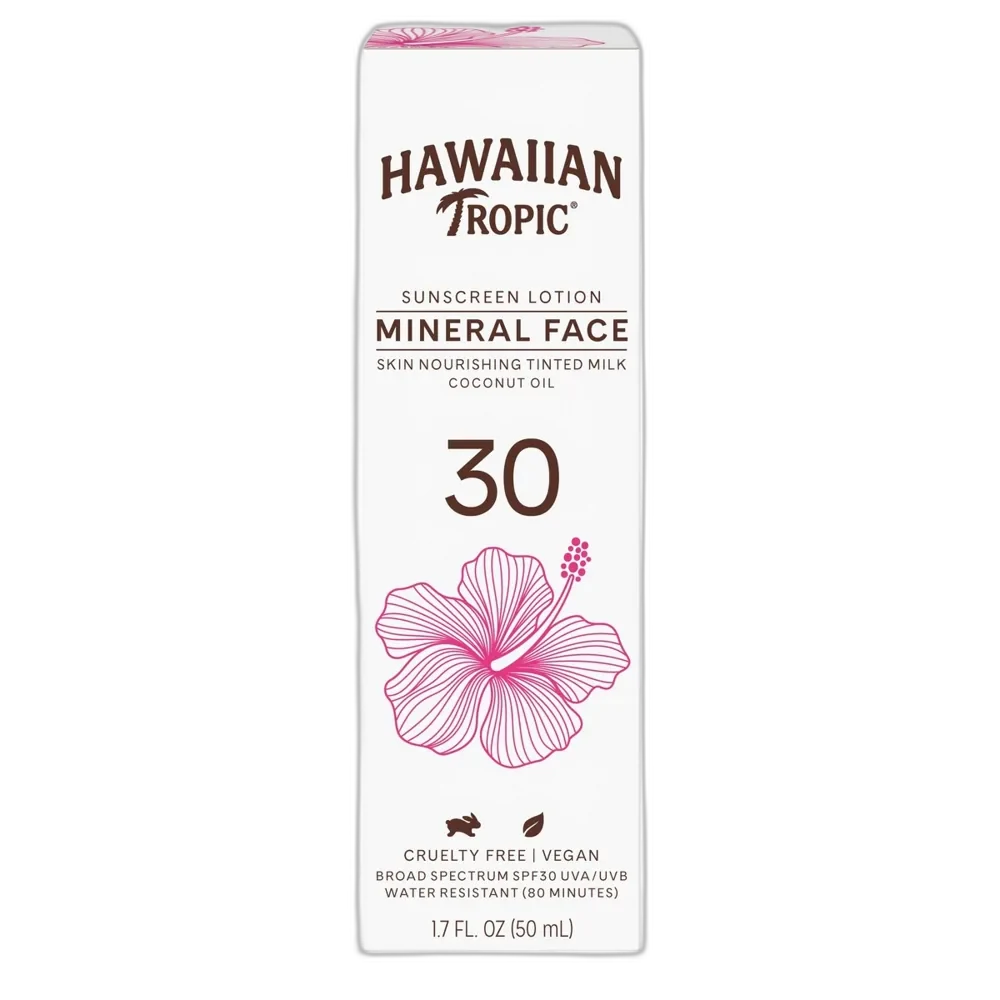
Mineral Skin Nourishing Milk SPF 30
Mineral Sunscreen Made Wearable
 Verified reviewer
Pros & cons.
- +100% mineral active ingredients — no chemical UV filters whatsoever
- +Milky texture is genuinely more spreadable than typical mineral sunscreens
- +Kukui nut oil provides authentic Hawaiian botanical nourishment
- +Coconut oil and glycerin deliver real moisturizing benefits
- +Broad-spectrum SPF 30 from zinc oxide and titanium dioxide combination
- +Iron oxides provide slight tinting to help reduce white cast
- −Contains fragrance despite targeting the mineral-sunscreen audience
- −Alcohol denat can be drying and irritating for sensitive skin types
- −Noticeable white cast on medium to dark skin tones
- −Smaller tube size (3.4 oz) at higher per-ounce cost than chemical alternatives
- −Coconut oil may trigger breakouts in acne-prone individuals
- −Contains mineral oil which some consumers prefer to avoid
The full review.
Hawaiian Tropic built its identity on products that smelled like tropical vacations and maximized tanning. The Mineral Skin Nourishing Milk SPF 30 acts as the brand’s atonement—a mineral-only sunscreen designed to prevent the sun damage its original products once caused. It is also a notable formulation; making a mineral sunscreen feel pleasant is a harder engineering challenge than making a chemical one.
The active ingredients are 6.7% zinc oxide and 4.9% titanium dioxide. This is a 100% mineral formula with no chemical UV filters. Zinc oxide provides broad-spectrum UVA and UVB protection, while titanium dioxide excels at UVB and short-wave UVA blocking. Together, they create a physical barrier that reflects and scatters UV radiation before it reaches living skin cells. The mineral approach is the gentlest sun protection mechanism: no chemical absorption or heat-generating molecular reactions, just inert particles deflecting photons.
Texture
The texture justifies the name. Traditional mineral sunscreens are thick, white, hard to spread, and leave a chalky appearance. Hawaiian Tropic uses a silicone-based emulsifier system (cetyl PEG/PPG-10/1 dimethicone, lauryl PEG-8 dimethicone) to suspend mineral particles in a fluid, milky vehicle that flows from the tube instead of squeezing out like paste. The resulting lotion spreads with minimal resistance and blends into skin easier than most mineral competitors at this price point.
The nourishment is real. Coconut oil and kukui nut oil (Aleurites moluccanus seed oil) provide emollient richness to prevent the drying, tightening sensation common in mineral sunscreens. Kukui nut oil is a thoughtful choice—it is native to Hawaii, used in traditional Hawaiian skincare for centuries, and provides anti-inflammatory, lightweight linoleic and alpha-linolenic fatty acids. Glycerin adds humectant hydration. Caprylic/capric triglyceride provides more lightweight emollience. The skin feels nourished, not just coated.
The white cast is inescapable. At 11.6% combined mineral concentrations, a visible white layer remains. The milky formulation reduces this compared to thick mineral creams, and iron oxides in the formula provide slight tinting that helps, but a noticeable white or grayish cast persists on medium to dark skin tones even after thorough blending. This is not a formulation failure—it is a fundamental limitation of mineral UV filters at concentrations required for SPF 30 protection. Tinted mineral sunscreens solve this, and Hawaiian Tropic makes a tinted facial version.
The formula contains contradictions. It includes fragrance and alcohol denat—two ingredients many consumers switching to mineral sunscreen specifically avoid. Mineral sunscreen buyers often seek ingredient sensitivity, reef safety, or cleaner formulations. Adding synthetic fragrance and denatured alcohol to a mineral formula creates cognitive dissonance: you choose the gentlest UV filter approach but undermine it with unnecessary irritants in the base. The fragrance is subtler than Hawaiian Tropic’s chemical sunscreens but still smells tropical. The alcohol denat likely aids the spreadable milky texture but can dry the skin, especially for the dry-skin consumers the nourishing oils target.
The packaging is a 3.4-ounce tube—smaller than the brand’s 8-ounce chemical sunscreen bottles. At roughly twelve dollars, the per-ounce cost ($3.53) is more than triple the Everyday Active SPF 30 ($1.12/oz). This premium reflects higher mineral UV filter formulation costs and smaller-batch production, meaning generous application—essential for effective sun protection—costs more.
For consumers seeking a mineral sunscreen from a trusted, affordable brand, this is a pleasant drugstore option. The milky texture solves the spreadability problem that prevents many from using mineral sunscreen. The nourishing oil blend delivers real conditioning. The price is reasonable for a mineral product, though less competitive than the brand’s chemical options. However, the fragrance and alcohol denat are missed opportunities; removing them would align the product fully with its audience’s values.
This is a mineral sunscreen for people who want the Hawaiian Tropic experience more than a strictly clean formula. For those users, it delivers. For the fragrance-free, minimal-ingredient mineral seeker, the search continues.
Ingredient analysis.
Full INCI list
Active Ingredients: Titanium Dioxide 4.9%, Zinc Oxide 6.7%. Inactive Ingredients: Water, C12-15 Alkyl Benzoate, Glycerin, Caprylic/Capric Triglyceride, Cetyl PEG/PPG-10/1 Dimethicone, Dimethicone, Lauryl PEG-8 Dimethicone, Stearyl/Octyldodecyl Citrate Crosspolymer, Polyhydroxystearic Acid, Sodium Chloride, Alcohol Denat, Cocos Nucifera (Coconut) Oil, Phenoxyethanol, Stearalkonium Bentonite, Caprylyl Glycol, Fragrance, Alumina, Propylene Carbonate, Aleurites Moluccanus Seed Oil, Ethylhexylglycerin, Triethoxycaprylylsilane, Mica, Mineral Oil, Psidium Guajava Fruit Extract, Plumeria Acutifolia Flower Extract, Passiflora Incarnata Fruit Extract, Mangifera Indica (Mango) Fruit Extract, Carica Papaya (Papaya) Fruit Extract, Iron Oxides
Skin match.
The science.
The Science
This formula uses two inorganic UV filters. Zinc oxide absorbs across the UV spectrum, protecting from UVB (290-320 nm) through UVA-II (320-340 nm) and into UVA-I (340-400 nm). Titanium dioxide has a narrower absorption profile for UVB and short-wave UVA, with protection dropping above approximately 340 nm. Using both minerals creates a complementary spectrum: titanium dioxide's strong UVB absorption supplements zinc oxide's broader UVB coverage, while zinc oxide extends the UVA protection range titanium dioxide alone cannot cover.
Modern sunscreen mineral particles are typically micronized (100-300 nm) or nano-sized (<100 nm). The iron oxides in this formula do two things: they tint the formula to reduce white cast, and research in the Journal of the American Academy of Dermatology (2019) shows iron oxides significantly enhance protection against visible light (400-700 nm). Neither zinc oxide nor titanium dioxide effectively blocks this wavelength, which exacerbates hyperpigmentation in darker skin tones.
The silicone-based emulsifier system (cetyl PEG/PPG-10/1 dimethicone) creates the milky texture by coating mineral particles with silicone polymers. This improves dispersibility in the vehicle and stops mineral particles from aggregating—the cause of the thick, pasty texture and uneven white cast in simpler mineral formulations.
Dermatologist Perspective
Board-certified dermatologists often call mineral sunscreens the gold standard for patients with sensitive skin, rosacea, or chemical sunscreen intolerance because inorganic UV filters sit on the skin surface without being absorbed. Dermatologists would commend the 100% mineral approach and the iron oxides for visible light protection. However, dermatologists specializing in contact dermatitis would flag the fragrance as problematic for a formula targeting patients avoiding chemical irritants. The alcohol denat may also sting compromised skin. For patients with melasma, the iron oxide inclusion adds meaningful protection against visible light-induced pigmentation—a growing area of dermatological focus.
Where it fits in your routine.
Shake well before use. Apply a nickel-sized amount to the face and neck, or a thick layer to all exposed body areas, 15 minutes before sun exposure. Press and pat to blend instead of rubbing — this reduces white cast from mineral formulas. Reapply every 2 hours, or after swimming, sweating, or towel-drying. Double-cleanse at night to remove all mineral particles.
At approximately $11.99 for 3.4 ounces ($3.53/oz), this costs more than Hawaiian Tropic's chemical sunscreens. It stays competitive in the mineral sunscreen category, where drugstore options usually cost $3-5 per ounce. The nourishing oil blend (kukui nut, coconut) adds skin-conditioning value that justifies the premium over basic zinc oxide formulas. One tube lasts 3-5 weeks for face-only daily use. Full-body application empties it quickly. Budget-conscious consumers needing generous full-body mineral protection may want to use this for the face and pair it with a larger, less expensive body sunscreen.
Consumers want mineral-only sun protection from a trusted mass-market brand. It provides the Hawaiian Tropic sensory experience without chemical UV filters. The nourishing oil blend works for normal to dry skin types. It also suits those who prefer mineral actives for reef safety.
Fragrance sensitivities make this a poor choice despite the mineral actives. The coconut oil content can trigger acne-prone and oily skin. Users frustrated by white cast on darker skin tones may prefer a tinted mineral or chemical alternative. The per-ounce cost is too high for budget-conscious users needing large volumes for full-body protection. The fragrance and alcohol denat will disappoint anyone expecting a fragrance-free, clean-ingredient mineral sunscreen.
Product details.
Fluid, milky white lotion with a thinner consistency than typical mineral sunscreens — spreads easily
Subtle tropical coconut and floral fragrance, less intense than the brand's chemical sunscreens
3.4 fl oz squeezable tube with a flip-top cap. This size works for travel. A spray format is also available.
The milky texture differs from typical thick mineral sunscreens — it flows and spreads easily. Rub thoroughly to minimize white cast. Once blended, it leaves a dewy, nourished finish. The coconut oil and kukui nut oil leave skin feeling soft and conditioned.
3-5 weeks with daily facial and neck application; shorter for full-body use
12 months
All Year
The backstory.
The Mineral Skin Nourishing Milk represents Hawaiian Tropic's response to growing consumer demand for mineral-only sunscreens — driven by reef-safety concerns and chemical filter avoidance. Rather than simply dropping chemical filters into a basic zinc oxide cream, the brand developed a milky delivery system designed to address the texture and white-cast complaints that keep many consumers from switching to mineral sunscreen. The kukui nut oil inclusion nods to the brand's Hawaiian roots in a more meaningful way than most of its tropical marketing.
About Hawaiian Tropic
Legacy Brand (20+ years)Ron Rice founded Hawaiian Tropic in 1969 in Daytona Beach, Florida. Edgewell Personal Care now owns the brand, which has over five decades of sunscreen formulation experience. The Mineral line marks the brand's entry into the 100% mineral sunscreen category.
Common myths.
Mineral sunscreens are always thick and chalky
Modern mineral formulations like this one use silicone emulsifiers and lightweight oils for fluid, spreadable textures. The milky consistency is thinner than traditional zinc oxide creams, but some white cast remains an inherent limitation of mineral UV filters.
Mineral sunscreens are always better for sensitive skin
Zinc oxide and titanium dioxide are gentle, but this formula adds fragrance and alcohol denat, which irritates sensitive skin. A mineral sunscreen is sensitive-skin-friendly only if the inactive ingredients are also gentle — check the full formula, not just the active ingredients.
FAQ.
Is Hawaiian Tropic Mineral Skin Nourishing Milk truly reef-safe?
The 100% mineral active ingredients (zinc oxide and titanium dioxide) are the most reef-friendly UV filters available. However, some inactive ingredients in the formula lack marine environmental impact assessments. For the strictest reef-safety standards, use sunscreens with certifications like the Protect Land + Sea certification.
Does Hawaiian Tropic Mineral Milk leave a white cast?
Yes, a white cast exists—this happens with all mineral sunscreens at concentrations high enough for SPF 30 protection. The milky formulation minimizes it compared to thick zinc oxide creams, but medium to dark skin tones will likely see a visible white cast. Thorough blending reduces it. The formula also uses iron oxides to provide a slight tint.
Is this sunscreen good for sensitive skin?
Zinc oxide and titanium dioxide are some of the gentlest mineral UV filters. This formula contains fragrance and alcohol denat, which can irritate sensitive or reactive skin. Sensitive skin needs a mineral sunscreen that is also fragrance-free and alcohol-free.
Can I use Hawaiian Tropic Mineral Milk on my face?
The milky texture works for both face and body. Coconut oil may cause breakouts in acne-prone skin, so patch-test if you have oily or acne-prone facial skin. The brand makes a dedicated facial version of this product.
Why does a mineral sunscreen contain fragrance?
Hawaiian Tropic uses its signature tropical scent in all product lines, including mineral formulations. This preserves the brand's sensory identity but adds potential irritants to formulas many consumers buy for gentleness. A fragrance-free mineral option would better suit the sensitive-skin audience.
What the community says.
"Milky spreadable texture is unusual and pleasant for mineral sunscreen"
"Nourishing feel — doesn't dry out skin like many mineral formulas"
"100% mineral actives for those avoiding chemical filters"
"Tropical botanical blend feels luxurious for the price"
"Noticeable white cast, especially on darker skin tones"
"Contains fragrance despite being mineral (seems contradictory)"
"Alcohol denat in a mineral formula may irritate sensitive users"
"Smaller tube size means higher cost per ounce than chemical alternatives"
"Coconut oil may trigger breakouts for acne-prone skin"
Featured in.
People also looked at.