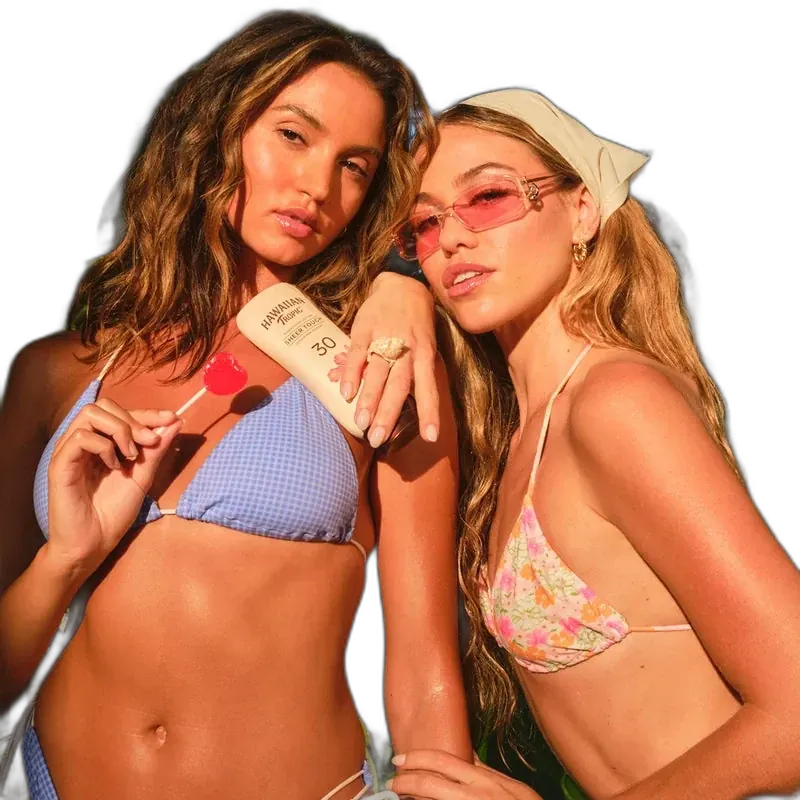
Everyday Active Lotion SPF 30
Beach Day Budget Pick
 Verified reviewer
Pros & cons.
- +Oxybenzone-free reformulation addresses reef-safety and exposure concerns
- +SPF 30 broad-spectrum provides excellent everyday UVA/UVB protection
- +80-minute water and sweat resistance ideal for active outdoor use
- +Excellent value at under $9 for 8 ounces of sunscreen
- +Tropical botanical blend adds genuine moisturizing and antioxidant benefits
- +Minimal white cast thanks to chemical (not mineral) UV filters
- +Pleasant tropical fragrance makes daily sunscreen application enjoyable
- −Fragrance limits suitability for sensitive or fragrance-reactive skin
- −Older-generation US-approved UV filters lag behind European/Asian options
- −Can feel slightly tacky in high humidity conditions
- −May pill when layered under makeup or other facial products
- −Not ideal as a dedicated facial sunscreen for cosmetically demanding users
The full review.
Hawaiian Tropic has a complicated relationship with dermatology. For much of its history, the brand mostly made sun damage smell like coconut. Ron Rice founded the brand in 1969—he famously mixed his first batch of tanning oil in a garbage can—and Hawaiian Tropic became synonymous with the bronzed beach culture of the seventies and eighties. When the link between UV exposure and skin cancer became undeniable, the brand pivoted. The Everyday Active line shows this shift: a water-resistant, broad-spectrum sport sunscreen for people who want protection, not just fragrance.
The UV filter system uses three chemical actives. Avobenzone at 2.2% handles UVA protection—the long-wavelength radiation that penetrates deep into skin, causing photoaging, collagen degradation, and melanoma risk. Homosalate at 7% provides the primary UVB shield to prevent sunburn. Octocrylene at 4.2% works as both a UVB absorber and a photostabilizer for avobenzone. This second role is vital: avobenzone degrades under the UV light it absorbs, and without octocrylene, the UVA protection drops significantly within the first hour of sun exposure.
This three-filter combination is the standard American approach to broad-spectrum SPF 30 protection. It is effective, well-understood, and has decades of real-world data on safety and efficacy. However, it lags behind modern global sunscreen standards. European and Asian sunscreens use newer-generation UV filters like Tinosorb S and Tinosorb M for broader protection and better photostability. American consumers face an FDA approval framework that has not cleared a new UV filter since 1999, so formulas like this do the best they can with allowed ingredients.
Crucially, this formula removed oxybenzone—the chemical filter that caused the most consumer concern over the last decade due to its environmental impact on coral reefs and its ability to absorb through skin into the bloodstream. Whether the health concern is warranted at realistic exposure levels is still debated in the dermatological community, but the reformulation responds to consumer preference and the precautionary principle.
Moisturizing and botanical components move this beyond a pure-utility sunscreen. Mango seed butter provides emollient richness and antioxidant support. Papaya, passionfruit, plumeria, and guava extracts mostly affect the sensory experience—they make this sunscreen smell and feel pleasant to apply. Panthenol and glycerin add conditioning and hydration. Dimethicone ensures a smooth application and helps the UV filter film distribute evenly.
On the skin, the texture is a conventional white lotion that spreads with good slip and absorbs within two to three minutes. There is minimal white cast—the chemical filters absorb UV instead of reflecting it, so the white-cast issue seen in mineral sunscreens is absent. The finish is semi-matte and non-sticky once set, though some users report slight tackiness in high humidity.
The tropical fragrance is unmistakably Hawaiian Tropic. It is coconut-forward with fruity floral notes—a scent that triggers beach nostalgia. For some, this is the point: wearing Hawaiian Tropic is a sensory ritual, not just a health measure. For others—especially those with fragrance sensitivities or those applying sunscreen under other products—the fragrance is a limitation. It is present and persistent enough to smell for at least thirty minutes after application.
Water and sweat resistance is rated at 80 minutes, the maximum claim allowed under FDA testing guidelines. Heavy swimming or toweling will reduce this in practice. Reapplication after water exposure is non-negotiable.
The 8-ounce bottle offers excellent value at roughly nine dollars. If you apply the recommended amount for full-body coverage (about one ounce per application), the bottle lasts approximately eight applications—meaning you will use it quickly during a beach weekend. For daily commuter use on exposed skin, it lasts much longer. Larger 10.8-ounce bottles are also available.
As a daily sunscreen for someone who is not fussy about cosmetic elegance, this works well. As a beach, pool, or outdoor activity sunscreen, the water resistance and large format make it practical. As a facial sunscreen for someone who wears makeup or prefers a weightless, fragrance-free finish, better options exist. Hawaiian Tropic knows its audience—this is for people who want protection they can feel good about wearing, with a scent that makes the protection feel like a mini-vacation rather than medicine.
Formula
Ingredient analysis.
Full INCI list
Active Ingredients: Avobenzone 2.2%, Homosalate 7%, Octocrylene 4.2%. Inactive Ingredients: Water, Diisopropyl Adipate, Cetearyl Alcohol, Glycerin, Phenoxyethanol, Benzyl Alcohol, Acrylates/C12-22 Alkyl Methacrylate Copolymer, Fragrance, C12-15 Alkyl Benzoate, Acrylates/C10-30 Alkyl Acrylate Crosspolymer, Ceteth-10 Phosphate, Dicetyl Phosphate, Coco-Glucoside, Chlorphenesin, Dimethicone, Xanthan Gum, Sodium Hydroxide, Disodium EDTA, Tocopheryl Acetate, Mangifera Indica (Mango) Seed Butter, Carica Papaya (Papaya) Fruit Extract, Mangifera Indica (Mango) Fruit Extract, Passiflora Incarnata Fruit Extract, Plumeria Acutifolia Flower Extract, Psidium Guajava Fruit Extract, Panthenol
Skin match.
The science.
The Science
The UV filter system in this formula uses a well-characterized approach to broad-spectrum protection. Avobenzone (butyl methoxydibenzoylmethane) absorbs across the UVA spectrum, peaking around 360 nm — the UVA-I range linked to dermal photoaging and melanoma risk. Avobenzone's main limit is photolability: it degrades under UV exposure without stabilization. Octocrylene acts as the photostabilizer. It absorbs excited-state energy from avobenzone before degradation occurs, a mechanism documented in the Journal of the American Academy of Dermatology.
Homosalate absorbs in the UVB range (290-315 nm) to prevent the erythema (sunburn) that determines the SPF rating. At 7%, it stays below the FDA-permitted maximum of 15% and provides effective UVB attenuation.
Multiple published works have studied the octocrylene-avobenzone photostabilization system. A 2009 paper in Photochemistry and Photobiology confirmed that octocrylene extends avobenzone's UVA protective capacity over several hours of UV exposure, maintaining the broad-spectrum designation during typical outdoor use.
This formula omits oxybenzone (benzophenone-3). A 2020 FDA study in JAMA found oxybenzone absorbs into the bloodstream at levels above the FDA's threshold for waived safety testing. While the clinical significance of systemic absorption is uncertain, omitting it follows the precautionary approach favored by consumers and some regulatory bodies.
Dermatologist Perspective
Board-certified dermatologists recommend any broad-spectrum SPF 30+ sunscreen applied consistently and in adequate quantity. This product meets core dermatological requirements: broad-spectrum designation, adequate SPF, and water resistance for outdoor activity. The three-filter chemical system is well-established and effective for most people. However, dermatologists treating patients with rosacea, photodermatoses, or chemical sunscreen sensitivities recommend mineral alternatives. The fragrance is an unnecessary addition from a dermatological standpoint — all fragrance compounds carry sensitization risk, and dermatologists generally prefer fragrance-free sun protection.
Where it fits in your routine.
Apply generously to all exposed skin 15 minutes before sun exposure. Use about one ounce (a full shot glass) for full-body coverage. Use a nickel-sized amount for face and neck. Reapply every 2 hours, or immediately after swimming, sweating, or towel-drying. For best results, apply to dry skin and wait 2-3 minutes to absorb before water exposure. Don't forget ears, back of neck, tops of feet, and the part in your hair.
At approximately $8.97 for 8 fluid ounces, this is one of the best values in the sunscreen market. The $1.12 per ounce cost is lower than most facial sunscreens and matches other mass-market body sunscreens. The larger 10.8 oz option has even better per-ounce value. For families or individuals who apply sunscreen frequently — beach days, outdoor sports, daily commutes — the low price makes proper application quantity and frequent reapplication affordable. Hawaiian Tropic's legacy brand positioning and Edgewell's manufacturing scale keep the price low without changing UV filter concentrations or water resistance.
This sunscreen works for affordable, reliable daily wear, beach days, or outdoor activities. It suits families who want to protect multiple people without a premium price. The tropical scent helps users apply it consistently. The 80-minute water resistance rating makes it suitable for sport and water activities.
People with fragrance sensitivities or sensitive/rosacea-prone skin should use fragrance-free alternatives. This formula is too heavy and fragrant for those seeking a cosmetically elegant facial sunscreen to wear under makeup. Those wanting mineral (zinc oxide/titanium dioxide) sun protection for reef-safety or chemical-free preference should look elsewhere. This is not recommended for babies or very young children.
Product details.
Lightweight white lotion absorbs into a semi-matte finish with minimal white cast
Classic Hawaiian Tropic tropical fragrance — coconut, plumeria, and fruit notes
Squeezable plastic bottle (8 fl oz) has a flip-top cap. This large format works for body application. A 10.8 fl oz size is also available.
Spreads easily with good slip. The tropical scent is noticeable but not overwhelming. It absorbs within 2-3 minutes to a comfortable, non-sticky finish. The formula feels light and non-occlusive on skin.
2-4 weeks with daily full-body application; longer if used on face only
12 months
spring summer
The backstory.
Hawaiian Tropic was born in 1969 when Ron Rice started mixing coconut oil and cocoa butter suntan lotion in a garbage can in his garage in Daytona Beach. The brand defined the tanning oil era — which, in hindsight, was not dermatology's finest hour. The Everyday Active line represents Hawaiian Tropic's evolution toward serious sun protection while retaining the tropical sensory experience that made the brand iconic. The oxybenzone-free reformulation reflects growing consumer awareness of both reef safety and personal chemical exposure concerns.
About Hawaiian Tropic
Legacy Brand (20+ years)Ron Rice founded Hawaiian Tropic in 1969 in Daytona Beach, Florida. Edgewell Personal Care now owns the brand, which has over five decades of sunscreen formulation experience. Hawaiian Tropic started with tanning oils but now uses modern UV filter systems for broad-spectrum sun protection.
Common myths.
Chemical sunscreens are dangerous because they absorb into the bloodstream
FDA studies show chemical sunscreen ingredients in blood, but at levels far below known toxicity thresholds. Dermatologists agree the proven harm of UV exposure outweighs the theoretical risk of sunscreen ingredient absorption. This formula removes oxybenzone, the most scrutinized chemical filter.
SPF 30 is only half as protective as SPF 60
SPF 30 blocks about 97% of UVB rays, and SPF 60 blocks about 98.3%. This difference is marginal. Application amount matters more (use a full shot glass for the body) and reapplication every 2 hours. SPF 30 offers excellent protection if applied correctly.
FAQ.
Is Hawaiian Tropic Everyday Active SPF 30 reef-safe?
This formula is oxybenzone-free, addressing a primary reef-toxicity concern. It contains octocrylene and homosalate, which some environmental organizations flag. It lacks an official reef-safe certification. Mineral sunscreens with zinc oxide or titanium dioxide offer maximum reef safety.
How long is Hawaiian Tropic Everyday Active SPF 30 water-resistant?
The formula lasts up to 80 minutes of water and sweat resistance per FDA testing standards. Reapply immediately after 80 minutes of water exposure, swimming, or heavy sweating. Reapply every 2 hours on dry land.
Can I use Hawaiian Tropic Everyday Active SPF 30 on my face?
Yes, but it is primarily a body sunscreen. The lotion formula works on the face, but the fragrance and thick texture may not suit people who prefer lightweight, cosmetically elegant facial sunscreens. A dedicated face SPF may feel more comfortable under makeup for daily facial use.
Does Hawaiian Tropic Everyday Active SPF 30 contain oxybenzone?
No, this formula is oxybenzone-free. The UV filter system uses avobenzone (UVA protection), homosalate (UVB), and octocrylene (UVB + photostabilizer) instead.
How much Hawaiian Tropic sunscreen should I apply?
Use about one ounce (a shot glass full) for full-body coverage. Use a nickel-sized amount for the face and neck alone. Most people under-apply sunscreen by 50-75%, which reduces the actual protection. The 8 fl oz bottle lasts about 8 full-body applications.
What the community says.
"Pleasant tropical scent that feels like vacation"
"Non-greasy formula absorbs well"
"Excellent value per ounce compared to premium sunscreens"
"Water and sweat resistant for active use"
"Doesn't sting eyes during sweating"
"Fragrance may bother those who prefer unscented sunscreen"
"Can pill under makeup or other products"
"Some users report it feels heavy in humid weather"
"Chemical filters may irritate very sensitive skin"
Featured in.
People also looked at.