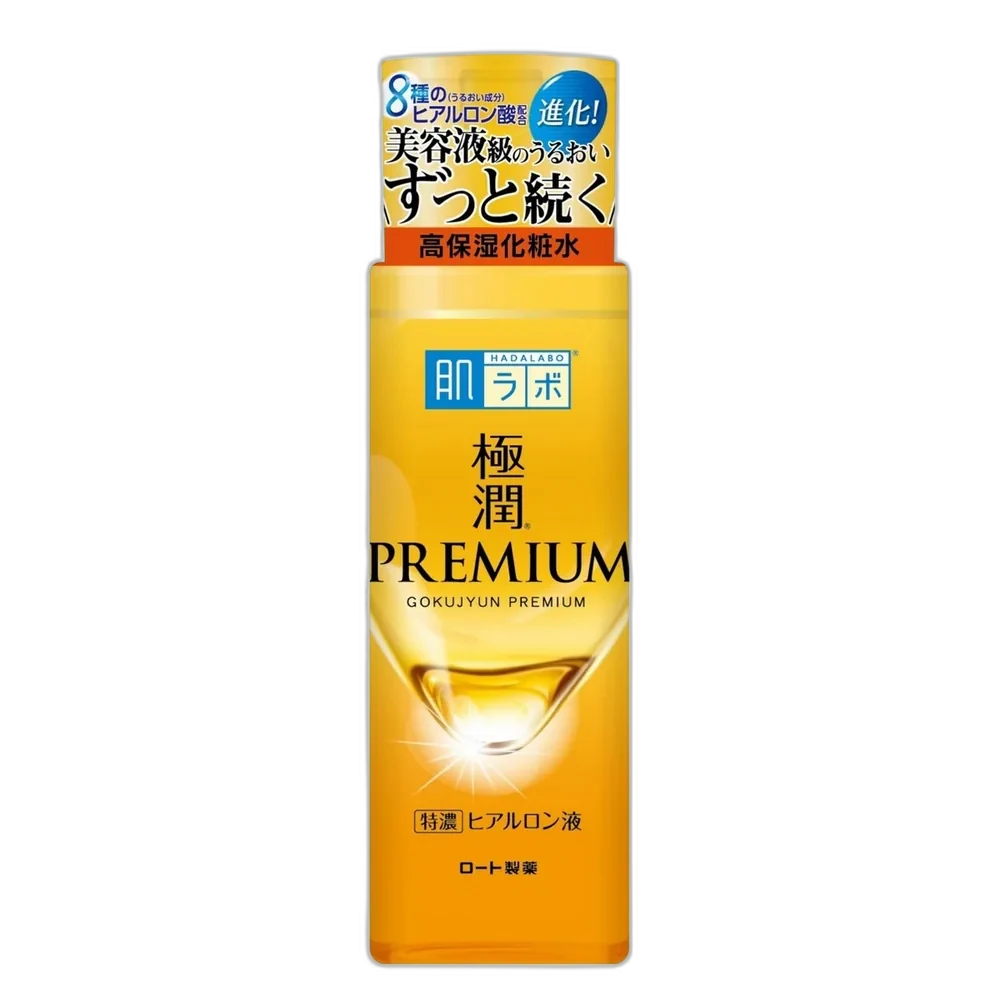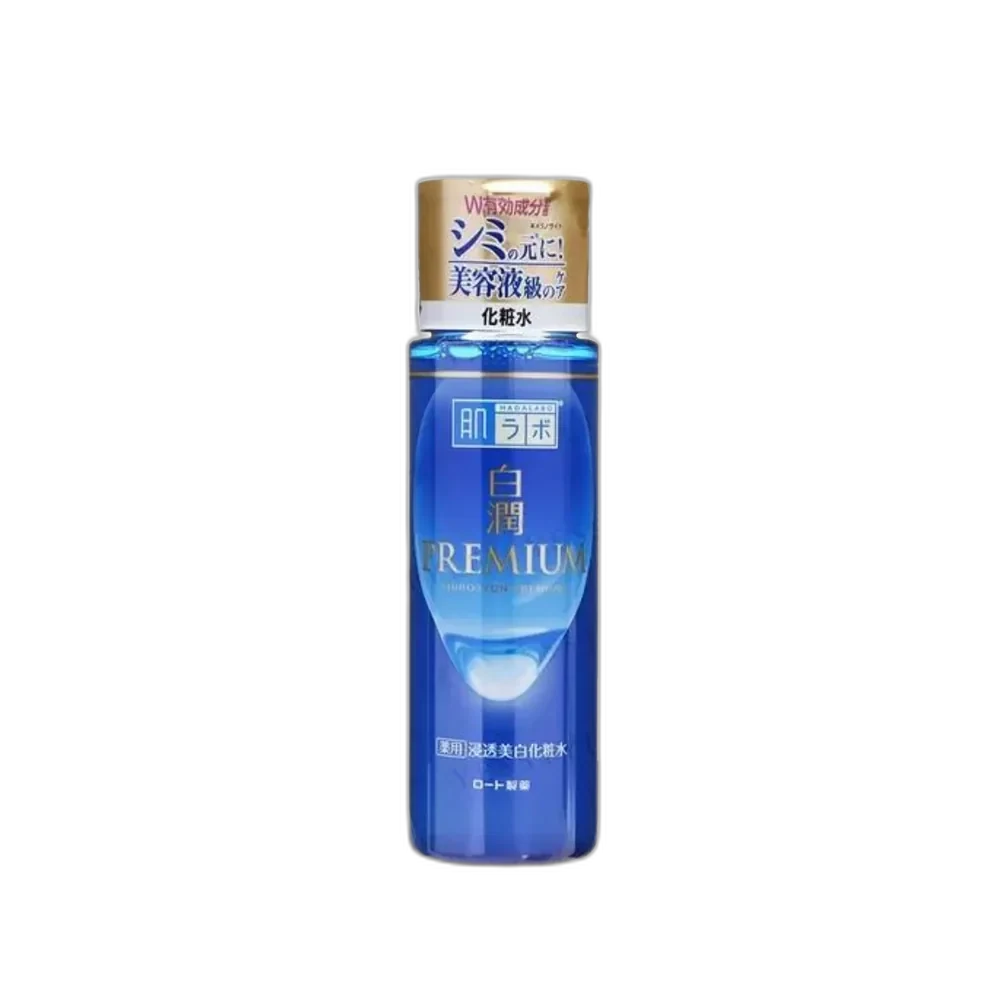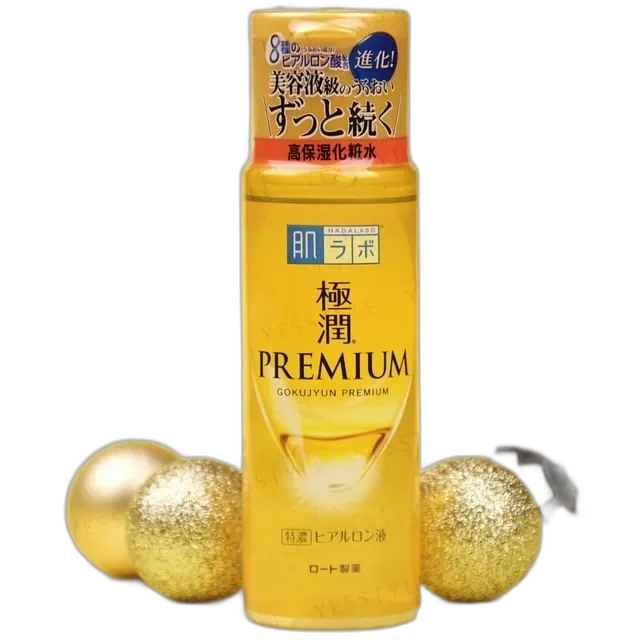
Gokujyun Premium Hyaluronic Acid Lotion
J-Beauty Holy Grail Hydrator
 Verified reviewer
Pros & cons.
- +Eight distinct hyaluronic acid forms create the most comprehensive multi-depth hydration available in a toner
- +Sacran, Lipidure, and trehalose add three non-HA hydration pathways for redundant moisture delivery
- +Fragrance-free, alcohol-free, oil-free, silicone-free — universally tolerable formula
- +170 mL bottle lasts 4-6 months at approximately $15 — extraordinary value
- +2023 reformulation adds oil-soluble Hyalorepair for lipid-barrier-level hydration
- +Mildly acidic pH respects the skin's natural acid mantle
- +Pairs beautifully with the 7-skin method for buildable hydration
- −Thick, viscous texture can feel sticky if too much is applied or not fully absorbed
- −Can pill under certain moisturizers or sunscreens if layered too quickly
- −Primarily available through Asian beauty online retailers — not in most Western stores
- −Not cruelty-free certified — Rohto's testing policies vary by market
- −The 2023 reformulation differs from older versions, which some longtime users preferred
The full review.
Some products earn holy grail status through marketing. Some earn it through influencer endorsement. And then there’s the Hada Labo Gokujyun Premium Lotion, which earned it the old-fashioned way: by being so good at hydrating skin that word-of-mouth traveled from Japanese drugstores to Seoul beauty forums to Reddit’s SkincareAddiction to the global skincare consciousness, one genuinely impressed user at a time.
The journey started in 2004 when Rohto Pharmaceutical launched the original Gokujyun Lotion with a radical idea: what if a toner’s entire identity was built around doing one thing — hydrating — better than anything else? No brightening agents, no exfoliants, no anti-aging actives competing for attention. Just hyaluronic acid, humectants, and water, formulated by pharmaceutical scientists who treated HA not as a trendy ingredient but as a molecular engineering challenge. The Premium version debuted in 2016 with five HA types. The 2020 reformulation added two more plus sacran. The 2023 version pushed the count to eight with the addition of Hyalorepair, representing nearly two decades of iterative improvement to a single product concept.
Eight types of hyaluronic acid sounds like it could be marketing excess, but Rohto’s pharmaceutical background means each variant was selected for a specific functional reason. Standard sodium hyaluronate forms a hydrating surface film. Nano hydrolyzed HA penetrates into deeper stratum corneum layers. Sodium acetyl hyaluronate — Rohto’s proprietary ‘Super Hyaluronic Acid’ — has enhanced skin affinity through acetylation. Cationic hydroxypropyltrimonium hyaluronate bonds electrostatically to the skin surface and resists being disrupted. Crosspolymer HA provides time-release, sustained hydration. Fermented HA has been pre-processed by Lactococcus bacteria for enhanced bioavailability. Hydrolyzed sodium hyaluronate offers intermediate penetration. And the newest addition, C12-13 alkyl glyceryl hydrolyzed hyaluronate (Hyalorepair), is an oil-soluble HA derivative that integrates directly into the skin’s lipid barrier — a breakthrough form that conventional water-soluble HA cannot replicate.
But Rohto didn’t stop at HA. The supporting hydration cast includes sacran, the freshwater cyanobacterium polysaccharide that holds 6,100 times its weight in water. Hydroxyethyl urea adds a gentle urea-derived humectant pathway. Glycosyl trehalose provides cell-protective moisture binding. And polyquaternium-51 — commercially known as Lipidure — is a biomimetic polymer modeled after cell membrane phospholipids, with moisture retention capabilities that exceed even hyaluronic acid in certain comparative studies. Each of these ingredients hydrates through a slightly different mechanism, and together they create a redundant, multi-pathway moisture system that’s genuinely unprecedented in a consumer toner product.
The texture requires a brief cultural translation. In Japanese skincare, ‘lotion’ means hydrating toner — a watery liquid applied after cleansing as the first hydrating step. This particular lotion is thicker than most, with a viscous, almost serum-like consistency that pours slowly and spreads with a slightly gel-like texture. It’s not a cream, despite the viscosity. Applied to damp skin — and applying to damp skin is genuinely important for HA efficacy — it absorbs over about thirty seconds, leaving a slightly tacky film that resolves once your next product goes on top.
That tackiness is the HA doing its job. The slight stickiness you feel is literally millions of hyaluronic acid molecules holding water at your skin surface, creating a temporary reservoir that your moisturizer then seals in. If you apply too much, the tackiness persists and can cause pilling under makeup. The solution is simple: less product, or more time between layers.
The 7-skin method — applying multiple thin layers of this lotion, allowing each to partially absorb before adding the next — is where the Gokujyun Premium Lotion truly shines. Each layer adds another film of HA-bound water, and by the third or fourth layer, your skin has an almost glass-like dewiness that no single product application can achieve. It’s a technique borrowed from Korean skincare that pairs perfectly with this formula’s multi-HA architecture.
Performance is immediate and cumulative. First application delivers visible plumping — skin looks dewier, feels softer, and has a subtle glow that comes from genuine hydration rather than light-reflecting particles. Over the first week, you’ll notice that your skin stays hydrated longer through the day and that the tight, dry feeling after cleansing disappears. By a month, the cumulative effect on skin texture, fine dehydration lines, and overall suppleness is significant.
The formula is remarkably clean for such a complex hydration product. Fragrance-free, alcohol-free, oil-free, silicone-free, and paraben-free. The pH is mildly acidic at approximately 5.0, matching the skin’s natural acid mantle. There’s nothing in the ingredient list that should cause concern for any skin type, which is why this product has near-universal appeal — from oily skin seeking lightweight hydration to dry skin building a moisture base to sensitive skin that can’t tolerate most products.
At approximately fifteen dollars for 170 mL, the value defies reasonable explanation. A bottle lasts four to six months with twice-daily use. That’s roughly three dollars a month for what may be the most technologically advanced hydrating toner on the market. Western brands selling single-HA toners for forty dollars should be embarrassed. The only reasonable explanation for the price is Rohto’s pharmaceutical manufacturing scale and the efficiency of the Japanese beauty market, where competition forces genuine value rather than inflated margins.
The only real limitations are practical. Availability outside Asia requires importing through online specialty retailers, which can add shipping time and cost. The thick texture takes getting used to if you’re accustomed to watery Western toners. And the utilitarian packaging — a plain plastic bottle — won’t win any aesthetic awards on your bathroom shelf. But these are cosmetic concerns in the most literal sense. What matters is what happens when this product meets your skin, and on that measure, two decades of pharmaceutical R&D speak for themselves.
Formula
Ingredient analysis.
Full INCI list · pH 5
Water, Butylene Glycol, Pentylene Glycol, PPG-50 Methyl Glucose Ether, Dipropylene Glycol, Diglycerin, Sodium Hyaluronate, Hydrolyzed Hyaluronic Acid, Sodium Acetyl Hyaluronate, Hydroxypropyltrimonium Hyaluronate, Sodium Hyaluronate Crosspolymer, Lactococcus Ferment/Hyaluronic Acid Ferment Filtrate, Hydrolyzed Sodium Hyaluronate, C12-13 Alkyl Glyceryl Hydrolyzed Hyaluronate, Aphanothece Sacrum Polysaccharides, Hydroxyethyl Urea, Polyquaternium-51, Hydrogenated Starch Hydrolysate, Glycosyl Trehalose, Sorbitol, Carbomer, Xanthan Gum, Disodium Succinate, Propanediol, Potassium Hydroxide, Succinic Acid, Disodium EDTA, Caprylhydroxamic Acid, Phenoxyethanol
Skin match.
The science.
The Science
The multi-weight hyaluronic acid approach is supported by clinical research showing that simultaneous application of different HA molecular weights provides superior hydration compared to any single weight alone. A study published in the Journal of Drugs in Dermatology (2011) demonstrated that layered HA weights improved skin hydration, elasticity, and roughness more effectively than single-weight formulations.
The newest addition to the 2023 formula, C12-13 alkyl glyceryl hydrolyzed hyaluronate (Hyalorepair), represents a significant advancement in HA delivery. This oil-soluble derivative is created by attaching alkyl chains to hydrolyzed HA fragments, allowing the molecule to integrate into the skin's lipid bilayer — a location that conventional water-soluble HA cannot reach. Rohto's published research indicates that Hyalorepair provides barrier-repair benefits beyond standard humectant action by reinforcing the lipid matrix from within.
Polyquaternium-51 (Lipidure) is a 2-methacryloyloxyethyl phosphorylcholine polymer that mimics the phospholipid structure of cell membranes. Research published in the Journal of Biomedical Materials Research demonstrated that polyquaternium-51 has water-retention capabilities exceeding those of hyaluronic acid in certain conditions, and its biomimetic structure gives it excellent biocompatibility. In this toner, it provides a supplementary hydration mechanism that works through lipid-mimetic pathways rather than the sugar-based binding of HA.
Sacran (Aphanothece sacrum polysaccharides) has been characterized in the International Journal of Biological Macromolecules as a mega-molecular polysaccharide capable of holding 6,100 times its dry weight in water. Its anti-inflammatory and moisture-barrier properties have been documented in Japanese pharmaceutical literature, positioning it as a complement to HA for comprehensive hydration.
Dermatologist Perspective
Dermatologists widely regard the Hada Labo Gokujyun Premium Lotion as one of the most effective hydrating toners available at any price point. Board-certified dermatologists note that the multi-HA formulation aligns with the dermatological understanding that different molecular weights of hyaluronic acid serve complementary functions in skin hydration. Dermatologists frequently recommend this product for patients on retinoid therapy to buffer dryness, for eczema patients in remission to maintain barrier hydration, and as a cost-effective hydrating step for any skin type. The fragrance-free, alcohol-free, minimal-irritant formula meets the standards that dermatologists typically require when recommending products for sensitive or compromised skin.
Where it fits in your routine.
Apply 2-3 drops to damp, freshly cleansed skin — the HA binds water most effectively this way. Press the product into your face with your palms instead of rubbing. For more hydration, apply 2-4 thin layers, letting each partially absorb before the next (the '7-skin method'). Follow immediately with a moisturizer or cream to seal in hydration. Use morning and evening. Note: this is a Japanese 'lotion' (hydrating toner), not a Western-style cream — use it as the first hydrating step after cleansing.
At about $15 for 170 mL, this offers the best skincare value. Western prestige brands charge $40-80 for the eight-HA technology, sacran, Lipidure, and pharmaceutical-grade formulation. One bottle lasts 4-6 months with twice-daily use, making the monthly cost about $3. Refill pouches in Japan lower the long-term cost. No other hydrating toner has this ratio of formulation sophistication to price.
Works for anyone prioritizing hydration, regardless of skin type. It helps dry skin, dehydrated skin, winter-skin sufferers, and those on retinoid therapy. J-beauty enthusiasts seeking the authentic gold-standard hydrating toner will like it. Budget-conscious consumers get pharmaceutical-grade formulation at drugstore prices.
People who prefer ultra-lightweight, watery toners and dislike viscous textures. Users who need a combined treatment-and-hydrating toner (this is purely hydration, no actives). Those who require cruelty-free certification.
Product details.
Completely unscented — no fragrance, colorants, or alcohol.
Clear plastic bottle with a small dispensing cap. Refill pouches are available in Japan for eco-conscious repurchasing. The simple, utilitarian packaging shows the brand's no-frills philosophy. Finish dewyglowynon-greasy What to Expect on First Use Most users find the first application a revelation. The thick, slightly sticky lotion absorbs into damp skin and plumps the skin visibly within minutes. Skin looks glassier, feels bouncier, and has a soft-focus glow. The tacky feeling during absorption is normal and goes away once a moisturizer is applied on top. How Long It Lasts 4-6 months with twice-daily application (170 mL size) Period After Opening 12 months
All Year
The backstory.
The original Gokujyun Lotion, launched in 2004, was the product that made Hada Labo a household name in Japan. The Premium version, first introduced in 2016 with five types of HA, escalated the formula to what many consider the ultimate hydrating toner. The 2020 reformulation added two more HA types and sacran. The 2023 version pushed the count to eight with the addition of Hyalorepair, an oil-soluble HA that represents Rohto's newest hydration technology. Each reformulation has been driven by Rohto Pharmaceutical's ongoing HA research, not by marketing trends.
About Hada Labo
Established Brand (5–20 years)Rohto Pharmaceutical Co., Ltd., a Japanese pharmaceutical company founded in 1899, created Hada Labo in 2004. The brand follows a 'Perfect and Simple' philosophy, using effective formulations with few unnecessary ingredients. The Gokujyun Premium Lotion is a top-selling hydrating toner in Japan; the formula added more HA types in 2023.
Common myths.
Japanese 'lotions' are identical to Western lotions (moisturizers).
In Japanese skincare terminology, 'lotion' (化粧水 / kesho-sui) means a hydrating toner—a watery liquid used as the first hydrating step after cleansing. While the name overlaps with Western lotions (creamy moisturizers), this product works as a toner/essence and requires a moisturizer afterward.
Stickiness means the product clogs your pores.
High concentrations of hyaluronic acid create a moisture-binding film on the skin surface, causing temporary tackiness. This tackiness disappears after you apply a moisturizer. This film shows the hyaluronic acid works by holding water at the skin surface until you seal it in.
FAQ.
What is a Japanese 'lotion' and how do I use it?
In Japanese skincare, 'lotion' means a hydrating toner, not a creamy moisturizer. Apply 2-3 drops to damp skin right after cleansing by pressing it into the face. Layer it multiple times for more hydration (the '7-skin method'). Always use a moisturizer or cream to seal in the moisture.
What are the eight types of hyaluronic acid in the 2023 formula?
Standard sodium hyaluronate, nano hydrolyzed HA, super hyaluronic acid (sodium acetyl hyaluronate), cationic HA (hydroxypropyltrimonium hyaluronate), 3D crosspolymer HA, fermented HA, hydrolyzed sodium hyaluronate, and the new Hyalorepair (C12-13 alkyl glyceryl hydrolyzed hyaluronate) — an oil-soluble HA that integrates into the skin's lipid barrier.
Is Hada Labo Premium Lotion good for oily skin?
Yes — this oil-free, silicone-free toner has a thick, viscous texture but provides pure humectant hydration. Oily skin needs hydration without occlusion, and this lotion delivers that. Use one thin layer and follow with a lightweight gel moisturizer.
Why does Hada Labo Premium Lotion feel sticky?
High hyaluronic acid concentrations create a moisture-binding film, causing temporary tackiness. This stickiness is intentional; the HA holds water at your skin surface. Applying moisturizer on top resolves the tackiness, seals in hydration, and smooths the finish.
How is the 2023 Hada Labo Premium Lotion different from previous versions?
The 2023 reformulation adds an eighth HA type — Hyalorepair, an oil-soluble form that penetrates the lipid barrier. It also uses updated humectant technology with hydroxyethyl urea and polyquaternium-51. The core multi-HA approach stays the same, but the newest version provides deeper, more comprehensive hydration.
Can I use Hada Labo Premium Lotion with retinol?
This lotion works well as a pre-retinol hydrating layer. Apply 2-3 layers of the lotion to damp skin, let it absorb, then apply your retinol product. The hydration buffers retinol-induced dryness and irritation. Follow with a moisturizer to seal everything in.
Where can I buy the authentic Hada Labo Premium Lotion?
Buy the authentic Japanese version from Asian beauty online retailers like YesStyle, Stylevana, iHerb, and Amazon (imported from Japan). Look for the 2023 packaging (gold bottle with updated labeling). Avoid counterfeits on marketplace platforms — buy from established Asian beauty retailers.
What the community says.
"Transformative hydration that makes skin visibly plumper and dewier"
"Incredibly affordable for the ingredient quality and technology"
"170 mL bottle lasts months with daily use"
"Fragrance-free and gentle enough for the most sensitive skin"
"The 7-skin method with this lotion is a game-changer for dry skin"
"Thick, viscous texture can feel sticky if too much is applied"
"Can pill under certain moisturizers or sunscreens if not fully absorbed"
"Availability outside Asia requires importing through specialty retailers"
"The 2023 reformulation is slightly different — some prefer the older version"