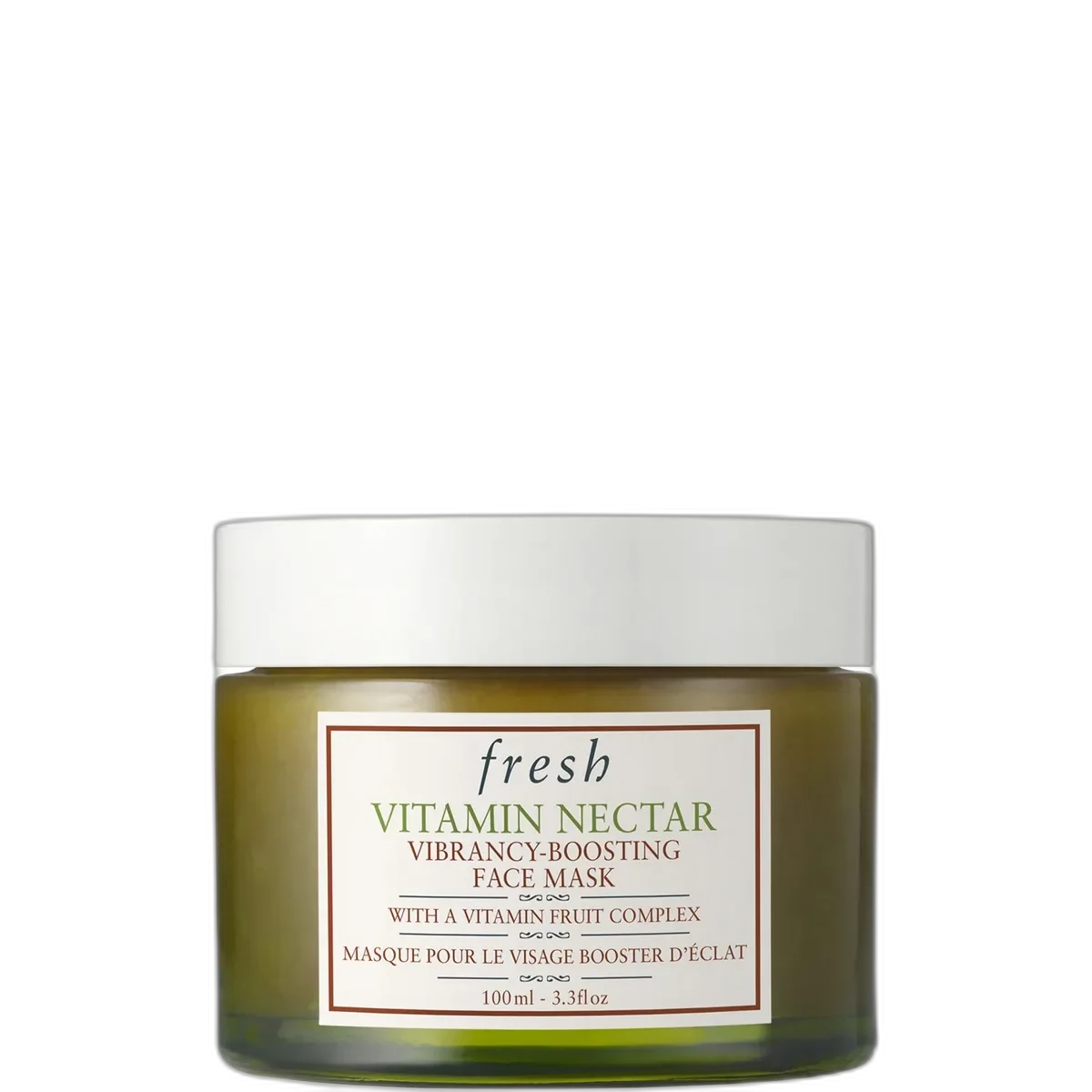
Vitamin Nectar Vibrancy-Boosting Face Mask
Instant Citrus Glow Ritual
 Verified reviewer
Pros & cons.
- +Genuinely composed of 50% real crushed Mediterranean citrus — not just extracts diluted in a cream base
- +Immediate visible glow and plumped radiance after a single ten-minute application
- +Triple vitamin system (C, E, B5) with mineral complex provides antioxidant support during masking
- +Multi-sugar humectant system draws water into skin for effective temporary plumping
- +Silicone-free, paraben-free formula with a unique marmalade texture unlike any competing mask
- +Excellent pre-event radiance boost for special occasions
- −Glow effect is temporary — typically lasts only about one day per application
- −Exfoliation claims are overstated — independent analysis rates chemical exfoliating efficacy at essentially zero
- −High citrus concentration (~11-13%) plus Parfum and Limonene creates significant irritation risk
- −Sticky, chunky texture is messy and requires a washcloth for thorough removal
- −Jar packaging accelerates degradation of vitamin C and citrus antioxidants with repeated opening
- −At $69 for 100 mL, premium pricing for a primarily cosmetic rather than treatment-grade effect
The full review.
Texture
The texture is sticky and chunky, unlike other masks. You need a washcloth to remove it, and it makes a mild mess in your bathroom sink. These features prove the fruit-forward claim is real.
Scent
The citrus scent is bright and invigorating — like burying your face in a bowl of fresh oranges.
Packaging
The jar packaging raises preservation concerns. Vitamin C derivatives and citrus antioxidants degrade when exposed to air and light. Every time you open the jar, the actives lose potency. By the end of the jar — two to three months in — the formula’s antioxidant capacity may be meaningfully diminished compared to the first use.
Common Complaints
The irritation potential is real. Concentrated citrus extracts make up approximately 11 to 13 percent of the formula, and the mask contains added Parfum plus Limonene — a fragrance allergen that oxidizes on air exposure to become more sensitizing over time. This is a red flag for sensitive, rosacea-prone, or barrier-compromised skin. Panthenol provides some soothing counterbalance, but it fights an uphill battle against the high volume of citrus in this formula. Slight tingling on application is normal; anything beyond that means your skin wants you to stop.
Not ideal for
This is a red flag for sensitive, rosacea-prone, or barrier-compromised skin.
Ingredient analysis.
Full INCI list
Water, Glucose, Citrus Limon (Lemon) Fruit Extract, Citrus Clementina Fruit Extract, Citrus Sinensis (Orange) Fruit Extract, Fructose, Glycerin, Sucrose, Citrus Medica Limonum (Lemon) Fruit Extract, Vaccinium Myrtillus Fruit Extract, Pyrus Cydonia Seed Extract, Saccharum Officinarum (Sugar Cane) Extract, Glycine Soja (Soybean) Oil, Citrus Aurantium Dulcis (Orange) Fruit Extract, Acer Saccharum (Sugar Maple) Extract, Tocopheryl Acetate, Ascorbyl Tetraisopalmitate, Tocopherol, Xanthan Gum, Butylene Glycol, Sclerotium Gum, Tetrasodium EDTA, Sodium Citrate, Parfum (Fragrance), Panthenol, Caramel, Sodium Metabisulfite, Citric Acid, Potassium Sorbate, Magnesium Aspartate, Zinc Gluconate, Copper Gluconate, Ci 75120 (Annatto), Phenoxyethanol, Limonene
Skin match.
The science.
The Science
This mask's immediate glow comes from humectant-driven hydration of the stratum corneum. Glucose (the second ingredient) and fructose are small-molecule sugars. They penetrate outer skin layers more easily than larger humectants, drawing water into the corneocytes and temporarily expanding them. This cellular swelling smooths the skin surface, improves light reflection, and creates the visible radiance effect. Glycerin supports this by regulating aquaporin-3 channels — water transport proteins in keratinocytes — as shown in a 2008 study by Fluhr et al. in the British Journal of Dermatology.
Citrus fruit extracts provide natural flavonoids — primarily hesperidin, naringin, and nobiletin — with documented antioxidant activity. A 2016 comprehensive review in Oxidative Medicine and Cellular Longevity examined citrus flavonoids and confirmed they scavenge free radicals and provide UV-protective effects through pathways like NF-κB inhibition and metalloproteinase suppression. However, these effects depend on concentration and penetration; the ten-minute contact time of a wash-off mask limits bioavailability.
Exfoliation is central to evaluating this mask's claims. Citric acid is an alpha-hydroxy acid, but its efficacy as an exfoliant depends on concentration, pH, and free acid availability. The Cosmetic Ingredient Review (CIR) Expert Panel established that AHAs require concentrations of 4% or higher at pH 3.5-4.0 for meaningful exfoliating effects. While this mask contains citric acid, its role is primarily a pH adjuster and chelating agent rather than a functional exfoliant, given the formulation pH and the buffering effect of sodium citrate.
Ascorbyl tetraisopalmitate is a lipid-soluble vitamin C ester with documented bioavailability advantages over water-soluble forms in lipid-rich formulations. A 2006 study in the Journal of Photochemistry and Photobiology showed it prevents UV-induced pigmentation in human subjects. However, clinical studies typically use 1-3% concentrations, while the INCI position in this formula suggests a much lower concentration.
Panthenol serves a strategic purpose beyond marketing. As a wash-off mask containing concentrated citrus acids, it carries a risk of barrier disruption during application. Panthenol converts to pantothenic acid in the skin; a 2011 study in the Journal of Cosmetic Dermatology showed this reduces transepidermal water loss — protecting the barrier during the mask's active phase.
References
- Citrus flavonoids: Molecular structure, biological activity and nutritional properties — Oxidative Medicine and Cellular Longevity (2016)
- Ascorbyl tetraisopalmitate prevents UV-induced pigmentation — Journal of Photochemistry and Photobiology (2006)
- Panthenol formulations reduce transepidermal water loss — Journal of Cosmetic Dermatology (2011)
Dermatologist Perspective
Dermatologists see this as a cosmetically pleasant hydrating mask with antioxidant support, but not a clinical treatment. Board-certified dermatologists note the AHA content is insufficient for meaningful chemical exfoliation — patients seeking resurfacing benefits should use dedicated glycolic or lactic acid products at effective concentrations. The concentrated citrus content and added fragrance are irritation risks for patients with rosacea, eczema, or compromised barriers. Dermatologists emphasize using sunscreen the morning after use, as citrus extracts contain furanocoumarins that increase photosensitivity. The panthenol inclusion is a favorable barrier-protective measure. Overall, dermatologists classify this as a well-tolerated brightening mask for non-sensitive skin types who enjoy the sensorial experience, not a treatment product.
Where it fits in your routine.
Apply an even layer to clean, damp skin, but avoid the eye area. Massage gently for 1-2 minutes to activate the fruit pulp's mild physical exfoliation. Leave on for up to 10 minutes. Remove thoroughly with warm water and a washcloth; water alone leaves a sticky residue. Follow immediately with a hydrating toner or serum and moisturizer. Use 2-3 times per week. Always apply sunscreen the next morning. Do not use on the same evening as AHA/BHA exfoliants or retinol.
At $69 for 100 mL used 2-3 times weekly, this lasts 2-3 months at about $3-4 per use. A 30 mL size costs around $35 for a smaller trial. The 50% real crushed citrus fruit is unique and offers a distinct sensorial experience for a mask. However, simpler, cheaper hydrating masks also provide the main benefit — an immediate temporary glow. The formula's AHA levels do not support the exfoliation claims, and the vitamin C concentration is too low for long-term brightening. Use this as a luxury self-care ritual or pre-event glow treatment, not as a results-driven performance product.
Normal to combination skin types who want a sensorial masking experience and an immediate pre-event glow boost. Best for people who treat masking as a self-care ritual and want a unique texture and experience. Ideal for seasonal dullness and making skin look refreshed and radiant for special occasions.
Sensitive, rosacea-prone, or barrier-compromised skin should avoid this because of the concentrated citrus extracts and fragrance load. Users seeking chemical exfoliation should use a dedicated AHA product instead. People allergic to citrus or soy must check the INCI carefully. Budget-conscious shoppers get similar temporary glow effects from simpler, cheaper hydrating masks.
Product details.
Strong, citrus aroma like fresh orange marmalade. It uses added Parfum alongside the natural citrus scent. It is energizing and not subtle.
Green-tinted glass jar with metal lid. The jar feels heavy. This packaging exposes actives to air and light every time you open it, which accelerates degradation of the vitamin C derivative and citrus antioxidants. Finish dewyglowy What to Expect on First Use Citrus acids cause slight tingling upon application. This is normal for most skin types but signals sensitivity for sensitive skin. The chunky marmalade texture is unexpected for first-time users. After 10 minutes and rinsing with a washcloth, skin looks immediately glowy, plumped, and refreshed. How Long It Lasts 2-3 months with 2-3x weekly use (100 mL jar) Period After Opening 12 months
All Year Background
The backstory.
Created to celebrate Fresh's 25th anniversary in 2016, this mask was born from co-founder Lev Glazman's childhood fascination with applying food directly to skin. After four years of R&D at LVMH's Helios Research Center outside Paris, the team developed a method to concentrate 50% real citrus fruit into a stable, cosmetically elegant formula. It launched as the first product in what became the entire Vitamin Nectar line.
About Fresh
Established Brand (5–20 years)Fresh launched in 1991 in Boston and joined LVMH as a maison in 2000. LVMH's Helios Research Center outside Paris spent four years developing The Vitamin Nectar Face Mask to mark the brand's 25th anniversary in 2016.
Common myths.
This mask provides AHA exfoliation using citric acid and fruit acids.
Independent analysis rates this product's exfoliating efficacy at zero. It contains citric acid and botanical AHA sources (bilberry, sugar cane, sugar maple), but the concentrations are too low for chemical exfoliation. The citric acid works as a pH adjuster. Humectant sugars plump the skin and fruit pulp provides mild physical buffing to smooth the skin.
The vitamin C in this mask works like a dedicated vitamin C serum.
The vitamin C derivative used (ascorbyl tetraisopalmitate) is stable but likely sits below clinically tested concentrations (1-3%). Because this wash-off product has only 10 minutes of contact time, significantly less vitamin C penetrates than a leave-on serum. The citrus extracts provide minimal usable ascorbic acid.
Natural fruit-based masks are gentler than masks with synthetic ingredients
This mask uses high concentrations of citrus extracts (~11-13% combined), added fragrance, and Limonene—all documented skin sensitizers. Natural ingredients are not always gentle. The citrus extracts cause photosensitivity and contact irritation, so this mask is more irritating than many synthetic formulations designed for sensitive skin.
FAQ.
Is the Fresh Vitamin Nectar Face Mask worth the price?
At $69 for 100 mL used 2-3 times weekly, this lasts 2-3 months at about $3-4 per use. The immediate glow works well for pre-event prep. However, the glow lasts ~1 day, the exfoliating claims are overstated, and the active concentrations are modest. View this as a sensorial experience mask, not a performance treatment. For lasting brightening results, buy a vitamin C serum instead.
How often should you use the Fresh Vitamin Nectar Face Mask?
Fresh recommends use 2-3 times per week. Apply to clean, damp skin and leave on for up to 10 minutes. Remove with warm water and a washcloth. Do not use on the same evening as AHA/BHA exfoliants or retinol. Apply sunscreen the next morning because citrus extracts increase photosensitivity.
Is the Fresh Vitamin Nectar mask good for sensitive skin?
No — this mask has about 50% crushed citrus fruit. It uses high concentrations of lemon, orange, and clementine extracts plus added Parfum and Limonene. These are documented skin sensitizers. People with sensitive skin, rosacea-prone skin, or a compromised barrier should avoid this mask or patch-test carefully.
Does the Fresh Vitamin Nectar mask actually exfoliate?
Independent ingredient analysis rates the exfoliating efficacy as negligible, despite the citric acid and botanical AHA sources. The fruit acid concentrations are too low for chemical exfoliation; the citric acid works mainly as a pH adjuster. The crushed fruit pulp provides mild physical buffing, while humectant sugars plump the skin surface for a smoothing effect.
Can you use the Fresh Vitamin Nectar mask with retinol?
Not on the same evening. The citrus acids and fruit extracts in this mask can increase skin sensitivity, and combining with retinol risks over-irritation. Use the mask on alternate evenings from your retinol treatment. On mask nights, follow with a hydrating toner and moisturizer. Apply sunscreen the following morning regardless.
Community
What the community says.
"Immediate visible glow and radiance after a single ten-minute application"
"Skin feels soft, plump, and refreshed after rinsing"
"Pleasant invigorating citrus scent like fresh orange marmalade"
"Unique jam-like texture with real fruit pulp is a luxurious sensorial experience"
"Excellent pre-event radiance boost for special occasions"
"Messy and difficult to remove — sticky chunky texture requires a washcloth"
"Glow effect is temporary, typically lasting only about one day"
"Expensive at $69 for a mask used 2-3 times weekly"
"Despite claims, does not provide meaningful chemical exfoliation"
"High citrus content can cause tingling or irritation on sensitive skin"
People also looked at.