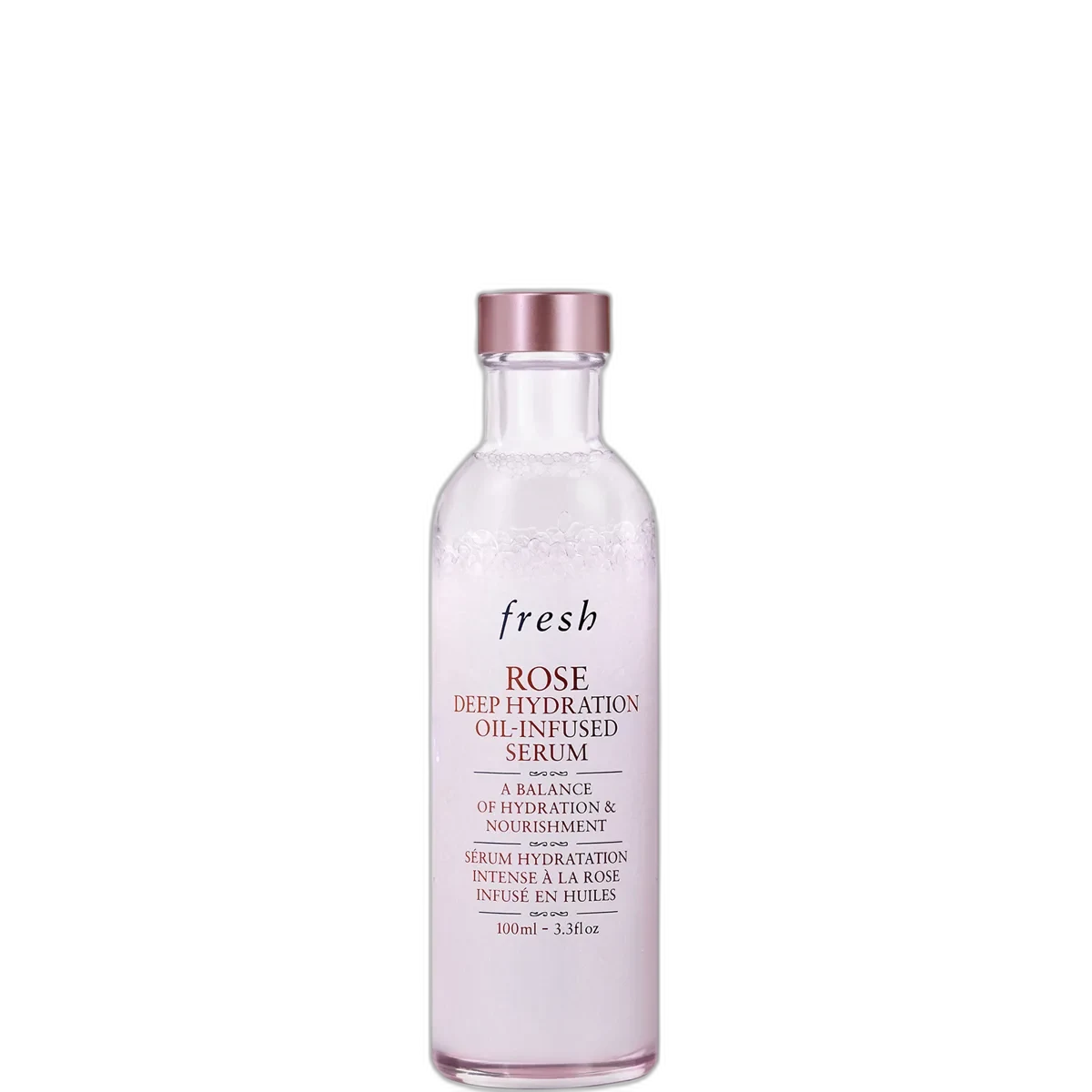
Rose Deep Hydration Oil-Infused Serum
Bi-Phase Rose Ritual
 Verified reviewer
Pros & cons.
- +Bi-phase format preserves oxidation-prone rosehip and camelina oils until the moment of application
- +Camelina sativa seed oil provides unusually high omega-3 content (30-40% ALA) rarely seen in serums
- +Immediate dewy glow and luminosity visible from first use
- +Silicone-free formulation that achieves fast absorption through lightweight squalane instead
- +Generous 100 mL bottle lasts 3-5 months, softening the per-use cost considerably
- +Confirmed pregnancy-safe by multiple retailer assessments
- −Active ingredient concentrations are modest — this is more emollient hydration than targeted treatment
- −Contains Citronellol and Geraniol fragrance allergens from Rosa Damascena Flower Oil
- −Ethylhexyl Palmitate has comedogenic potential for clog-prone skin
- −Splash-style dispenser is imprecise compared to dropper bottles
- −Can feel too oily on oily skin types with noticeably slower absorption
The full review.
There’s something satisfying about a product that asks you to do something before it works. The Fresh Rose Deep Hydration Oil-Infused Serum sits on your shelf with its two phases visibly separated — golden oil floating above clear rosewater — and refuses to function until you pick it up and shake it. It’s a minor ritual, maybe five seconds of effort, but it transforms the act of applying a serum from autopilot into something deliberate. Fresh understands this. The bi-phase format isn’t just functional; it’s theater.
But there is genuine function behind the performance. When the two phases separate between uses, the oxidation-prone plant oils — rosehip and camelina — are partially protected from the water phase that accelerates their degradation. Traditional pre-mixed emulsions force these incompatible ingredients to coexist 24/7, requiring stronger emulsifiers and more aggressive preservatives. The bi-phase approach sidesteps some of that chemistry, letting you create a fresh micro-emulsion each time you use it.
The oil blend itself is more thoughtful than the luxury skincare category typically delivers. Camelina sativa seed oil is a genuinely uncommon choice. Also called gold-of-pleasure oil, it contains 30 to 40 percent alpha-linolenic acid — an omega-3 fatty acid concentration that rivals flaxseed oil and dwarfs most botanical oils used in skincare. Omega-3s are anti-inflammatory and barrier-repairing, and their presence here alongside rosehip oil (which brings its own natural trans-retinoic acid and linoleic acid) creates a fatty acid profile that’s more intentional than the usual squalane-and-nothing approach.
Squalane is here too, of course, serving as the lightweight emollient base that keeps the oil phase from feeling heavy. It mimics the skin’s own sebum, absorbs quickly, and creates the non-greasy finish that makes this serum wearable during the day. The water phase is dominated by Rosa Damascena Flower Water — rosewater — listed second in the INCI, providing soothing anti-inflammatory hydration and that unmistakable rose scent.
On the skin, the shaken micro-emulsion feels like silk water. It absorbs quickly on dry to normal skin, leaving a dewy luminosity that looks like you’ve just done something nice for yourself. A few drops is genuinely all you need — the 100 mL bottle is generous for a serum and should last three to five months at twice-daily use, which softens the per-use math on the $62 price tag considerably.
The glow is the star effect. It’s immediate, visible, and flattering. Skin looks lit from within rather than greasy, and it photographs well — which probably isn’t an accident for a product that launched in 2020, peak Instagram-skincare era. Over a week or two of consistent use, skin feels softer and more supple, with a subtle improvement in overall radiance that goes beyond the immediate surface effect.
But let’s talk about depth. This serum hydrates and nourishes the surface beautifully, but its active ingredient concentrations are modest. Independent analysis estimates the rose extracts at under one percent each, the squalane around 1.3 percent, and the camelina and rosehip oils each under one percent. These aren’t treatment-level concentrations. Fresh’s claim that their damask rose extract boosts the skin’s own hyaluronic acid production may have in-vitro support, but at these levels, it’s a supporting note rather than a headline act. The primary mechanism here is emollient hydration — coating the skin in a pleasant layer of lightweight oils and humectants.
The fragrance is natural and beautiful — a true damask rose scent that reviewers consistently describe as gorgeous. But it comes from Rosa Damascena Flower Oil, which means Citronellol and Geraniol are present as fragrance allergens. For a leave-on product used twice daily, this is a legitimate concern for anyone with fragrance sensitivity or a history of cosmetic contact dermatitis. The formula is otherwise clean — silicone-free, paraben-free, and alcohol-free — which makes the fragrance inclusion feel like a conscious aesthetic choice rather than a formulation necessity.
The splash-style dispenser deserves a mention. It works, but it’s imprecise. A dropper would give better control over how much product you dispense, especially given the liquid-thin consistency of the shaken serum. It’s a minor complaint, but a dropper is the industry standard for a reason.
This is a serum for people who value the experience of skincare as much as the measurable results. The bi-phase ritual, the rose scent, the immediate glow, the elegant glass bottle with its separated layers — it all adds up to something that makes your routine feel more intentional and luxurious. As a performance product, it’s pleasant but modest. As a sensorial experience with real (if gentle) skin benefits, it genuinely delivers.
Ingredient analysis.
Full INCI list
Aqua (Water), Rosa Damascena Flower Water, Coco-Caprylate/Caprate, C9-12 Alkane, Propanediol, Ethylhexyl Palmitate, Pentylene Glycol, Glycerin, Squalane, Rosa Damascena Flower Extract, Rosa Damascena Extract, Camelina Sativa Seed Oil, Rosa Rubiginosa Seed Oil, Cucumis Sativus (Cucumber) Fruit Extract, Rosa Damascena Flower Oil, Tocopherol, Sodium Citrate, Sodium Chloride, Ethylhexylglycerin, Xanthan Gum, Citric Acid, Caprylic/Capric Triglyceride, Sorbitan Sesquioleate, 1,2-Hexanediol, Caprylyl Glycol, Sodium Benzoate, Potassium Sorbate, Citronellol, Geraniol
Skin match.
The science.
The Science
The bi-phase format in this serum creates a thermodynamically unstable micro-emulsion upon shaking — the water and oil phases combine temporarily before gradually separating again. This approach has a practical benefit beyond aesthetics: it minimizes the continuous contact between aqueous and lipid phases that accelerates oxidation of polyunsaturated fatty acids (PUFAs).
Calelina sativa seed oil is the most distinctive ingredient in the oil phase. It contains approximately 30-40% alpha-linolenic acid (ALA), an omega-3 fatty acid. A 2010 review published in the International Journal of Molecular Sciences (McCusker & Grant-Kels) examined the role of essential fatty acids in skin biology, documenting that omega-3 deficiency impairs barrier function and increases transepidermal water loss. Topical ALA has shown anti-inflammatory properties through inhibition of arachidonic acid-derived eicosanoids, though clinical studies on topical camelina oil specifically are limited.
Rosa Rubiginosa (rosehip) seed oil contains natural trans-retinoic acid — the same active compound as prescription tretinoin — at trace levels (approximately 0.357 mg/L in cold-pressed oil, per analysis by Panico et al., 2014, Cosmetics). While this concentration is orders of magnitude below therapeutic tretinoin levels, rosehip oil also provides linoleic acid (44-49% of fatty acid profile), which supports barrier function in individuals with linoleic acid-deficient sebum — a common characteristic of acne-prone and dehydrated skin.
Tocopherol serves a dual role as both a skin antioxidant and a formulation stabilizer. It protects the PUFA-rich camelina and rosehip oils from lipid peroxidation — a chain reaction where free radicals attack the double bonds in unsaturated fatty acids, generating rancid byproducts. This protection is particularly important in this formula because PUFAs are the functional actives, not just vehicle ingredients.
Rosa Damascena extracts have documented antioxidant activity attributed to phenolic compounds including gallic acid and quercetin. A 2017 review in the Journal of Ethnopharmacology (Mahboubi) summarized the pharmacological properties of damask rose, noting anti-inflammatory, analgesic, and antioxidant activities confirmed across multiple in-vitro and in-vivo studies. Topical application of rose water has demonstrated soothing and anti-inflammatory effects relevant to reactive skin.
References
- Healing fats of the skin: the structural and immunologic roles of the omega-6 and omega-3 fatty acids — International Journal of Molecular Sciences (2010)
- Rosehip Oil: Composition and Biological Activity — Cosmetics (2014)
- Rosa Damascena as Holy Ancient Herb with Novel Applications — Journal of Ethnopharmacology (2017)
Dermatologist Perspective
Dermatologists would view this serum as a reasonable hydrating and barrier-support product with an interesting delivery format, though not a targeted treatment for specific skin concerns. Board-certified dermatologists frequently recommend squalane and rosehip oil as well-tolerated emollients for dry and dehydrated skin. The camelina oil's omega-3 content is a welcome addition, though dermatologists would note that the concentrations present are unlikely to deliver therapeutic anti-inflammatory effects. The primary concern would be the fragrance allergens — Citronellol and Geraniol from the rose oil — which dermatologists routinely advise avoiding in patients with atopic dermatitis, rosacea, or fragrance contact allergy. The product's pregnancy-safe profile makes it a reasonable option for pregnant patients seeking gentle hydration.
Where it fits in your routine.
Shake the bottle vigorously for five seconds to blend the water and oil phases into a milky micro-emulsion. Pour two to three drops into your palm and press into clean skin after toner or essence. Use morning and evening before moisturizer. Press over makeup during the day to refresh hydration. The phases re-separate within minutes — this is by design, not a flaw.
At $62 for 100 mL, the per-use cost is reasonable. A few drops per application makes the bottle last 3-5 months, costing roughly $0.50-0.70 per use. This price competes in the luxury serum category. The camelina oil and bi-phase format show thoughtful formulation, but active concentrations are modest. Fresh's brand positioning means you pay partly for the sensorial experience — the rose scent, the shake ritual, and the glass bottle. The price is fair for those who value that experience. More potent serums exist at similar or lower price points for pure performance seekers.
Dry to normal skin types get gentle hydration and a dewy finish from this serum. It works for users who like rose-scented skincare and a lightweight oil-hybrid texture that feels light. The pregnancy-safe profile makes it a good choice for expecting mothers seeking gentle hydration.
Avoid this if you have fragrance sensitivity or a known allergy to Citronellol or Geraniol. Oily skin types will find it too emollient and slow to absorb. Serums with higher active concentrations work better for targeted concerns like hyperpigmentation, acne, or aging. Fungal acne-prone skin should avoid the Ethylhexyl Palmitate content.
Product details.
Rosa Damascena Flower Oil and rosewater provide a natural rose fragrance. The scent is fresh, true, and smells like a spa. It is not synthetic. The scent fades 15-20 minutes after application.
A glass bottle with a splash-style dispenser shows two phases that separate when the bottle sits. Shake before each use to combine the water and oil layers. This separation is functional; it protects oil-soluble actives from oxidation until application.
Shaking the bi-phase formula feels intentional. Skin feels soft and luminous with a dewy glow upon first application. Expect no adjustment period, purging, or tingling. Users with oily skin may need a few days to find the right amount to avoid greasiness.
3-5 months with twice-daily use (100 mL is plenty for a serum; each application uses only a few drops)
12 months
All Year
The backstory.
Launched in 2020 as Fresh's first bi-phase serum, this product evolved from the brand's signature rose hydration line built over decades. The concept was to merge hydration and nourishment — typically separate skincare steps — into a single ritual by literally combining water and oil phases in one bottle. Fresh has been credited with popularizing rose as a mainstream Western skincare ingredient.
About Fresh
Established Brand (5–20 years)Fresh launched in 1991 in Boston and joined LVMH as a maison in 2000. The brand uses natural ingredients and sensorial formulations to build its reputation, and its rose line is one of the most recognized luxury botanical skincare collections.
FAQ.
Is Fresh Rose Deep Hydration Oil-Infused Serum worth the price?
At $62 for 100 mL, the per-use cost is reasonable. Only a few drops work per application, so the bottle lasts 3-5 months. The bi-phase format with camelina and rosehip oils is interesting, but active ingredient concentrations are modest. You pay for the sensorial experience, the unique delivery system, and the rose complex instead of high-potency actives.
Is Fresh Rose Oil Serum good for oily skin?
This serum uses squalane, rosehip oil, and camelina oil. The lightweight formula absorbs well on dry to normal skin, but oily skin types may find it too emollient. Combination skin types with dry areas can use it selectively on drier zones. Very oily skin types should use a water-based serum instead.
How do you use the Fresh Rose bi-phase serum?
Shake the bottle vigorously until the water and oil phases form a milky micro-emulsion. Pour a few drops into your palms and press into clean skin after toner or essence. Use morning and evening before moisturizer. The bi-phase design requires shaking before every use because the phases separate within minutes.
Is Fresh Rose Oil-Infused Serum safe during pregnancy?
Yes — this serum has no retinoids (though rosehip oil has trace natural retinoids), no salicylic acid, and no ingredients flagged as pregnancy concerns. Space NK lists it as suitable for pregnancy. Consult your healthcare provider for personalized guidance.
Can you use Fresh Rose Serum with retinol?
Yes — the hydrating oils and squalane in this serum buffer potential retinol dryness. Apply your retinol product first, wait a few minutes to absorb, then layer this serum on top for moisture and barrier support. The rosehip oil's natural fatty acids complement retinol's skin renewal activity.
Community
What the community says.
"Delivers immediate hydration and a visible dewy glow"
"Skin feels soft, velvety, and plumped after application"
"Beautiful natural rose scent from real rose ingredients"
"Lightweight texture absorbs surprisingly well for an oil-based product"
"A small amount goes a long way — the 100 mL bottle lasts months"
"Can feel too oily for oily skin types with slower absorption"
"Contains fragrance allergens (Citronellol, Geraniol) that may irritate sensitive skin"
"Hydration effect is primarily surface-level rather than deeply transformative"
"Splash-style dispenser can be imprecise compared to dropper bottles"
"Price is high relative to the modest active ingredient concentrations"
Featured in.
People also looked at.