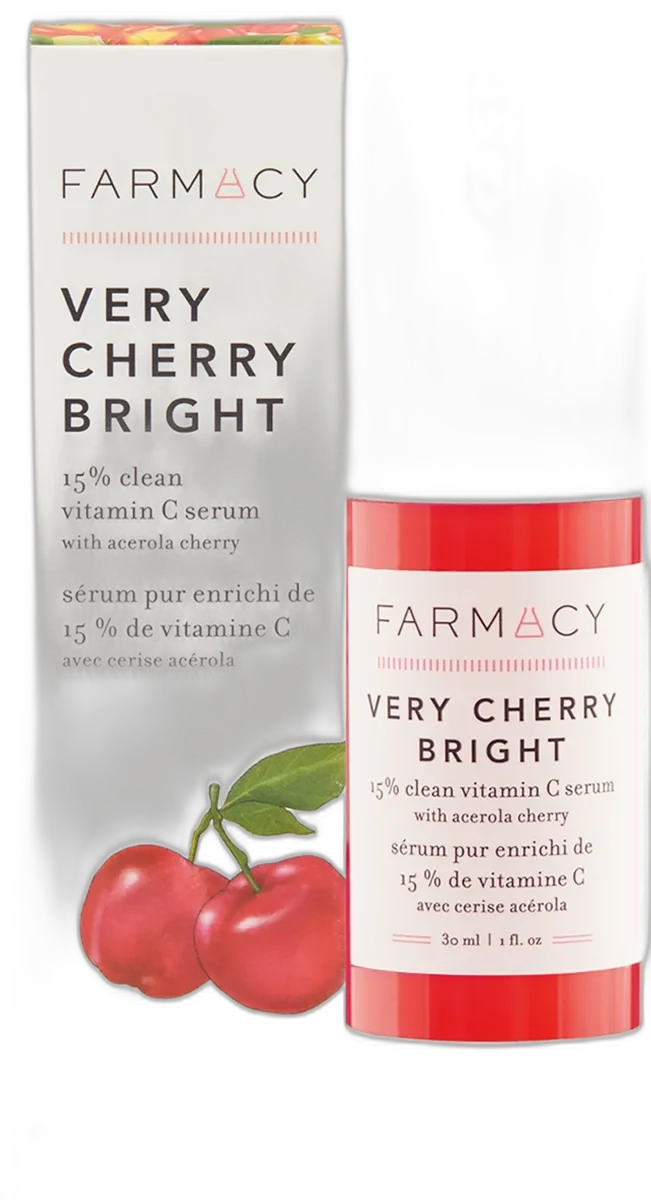
Very Cherry Bright 15% Clean Vitamin C Serum
Gentle Vitamin C Pioneer
 Verified reviewer
Pros & cons.
- +Four-form vitamin C approach covers both water-soluble and oil-soluble pathways for broader delivery
- +Quad-weight hyaluronic acid complex makes this an exceptional hydrating serum alongside the brightening
- +Significantly gentler and more stable than L-ascorbic acid serums with no oxidation turning orange
- +Innovative airless push-pop pump mechanism minimizes air exposure and contamination
- +Pregnancy-safe formula suitable for those who cannot use retinoid-based brighteners
- +Vegan and cruelty-free with Leaping Bunny certification and Clean at Sephora designation
- +Acerola cherry extract provides companion antioxidants beyond isolated vitamin C
- −Vitamin C derivatives produce slower brightening results than L-ascorbic acid serums
- −Premium sixty-two dollar price is steep for derivative-based rather than pure ascorbic acid
- −Mild tackiness on application requires moisturizer layered over it to resolve
- −Semi-transparent packaging contradicts the otherwise thoughtful oxidation-prevention design
- −Cherry vanilla scent from botanical extracts divides opinion among users
The full review.
The vitamin C serum market has a potency problem. For years, brands competed in an L-ascorbic acid arms race using higher percentages, lower pH, and aggressive formulations. Many customers abandoned these serums because they stung, turned orange, or smelled like hot dog water. Farmacy analyzed this in 2019 and asked: what if the most effective serum is the one people actually keep using?
Very Cherry Bright is Farmacy’s answer, built on an interesting premise. Instead of one high-concentration vitamin C, it combines four derivatives—3-Glyceryl Ascorbate, 3-O-Ethyl Ascorbic Acid, Ascorbyl Tetraisopalmitate, and natural acerola cherry extract—at a combined 15%. The strategy favors coverage over concentration: water-soluble forms work on the skin surface, an oil-soluble form penetrates the lipid barrier, and a natural extract provides companion antioxidants. It is like diversifying an investment portfolio instead of betting on one stock.
The acerola cherry sourcing separates Farmacy from brands that use “clean” as a mere label. These cherries come from Northeast Brazil and contain up to sixty-five times more vitamin C per gram than an orange. The extract provides ascorbic acid, flavonoids, and carotenoids for complementary antioxidant protection. Whether farm-sourced ingredients justify the price premium is a personal choice, but the ingredient has functional value.
The quad-weight hyaluronic acid complex is the formula’s secret weapon. Four forms—crosspolymer, standard sodium hyaluronate, hydrolyzed, and acetylated—work at different epidermal depths. The crosspolymer forms a breathable surface film. The hydrolyzed fragments penetrate deeper. The acetylated form resists washing away. Together, they create a hydration architecture that makes this serum feel like a hydrating treatment as much as a brightening one. This is clever because dehydration drives most vitamin C serum abandonment.
The texture is a lightweight, slightly pink-tinted gel that spreads easily and absorbs within a couple of minutes. It has a mild tackiness upon application—common in hyaluronic acid-heavy formulas—that settles once you layer moisturizer over it. The scent is a light cherry-vanilla note from botanical extracts, not added fragrance. It is pleasant if you like it and polarizing if you do not. Some users describe it as waxy, though this fades quickly.
The packaging is noteworthy because Farmacy made an unusual choice. Instead of a standard dropper bottle—which exposes the product to air and bacteria—Very Cherry Bright uses an airless push-pop pump mechanism. The product twists up from the bottom, and the nozzle dispenses controlled amounts without drawing air into the reservoir. This is a practical design choice for a vitamin C serum, where oxidation is the main stability concern. However, the semi-transparent container is a strange counterpoint; fully opaque packaging would better match the stability-focused dispenser.
Performance shows how derivatives compare to pure ascorbic acid. 3-O-Ethyl Ascorbic Acid has brightening efficacy in clinical studies, and Ascorbyl Tetraisopalmitate shows promise for deeper penetration due to its oil solubility. But clinical evidence for these derivatives is thinner than for L-ascorbic acid, and results manifest more slowly. Users switching from a 15-20% L-ascorbic acid serum may notice a difference in speed. Users who cannot tolerate L-ascorbic acid will find this serum a revelation.
Brightening occurs. Dark spots fade over eight to twelve weeks of consistent use. Skin tone evens out. The complexion develops a quiet luminosity that looks like good sleep. These results accumulate gradually rather than providing the dramatic before-and-after impact high-potency L-ascorbic acid serums deliver in half the time.
At sixty-two dollars for one ounce, Very Cherry Bright is a premium product, making the derivative-based formula harder to justify by potency alone. You pay for the multi-form approach, farm-sourced acerola extract, quad-weight hyaluronic acid, innovative packaging, and clean formulation standards. Whether this equals sixty-two dollars of value depends on how you weigh experience and stability against raw brightening power. For those with a graveyard of oxidized, half-used vitamin C serums, the calculus tips favorably.
Very Cherry Bright does not try to be the most powerful vitamin C serum; this restraint is its greatest strength and its main limitation. It is for people who want consistent, gentle brightening without the irritation, instability, and sensory issues that cause people to abandon vitamin C. Seven years in, it proves the best vitamin C is not always the strongest.
Ingredient analysis.
Full INCI list
Water/Aqua/Eau, Glycerin, 3-Glyceryl Ascorbate, Prunus Cerasus (Bitter Cherry) Fruit Water, 3-O-Ethyl Ascorbic Acid, Sodium Citrate, Propanediol, Malpighia Punicifolia (Acerola) Fruit Extract, Ascorbyl Tetraisopalmitate, Glucomannan, Sodium Hyaluronate Crosspolymer, Sodium Hyaluronate, Hydrolyzed Sodium Hyaluronate, Sodium Acetylated Hyaluronate, Calendula Officinalis Flower Extract, Allantoin, Hydrolyzed Plukenetia Volubilis Seed Extract, Physalis Angulata Extract, Sorbitol, Sodium Phytate, Biosaccharide Gum-1, Prunus Amygdalus Dulcis (Sweet Almond) Fruit Extract, Oryza Sativa (Rice) Bran Extract, Helianthus Annuus (Sunflower) Extract, Simmondsia Chinensis (Jojoba) Seed Oil, Tocopherol, Rosmarinus Officinalis (Rosemary) Leaf Extract, Vanilla Planifolia Fruit Extract, Glyceryl Caprylate, Ethylhexylglycerin, Caprylyl Glyceryl Ether, Sclerotium Gum, Lithospermum Erythrorhizon Root Extract, Citric Acid, Polyglyceryl-4 Caprate, Pentylene Glycol, Polyglyceryl-6 Caprylate, Butylene Glycol, Caprylic/Capric Triglyceride, Caprylhydroxamic Acid, Sodium Levulinate, Sodium Anisate, Sodium Benzoate
Skin match.
The science.
The Science
Very Cherry Bright uses a multi-derivative vitamin C approach based on a proven rationale: different vitamin C forms access different skin compartments. 3-O-Ethyl Ascorbic Acid (EAC) is a well-studied derivative. A 2009 study in the Journal of Dermatological Science shows EAC inhibits melanin synthesis in human melanocytes more effectively than arbutin. Its stability at neutral pH means it stays active in formulation longer than L-ascorbic acid. The ethyl group protects the molecule from oxidation but allows conversion to active ascorbic acid in the skin.
Ascorbyl Tetraisopalmitate is the oil-soluble form. It solves a core limitation of water-soluble vitamin C: the stratum corneum is lipophilic, so water-soluble molecules face penetration barriers. Research in Skin Pharmacology and Physiology shows oil-soluble vitamin C derivatives penetrate the skin barrier's lipid matrix more efficiently, reaching deeper epidermal layers where melanocyte activity occurs.
The quad-weight hyaluronic acid system does more than add hydration. Sodium Acetylated Hyaluronate — the modified form used here — has higher skin affinity than standard sodium hyaluronate and stays effective after rinsing. A study in the International Journal of Biological Macromolecules shows acetylated hyaluronic acid forms a more persistent moisture-retaining film than conventional forms. Combined with hydrolyzed sodium hyaluronate (low molecular weight fragments that penetrate deeper) and crosspolymer forms (which create a surface film), the system hydrates the full depth of the epidermis.
Allantoin is a strategic addition to these vitamin C formulations. Research shows it promotes cell proliferation and modulates inflammatory pathways, making it a natural companion to concentrated actives that trigger mild irritation. Here, allantoin buffers the vitamin C activity and the skin's inflammatory response.
References
- Natural Oils for Skin-Barrier Repair: Ancient Compounds Now Backed by Modern Science — American Journal of Clinical Dermatology (2018)
Dermatologist Perspective
Dermatologists note that while L-ascorbic acid is the most clinically validated topical vitamin C, compliance is an issue. Many patients stop using L-ascorbic acid serums because of irritation, stinging, or the product turning orange in the bottle. Board-certified dermatologists say stable derivatives like 3-O-Ethyl Ascorbic Acid and Ascorbyl Tetraisopalmitate offer a pragmatic alternative for patients who cannot tolerate pure ascorbic acid. Dermatologists view the multi-weight hyaluronic acid inclusion favorably because it addresses the transepidermal water loss that vitamin C application can temporarily increase. Dermatologists recommend using this serum in the morning with broad-spectrum SPF for antioxidant-photoprotection synergy.
Where it fits in your routine.
Cleanse and tone first, then press 2-3 pumps into the face and neck, avoiding the eye area. Wait 1-2 minutes for absorption before you apply moisturizer and sunscreen. Use daily in the morning for antioxidant protection. You can also use it in the evening routine. Store in a cool, dark place to maximize shelf life.
At sixty-two dollars for one ounce, Very Cherry Bright charges a premium for a vitamin C serum using derivatives instead of L-ascorbic acid. The quad-weight hyaluronic acid, airless packaging, and farm-sourced acerola extract add value beyond the vitamin C, making this a two-in-one brightening and hydrating serum. One bottle lasts about two to three months with daily morning use. For users who stop using L-ascorbic acid serums due to irritation or instability, the cost-per-use of a product they finish may be more economical than buying serums they discard half-used.
This is for people who want vitamin C benefits but dislike the irritation, instability, or sensory experience of L-ascorbic acid serums. It works for normal to combination skin seeking brightening and hydration in one step, and for pregnant individuals needing a retinoid-free brightening option.
Users wanting maximum-potency brightening for significant hyperpigmentation or sun damage may find these derivatives slower than proven 15-20% L-ascorbic acid serums. Those with tree nut allergies should note the sweet almond extract. For strict budgets, the derivative-to-dollar ratio may not justify the premium over cheaper vitamin C options.
Product details.
This lightweight, slightly pink-tinted gel-serum spreads easily. It feels mildly tacky at first, but this resolves within one or two minutes, especially after applying moisturizer.
Natural botanical extracts provide a light cherry and vanilla aroma instead of synthetic fragrance. The scent is subtle and fades fast, but users disagree on whether it smells pleasant or slightly waxy.
An airless push-pop pump mechanism twists the product up from the bottom. This design limits air exposure and oxidation risk. The semi-transparent container shows the cherry-pink tinted product inside. Some users report dried product buildup on the nozzle.
No adjustment period is needed. The stable vitamin C derivatives are gentler than L-ascorbic acid from the first use. The hydrating hyaluronic acid complex makes skin look slightly more radiant immediately. The slight tackiness settles after you apply moisturizer.
2-3 months with daily morning use, using 2-3 pumps per application
6 months
All Year
The backstory.
Launched in 2019, Very Cherry Bright was Farmacy's entry into the competitive vitamin C serum market with a deliberately different approach. Instead of competing on L-ascorbic acid concentration — the traditional arms race in vitamin C serums — Farmacy chose stability and tolerability, combining derivatives that work at a wider pH range and resist oxidation. The acerola cherries are sourced from partner farms in Northeast Brazil, one of the richest natural sources of vitamin C on earth.
About Farmacy
Established Brand (5–20 years)Farmacy launched in 2015 with a farm-to-face philosophy and Procter & Gamble acquired it in 2021. The brand has Clean at Sephora certification and Leaping Bunny cruelty-free status. Partner farms in Northeast Brazil source the acerola cherries in this product.
Common myths.
Vitamin C serums must use L-ascorbic acid to be effective.
L-ascorbic acid has the most clinical data, but 3-O-Ethyl Ascorbic Acid and Ascorbyl Tetraisopalmitate show brightening and antioxidant efficacy in studies. These derivatives offer better stability and lower irritation. This formula uses multiple derivatives to provide broad vitamin C activity without the oxidation issues of pure ascorbic acid.
You cannot use vitamin C and niacinamide together.
This outdated advice relies on one study using extreme conditions. At this formula's pH range, vitamin C derivatives and niacinamide coexist without issue. Many dermatologists now recommend layering them for complementary brightening benefits.
FAQ.
What form of vitamin C does Farmacy Very Cherry Bright use?
This serum uses four vitamin C forms: 3-Glyceryl Ascorbate, 3-O-Ethyl Ascorbic Acid, Ascorbyl Tetraisopalmitate, and natural Acerola Cherry Extract. These stable derivatives replace pure L-ascorbic acid to brighten skin with less irritation and better shelf stability.
Is Farmacy Very Cherry Bright as effective as L-ascorbic acid serums?
The vitamin C derivatives in this formula are gentler and more stable than L-ascorbic acid, though brightening results are slower or more subtle. L-ascorbic acid serums at 15-20% work better for significant hyperpigmentation or sun damage, but this formula suits users who cannot tolerate pure ascorbic acid.
Can I use Farmacy Very Cherry Bright during pregnancy?
Most dermatologists consider topical vitamin C derivatives safe during pregnancy. This formula lacks retinoids, BHAs, or other pregnancy-contraindicated ingredients. Consult your healthcare provider for personalized advice.
Should I use Farmacy Very Cherry Bright in the morning or at night?
Use this in the morning. Vitamin C provides antioxidant protection that works with sunscreen to defend against UV-induced free radical damage. The stable derivatives in this formula resist the oxidation that makes some vitamin C serums problematic under sunlight.
Why does the serum feel sticky after application?
The glucomannan and hyaluronic acid complex forms a hydrating film, causing mild tackiness. This feeling subsides within one to two minutes and disappears after you apply moisturizer. This film locks in the vitamin C activity.
What the community says.
"Effective brightening and visible fading of dark spots over time"
"Hydrating formula that does not dry out or irritate skin like L-ascorbic acid serums"
"Innovative airless push-pop pump minimizes oxidation risk"
"Lightweight gel texture that layers well under makeup and sunscreen"
"Pleasant cherry scent from natural botanical extracts"
"Noticeable glow and improved skin tone with consistent use"
"Sticky or tacky texture before moisturizer is applied over it"
"Semi-transparent packaging may not fully protect vitamin C from light degradation"
"High price at $62 for one ounce especially for vitamin C derivatives rather than L-ascorbic acid"
"Cherry vanilla scent is polarizing with some finding it artificial or waxy"
"Some users report minimal visible brightening results compared to L-ascorbic acid serums"
People also looked at.