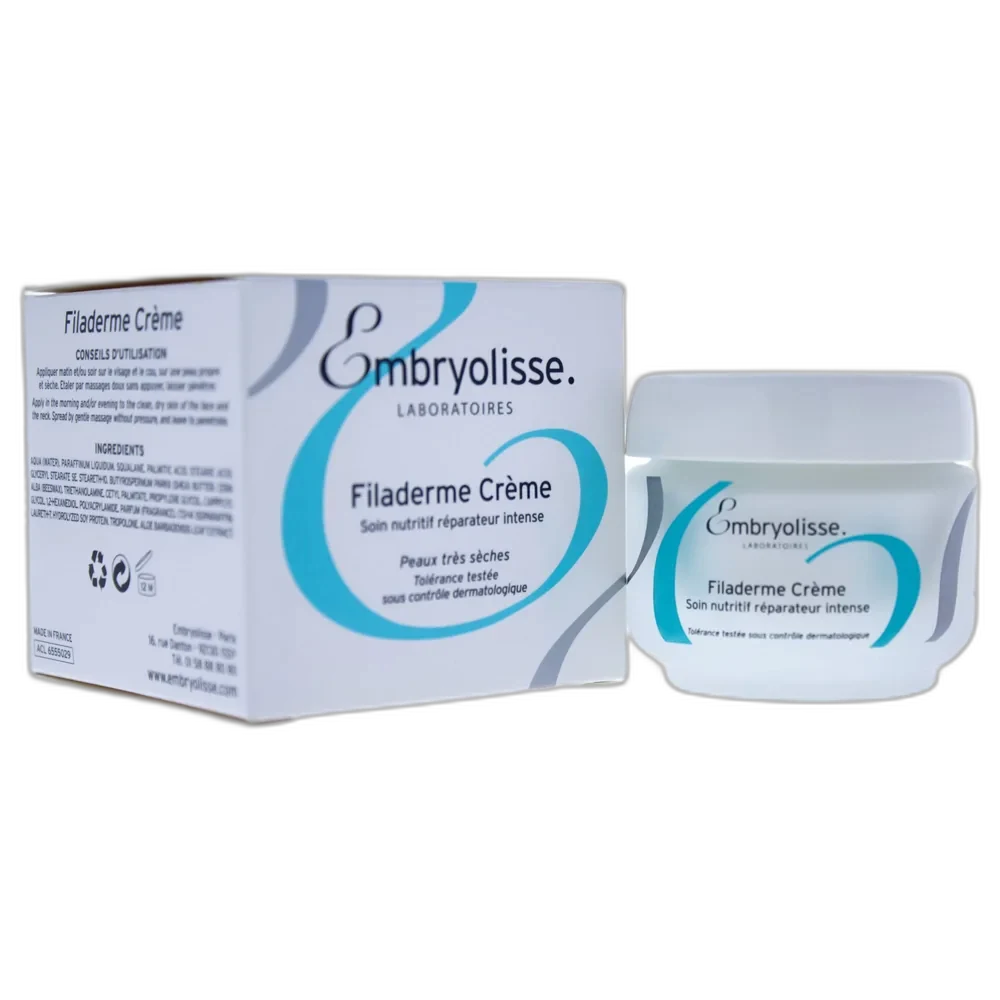
Filaderme Nourishing Cream
Winter Dry Skin Cream
 Verified reviewer
Pros & cons.
- +Dual GLA-rich oils (borage and evening primrose) for broad fatty acid coverage
- +Microcrystalline wax adds occlusive sealing for overnight protection
- +Shea butter provides substantial emollient nourishment
- +Niacinamide supports ceramide synthesis at a cellular level
- +Reasonable French pharmacy price for the formula quality
- +Genuinely effective for very dry and atopic-prone skin
- +Pairs well with hydrating serums layered underneath
- −Too heavy for daytime use under makeup in most cases
- −Light fragrance may bother very reactive skin
- −Jar packaging exposes oils to air over time
- −Not suitable for oily, combination, or acne-prone skin
- −Smaller 50ml jar relative to the price
The full review.
There’s a question that comes up constantly in dry skin recommendations: do you really need a heavier cream, or do you just need a better one? The answer for most people is the second — a thoughtfully formulated lighter moisturizer with the right combination of humectants, emollients, and barrier actives will outperform a heavier but less coherent cream. But there’s a real population of users for whom that answer is wrong. Very dry, chronically dehydrated, atopic-prone, or winter-compromised skin sometimes genuinely needs more occlusion than even a well-built emulsion can provide. That’s the user Filaderme Nourishing Cream is for.
The formulation strategy is the same as Filaderme Emulsion — borage and evening primrose oils for gamma-linolenic acid, shea butter for emollience, niacinamide for ceramide synthesis support, squalane for skin-mimetic lipid replenishment, panthenol and allantoin and bisabolol for soothing, sodium hyaluronate for humectant action. What makes the Nourishing Cream different is the addition of microcrystalline wax and a denser overall lipid load, which create a more occlusive sealing layer over the skin. The wax is what gives this cream its overnight performance for the driest skin types. It holds moisture in through hours of sleep, protects against cold dry air, and lets the underlying lipid replenishment work uninterrupted.
The GLA strategy is the same one that makes the broader Filaderme line worth attention. Borage seed oil is the richest natural source of gamma-linolenic acid, an omega-6 essential fatty acid the skin can metabolize into barrier lipids and anti-inflammatory signaling molecules. Evening primrose oil provides a second GLA source with a slightly different fatty acid profile, broadening the coverage. Topical GLA has a reasonable body of dermatological research supporting its use in atopic and chronically dry skin, particularly in combination with humectants and barrier-supporting actives like niacinamide. Embryolisse’s choice to pair both oils — rather than relying on one — is the kind of formulation thoughtfulness that distinguishes this line from cheaper drugstore options that include a token amount of one oil for the marketing copy.
The texture is dense and warming. The cream comes out of the jar as a substantial scoop and softens between fingertips before pressing into skin. There’s a light, clean French pharmacy fragrance that fades within a minute. Very dry skin types often experience immediate relief from tightness and flaking, and overnight use produces noticeably softer, more comfortable skin by morning. The cream stays on the skin’s surface longer than an emulsion would — which is the point of the wax content — so you’ll feel a faint film for the first ten or fifteen minutes after application before it fully settles. That’s normal for an occlusive-leaning night cream.
The practical use case is clear. This is a nighttime cream for very dry, chronically dehydrated, or atopic-prone skin, and a daytime cream only in cold winter weather when you’re not layering makeup on top. For oily and combination skin, this is too rich for any time of year, and the cream is too heavy to recommend for users who don’t have a confirmed dry-skin baseline. For acne-prone skin in general, the rich emollient base and shea butter content make it a poor choice — better to use the lighter Embryolisse options. For users with severely compromised barriers needing maximum protection, this still doesn’t go as far as pure petrolatum, so the heaviest cases may want to add a thin layer of plain petroleum jelly or an occlusive balm on top at night.
The limitations are about scope rather than execution. The light added fragrance is a flag for very reactive skin. The 50ml jar is on the smaller side for the price, though the dense texture means a little goes a long way. There’s no hero anti-aging active in the formula, so users wanting visible firming or fine line work should look elsewhere or layer this over a peptide or retinol serum at night. And like any rich cream packaged in a jar, the format exposes the product to air and contamination on every use, which is a small but real consideration for the more delicate ingredients like the GLA oils.
What this cream does well is exactly what it’s marketed to do: provide substantial overnight nourishment for the driest skin types using a coherent essential-fatty-acid-and-niacinamide strategy in a French pharmacy package at a fair price. It’s not exciting. It doesn’t have a trend ingredient or a celebrity endorsement or a hero molecule that gets a TikTok hashtag. It’s a quiet, well-built winter cream for users who need exactly this kind of product, and it deserves the consideration that more reliably-marketed but less thoughtfully-formulated alternatives often get instead. For the right user, it’s an easy recommendation.
### Formula
Ingredient analysis.
Full INCI list
Aqua, Glycerin, Cetearyl Alcohol, Caprylic/Capric Triglyceride, Butyrospermum Parkii (Shea) Butter, Glyceryl Stearate, Hydrogenated Polyisobutene, PEG-100 Stearate, Borago Officinalis Seed Oil, Oenothera Biennis (Evening Primrose) Oil, Squalane, Cera Microcristallina, Tocopheryl Acetate, Niacinamide, Panthenol, Hydrogenated Lecithin, Sodium Hyaluronate, Allantoin, Bisabolol, Phenoxyethanol, Disodium EDTA, Xanthan Gum, Fragrance
Skin match.
The science.
The Science
The formulation combines plant oil fatty acid replenishment, niacinamide-driven ceramide synthesis, and occlusive sealing from waxes and emollients. Borage seed oil has the highest gamma-linolenic acid concentration (approximately 18-26%) of any common cosmetic plant oil; evening primrose oil adds 8-14% GLA with a different fatty acid profile. Published research shows topical and oral GLA supports barrier function in atopic dermatitis and chronically dry skin, with studies showing improved barrier markers and lower transepidermal water loss with consistent use. GLA acts as a precursor to anti-inflammatory eicosanoids and a substrate for skin metabolism into barrier lipids. Niacinamide has the strongest evidence in this formula; multiple peer-reviewed studies show it stimulates ceramide synthesis, reduces transepidermal water loss, and improves barrier function. Shea butter provides a balanced fatty acid profile, naturally occurring tocopherols, and unsaponifiables with documented emollient and barrier-supporting properties. Microcrystalline wax forms an occlusive layer that complements the lipid-rich emollient base by physically reducing water evaporation from the skin surface. Sodium hyaluronate provides documented humectant action. This multi-pathway barrier support strategy—combining GLA, ceramide-stimulating niacinamide, occlusive emollients, and waxes—matches current dermatological consensus for effective very dry and atopic-prone skin formulations.
Dermatologist Perspective
Dermatologists often recommend GLA-rich moisturizers and occlusive night creams for patients with chronically dry, atopic, or barrier-compromised skin. The mix of borage and evening primrose oils, niacinamide, and a wax-containing emollient base aligns with board-certified dermatologist suggestions for nighttime use in winter or for patients who avoid petrolatum-based occlusives. Embryolisse products are widely available in French pharmacies and are standard recommendations for dry and sensitive skin populations in France. Dermatologists note that prescription topical treatments should be the first line for active eczema flares, while rich moisturizers like this support barrier resilience between flares. Fragrance content is a typical consideration for sensitive populations but is not a major issue at the levels used in French pharmacy formulations. For maximum barrier support in severely compromised cases, dermatologists sometimes suggest layering this kind of cream with a thin layer of petrolatum on top at night.
Where it fits in your routine.
Apply nightly after cleansing and any treatment serums. Warm a small amount between fingertips and press it into your face and neck. The cream is thick; use less than you expect. For severely compromised barriers, layer a hydrating serum (hyaluronic acid, polyglutamic acid, or glycerin-based) underneath to increase humectant pull before sealing with the lipid-rich cream. Use during the day only in cold winter weather without makeup. For both daytime and nighttime Filaderme coverage, use this cream at night and the lighter Filaderme Emulsion in the morning.
At approximately $32 for 50ml, Filaderme Nourishing Cream is priced reasonably for the French pharmacy tier and offers good value for users who specifically need a rich occlusive-leaning night cream for very dry skin. The 50ml jar is the only size routinely available, and lasts 2-3 months with nightly use, which works out to a fair monthly cost. The active ingredient list — dual GLA oils, niacinamide, shea butter, microcrystalline wax — is more thoughtfully constructed than many drugstore dry-skin creams and competitive with mid-tier French pharmacy alternatives. For users who want this specific kind of barrier-repair night cream, the value is solid. For users who could be served by a lighter moisturizer like Filaderme Emulsion, that's the better starting point and the Nourishing Cream can be added later if more occlusion is needed.
This works for very dry, chronically dehydrated, atopic-prone, or barrier-compromised skin needing a substantial nighttime cream with GLA support and occlusive sealing. It is particularly good for winter use and users in cold, dry climates.
Oily, combination, or acne-prone skin will find this far too heavy. Users wanting a lighter daytime moisturizer should choose Filaderme Emulsion instead, and severe fragrance-sensitive users should look for fragrance-free alternatives.
Product details.
Rich, dense cream that warms between fingertips into a silkier consistency
Light, clean French pharmacy fragrance
White and blue jar with the Filaderme line typography
New users notice the thick, nourishing texture that warms and softens between fingertips before pressing into skin. The light fragrance fades within a minute. Very dry skin types get immediate relief from tightness and flaking; overnight use produces softer, more comfortable skin by morning.
Approximately 2-3 months with nightly face and neck use
12 months
fall winter
The backstory.
Embryolisse expanded the Filaderme line in the early 2010s with a richer cream version for users who wanted the same GLA-driven barrier repair strategy in a more occlusive overnight formula. The Nourishing Cream complements the Emulsion in the line, offering a heavier option for the driest skin types and for winter use.
About Embryolisse
Legacy Brand (20+ years)Embryolisse started in 1950 in a French dermatologist's office and has been a European pharmacy mainstay for decades. The Filaderme line targets very dry and atopic-prone skin, using essential-fatty-acid-driven barrier repair as a modern approach.
Common myths.
Heavier creams are always better for dry skin
Dry skin doesn't always require the heaviest cream. You need the right mix of humectants, emollients, and occlusives for your specific dryness type. A heavy cream applied to dehydrated skin without underlying humectants sits on top and fails to deliver the water the skin needs.
GLA only works when taken orally
Studies show both topical and oral GLA repair the barrier. Topical application delivers GLA directly to the lipid matrix to incorporate it into the skin's barrier. Topical use works well, especially when paired with other barrier-supporting ingredients.
FAQ.
How does Filaderme Nourishing Cream differ from the Emulsion?
Both use the same GLA-driven strategy with borage and evening primrose oils, niacinamide, and shea butter. The Nourishing Cream is thicker and more occlusive, using microcrystalline wax for a stronger overnight seal. The Emulsion works for daytime; the Nourishing Cream is the winter and overnight option for the driest skin.
Can I use this cream during the day?
Most users find it too heavy for daytime, especially under makeup. Use it as a nighttime cream or during cold winter weather when you need extra barrier protection and aren't layering foundation on top.
Is it suitable for eczema-prone skin?
Yes — the GLA from borage and evening primrose oils, niacinamide, and shea butter work well in a non-flare eczema maintenance routine. Use your dermatologist's prescribed treatment first during active flares; this is a maintenance moisturizer.
Will it clog pores?
It lacks specific non-comedogenic testing, and the thick emollient base can cause acne. Users prone to breakouts should use it only at night on confirmed dry areas, or choose a lighter alternative.
How long does a jar last?
Use nightly on the face and neck for 2-3 months. The cream is thick, so a small amount lasts a long time.
Is it fragrance-free?
No — it has a light added fragrance. Sensitive users can patch test first or choose a fragrance-free alternative.
What the community says.
"Genuinely nourishing for the driest skin"
"Quick relief for flaking and tightness"
"Rich without being suffocating"
"French pharmacy heritage"
"Too rich for warm weather"
"Light fragrance"
"Smaller jar than Emulsion version"
"Not for daytime under makeup"