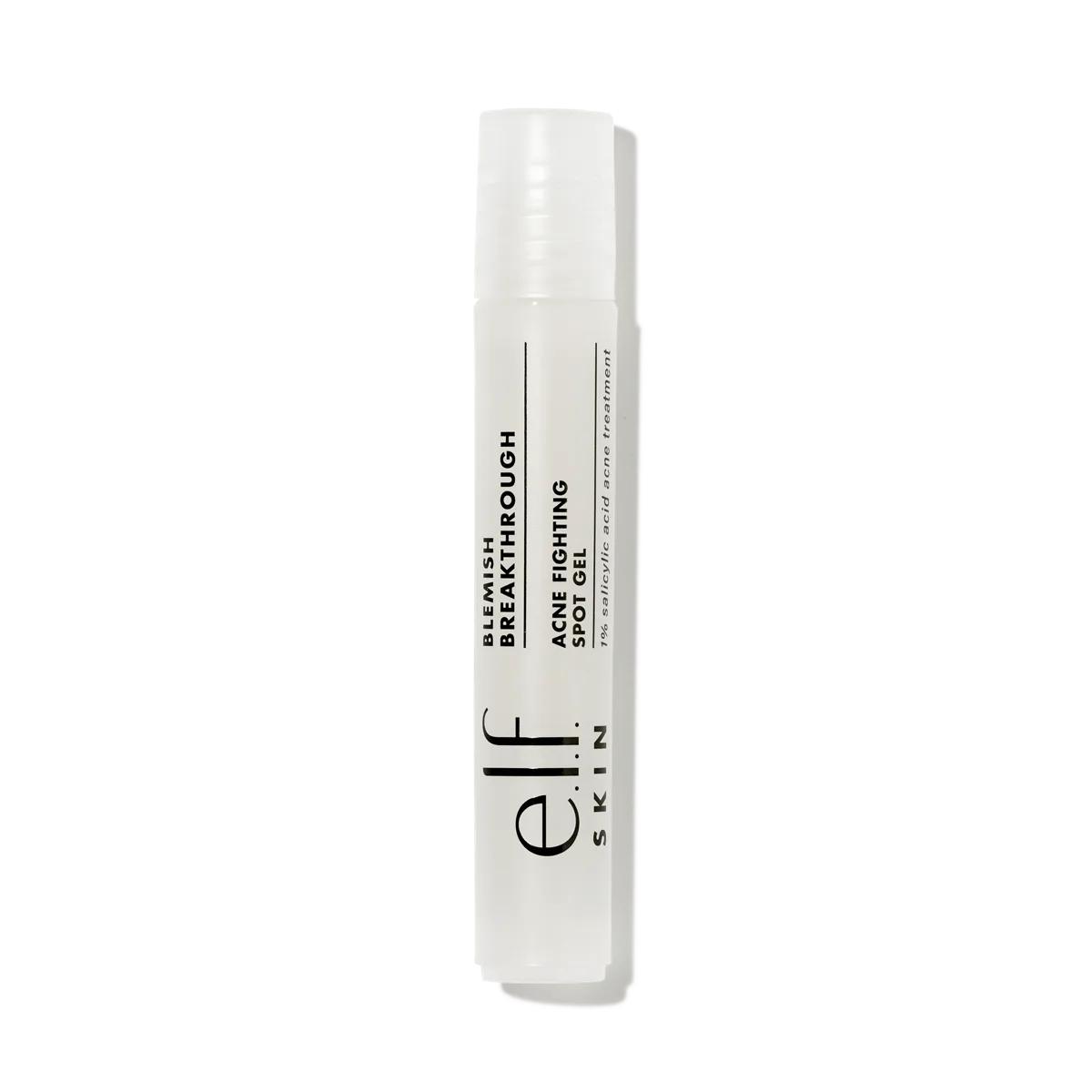
Blemish Breakthrough Acne Fighting Spot Gel
Budget Spot Zapper
 Verified reviewer
Pros & cons.
- +Five dollars for a multi-active spot treatment with salicylic acid and tea tree oil
- +Roll-on applicator allows precise application directly to individual blemishes
- +Visibly reduces blemish redness and swelling within hours of first application
- +Compact pen format is genuinely pocket-portable for on-the-go treatment
- +Leaping Bunny certified cruelty-free and 100% vegan
- +Dries to a thin invisible film that works under makeup
- −Alcohol denat. as the second ingredient may over-dry and irritate sensitive skin
- −Roll-on ball can potentially transfer bacteria between blemishes
- −Very small 7.5ml size depletes quickly with frequent breakouts
- −Camphor scent is noticeable and medicinal
- −1% salicylic acid may be insufficient for deep cystic acne
Ingredient analysis.
Full INCI list
Active Ingredient: Salicylic Acid 1%. Inactive Ingredients: Water (Aqua), Alcohol Denat., Butylene Glycol, Polyacrylate Crosspolymer-6, Camphor, Sodium Hydroxide, Melaleuca Alternifolia (Tea Tree) Leaf Oil, Hamamelis Virginiana (Witch Hazel) Extract, Aloe Barbadensis Leaf Extract, Camellia Sinensis Leaf Extract, T-Butyl Alcohol, Sodium Benzoate, Phenoxyethanol, Denatonium Benzoate
Skin match.
The science.
The Science
Salicylic acid works as a proven comedolytic agent. The FDA approves it as an OTC active at concentrations up to 2%. At 1%, the beta-hydroxy acid dissolves keratin and sebum plugs in comedones. Its lipophilicity—the ability to dissolve in oil—sets it apart from alpha-hydroxy acids.
Research shows tea tree oil (Melaleuca alternifolia) treats acne. A landmark randomized controlled trial by Bassett et al. in the Medical Journal of Australia compared 5% tea tree oil gel to 5% benzoyl peroxide lotion. Both reduced inflamed and non-inflamed acne lesions with comparable efficacy. Tea tree oil works more slowly but causes significantly fewer side effects.
Witch hazel (Hamamelis virginiana) has tannins with astringent and anti-inflammatory properties. Research shows hamamelis extracts inhibit pro-inflammatory mediators, supporting its use for skin inflammation, though clinical evidence for acne is more limited.
Salicylic acid and tea tree oil treat acne through two mechanisms: salicylic acid chemically exfoliates the pore lining, and tea tree oil provides antimicrobial activity against C. acnes bacteria. This dual approach matches dermatological recommendations for multi-mechanism acne treatment.
Dermatologist Perspective
Board-certified dermatologists consider salicylic acid spot treatments a reasonable first-line option for mild inflammatory and comedonal acne. The tea tree oil combination adds antimicrobial coverage to the BHA's pore-clearing action. However, dermatologists note that alcohol denat. as the second ingredient and camphor may compromise the skin barrier at the application site. Dermatologists recommend prescription-strength treatments over OTC spot gels for persistent or cystic acne.
Where it fits in your routine.
Roll the ball applicator over individual blemishes after cleansing and toning. Apply a thin layer to the blemish and the small surrounding area. Let it dry for 1-2 minutes before you apply moisturizer or makeup. Use morning and evening for fastest results. Clean the roller ball with rubbing alcohol between uses.
At $5 for 7.5ml, this is one of the most affordable spot treatments. The multi-botanical approach uses more active ingredients than many spot treatments costing three to four times more. The roll-on applicator adds convenience. It offers excellent value for quick intervention on surface blemishes. Users with frequent breakouts may repurchase monthly because of the small volume.
People with oily or combination skin who get occasional breakouts and want a quick, affordable, portable spot treatment. It works well for teens and young adults with mild to moderate acne.
The alcohol denat. and camphor are too aggressive for dry, sensitive, or eczema-prone skin with compromised barriers. This formula also does not work for deep cystic acne.
Product details.
This lightweight clear gel uses a roll-on ball applicator. It feels slightly tacky when applied, then dries to a thin film over the blemish.
It has no added fragrance, but smells of camphor and tea tree — cooling and slightly medicinal. The scent dissipates within minutes.
Slim pen-style tube with a roll-on ball applicator in Blemish Breakthrough teal-green. It is compact and portable.
The roll-on applicator feels cool and tingles slightly from the camphor and tea tree oil. The gel leaves a thin, slightly tacky layer on the blemish. The camphor cooling fades within minutes and the product dries to an invisible film.
4-8 weeks depending on frequency of breakouts
12 months
All Year
The backstory.
The Acne Fighting Spot Gel was part of e.l.f. Skin's Blemish Breakthrough collection that launched in 2022, designed to make dermatologist-grade acne care accessible at drugstore prices. The roll-on format was chosen for portability and precision.
About e.l.f. Skin
Legacy Brand (20+ years)e.l.f. launched in 2004 and is one of the fastest-growing beauty brands in the US. Dermatologists helped develop the Blemish Breakthrough collection, which launched in 2022. e.l.f. has double cruelty-free certification (Leaping Bunny + PETA) and was the first beauty brand to earn Fair Trade USA certification.
Common myths.
Spot treatments should sting and burn to be effective.
Camphor in this product creates a cooling sensation, but salicylic acid and tea tree oil provide the therapeutic action. Stinging means irritation, not efficacy.
You should only apply spot treatment at night.
This gel dries to a thin, invisible film. It works well under makeup during the day. Apply morning and evening to resolve blemishes faster.
FAQ.
Does the e.l.f. acne spot gel really work?
The formula combines 1% salicylic acid with tea tree oil, witch hazel, and aloe vera. Most users see less redness and swelling within hours. It works best on early-stage blemishes; deep cystic acne may need stronger treatment.
Is the roll-on applicator hygienic?
The roll-on ball touches the blemish directly, which transfers bacteria between spots. Clean the roller with rubbing alcohol occasionally and do not share the product.
Can I use the e.l.f. spot gel under makeup?
Yes — the gel dries to a thin, nearly invisible film that works well under concealer and foundation. Apply to clean skin, wait 1-2 minutes to dry, then apply makeup as normal.
Does this spot treatment contain alcohol?
Yes — alcohol denat. is the second ingredient and makes the gel dry fast. The aloe vera and small application area reduce drying, but people with very dry skin should be cautious.
Can I use this with retinol?
Avoid layering retinol on the same spots. The combination of salicylic acid, alcohol, and camphor with retinol causes irritation. Skip the spot gel on treated areas on retinol nights.
What the community says.
"Effectively reduces blemish redness and swelling within hours"
"Convenient roll-on applicator is portable and easy to target"
"Extremely affordable at $5"
"Soothing formula calms active breakouts quickly"
"Works well as a preventative on breakout-prone areas"
"Dries to invisible film under makeup"
"Some report little effect on stubborn or cystic acne"
"Roll-on applicator may transfer bacteria between uses"
"Contains alcohol denat. and camphor which may irritate"
"Very small 7.5ml size runs out quickly"
"Slightly tacky residue on skin"
Featured in.
People also looked at.