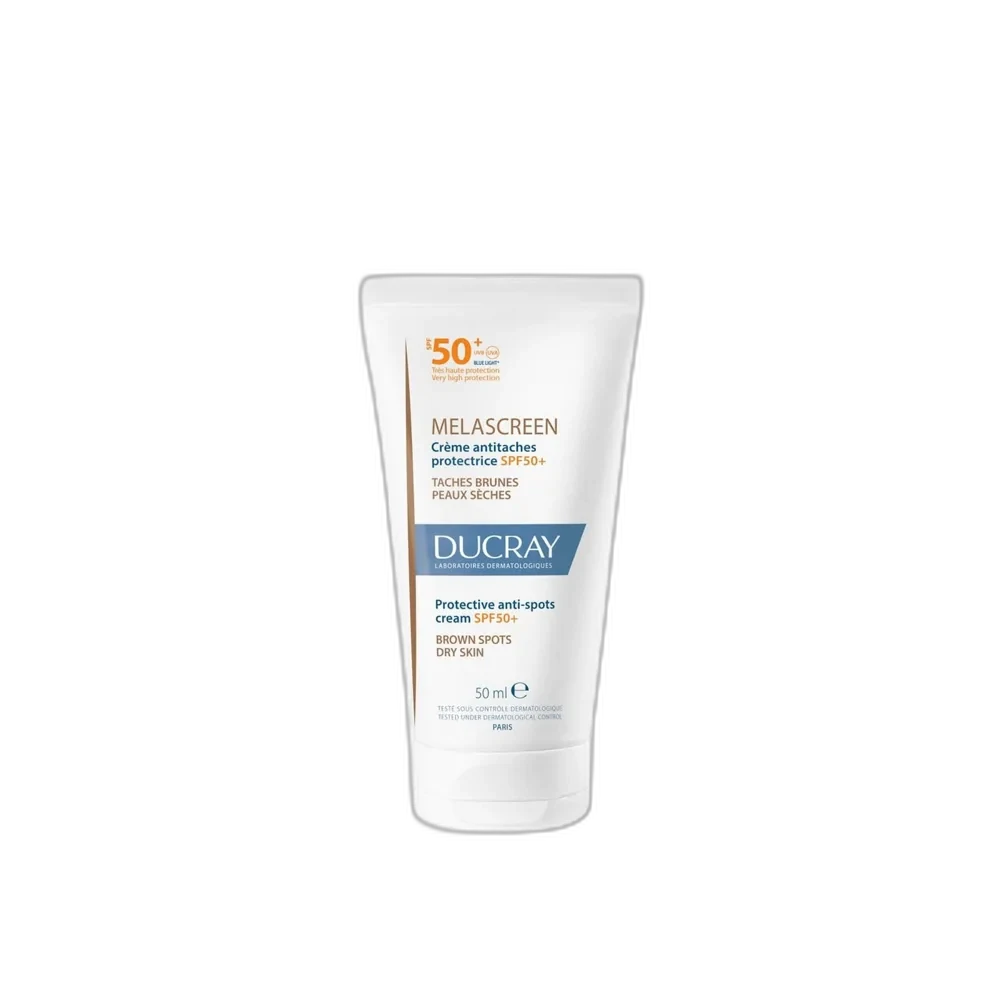
Melascreen Depigmenting Cream SPF 50+
Melasma Day Cream MVP
 Verified reviewer
Pros & cons.
- +Four brightening mechanisms work in parallel (dioic acid, niacinamide, resorcinol, glycolic acid)
- +Broad-spectrum SPF 50+ with strong Tinosorb-based UVA coverage
- +Pregnancy-safe — appropriate for hormonal melasma during pregnancy
- +Single-product approach addresses the most common adherence failure in melasma treatment
- +Light non-greasy texture that layers under makeup
- +Published Ducray clinical data and a decade of European pharmacy track record
- −Small 30 ml tube makes per-ounce price relatively high
- −Glycolic acid too active for the most sensitive or barrier-compromised users
- −Slight whitecast possible on the deepest skin tones
- −Requires reapplication every 2 hours for sustained outdoor sun protection
- −Octocrylene filter is a potential allergen for a small subset of users
The full review.
Ask any dermatologist why melasma treatments fail, and they won’t blame hormones or genetics. They will blame patients skipping brightening treatments, sunscreen, or both. Melasma is punishing because pigment and UV exposure are directly linked: even small amounts of unprotected sun reactivate melanocytes and undo weeks of progress. Clinical literature shows patients who consistently apply both depigmenting treatment AND broad-spectrum SPF every morning, reapplying as needed, see meaningful improvement. However, trials show the average patient stops this routine after about three weeks. The treatments work; patients cannot sustain the protocol.
Ductray’s Melascreen Depigmenting Cream solves this adherence problem by combining the depigmenting treatment AND the high-protection sunscreen into one single-step product. It removes the main failure point: the patient who applies brightening cream but forgets sunscreen, or applies sunscreen but skips brightening cream because they are in a rush. Whether this consolidation works depends on your habits, but for those prone to melasma treatment failure, the formulation design is thoughtful.
The brightening side uses four parallel mechanisms. Octadecenedioic acid (dioic acid) is a saturated fatty diacid that inhibits PPAR-gamma and reduces tyrosinase expression—the rate-limiting enzyme of melanin synthesis—over 8-12 weeks of consistent use. Niacinamide adds another mechanism: it inhibits the transfer of finished melanosomes from melanocytes to surrounding keratinocytes, reducing visible pigment without bleaching underlying cells. Phenylethyl resorcinol (Symwhite 377) is a potent tyrosinase inhibitor that lab studies show is significantly more effective than kojic acid. Finally, glycolic acid at a low daytime-appropriate concentration accelerates surface turnover of pigmented cells, helping the skin shed dark patches faster while deeper-acting actives prevent new pigment. These mechanisms target different points in the melanin pathway to compound rather than overlap.
The sunscreen side uses a five-filter system: octocrylene, ethylhexyl salicylate, Tinosorb S (Bis-Ethylhexyloxyphenol Methoxyphenyl Triazine), Tinosorb M (Methylene Bis-Benzotriazolyl Tetramethylbutylphenol), and Uvinul A Plus (Diethylamino Hydroxybenzoyl Hexyl Benzoate). This modern photoprotection cocktail provides strong UVA coverage via the Tinosorbs and Uvinul, which is critical for melasma since UVA wavelengths primarily trigger pigment reactivation. The SPF 50+ rating and Tinosorb-driven UVA protection match the gold standard for melasma sun care and typical European dermatologist recommendations.
The cream is light and smooth—unusual for a high-SPF product with active treatments—with a satin finish that absorbs in about a minute and layers under makeup. Most skin tones see minimal white cast; a few users with very deep skin tones report a slight initial whitecast that fades within minutes. The formula is fragrance-free and pH-balanced. The glycolic acid causes a mild tingle during the first few applications before the skin acclimates.
Results follow the standard melasma treatment timeline. Most users see early, modest reduction in surface pigment density around the four-to-six-week mark. Meaningful improvement in established melasma and post-inflammatory hyperpigmentation accumulates over eight to twelve weeks. Full effect requires twelve to sixteen weeks of strict daily SPF reapplication. This matches dermatology literature for well-formulated combination depigmenting treatments, and Ductray’s published clinical data on the Melascreen line follows this same curve.
The limitations are manageable. The 30 ml tube is small, and at $38, the per-ounce price is high for the mid-market. No larger size exists. The glycolic acid is too active for some; patients with diagnosed rosacea or compromised barriers should use the gentler Melascreen UV Light Cream, which provides similar sun protection without the AHA. The chemical filter system is photostable but includes octocrylene, a known potential allergen for some users. Like any high-SPF treatment cream, it requires reapplication every two hours during sun exposure; a single morning application is not enough for outdoor activities.
The cream’s credibility is its strongest point. Pierre Fabre has made dermatology products since the 1960s and Ducray dates to 1930, with the Melascreen line serving as a long-standing, well-researched platform. Published clinical data on the active combinations is on file with European regulators, and French dermatology pigmentation protocols have recommended the line for over a decade. This is a refined approach to a difficult condition, not an experimental formula.
For patients with mild-to-moderate melasma who need a daily product they will actually use, pregnant or breastfeeding patients needing non-prescription options for hormonal melasma, or anyone whose treatment stalled due to skipping sunscreen, this is a top pharmacy-grade option. It is not magic or a replacement for dermatologist-managed care in severe cases, but it is a credible, clinically-grounded foundation for a daily melasma routine.
Formula
Ingredient analysis.
Full INCI list · pH 5
Aqua, Octocrylene, Diethylhexyl Butamido Triazone, Glycerin, Diethylamino Hydroxybenzoyl Hexyl Benzoate, Bis-Ethylhexyloxyphenol Methoxyphenyl Triazine, Caprylic/Capric Triglyceride, Niacinamide, Cetearyl Alcohol, Dimethicone, Ethylhexyl Salicylate, Methylene Bis-Benzotriazolyl Tetramethylbutylphenol, Octadecenedioic Acid, Glycolic Acid, Phenylethyl Resorcinol, Glyceryl Stearate, PEG-100 Stearate, Tocopherol, Sodium Hydroxide, Carbomer, Caprylyl Glycol, Phenoxyethanol, Disodium EDTA
Skin match.
The science.
The Science
This cream uses multiple evidence bases for depigmentation. Octadecenedioic acid (dioic acid) has clinical research, including studies in the British Journal of Dermatology, showing that topical application reduces hyperpigmentation via PPAR-gamma modulation and tyrosinase inhibition over 8-12 week windows. Some comparative studies show its efficacy matches hydroquinone but with much better tolerability.
The niacinamide brightening evidence base is well-established. Published work shows topical niacinamide reduces visible hyperpigmentation by inhibiting melanosome transfer from melanocytes to keratinocytes. This mechanism differs from tyrosinase inhibition, so niacinamide works well with other brightening actives without redundant effects.
Phenylethyl resorcinol has recent, interesting data. Published in vitro and clinical studies show it is a potent tyrosinase inhibitor in topical formulation. Research suggests it has a significantly greater inhibitory effect than kojic acid or hydroquinone equivalents at comparable concentrations. Using it with dioic acid hits tyrosinase from multiple angles.
The sunscreen filter system provides modern broad-spectrum photoprotection. The combination of Tinosorb S, Tinosorb M, and Uvinul A Plus provides the strong UVA coverage critical for melasma management, as UVA wavelengths trigger pigment reactivation more effectively than UVB. Published photostability data confirms these filters maintain protection during typical wear, which matters for a treatment cream delivering actives and sun protection at once.
Melasma rarely responds to a single intervention. Combining multi-mechanism treatment with aggressive sun protection is the dermatology-standard approach, and this cream does this in one daily product.
Dermatologist Perspective
Dermatologists treating melasma emphasize two non-negotiables: consistent daily depigmenting treatment and aggressive broad-spectrum sun protection. Board-certified dermatologists familiar with the Melascreen line frequently recommend the Depigmenting Cream as the daily morning product for patients with mild-to-moderate melasma, especially those who struggle to adhere to multi-product regimens. It is also commonly recommended for pregnant and breastfeeding patients with hormonal melasma, as the active ingredients are pregnancy-safe alternatives to prescription options like hydroquinone. Dermatologists note that for severe or recalcitrant melasma, this cream works best as one part of a broader treatment plan that may include prescription tranexamic acid, evening retinoids, or in-office procedures.
Where it fits in your routine.
Apply a thick layer to your face and neck every morning as the final AM step. This product replaces your morning treatment and your sunscreen step. Reapply every 2 hours during direct sun exposure to keep UV protection. Apply vitamin C serum first if you want. In the evening, follow with a separate brightening or retinoid treatment (tranexamic acid, retinaldehyde, or prescription tretinoin) for 24-hour pigment management. Use daily for at least 12-16 weeks before evaluating full results.
At about $38 for 30 ml, this sits at the high end of mid-market pharmacy pricing. The per-ounce cost matters for daily use, but consolidation adds value: replacing a separate brightening cream and a separate high-SPF sunscreen with one product saves money. For patients using a $30 brightening cream plus a $25 SPF 50+ sunscreen, this cream offers a slight net savings. For patients using only a basic moisturizer, it is a meaningful upgrade in cost and effort.
This works for patients with mild-to-moderate melasma needing one daily product, pregnant and breastfeeding users with hormonal melasma, anyone with sun-induced hyperpigmentation seeking treatment and protection in one step, and patients who failed previous melasma treatments because multi-product regimens were hard to follow.
People with severe or recalcitrant melasma requiring prescription treatment, patients with diagnosed rosacea or significantly compromised barriers (the glycolic acid may be too active), users with octocrylene allergies, and anyone needing a fragrance-free mineral-only sunscreen alternative.
Product details.
Light, smooth white cream that absorbs in about 60 seconds with a satin finish
None
White squeeze tube with flip cap, 30 ml
The glycolic acid causes a slight tingle during the first few uses, which usually stops within a week. Intact skin does not sting. Visible pigment improvement starts around the 4-week mark with strict daily use and consistent SPF reapplication.
2-3 months with daily morning application
6 months
All Year
The backstory.
Ducray developed the Melascreen Depigmenting Cream variant in 2014 in response to a long-standing clinical observation: melasma patients are notoriously poor at applying both their depigmenting treatment AND adequate daily sunscreen, and the result is that many treatments fail because the sun keeps reactivating pigment faster than the treatment can fade it. The single-product approach was Pierre Fabre's solution — eliminate the second step that patients were skipping.
About Ducray
Legacy Brand (20+ years)Ducray launched in 1930 as part of Pierre Fabre and has nearly a century of pharmacy-grade dermatology research. The Melascreen line is its long-running pigmentation platform. It has published clinical data on its active combinations and has broad European pharmacy distribution under dermatologist recommendation.
Common myths.
Glycolic acid in a daytime sunscreen increases sun sensitivity and is dangerous.
This formula uses a low concentration of glycolic acid to produce gentle surface turnover without significant photosensitization. AHA and sun concerns apply mostly to high-concentration evening peels; the SPF 50+ protection in this same product mitigates that risk.
FAQ.
How is Melascreen Depigmenting Cream different from Melascreen Eclat or UV Light Cream?
The Depigmenting Cream uses active brightening ingredients (dioic acid, phenylethyl resorcinol, glycolic acid) and SPF 50+ protection to correct skin. The UV Light Cream is a lighter, protective sunscreen for melasma maintenance. Melascreen Eclat is a serum for targeted nighttime treatment.
Can I use Melascreen Depigmenting Cream during pregnancy?
Yes. Standard OB/GYN guidelines consider the active ingredients (dioic acid, niacinamide, phenylethyl resorcinol, glycolic acid at low concentrations) pregnancy-safe, and the sunscreen filters are well-tolerated. This makes it one of the few effective melasma treatments for use during pregnancy, when hormonal melasma often develops.
How long until I see results from Melascreen Depigmenting Cream?
Surface pigmentation shows visible reduction after 4-6 weeks of consistent daily use. Melasma and post-inflammatory hyperpigmentation show meaningful improvement over 8-12 weeks. Full effect takes 12-16 weeks and requires strict daily SPF reapplication every 2 hours during sun exposure.
Can I use this cream with vitamin C or tranexamic acid?
Yes — applying a vitamin C serum first in the morning and layering this cream on top works well. Use Tranexamic acid serum in the evening to complement the daytime work this cream does for 24-hour pigment management.
Does this sunscreen leave a white cast on darker skin tones?
The filter system uses mostly organic chemical filters instead of mineral ones, so it leaves minimal white cast on most skin tones. Some users with very deep skin tones report a slight initial whitecast that absorbs within a few minutes, but this is not typically a dealbreaker.
Is Melascreen Depigmenting Cream enough on its own for severe melasma?
Use this cream as part of a multi-product approach for severe or recalcitrant melasma. This approach includes prescription tranexamic acid (oral or topical), a nighttime retinoid, and dermatologist-prescribed treatments. For mild-to-moderate melasma, daily use of this cream alone produces meaningful improvement.
What the community says.
"visible fading of melasma over months"
"high SPF protection in same product"
"layers under makeup well"
"pleasant non-greasy texture for a sunscreen"
"small 30 ml tube for the price"
"slight whitecast on deeper skin tones"
"glycolic acid too active for some sensitive users"
"needs reapplication for sustained sun protection"
People also looked at.