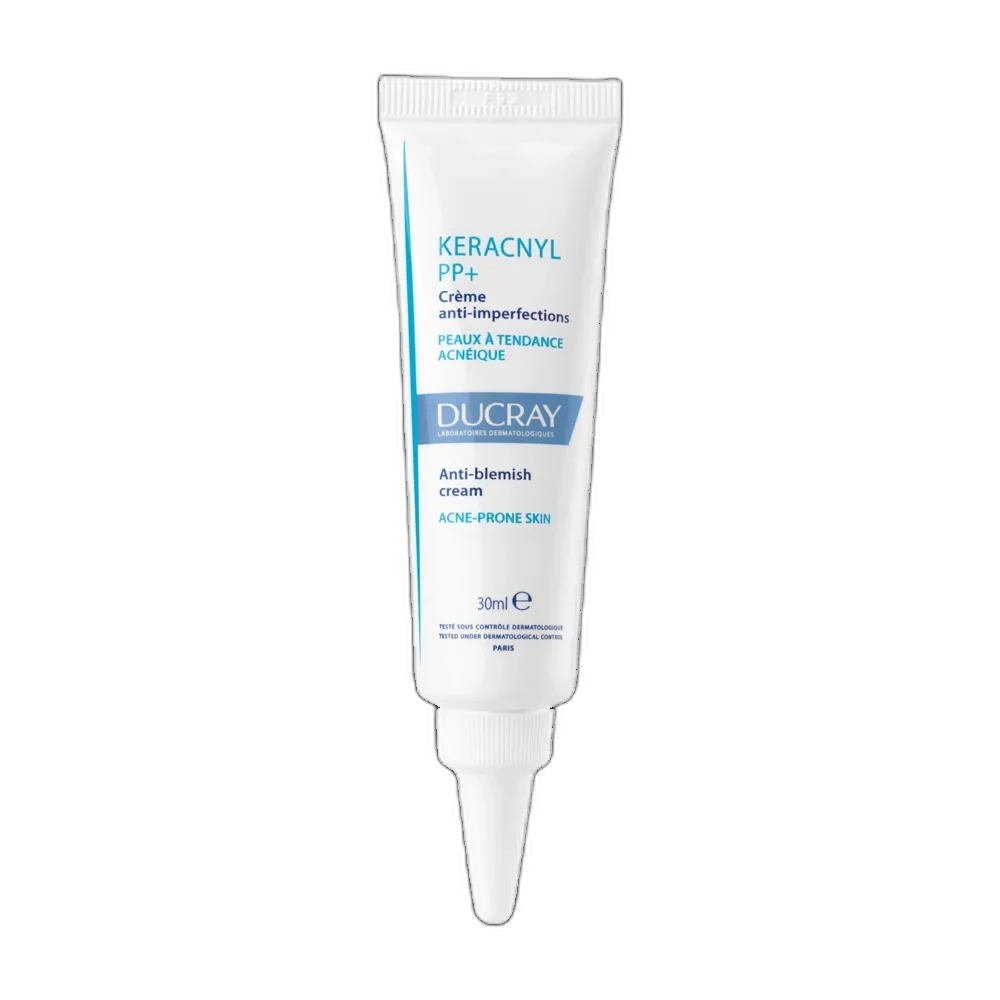
Keracnyl PP+ Anti-Blemish Cream
Acne Companion Plus
 Verified reviewer
Pros & cons.
- +Four-mechanism approach: sebum, inflammation, bacteria, and pigmentation
- +Celastrol addition gives noticeably more anti-inflammatory effect than original PP
- +Phytic acid contributes gentle anti-pigment action for post-acne marks
- +Niacinamide at meaningful concentration for sebum and barrier support
- +Fragrance-free, oil-free, and fungal-acne safe — appropriate for sensitive acne types
- +Layers cleanly with retinoids and benzoyl peroxide as a buffering and active step
- −Not recommended during pregnancy due to Tripterygium wilfordii content
- −Small 30 ml tube runs out in 6-8 weeks of full-face twice-daily use
- −Limited US availability through mainstream retail channels
- −Too lightweight for users with dry skin alongside acne
- −Not a substitute for prescription treatment in severe nodulocystic acne
The full review.
When Pierre Fabre’s research team set out to upgrade the original Keracnyl PP cream in the early 2020s, they had a specific patient profile in mind. The original PP variant had been on French pharmacy shelves since 2013 as a gentle, niacinamide-and-Myrtacine-based companion cream for acne-prone skin — the kind of product you reach for when you need barrier support alongside your adapalene without compounding the irritation. It was reliable and well-tolerated, and dermatologists liked it. But it had a clear ceiling. For patients with more active inflammatory acne — the kind where lesions appeared faster than they cleared, where post-inflammatory hyperpigmentation was building up faster than the niacinamide could fade it, where the gentle PP version simply wasn’t doing enough — there was a gap between Keracnyl PP and a prescription-grade product. PP+ is what Pierre Fabre built to fill that gap, and it launched in 2021 as the more aggressive sibling to the original.
What PP+ adds is two specific actives that distinguish it from the original. The first is Tripterygium wilfordii root extract — the same celastrol-containing botanical that anchors Ductray’s Dexyane MeD line for atopic dermatitis. Celastrol has a growing body of dermatological research showing it modulates inflammatory cascades involved in skin conditions ranging from eczema to acne. In this acne-focused context, it gives PP+ noticeably more anti-inflammatory punch than the niacinamide-and-Myrtacine combination of the original PP could provide on its own. The second addition is phytic acid, a plant-derived chelator with mild keratolytic and anti-tyrosinase activity. It’s much gentler than glycolic or salicylic acid — important because the patient using this cream is probably also using a stronger acne active that’s already producing irritation — but it adds a brightening and gentle exfoliating layer that targets post-inflammatory hyperpigmentation alongside the active acne. Combined with the existing niacinamide (around 4%), Myrtacine, and zinc PCA, this creates a four-mechanism approach: niacinamide for sebum and inflammation, celastrol for deeper inflammation modulation, Myrtacine for bacterial biofilm disruption, and phytic acid for surface exfoliation and pigment fading.
That’s a lot to put in one cream, and the natural concern is whether layering all those mechanisms ends up producing irritation. In practice, the formulation is still well-tolerated. The vehicle is fragrance-free, alcohol-free, oil-free, and the actives are all chosen for their relatively low irritation profiles relative to their effect. The texture is a smooth, lightweight cream with a slight gel-like slip that absorbs within forty-five seconds and leaves a matte finish. It layers cleanly under sunscreen and oil-free makeup. Most users report no stinging on intact skin, though a small number notice mild tingling on actively inflamed lesions in the first few days as the celastrol takes effect — usually settling within a week.
In use, the difference between PP+ and the original PP is genuinely noticeable. Where the original PP is a quiet, supportive cream that you might struggle to attribute specific results to, PP+ produces visible reduction in inflammatory blemishes within seven to fourteen days of consistent twice-daily use, and visible improvement in post-inflammatory marks over four to eight weeks. That’s not a transformational result — it’s not going to clear severe nodulocystic acne — but it’s enough that patients who’d been on the original PP for months and felt stuck often report meaningful improvement after switching to PP+. For mild-to-moderate inflammatory acne, particularly in adult patients with the overlap of acne and post-inflammatory pigmentation that’s so common in the late-twenties-to-thirties demographic, PP+ is one of the most effective non-prescription options on the European pharmacy market.
The limitations are real but specific. The 30 ml tube is small and runs out in six to eight weeks with twice-daily full-face use. There’s no larger size option. The Tripterygium wilfordii extract means PP+ is not a default pregnancy-safe option — Ductray advises pregnant and breastfeeding users consult a doctor before use, which is a meaningful asterisk for the demographic most likely to be dealing with hormonal adult acne. US availability is still limited, though Ductray’s distribution has been expanding. And like the original PP, it’s not a standalone treatment for severe or cystic acne; for those cases, a dermatologist visit and prescription treatment is still the right starting point.
The broader credibility argument for PP+ is the same as for the rest of Ductray’s line: nearly a century of pharmacy-grade dermatology development under the Pierre Fabre umbrella, with the published research infrastructure to back the claims on the tube. The Myrtacine extract has been in the Keracnyl line for over a decade with a track record. The celastrol component is the same patented active Pierre Fabre uses in Dexyane MeD, with the same regulatory and tolerance data backing it. You’re not buying a startup’s first attempt at an acne cream — you’re buying into a multi-decade formulation tradition that’s been refined through European pharmacy distribution and dermatologist feedback.
For the right patient, PP+ is one of the most comprehensive non-prescription acne creams on the market. It’s particularly well-suited to adult acne with hyperpigmentation, to patients who’ve outgrown the gentle PP variant, and to anyone looking for serious anti-inflammatory action without resorting to a prescription. For patients who need a steroid-sparing option, it’s also worth considering. Just go in knowing what it is and what it isn’t.
Ingredient analysis.
Full INCI list · pH 5
Aqua, Glycerin, Caprylic/Capric Triglyceride, Niacinamide, Cetearyl Alcohol, Myrtus Communis Leaf Extract, Phytic Acid, Tripterygium Wilfordii Root Extract, Zinc PCA, Dimethicone, Glyceryl Stearate, PEG-100 Stearate, Bisabolol, Allantoin, Tocopherol, Carbomer, Sodium Hydroxide, Caprylyl Glycol, Phenoxyethanol, Disodium EDTA
Skin match.
The science.
The Science
PP+ uses three evidence bases. First, niacinamide has a well-established literature for acne-prone skin. Clinical trials in journals like the Journal of the American Academy of Dermatology show that topical niacinamide at 4-5% reduces sebum excretion, calms inflammatory acne lesions, and supports barrier function over 4-12 week application periods. In some patient populations, it shows comparable efficacy to topical clindamycin but has substantially better tolerability.
Second is the Myrtacine evidence base. Pierre Fabre's published work on Myrtus communis leaf extract shows anti-biofilm activity against C. acnes. This is mechanistically interesting because the biofilm protects acne-associated bacteria from host immune responses and topical anti-bacterials. Disrupting the biofilm makes bacteria more susceptible to other interventions, which can enable lower effective doses of harsher actives like benzoyl peroxide.
Third—and the addition that distinguishes PP+ from the original PP—is the celastrol literature. Published work in journals including Phytomedicine and the Journal of Ethnopharmacology characterizes celastrol from Tripterygium wilfordii as a multi-target anti-inflammatory compound that modulates NF-kB signaling and reduces pro-inflammatory cytokine production. Its application in acne is more recent than its role in atopic and inflammatory skin conditions, but the mechanism translates: acne is an inflammatory process triggered by sebum and bacteria, so an additional anti-inflammatory pathway compounds the niacinamide's effect.
Phytic acid adds a fourth mechanism through mild keratolysis and tyrosinase inhibition. Published comparison studies support its evidence base for post-inflammatory hyperpigmentation, showing meaningful pigment reduction over 8-12 week windows at gentle, low-irritation concentrations. The PP+ formula is strategic because none of these four mechanisms overlap with what a primary acne active (retinoid, benzoyl peroxide) does—PP+ adds new anti-acne effects to the routine without adding new irritation pathways.
Dermatologist Perspective
Dermatologists treating adult acne increasingly recommend layered, multi-mechanism regimens instead of single-active approaches. Board-certified dermatologists familiar with the Keracnyl line typically position PP+ as the more active option for patients who found the original PP insufficient, especially for adult acne with significant post-inflammatory hyperpigmentation. It is commonly recommended as a daily companion to prescription adapalene or tretinoin courses, and as a steroid-sparing option for patients wanting to reduce reliance on prescription topicals. Dermatologists note that the celastrol content makes it inappropriate as a pregnancy default, and they direct pregnant patients to the original PP version instead. The fungal-acne safety is also frequently flagged as a benefit, since the overlap of acne and Malassezia folliculitis is more common than many patients realize.
Where it fits in your routine.
Apply a pea-sized amount to clean skin twice daily as an acne treatment layer. In the morning, use an oil-free moisturizer if needed and lightweight sunscreen. In the evening, apply PP+ to dry skin after your primary acne active (adapalene, tretinoin, benzoyl peroxide) — wait one to two minutes before layering. Avoid use during pregnancy without medical guidance due to the Tripterygium content. Use for at least 8-12 weeks before evaluating effects on post-inflammatory pigmentation. Pair with daily SPF for best results on hyperpigmentation.
At about $25 for 30 ml, PP+ costs more than the original PP cream because the formulation has more actives. The per-ounce price is high for a non-prescription acne cream, but Myrtacine and celastrol justify it. It offers strong value compared to luxury acne lines that charge $50-80 for less differentiated formulations. It costs a meaningful premium over a $15 basic drugstore niacinamide cream due to the additional actives and the brand's clinical track record. The small tube size is the main per-unit value concern — heavy users will use it faster than they want.
Adult patients with mild-to-moderate inflammatory acne and post-inflammatory hyperpigmentation use this. It works for users who outgrew the gentle Keracnyl PP variant and patients on prescription retinoids seeking a more active companion cream than basic niacinamide. It suits the late-twenties-to-thirties demographic with hormonal adult acne.
Skip this if you are pregnant or breastfeeding (without medical guidance), have very dry skin with acne and need a thicker moisturizer, or have severe nodulocystic acne requiring prescription treatment. Also skip if you prefer fragrance and a more sensorial cream experience.
Product details.
This smooth, lightweight white cream has a slight gel-like slip. It absorbs in about 45 seconds and leaves a matte finish.
None
White squeeze tube with flip cap, 30 ml
Intact skin feels calm immediately without stinging. A few users report mild tingling on broken or actively inflamed lesions as the celastrol works, which usually stops within a few applications. Redness reduces visibly within the first few days.
2-3 months with twice-daily use over the full face
6 months
All Year
The backstory.
Keracnyl PP+ launched in 2021 as Pierre Fabre's upgrade to the long-running PP variant. The brief was specific: take the well-established PP base — niacinamide, Myrtacine, zinc — and layer in celastrol and phytic acid to give patients with active inflammatory acne and post-inflammatory hyperpigmentation a more aggressive non-prescription option. The PP+ was designed to bridge the gap between the gentle daily-use PP cream and prescription acne treatments.
About Ducray
Legacy Brand (20+ years)Ducray, part of Pierre Fabre and founded in 1930, has nearly a century of dermatological research. The Keracnyl line is its long-standing acne-prone-skin platform. The PP+ variant is the 2021 upgrade, which uses Pierre Fabre's patented Celastrol anti-inflammatory active and the brand's signature Myrtacine.
Common myths.
Phytic acid is a harsh exfoliating acid that dries out skin.
Phytic acid is a gentle plant-derived acid. It has mild chelating and tyrosinase-inhibiting effects instead of strong keratolysis. At pharmacy cream concentrations, it brightens skin and improves post-inflammatory pigment without the dryness caused by glycolic or salicylic acids.
FAQ.
How is Keracnyl PP+ different from the original Keracnyl PP?
PP+ adds Tripterygium wilfordii root extract (celastrol source) and phytic acid to the original PP formula's niacinamide, Myrtacine, and zinc PCA. This version has stronger anti-inflammatory action and gentle anti-pigment activity for patients who need more than the gentle PP version provides.
Can Keracnyl PP+ replace prescription acne treatments?
Many patients see meaningful improvement from PP+ alone for mild-to-moderate inflammatory acne. For moderate-to-severe acne, PP+ works best alongside prescription treatments like adapalene, tretinoin, or topical antibiotics. PP+ is stronger than the original PP but does not substitute for dermatologist-prescribed care in severe cases.
Is Keracnyl PP+ safe during pregnancy?
Ducray advises pregnant and breastfeeding users consult a doctor because it contains Tripterygium wilfordii root extract. The original Keracnyl PP (without celastrol) is a pregnancy-safer alternative for this use case.
Will Keracnyl PP+ help with post-acne marks?
Yes — the niacinamide and phytic acid combination has gentle anti-pigment activity. It reduces post-inflammatory hyperpigmentation over 4-12 weeks of consistent use. It works slower than a dedicated brightening serum, but it is effective with daily sunscreen.
Can I use Keracnyl PP+ with adapalene?
Yes — this is a primary use case. Apply adapalene first on dry skin, wait one to two minutes, then layer Keracnyl PP+ on top. This buffers irritation while celastrol and Myrtacine add anti-inflammatory and anti-bacterial effects.
Is Keracnyl PP+ fungal-acne safe?
Yes — this formula has no fatty alcohols, esters, or oils that feed Malassezia. It works for patients managing fungal folliculitis alongside conventional acne.
What the community says.
"more visible effect than the original PP version"
"reduces post-acne marks over time"
"calms inflammatory blemishes within days"
"layers well with prescription actives"
"not yet widely available in US"
"small 30 ml tube"
"celastrol inclusion makes pregnancy use uncertain"
"price slightly higher than original PP"
People also looked at.