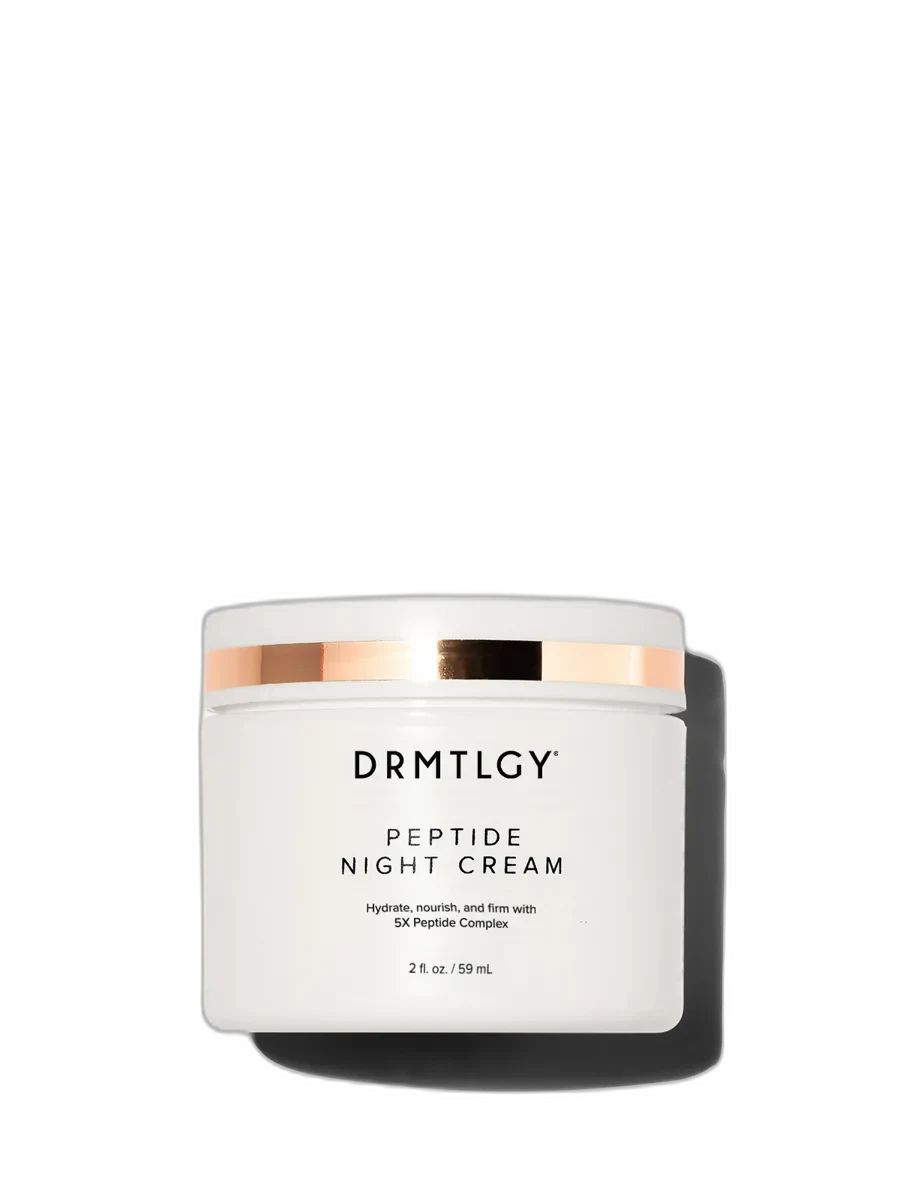
Anti-Aging Peptide Night Cream
Peptide Workhorse
 Verified reviewer
Pros & cons.
- +Unusual five-peptide stack covering multiple collagen pathways
- +Three-ceramide plus cholesterol and phytosphingosine barrier matrix
- +Silky, cushioning texture that layers cleanly over retinoids
- +Fragrance-free and alcohol-free for sensitive skin compatibility
- +Strong value compared with prestige peptide night creams
- +Gentle enough for nightly use without adjustment period
- +Pregnancy-compatible and retinoid-friendly
- −Jar packaging exposes peptides to oxidation over time
- −Isopropyl palmitate and cetyl alcohol may break out acne-prone skin
- −Too rich for oily skin in humid climates
- −No stated peptide concentration makes dose hard to judge
- −Not fungal-acne safe due to occlusive lipid content
The full review.
Many night creams use “peptide” on the label while only including one trendy chain. Drmtlgy’s Anti-Aging Peptide Night Cream does the opposite. It stacks five distinct peptides — Palmitoyl Tripeptide-1, Tripeptide-5, Tetrapeptide-7, Dipeptide-5 Diaminobutyroyl Hydroxythreonine, and Trifluoroacetyl Tripeptide-2 — inside a barrier-repair lipid matrix. This active list is unusually maximalist for a cream that competes with prestige peptide jars, and the math works on skin.
Peptides are short amino acid chains that signal skin cells. Some, like Tripeptide-1 (the Matrixyl family), nudge fibroblasts to produce more collagen. Others, like Tetrapeptide-7, dampen low-grade inflammatory signaling that breaks down existing collagen. Others act as carriers, moving actives into the upper dermis. Using five at once isn’t marketing theater; different peptides target different parts of the collagen lifecycle. A formula covering several pathways works because no single peptide is a miracle. The palmitoyl prefix on most of them also matters: it lipid-tags the peptide so it crosses the stratum corneum instead of sitting on top.
The peptides ride on a smart base. The formula uses a physiologic barrier blend: three ceramides (NP, AP, EOP), phytosphingosine, cholesterol, and shea butter. These are the exact lipid species the stratum corneum uses to hold water. This matters because peptides work best when skin isn’t losing water. Rebuilding the lipid scaffold and signaling collagen in one product is a coherent strategy. This layered thinking is typical of professional-line skincare, not a $46 DTC night cream.
Texture
The texture matches the claims. It is thick, silky, and cushioning without being a full occlusive balm. Dimethicone and caprylic/capric triglyceride turn the shea butter into a velvety finish rather than a greasy one. Because it has no fragrance, no essential oils, and no alcohol, it layers over serums or retinoids without sting. It is a strong retinoid buffer for its price; tretinoin users can use it to soften morning-after tightness without canceling the retinoid’s effect.
Who Should Buy
This cream is an excellent nightly option for users in their 30s through 60s with dry, normal, or well-behaved combination skin who want firmness and barrier support without irritation. It won’t replace a retinoid, and it shouldn’t. But as the final step that holds everything in and signals fibroblasts for eight hours, it earns its spot on the shelf.
Not ideal for
The formula has limits. Isopropyl palmitate and cetyl alcohol make it a risk for very acne-prone or fungal-acne-prone skin. Its thickness is also heavy enough that oily skin in a Houston summer will find it suffocating.
Packaging
The jar packaging is an issue. Peptides are delicate, and dipping into the jar introduces oxygen. A pump or sealed tube would better protect the active load Drmtlgy includes. For a product with this much active investment, the jar feels like a compromise.
Price
The price sits in a middle lane. At $46 for 2.1 ounces, it costs more than drugstore ceramide creams but much less than La Prairie or SK-II peptide products. You are paying for the active load — not the packaging, a celebrity, or a counter experience. That is an honest trade, especially since many prestige peptide creams contain only one peptide in the middle of the INCI list and mostly glycerin.
Ingredient analysis.
Full INCI list
Water/Aqua/Eau, Glyceryl Stearate, Propanediol, C12-15 Alkyl Benzoate, Glycerin, Isopropyl Palmitate, Undecane, Butyrospermum Parkii (Shea) Butter, Caprylic/Capric Triglyceride, Cetyl Alcohol, Dimethicone, PEG-100 Stearate, Palmitoyl Dipeptide-5 Diaminobutyroyl Hydroxythreonine, Palmitoyl Tripeptide-1, Palmitoyl Tripeptide-5, Palmitoyl Tetrapeptide-7, Trifluoroacetyl Tripeptide-2, Tetradecyl Aminobutyroylvalylaminobutyric Urea Trifluoroacetate, Ceramide NP, Ceramide AP, Ceramide EOP, Phytosphingosine, Cholesterol, Tridecane, Allantoin, Tocopherol, Glycol Distearate, Potassium Cetyl Phosphate, Butylene Glycol, Ethylhexylglycerin, Acrylates/C10-30 Alkyl Acrylate Crosspolymer, Carbomer, Polysorbate 20, Dextran, Magnesium Chloride, Phenoxyethanol, Disodium EDTA, Sodium Hydroxide, Sodium Lauroyl Lactylate, Xanthan Gum
Skin match.
The science.
The Science
The peptide evidence for this formula is meaningful but requires realistic framing. Palmitoyl Tripeptide-1 and Palmitoyl Tetrapeptide-7 belong to the Matrixyl peptide family; published in vitro and small clinical studies show they affect fibroblast collagen synthesis and wrinkle appearance. Palmitoyl Tripeptide-5 is chemically related to TGF-β, the body's collagen-signaling growth factor, and has supporting topical data. Trifluoroacetyl Tripeptide-2 is more niche—it targets progerin-like pathways and appears in 'lifting' formulations—and its independent clinical evidence is thinner than the Matrixyl family. Together, this stack relies on promising rather than definitive evidence. This is why peptide creams improve fine lines, firmness, and barrier feel without the dramatic remodeling seen with prescription retinoids. The three-ceramide barrier blend has firmer scientific footing. The 'physiologic lipid' concept—that equimolar ceramides, cholesterol, and free fatty acids rebuild the stratum corneum better than any single lipid alone—comes from decades of dermatologic barrier research by Peter Elias and colleagues. It forms the basis for modern ceramide-focused moisturizers. This formulation is interesting because it builds a physiologic lipid vehicle for the peptides; every application delivers both signal molecules and the lipid scaffold they need to work.
Dermatologist Perspective
Dermatologists generally view peptide creams as a useful adjunct to anti-aging routines rather than a centerpiece—tretinoin, sunscreen, and professional treatments still do the heavy lifting. However, board-certified dermatologists often recommend multi-peptide formulations with ceramide-rich bases for patients who cannot tolerate aggressive retinoid titration, have compromised barriers, or want a gentle nightly cream to complement an active routine. This product fits that role: the physiologic lipid base matches what dermatologists typically recommend for barrier repair, and the fragrance-free, alcohol-free profile minimizes sensitization risk. The main clinical caveat is for acne-prone patients, as the cream's thicker base may not be appropriate.
Where it fits in your routine.
At night, after cleansing and applying water-based serums or prescription retinoid, warm a pea-sized amount between fingertips. Press it into the face and neck using upward motions. Let it absorb for 1-2 minutes before bedtime. If layering over a retinoid, wait 15-20 minutes until the retinoid is fully absorbed to prevent dilution. Use more on the cheeks and jawline for very dry skin; use less on the T-zone for combination skin. Avoid the eye area — use a dedicated eye cream instead. Close the jar tightly after use to minimize peptide oxidation.
At $46 for 2.1 ounces, this peptide night cream sits in the mid-premium tier—higher than pharmacy ceramide creams but much lower than prestige peptide jars. The value comes from the active load: five peptides, three ceramides, cholesterol, and phytosphingosine. This formulation density usually costs $90-$150 at department store counters. The larger double-size option lowers the per-ounce price and offers better value for regular users. As a mid-priced DTC brand lacking the clinical decades of La Roche-Posay or CeraVe, Drmtlgy does not get the benefit of the doubt on premium pricing, but the INCI list justifies the cost.
People 30 and up with dry, normal, or non-breakout-prone combination skin who want peptide-driven firmness and barrier repair. It works well for retinoid users needing a gentle buffering night cream that won't cancel their active routine, and for sensitive skin that can't tolerate fragranced luxury anti-aging creams.
Oily and acne-prone skin, particularly those with fungal acne, works better with a lighter peptide serum or gel-cream. Peptides work subtly, so users expecting dramatic overnight wrinkle erasure will be disappointed. This DTC jar lacks the prestige packaging and counter experience of luxury brands.
Product details.
Thick, silky cream with balm-like slip that absorbs to a cushioned, non-tacky finish
Essentially scentless — a faint natural lipid note from the shea butter
Opaque plastic jar with screw lid — convenient but risks peptide stability
The first few uses feel cushioning without tingling or stinging. This fragrance-free formula requires no adjustment period; most users see improved morning softness within the first week.
3-4 months with nightly face and neck application
12 months
All Year
The backstory.
Drmtlgy was built as a DTC brand aimed at the gap between drugstore value and prestige marketing — offering dermatologist-developed formulas without the $150 jar premium. The peptide night cream became one of the brand's signature anti-aging anchors and a frequent entry point for customers migrating off department-store prestige brands.
About Drmtlgy
Emerging Brand (2–5 years)Drmtlgy launched in 2018 as a direct-to-consumer brand. It uses dermatologist-backed formulations at mid-tier prices. The brand lacks the decades of clinical literature found in legacy pharmacy brands, but its formulations use well-studied actives and have a large Amazon and DTC review base.
Common myths.
Peptides can't penetrate skin, so peptide creams are just expensive moisturizer.
Specific palmitoylated peptides in this formula use lipid-tags to cross the stratum corneum. Signal peptides like Tripeptide-1 show in vitro and topical data for collagen upregulation. They are not retinoids, but they are not placebo.
A peptide cream makes daily retinoid use unnecessary.
Peptides and retinoids use different pathways. Retinoids drive cell turnover and long-term remodeling, while peptides support signaling and barrier integrity. This cream complements a retinoid; it does not replace one.
FAQ.
Can I use this with a retinoid?
Yes — this cream works well as a retinoid buffer. Its ceramide-cholesterol-phytosphingosine base counters retinoid-induced barrier disruption, while the shea and dimethicone blunt initial dryness. Apply the retinoid first, then layer this on top.
Is it safe during pregnancy?
The peptides, ceramides, and supporting ingredients in this formula are safe for pregnancy. This product contains no retinoids, salicylic acid, or hydroquinone. Always discuss specific concerns with your OB or derm.
Will it break out acne-prone skin?
The base uses isopropyl palmitate and cetyl alcohol. These ingredients can cause issues for very acne-prone or fungal-acne-prone users. The formula fits normal, dry, and mature skin better than oily breakout-prone skin.
How does it compare to a prestige peptide night cream at 3-4x the price?
This five-peptide stack is more varied than many prestige jars that use only one star peptide. You pay less for the jar and packaging and more for the active load, but the plastic jar format hurts peptide stability.
Can I use it in the morning?
You can, but its thick texture works better for PM use. The brand markets it as a night cream because peptides and ceramides restore skin during overnight cell turnover, without SPF or makeup layering.
How long will one jar last?
Most users use a 2.1 oz jar for three to four months with nightly face and neck application. A larger double-size option costs less per ounce.
What the community says.
"Silky, cushioning texture"
"Visible firming over weeks of use"
"No fragrance or sting"
"Plays well under and over retinoids"
"Jar packaging exposes peptides to air"
"Too rich for oily skin in summer"
"Price creeps into prestige territory"