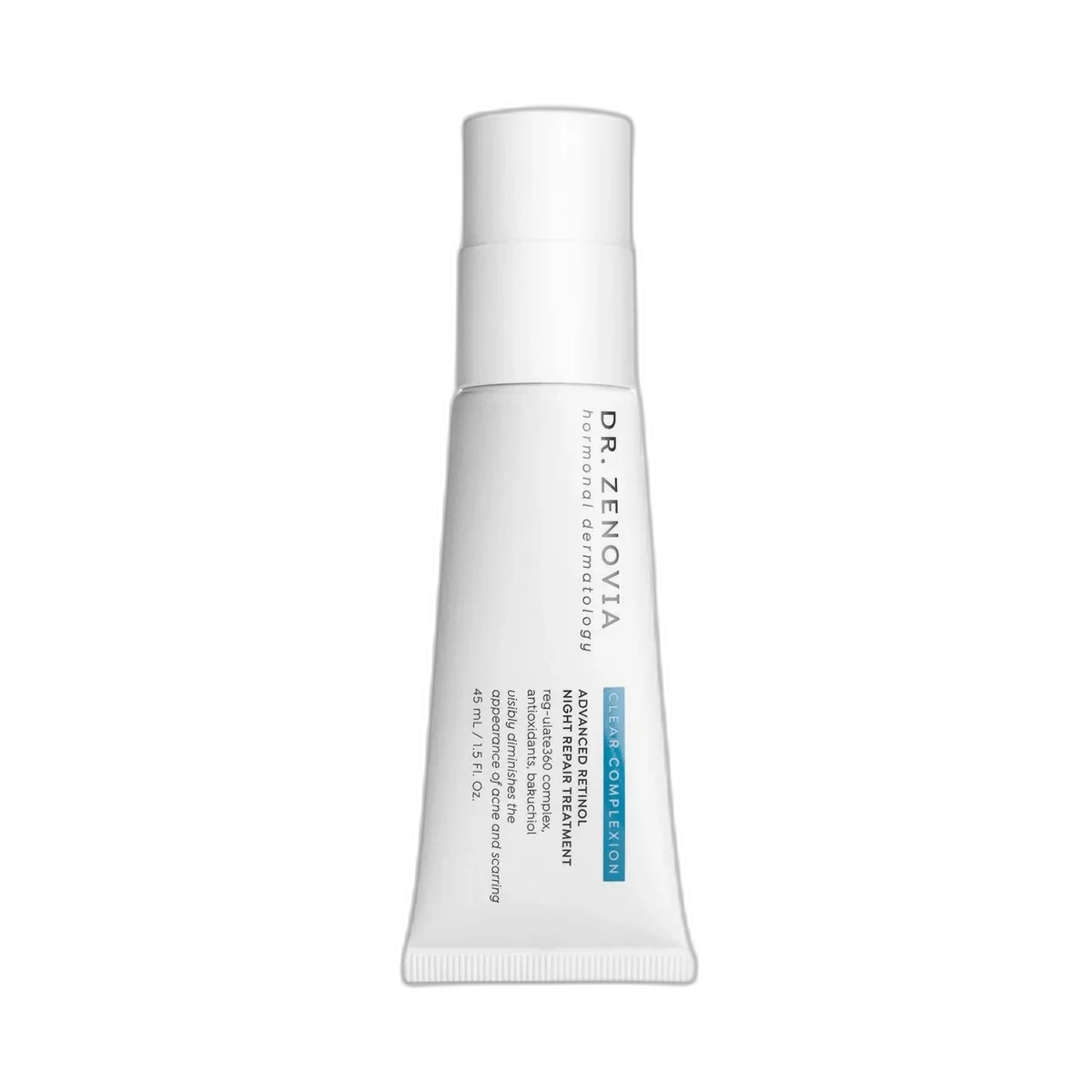
Hormonal Dermatology Retinol Refining Serum
Hormonal-Acne Retinol Specialist
 Verified reviewer
Pros & cons.
- +Encapsulated 0.5% retinol is significantly more tolerable than free retinol
- +Bakuchiol co-formulation amplifies benefits while buffering irritation
- +Niacinamide, cica, and squalane create a comprehensive soothing cast
- +Addresses both hormonal acne and signs of aging simultaneously
- +Fragrance-free and specifically targeted at adult reactive skin
- +Lightweight silky texture layers well under moisturizer
- +Dermatologist-developed with clear clinical specificity
- −Expensive compared to drugstore retinol options with similar concentration
- −Small 30ml size depletes in 3-4 months of nightly use
- −Still requires tolerance buildup despite encapsulation
- −Not safe for use during pregnancy or while trying to conceive
The full review.
Most retinol products ignore a specific skincare problem. It affects people in their late 30s, 40s, or early 50s who have crow’s feet, cheek laxity, and new monthly hormonal breakouts on the chin and jawline. These users often have skin that is dehydrated in some areas and oily in others. Every retinol tried—from affordable drugstore options and fancy department store brands to the prescription tretinoin from a derm visit last year—is either too irritating for the whole face or too weak for the breakouts. Dr. Zenovia Gabriel built her Hormonal Dermatology collection for this exact patient, making this retinol serum the centerpiece.
The formulation strategy is deliberate. The active is encapsulated 0.5% retinol instead of free retinol. This lipid shell wraps the active to release it gradually over several hours, which reduces the flaking, redness, and peeling free retinol typically causes at this concentration. Bakuchiol is co-formulated with the retinol. Bakuchiol uses pathways distinct from retinol and has evidence for collagen stimulation and anti-acne activity. Crucially, bakuchiol has documented anti-inflammatory effects that offset retinol irritation. This pairing is an amplification strategy with a built-in buffer, not redundancy.
The rest of the ingredients reinforce this buffering. Niacinamide is high on the list to cue endogenous ceramide synthesis and replace lipids retinol disrupts. Madecassoside and centella asiatica extract provide cica’s wound-healing signaling to help with retinol-induced redness and inflammation. Squalane acts as a lipid mimic of natural sebum, providing light moisturization without comedogenic risk. Panthenol, bisabolol, allantoin, and beta-glucan provide the soothing infrastructure. These are evidence-backed ingredients that make retinol tolerable for reactive adult skin.
The texture matches the formulation. It is a lightweight, silky serum with a slight yellow tint from the retinol that absorbs without residue. Application is smooth and usually sting-free, which is unusual for 0.5% retinol. Users following the recommended buildup schedule—2-3 nights per week for the first month, then every other night, then nightly as tolerated—typically see visible smoothing in two to three weeks. Breakout reduction follows around six to eight weeks, and fine-line softening and improved firmness appear around 12 to 16 weeks. This timeline matches retinol research across concentrations; retinol rewards patience.
Purging in the first 2-4 weeks is normal, especially for hormonal acne. Encapsulation slows this but does not eliminate it. If purging lasts past four weeks or becomes severe, reduce frequency and add barrier-supporting products. Most users following the tolerance buildup schedule find the purge milder than with traditional retinol.
At $72 for 30ml, the price sits above drugstore options (The Ordinary retinol at around $10-15, Neutrogena at around $25) but below luxury tiers like SkinCeuticals or Dr. Dennis Gross premium options. The cost covers the encapsulation technology, the bakuchiol pairing, the soothing ingredients, and Dr. Zenovia’s clinical targeting. For users who find drugstore retinols too harsh, this upgrade is often worth it because tolerability predicts long-term retinol success. If users tolerate The Ordinary or Paula’s Choice retinols well, there is no retinol-specific reason to spend more; the value here is the clinical targeting and secondary acne-fighting benefit.
This product focuses on specificity. Most retinols are generalists for everyone from 20-year-olds to 60-year-olds. This is built for the adult-acne-plus-aging population. The encapsulation improves tolerability, bakuchiol adds amplification, and cica and niacinamide manage inflammation. Squalane replaces lipids the retinol disrupts. It is not a miracle product, but it is a targeted one and a strong option in a crowded category. Use it with consistent nightly application, barrier support, and mandatory SPF to see results.
Ingredient analysis.
Full INCI list · pH 5.8
Water/Aqua/Eau, Propanediol, Glycerin, Retinol, Niacinamide, Bakuchiol, Dimethicone, Squalane, Tocopherol, Panthenol, Centella Asiatica Extract, Madecassoside, Sodium Hyaluronate, Allantoin, Bisabolol, Beta-Glucan, Encapsulated Retinol (Hydrogenated Lecithin, Phospholipids), Caprylic/Capric Triglyceride, Xanthan Gum, Disodium EDTA, Caprylyl Glycol, Phenoxyethanol, Ethylhexylglycerin
Skin match.
The science.
The Science
Dermatology has extensively documented Retinol's efficacy for acne, photoaging, and texture refinement. A 2006 review in the Journal of the American Academy of Dermatology summarized decades of research; topical retinoids upregulate collagen synthesis, normalize follicular keratinization, and reduce post-inflammatory hyperpigmentation via tyrosinase-related mechanisms. Research specifically examines encapsulation technology for retinol to reduce irritation without losing efficacy. A 2014 paper in the International Journal of Cosmetic Science shows encapsulated retinol formulations produce less transepidermal water loss and erythema than free retinol at comparable concentrations, while providing comparable long-term clinical improvements. Bakuchiol is newer to cosmetic literature but shows evidence for retinol-like effects through distinct molecular pathways. A 2018 study in the British Journal of Dermatology used a split-face trial to compare bakuchiol 0.5% to retinol 0.5%; it found comparable improvements in photoaging markers and significantly less irritation in the bakuchiol group. Co-formulating retinol with bakuchiol is a newer strategy that uses their complementary mechanisms and bakuchiol's anti-inflammatory effects to buffer retinol's irritation profile. Multiple controlled studies, including work by Tanno and colleagues in the British Journal of Dermatology, document Niacinamide's ability to stimulate endogenous ceramide synthesis. The supporting cast of madecassoside, squalane, and panthenol each provide evidence-backed barrier support, making this retinol formulation more tolerable for sensitive adult skin.
Dermatologist Perspective
Dermatologists frequently recommend retinol as the foundational anti-aging and acne-fighting active for adult patients. The encapsulated formulation approach is a strategy that gains traction for patients who struggle with retinol tolerability. Board-certified dermatologists note that tolerability is the single biggest predictor of long-term retinol success — a retinol a patient uses nightly produces better results than a higher-concentration option abandoned within weeks due to irritation. The co-formulation with bakuchiol and the inclusion of cica and niacinamide reflects an approach dermatologists take when recommending retinols for patients with both acne and aging concerns, particularly in perimenopausal populations. Pregnant patients should avoid all retinoids. Patients with active rosacea, eczema, or severely compromised barriers should generally avoid retinol until those conditions stabilize. For most adult patients looking to address acne and photoaging simultaneously, a formulation like this is a reasonable starting point.
Where it fits in your routine.
Apply at night to clean, dry skin. Use 2-3 drops on the full face, but avoid the immediate eye area and lip line. Always follow with a moisturizer to buffer and support the barrier. Use 2-3 nights per week for the first month, then move to every other night, then nightly as tolerated. Do not combine with AHA, BHA, vitamin C, or benzoyl peroxide in the same routine; alternate them on different nights. Always use broad-spectrum SPF during the day because retinol increases photosensitivity. Not for use during pregnancy.
At $72 for 30ml, this product sits in the premium-but-not-luxury retinol category. Drugstore options from The Ordinary, CeraVe, and Neutrogena offer similar retinol concentrations for a third to a fifth of the price, but lack the encapsulation technology and supporting cast. Mid-range alternatives like Paula's Choice and Naturium cost $30-50. Luxury tier options from SkinCeuticals and Dr. Dennis Gross exceed $120. This serum's value comes from its specific clinical targeting (adult hormonal acne plus aging), the encapsulation technology, and the bakuchiol pairing. The upgrade works for users who struggle with drugstore retinols. Users who tolerate cheaper options fine have no retinol-specific reason to spend more. No larger size is available.
Adults with hormonal breakouts and aging signs who struggle with traditional retinols. It works well for perimenopausal and post-menopausal users with more reactive skin. This single serum addresses acne, texture, hyperpigmentation, and fine lines.
Pregnant users and those trying to conceive must avoid retinol. Users with rosacea, active eczema, or severely compromised barriers should stabilize those conditions first. Budget-conscious retinol users who tolerate drugstore options have no efficacy reason to upgrade. Users with only aging concerns (no acne) find equally effective retinols at lower price points.
Product details.
Lightweight silky serum with a slight yellow tint
Fragrance-free with a mild retinol note
Opaque glass dropper bottle protecting retinol from light
The application is smooth, absorbs fast, and stings minimally. First-time retinol users may see flaking or purging during the first 2-4 weeks — this is normal and usually resolves. Start slowly: use 2-3 nights per week for the first month, then every other night, then nightly as tolerated.
About 3-4 months with nightly face application
6 months
All Year
The backstory.
Dr. Zenovia Gabriel developed this serum as the flagship of her Hormonal Dermatology collection, specifically for the adult patients — many in their 30s, 40s, and 50s — who were dealing with unexpected breakouts alongside early signs of aging. The encapsulation and co-formulation with bakuchiol were deliberate choices to make retinol tolerable for adult skin that's often both reactive and dehydrated, rather than the young oily skin most retinol products implicitly assume.
About Dr. Zenovia
Emerging Brand (2–5 years)Dr. Zenovia Gabriel, a board-certified dermatologist specializing in hormonal-related skin conditions, founded Dr. Zenovia Skincare in 2019. The Hormonal Dermatology collection targets adult hormonal acne and perimenopausal skin changes. As an emerging brand, independent clinical validation is still developing.
Common myths.
Retinol and bakuchiol are redundant — you only need one
They work through related but distinct pathways and amplify each other's benefits when co-formulated. Bakuchiol's anti-inflammatory effects reduce retinol's typical irritation. Combining them produces better results with less skin stress than retinol alone at the same concentration.
Higher retinol percentages are always better for anti-aging
Tolerability and consistency beat concentration. A 0.5% encapsulated retinol used nightly produces better long-term results than a 1% retinol that causes enough irritation to limit use to twice a week. The encapsulation in this formula targets the nightly-use sweet spot.
FAQ.
Can I use this retinol if I have hormonal acne?
Yes — this serum targets hormonal adult acne. It uses retinol, niacinamide, and cica to treat breakouts and surrounding inflammation. Expect initial purging for 2-4 weeks as pores clear. Consult your dermatologist if you have active severe cystic acne.
How does the encapsulated retinol differ from regular retinol?
Encapsulated retinol uses a lipid shell to release the active gradually over several hours instead of all at once. This reduces the irritation, dryness, and flaking free retinol causes, but keeps efficacy. This makes the serum tolerable for adult skin that cannot handle traditional retinols.
Is this retinol safe during pregnancy?
No — avoid all retinoids, including encapsulated retinol, during pregnancy and when trying to conceive. If you're pregnant, use bakuchiol-only alternatives and ask your OB for pregnancy-safe anti-aging options.
Can I use this with my vitamin C serum?
Do not use these in the same routine. Use vitamin C in the morning and this retinol at night; this is the standard layering approach. Combining them in one routine reduces the efficacy of both and increases irritation risk.
How long before I see results from this retinol?
Texture improves within 2-3 weeks. Breakouts decrease and hyperpigmentation fades around 6-8 weeks. Consistent nightly use yields full collagen-driven benefits—fine lines, firmness, and texture—at 12-16 weeks. Retinol rewards patience more than any other skincare ingredient.
Do I need to use sunscreen with this retinol?
Absolutely yes. Retinol significantly increases photosensitivity, and using it without daily broad-spectrum SPF will actively damage your skin and negate the anti-aging benefits. SPF is non-negotiable when using any retinoid.
Community
What the community says.
"Less irritating than other retinols"
"Addresses both acne and fine lines"
"Visible smoothing within weeks"
"Fragrance-free formula"
"Expensive compared to drugstore retinols"
"Small 30ml size"
"Still requires tolerance buildup for sensitive skin"
People also looked at.