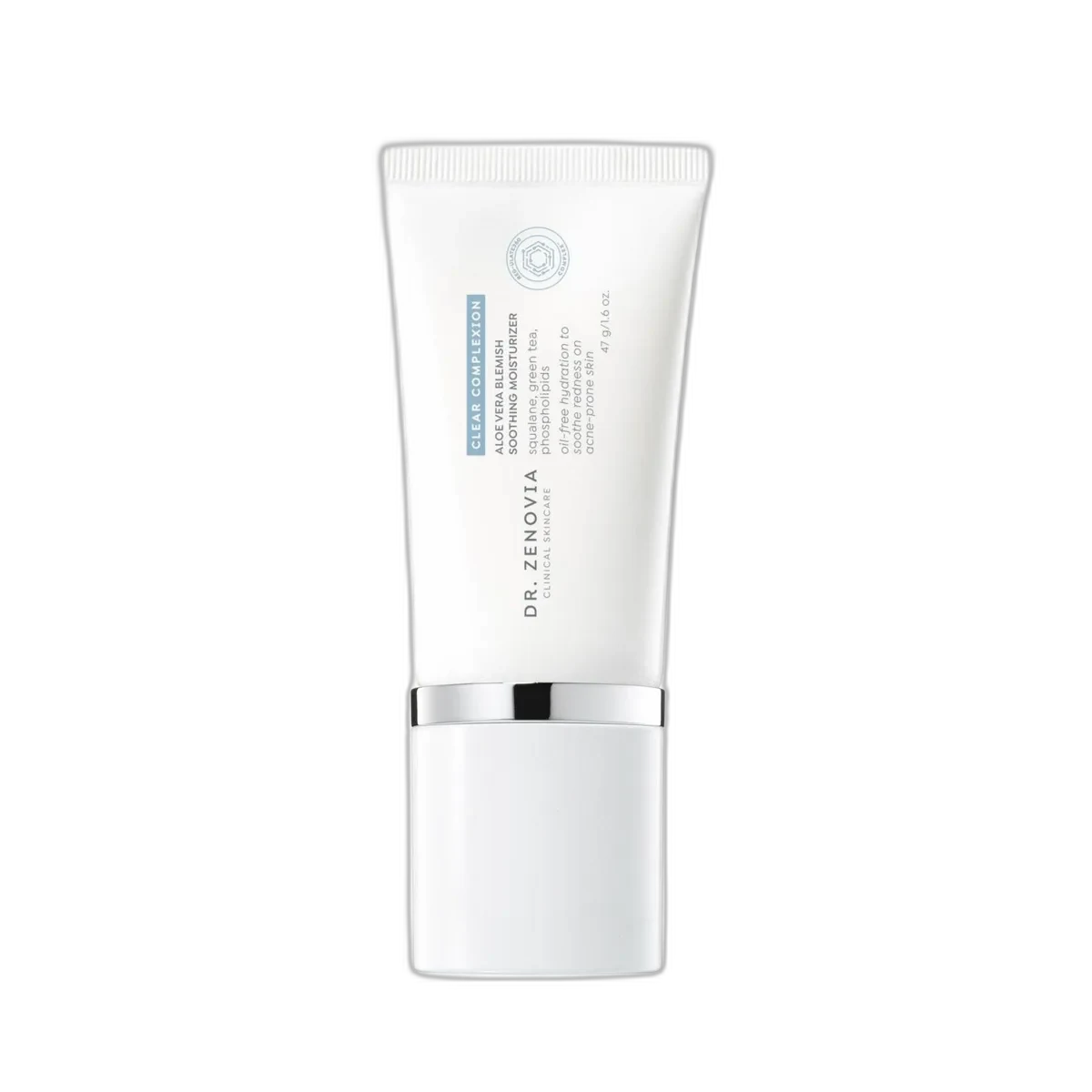
Aloe Vera Blemish Soothing Moisturizer
Soothing Acne Moisturizer
 Verified reviewer
Pros & cons.
- +Aloe as the second ingredient provides a genuinely calming hydration base
- +Low-dose salicylic acid and azelaic acid treat acne without compromising the barrier
- +Niacinamide, ceramides, and cica create a comprehensive barrier-supporting infrastructure
- +Lightweight gel-cream texture suits combination and oily skin types
- +Layers well under sunscreen and over prescription retinoids
- +Reasonable price for a dermatologist-developed acne moisturizer
- +Fragrance-free and formulated for reactive, adult acne-prone skin
- −Contains salicylic acid — not pregnancy-safe
- −Texture is too light for users with genuinely dry skin
- −Not sufficient as a standalone acne treatment for moderate to severe cases
- −Small 1.7 oz size depletes in 2-3 months of daily use
The full review.
Dr. Zenovia Gabriel runs her dermatology practice in Newport Beach. Much of her clinical work targets the population mainstream acne products fail: adults with hormonal breakouts whose skin is reactive, dehydrated, or over age 30. These patients often cannot tolerate the drying gels and benzoyl peroxide creams used for teenage acne, yet they cannot use rich moisturizers without triggering breakouts. For years, she recommended layering a gentle hydrator with a separate low-dose BHA, a separate azelaic acid product, and a separate soothing cream. In 2020, she consolidated that patchwork into this single moisturizer. The formula reflects that origin story.
Aloe barbadensis leaf juice is the second ingredient by weight. This is a heavy base, not a token inclusion at the bottom of the INCI list; it cools on application and quiets the inflammatory halo around active blemishes. Aloe has established anti-inflammatory credentials, and this concentration provides the product’s foundational calm. The salicylic acid at 0.5% stays below the irritation threshold for most users, keeping pores clear without the stinging, flaking, or barrier compromise seen in higher-dose BHA treatments. Azelaic acid handles the acne-fighting side and helps with the aftermath of breakouts—the dark marks and lingering redness that salicylic acid alone does not address. Azelaic acid works on both C. acnes and post-inflammatory hyperpigmentation. At this concentration, it acts as a supporting actor with real range rather than a star.
The barrier-supporting ingredients are notable. Niacinamide appears high on the list to regulate sebum, support barrier function, and quiet inflammation. Ceramide NP rebuilds the lipid matrix that acne and acne treatments disrupt. Madecassoside and whole centella extract provide wound-healing signaling for post-breakout repair. Panthenol, bisabolol, allantoin, and beta-glucan complete the soothing infrastructure. The formula balances treatment and barrier ingredients so neither side dominates.
The texture supports the formula. This lightweight gel-cream absorbs in about twenty seconds and leaves a slightly matte, non-greasy finish that layers under SPF and makeup. It has no heaviness, no shine, and no greasy afterfeel—the profile acne-prone users want. First-time users often report immediate cooling from the aloe, followed by visible redness reduction around active breakouts within the first week. Full benefits—fewer new breakouts, more even tone, and less reactive skin—appear over two to four weeks of consistent twice-daily use.
This product pairs well with stronger prescription or OTC actives. If you use tretinoin or adapalene at night, this moisturizer buffers retinoid irritation without canceling its effects. If you use a dedicated BHA toner or cleanser, this adds a treatment layer without overstacking. If you use prescription azelaic acid (Finacea or Azelex), the consumer-level azelaic acid here reinforces rather than duplicates. Dr. Gabriel designed it to slot into real-world acne routines.
There are limitations. Because the formula contains salicylic acid, it is not pregnancy-safe and should not be used by anyone pregnant or trying to conceive. The 1.7-ounce size at $42 is reasonable rather than cheap. Acne-prone users needing a dedicated acne moisturizer will find the value defensible, but those seeking a simple hydrator can find cheaper options. This is not for genuinely dry skin; the gel-cream texture targets combination and oily-leaning users, and dry skin will likely find it insufficient. While the salicylic acid helps mild comedonal acne, users with moderate to severe inflammatory acne still need a dedicated treatment. This moisturizer is a supporting player, not a solo solution.
The brand is about five years old, placing Dr. Zenovia in the “established emerging” zone. It has enough real-world feedback (review volume sits in the several-hundreds range across retailers) but lacks the decades-long track record of a La Roche-Posay or CeraVe. Reviews are positive and consistent, especially among the target hormonal-acne population. The formulation logic is sound, the price is reasonable, and the product works. For adult acne-prone skin that is also reactive or dehydrated, it is a thoughtful part of a broader routine and a strong example in a crowded category.
Ingredient analysis.
Full INCI list · pH 5
Water/Aqua/Eau, Aloe Barbadensis Leaf Juice, Glycerin, Propanediol, Niacinamide, Caprylic/Capric Triglyceride, Dimethicone, Cetearyl Alcohol, Salicylic Acid, Panthenol, Allantoin, Bisabolol, Madecassoside, Centella Asiatica Extract, Sodium Hyaluronate, Ceramide NP, Azelaic Acid, Beta-Glucan, Tocopherol, Cetearyl Glucoside, Glyceryl Stearate, Xanthan Gum, Sodium Hydroxide, Disodium EDTA, Caprylyl Glycol, Phenoxyethanol, Ethylhexylglycerin
Skin match.
The science.
The Science
Leave-on 0.5% salicylic acid has strong evidence for managing mild comedonal acne. A 2009 review in the Journal of Clinical and Aesthetic Dermatology summarized trials showing low-dose salicylic acid reduces comedones. It works via lipophilic penetration into follicles and mild keratolytic action, causing significantly less irritation than benzoyl peroxide at comparable efficacy for mild acne. Azelaic acid has the most comprehensive evidence base in this formula. FDA-approved 15-20% prescription concentrations treat acne and rosacea; at lower consumer concentrations, it still affects post-inflammatory hyperpigmentation and C. acnes. A 2011 paper in the Journal of Drugs in Dermatology reviewed azelaic acid's mechanisms, including tyrosinase-inhibiting, antimicrobial, and anti-inflammatory effects. Niacinamide's role in acne management is well-studied. A 1995 paper in the International Journal of Dermatology by Shalita and colleagues showed topical 4% niacinamide improved inflammatory acne similarly to 1% clindamycin over 8 weeks. Traditional use and modern research on the polysaccharide fraction support aloe vera's anti-inflammatory effects. Madecassoside, the purified triterpene fraction of Centella Asiatica, has documented wound-healing effects and appeared in a 2008 paper in the Journal of Dermatological Science. This formula layers multiple evidence-backed actives at lower individual concentrations, a clinical strategy used to achieve effect while minimizing individual ingredient irritation.
Dermatologist Perspective
Dermatologists often recommend moisturizers for acne-prone patients to support the skin barrier that acne treatments compromise. This product's strategy—combining low-dose salicylic acid and azelaic acid with a significant aloe base and cica supporting cast—matches how many board-certified dermatologists counsel adult acne patients who cannot tolerate aggressive drying treatments. Dermatologists note that barrier compromise drives the adult acne flare cycle. Moisturizers with integrated anti-acne actives can break that cycle where a harsh cleanser or a basic hydrator alone fails. This moisturizer is suitable for mild to moderate acne patients seeking a maintenance option, or for patients on prescription retinoids who need a buffering moisturizer that still aids acne control. Patients with severe inflammatory acne typically need more targeted prescription intervention.
Where it fits in your routine.
Apply morning and evening after cleanser and treatment serums. Use a pea-sized amount on the face and neck, avoiding the immediate eye area. Wait 60 seconds before applying sunscreen in the morning. This works over prescription retinoids at night — apply the retinoid first, let it absorb, then layer this on top as a buffering moisturizer. If using with benzoyl peroxide, apply the benzoyl peroxide at a different time instead of layering. Do not use during pregnancy or while trying to conceive because of the salicylic acid content.
At $42 for 1.7 ounces, this price is reasonable for a dermatologist-developed acne moisturizer. Comparable options from Paula's Choice, La Roche-Posay Effaclar, and Murad cost $28-65, placing this in the middle. The value comes from the multi-active approach—buying one moisturizer instead of separate salicylic, azelaic, and niacinamide products saves money. For users wanting a basic oil-free hydrator, CeraVe and Cetaphil provide similar hydration for less without the treatment integration. No larger size exists currently, which lowers the long-term value.
Adults with combination or oily acne-prone skin need both hydration and treatment in one step. It works well for users with hormonal adult acne who cannot tolerate harsh drying treatments. It also suits those building a routine around prescription retinoids who need a buffering moisturizer that still helps control acne.
Users with genuinely dry skin will find the texture insufficient. Pregnant or trying-to-conceive users should avoid this due to salicylic acid. Users with moderate to severe inflammatory acne need more targeted treatment alongside this moisturizer. Budget shoppers can find basic oil-free moisturizers for much less if they do not need the treatment integration.
Product details.
Lightweight gel-cream with a cooling application feel
Fragrance-free with a faint natural aloe note
White airless pump tube, 1.7 fl oz
The aloe content provides a cooling sensation on application. It absorbs quickly and leaves a matte-leaning finish. First-time users often see less redness around active blemishes within the first week. The formula does not sting; it is designed for compromised, reactive, acne-prone skin.
About 2-3 months with twice-daily face application
12 months
All Year
The backstory.
Dr. Zenovia Gabriel built her practice around hormonal-related skin concerns — adult acne, perioral dermatitis, melasma — and she launched this line in 2019 after years of recommending specific ingredient combinations to patients. This moisturizer addresses a common clinical problem she encountered: patients who needed hydration and calming but couldn't tolerate standard rich creams, and patients who needed acne treatment but couldn't tolerate standard drying gels.
About Dr. Zenovia
Emerging Brand (2–5 years)Dr. Zenovia Gabriel, a board-certified dermatologist in Newport Beach, founded Dr. Zenovia Skincare in 2019. The brand focuses on hormonal-related skin concerns and uses her clinical practice observations. As an emerging brand, it has growing but limited independent clinical validation.
Common myths.
Acne-prone skin does not need moisturizer — it causes more breakouts
Skipping moisturizer on acne-prone skin often worsens acne. It compromises the barrier, which triggers more sebum production and inflammation. The right moisturizer—non-comedogenic, barrier-supportive, and containing ingredients that calm rather than clog—is essential even during active breakouts.
If a moisturizer doesn't feel rich, it isn't doing anything
Lightweight gel-cream formulations use humectants like glycerin, aloe, and hyaluronic acid to hydrate without heavy occlusives. This lighter texture works better for oily and combination skin because it does not trap oil and sweat.
FAQ.
Can I use this moisturizer with benzoyl peroxide?
Yes, but apply them at different times. Use your benzoyl peroxide treatment first, wait for it to dry, then apply this moisturizer as a soothing top layer. Alternatively, alternate: BP in the morning, this moisturizer AM and PM. Benzoyl peroxide can inactivate some ingredients if layered directly on top.
Is this moisturizer safe during pregnancy?
No — this formula contains salicylic acid. Low leave-on concentrations are typically restricted during pregnancy. If you are pregnant or trying to conceive, choose a pregnancy-safe moisturizer and consult your OB.
Will this moisturizer help fade acne scars?
The azelaic acid and niacinamide content helps fade post-inflammatory hyperpigmentation — the dark marks left after pimples heal. Fading takes 8-12 weeks. It does not fix textural scarring; that requires in-office procedures.
How does this compare to a standard oil-free moisturizer?
Standard oil-free moisturizers hydrate without clogging pores but do not treat acne. This formula uses low-dose salicylic acid, azelaic acid, niacinamide, and cica to hydrate and treat. It is a treatment-integrated moisturizer rather than a neutral one.
Can I use this moisturizer on sensitive skin?
Yes, most sensitive users tolerate it well because the aloe, cica, and bisabolol buffer the salicylic and azelaic acids. If you have very reactive skin, patch test for a week before full-face use. Users with active rosacea should consult their dermatologist first.
Is the 0.5% salicylic acid enough to actually treat acne?
At leave-on concentrations, 0.5% salicylic acid treats mild comedonal acne and maintenance. Moderate to severe acne requires a dedicated BHA toner or cleanser used with this moisturizer, not instead of it.
What the community says.
"Hydrates without causing breakouts"
"Calms redness around active blemishes"
"Gentle enough to use over retinoids"
"Fragrance-free formula"
"Expensive for the size"
"Not moisturizing enough for dry skin"
"Takes time to see results on stubborn acne"